The short answer
Labs are easy to love and easy to underestimate. The work is exercise and weight control, not obedience. The Hamilton/Burlington SPCA is the main shelter, and Ladybird Animal Sanctuary is the reliable foster-based rescue. Rescue fees run about $350 to $600; Ladybird is $350 for a single dog, and the HBSPCA does not publish a flat fee but its adoption package is valued at over $1,000 in included care. A young Lab needs one to two hours of real activity a day. Field-line dogs need more than that. The breed gains weight fast and is prone to hip, elbow and ear issues, so measured meals and a Hamilton vet on speed dial matter from day one. Coat colour does not change temperament; energy level does. Plan a few weeks to a couple of months from application to dog-in-home.
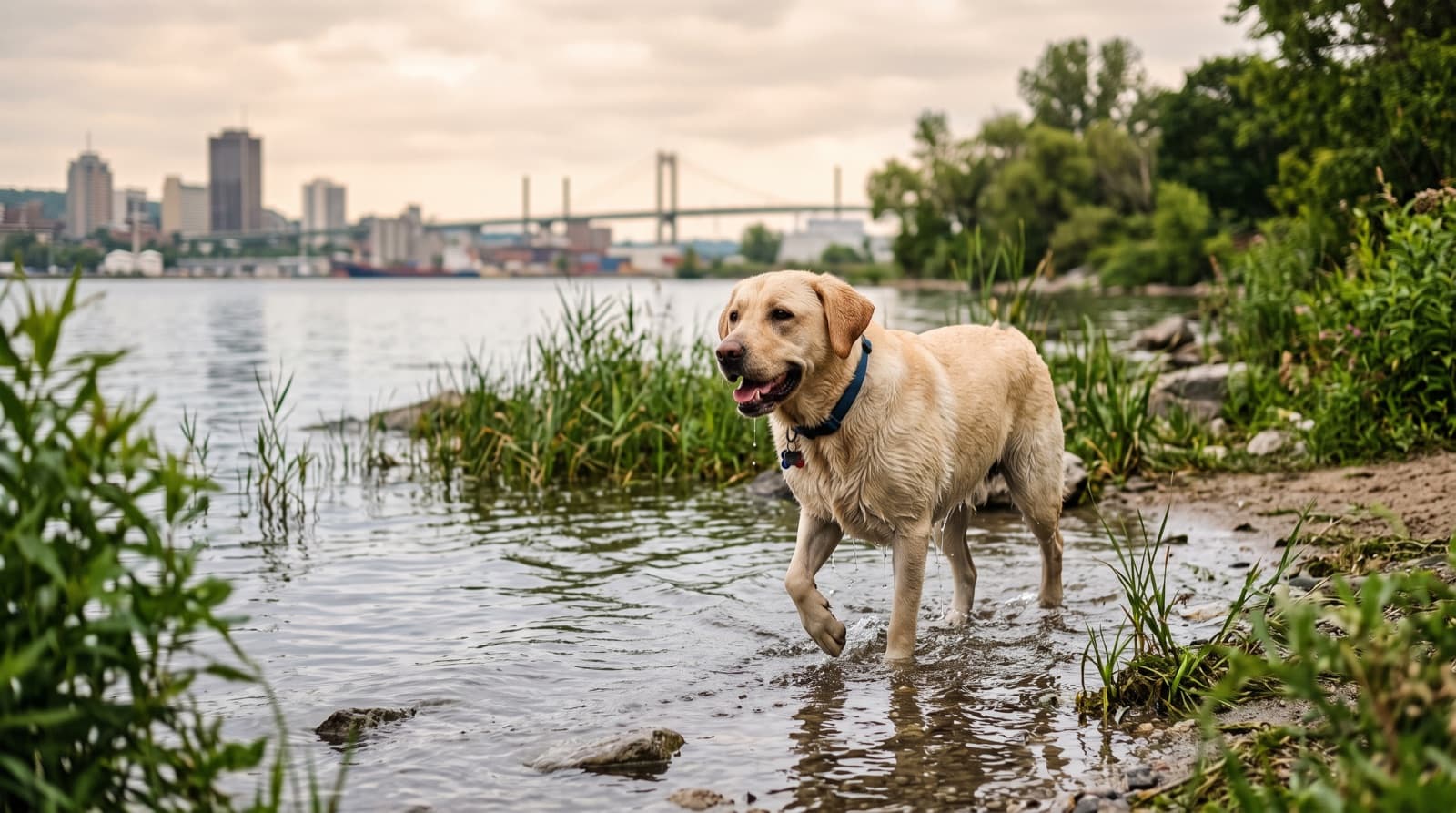
Why Labradors surrender in Hamilton
It is a strange thing to say about the most popular breed in the country, but Labs are also one of the most surrendered dogs in Ontario rescue, and the reasons are consistent. Reading them before you adopt is the single best thing you can do, because most of these stories are avoidable when the adopter goes in with clear eyes.
- Underestimated energy. This is the big one. People picture the mellow older Lab and adopt a one-year-old who needs real daily exercise and a job. The under-exercised young Lab then chews the baseboards, digs the yard, counter-surfs, jumps on guests, and hauls the walker down the sidewalk. The family calls that misbehaviour; it is almost always an unmet exercise need. A Lab that gets its hour or two of activity a day is a completely different dog by evening.
- Housing and rentals. Hamilton is a busy rental market, and plenty of leases restrict large dogs or set weight limits. A move, a new landlord, or a condo rule can put a well-loved Lab into rescue through no fault of the dog. If you rent, get written landlord approval before you apply, because rescues will ask for it.
- Cost surprises. Ear infections, joint issues, and the occasional emergency add up, and a family already stretched thin can hit a wall. Pet insurance enrolled early and a realistic annual budget prevent most of these surrenders.
- Life changes. A new baby, a job change, a relationship ending, or an owner's health decline all land Labs in rescue. These are the hardest surrenders because nobody did anything wrong; the household simply could not keep going.
- Impulse puppy purchases. Someone buys a cute Lab puppy without meeting the parents or thinking about the adult dog, gets a high-drive field-line rocket, and gives up around adolescence. Those dogs often make excellent adoptions for an active adopter who knows what they are taking on.
The through-line is that the dogs are rarely the problem. Labs are friendly, trainable, and eager to please. The gap is between what the owner expected and what a working retriever actually needs. When you read a Hamilton surrender note, look past the phrase “too much for us” and ask the specifics: how much daily exercise was the dog getting, what is its recall like, and what does the foster or shelter say about its energy level.
Hamilton and Ontario rescues that list Labs
Labs and Lab mixes turn up regularly in Hamilton rescue, but demand is high, so a wide alert net matters. Set up listing alerts on every organisation you would consider, and be ready to apply the same day. For a fuller directory of local options, see our guide to the best dog rescues in Hamilton.
- Hamilton/Burlington SPCA (HBSPCA): the main shelter for the area and the most consistent general source of Labs and Lab mixes, through owner surrender and stray intake. The HBSPCA does not publish a flat adoption fee; instead the adoption package represents more than $1,000 in bundled care, covering a comprehensive vet exam, spay or neuter, up-to-date vaccines and preventatives, microchip, deworming, and heartworm testing, plus a month of Trupanion pet insurance and five days of aftercare at their onsite hospital. You can meet the dog in person before applying, and the shelter team produces a clear write-up of temperament and any flagged medical history.
- Ladybird Animal Sanctuary: a foster-based Hamilton rescue whose dogs live in real homes, which makes the notes on energy, house manners, and how the dog handles kids or other pets more accurate than a shelter-only setting. Fees are $350 for a single dog and $650 for a bonded pair, a price that rolls in a vet health check, spay or neuter surgery, vaccinations, parasite treatment, and a microchip. Because they are foster-based, availability moves with what is in their homes, so alerts are your friend.
- Regional Ontario foster-based rescues: many Ontario rescues list Labs and Lab crosses, and a good number pull dogs from northern communities, out-of-region transport, and even out-of-country intake. That transport is why some foster-rescue fees run higher than a local shelter; the fee is covering real travel and vetting. Widening your search across the province meaningfully increases how quickly the right dog appears.
One caution that applies to any breed but hits Labs hard because they are so sought-after: be wary of “free Lab puppy” offers and cut-rate transport listings online. Legitimate rescues want an application and a conversation first, and they can show you a real address and charitable status. Vets in Ontario are regulated by the College of Veterinarians of Ontario, a useful reference when you are choosing a clinic to build your dog's care around. If an offer wants money wired before you have met anyone or seen paperwork, walk away.
The energy reality: field line vs bench line
Almost everything that goes wrong between a Lab and its family comes back to energy. The breed was developed to work all day retrieving in cold water, and that drive did not disappear when Labs became the family dog of choice. Understanding the two broad types within the breed helps you read a Hamilton listing accurately.
Bench-line or show-line Labs are the stockier, blockier, heavier-boned dogs bred toward the classic look. They tend to be calmer and are usually the better fit for a moderately active family. Field-line or working-line Labs are leaner, rangier, and considerably higher-drive, bred to hunt and retrieve, and a field-line dog in a quiet home is a recipe for a surrender. In rescue you rarely get pedigree paperwork, so you often cannot label the line from a glance, which is exactly why the energy description in a listing matters more than the label ever could. A note that says “high energy, needs an active home, loves to retrieve” is telling you this dog leans working-line, no matter what its parents were called.
For a healthy adult Lab, plan on one to two hours of real activity a day, and more for a young field-line dog. Real activity means walks with sniffing, retrieving, swimming, training, and problem-solving, not a five-minute trip around the block. Hamilton gives you good ground for it. On-leash, the Niagara Escarpment and the Bruce Trail offer long, varied walks, the Chedoke Radial Trail and rail trails give you flat distance, and the Dundas Valley Conservation Area is a favourite for a proper hike. The waterfront at Bayfront Park and the Pier 8 stretch are good for a leashed walk with water views. For off-leash running, use the City of Hamilton's designated free-running areas rather than assuming any park allows it; the city keeps a current list of dog parks and free-running areas. The escarpment paths, Bruce Trail, and waterfront are on-leash walking spaces, not off-leash zones.
Retrieving is the shortcut with this breed. A Lab that gets a solid fetch session burns more energy in twenty minutes than an hour of ambling would, and it satisfies the retrieve drive that otherwise goes hunting for mischief. Add in scent games, puzzle feeders, and short training sessions, and you have a tired, content dog. An under-stimulated Lab is a chewing, digging, counter-surfing dog, and no amount of correction fixes what is really a need for a job.
Water, weather, and the Hamilton seasons
Most Labs are natural swimmers. The breed carries a water-resistant double coat, webbed feet, and a thick otter tail built for the water, and swimming is superb low-impact exercise, which is a genuine asset for a breed prone to hip and joint trouble. Around Hamilton, the natural water is the Cootes Paradise marshland and the harbourfront near Bayfront Park, but always check current signage and water-quality advisories before letting a dog in, and keep the dog leashed where required. Two real cautions: not every Lab loves water, so never force a nervous or senior dog into the deep, and blue-green algae blooms can form in warm, still water in an Ontario summer and are dangerous, so avoid any water with scummy or discoloured patches. When you are unsure, a shallow paddle and a rinse at home is the safe call.
Hamilton runs a true four-season humid-continental climate, and a Lab needs managing at both extremes. Winters bring snow, ice, freezing rain, and heavy road salt on sidewalks and roads. The double coat handles the cold fine, but salt is hard on paws, so rinse or wipe the paws after walks, watch for cracking and salt burn between the pads, and use booties for a sensitive dog. Ice makes footing treacherous for a big dog that pulls, so a well-fitted harness and a bit of patience go a long way. Lake Ontario moderates the worst of it, but lake-effect snow still happens.
The summer is actually the riskier season for this breed. Hamilton gets hot, humid weather with a high humidex, and Labs run warm under that coat. Heat plus humidity can bring on heatstroke quickly. Walk in the early morning or the evening, skip midday exertion on hot days, always carry water, and never leave a dog in a parked car for even a couple of minutes. Overweight and senior Labs need extra caution in the heat. A swim on a hot day, with the algae caution above, is often the safest way to exercise a Lab when the humidex climbs.
Labrador health, in brief
Labs are generally sturdy and often live 11 to 13 years, but a handful of conditions are worth planning around so you adopt with realistic expectations and the right budget.
- Obesity. The single biggest day-to-day risk. Labs are relentlessly food-driven and gain weight fast, and extra weight worsens every joint and heart problem below. Measured meals, counted treats, and no table scraps are the whole game.
- Hip and elbow dysplasia. The best-known breed risks. Responsible breeders screen for them, but rescue dogs rarely arrive with records, so a baseline vet exam and a lean body weight are your best tools. Swimming helps keep affected joints mobile without impact.
- Ear infections. The drop ears trap moisture, and a Lab that swims is more prone still. Routine ear checks and cleaning after water are part of ownership.
- Eye conditions. Progressive retinal atrophy and cataracts appear in the breed; a vet eye check catches problems early.
- Exercise-induced collapse. A genetic condition seen in some Labs, especially high-drive working lines, where intense exercise triggers weakness. Worth knowing about if you adopt a field-line dog.
- Bloat. A life-threatening stomach twist that deep-chested dogs are prone to. Learn the signs (a distended belly, unproductive retching, distress) and treat it as an emergency.
For breed-level health-testing standards, the Orthopedic Foundation for Animals maintains public screening databases at ofa.org, and the Canadian Kennel Club publishes the breed standard and responsible-breeding guidance. A rescue Lab will not usually come with OFA records, but the resources are useful context for what the breed is screened for. Know where your nearest after-hours help is before you need it: the Hamilton Emergency Veterinary Clinic handles after-hours emergencies, and the Burlington Veterinary Emergency & Referral Hospital covers emergency and specialty referral care. Plan a baseline vet visit in your first month to establish records, score body condition, and check the ears and joints.
What a Hamilton rescue Labrador actually costs
A rescue dog in the Hamilton area typically comes with a $350 to $600 adoption fee. Ladybird Animal Sanctuary charges $350 for a single dog and $650 for a bonded pair, a price that rolls in a vet health check, spay or neuter surgery, vaccinations, parasite treatment, and a microchip. The Hamilton/Burlington SPCA does not set a single published fee; its adoption package amounts to over $1,000 in included care, which is worth understanding as real value rather than a sticker price. Foster-based rescues that fund out-of-region transport can run higher, and that difference reflects genuine travel and vetting costs, not a markup.
Whatever the fee, it is not a sticker price but a partial reimbursement for vetting the rescue has already paid for. Compare it to a Lab puppy from a breeder, which is directionally far more expensive and arrives with no vetting done yet, and the rescue path is dramatically cheaper while often giving you a dog with a known temperament. Budget another $400 to $900 in one-time setup for your first month: a crate, a well-fitted harness and leash, a bed, food and bowls, initial supplies, and your own baseline vet visit. Remember the 13% Ontario HST applies to those supplies, though not to the adoption fee itself. For a fuller local breakdown, see our Hamilton dog adoption cost guide.
Ongoing, plan roughly $1,500 to $2,500 a year for a medium-to-large dog: quality food measured to keep a Lab lean, routine vet care, pet insurance (genuinely worth it for a breed with documented hip, ear, and joint risks), and a City of Hamilton dog licence, which the city requires and administers. Ren's Pets offers a $20 credit when you register or renew a City of Hamilton dog licence, a small offset worth knowing about. Our Hamilton dog licensing guide walks through the process, and if your Lab somehow arrives unaltered, our Hamilton spay and neuter guide covers local options, though most rescue Labs arrive already fixed.
Browse adoptable Hamilton Labs and Lab mixes
Current Hamilton-area listings from the Hamilton/Burlington SPCA, Ladybird Animal Sanctuary, and regional Ontario rescues in one place. Labs are popular and place fast, so alerts and same-day applications win.
See Available Hamilton Labradors →The first 30 days with a Hamilton rescue Lab
A Lab follows the same 3-3-3 arc as any rescue dog: the first three days are raw decompression, the routine clicks over about three weeks, and the real bond takes closer to three months. Labs often land on the faster end because the breed is so social and eager to connect. What you set up in week one, though, decides how the rest goes. Our first week with a rescue dog guide covers the general decompression plan; here is the Lab-specific version.
- Set the feeding and weight plan on day one. Measured meals, no free-feeding, treats counted into the daily total, and a firm household rule that nobody feeds table scraps. A Lab will always act starving; do not trust the begging.
- Plan the exercise honestly. A young Lab needs one to two hours of activity a day from the start. If your life cannot provide that, you adopted the wrong dog. Build walks, retrieving, and sniff time into the daily routine immediately.
- Book a baseline vet visit in the first two weeks. Establish records, score body condition, check the ears and joints, and confirm the microchip is registered to you.
- Enrol in pet insurance in week one. Before any pre-existing conditions land in the records. Lab hip, ear, and joint issues are far cheaper to insure against when enrolled early.
- Start the ear-care routine. Weekly checks and cleaning, and always dry the ears after a swim. Watch for redness, odour, or head-shaking.
- Work on manners early. Loose-leash walking, a solid recall, and no jumping. A 70 lb Lab that jumps and pulls is a genuine problem; the same dog with basic manners is a joy. Start gentle training in week one.
- Licence the dog with the City of Hamilton. Required for dogs in the city and quick to arrange, with the Ren's Pets credit as a small bonus.
- Introduce water carefully. If you plan to swim your Lab, start shallow and let the dog choose, and never force a nervous dog into the deep.
- Winter and summer prep. Have paw wipes and booties ready for salted-sidewalk season, and a hot-weather plan (early or late walks, water, no midday exertion) for the humid Hamilton summer.
- Same routes, same routine for the first two weeks. Keeping things low-key and repetitive helps a Lab settle in. Save busy dog parks and new friends for after week three.
- Crate train from night one. Even a house-trained Lab benefits from a crate routine early; it gives the dog a safe den during decompression and prevents boredom chewing.
Around week three the household rhythm settles and the dog you actually adopted comes through. By the three-month mark the bond is solid and the measured meals, daily exercise, and ear-drying routine are simply how your week runs. Hold off on big judgements through those first 90 days; most early worries fade with a set feeding plan, real exercise, and a little time.
Frequently asked questions
Where can I adopt a Labrador near me in Hamilton?
Start with the two consistent local sources. The Hamilton/Burlington SPCA (HBSPCA) is the main shelter and takes in Labs and Lab mixes regularly through owner surrender and stray intake, so it is the first place to check and set alerts. Ladybird Animal Sanctuary is the other reliable option, a foster-based Hamilton rescue whose dogs live in real homes, which makes the temperament notes on energy and manners more accurate. Beyond those two, several regional Ontario foster-based rescues list Labs and Lab crosses, and many pull dogs from out-of-region transport, so widening your alert net across the province shortens the wait. Labs are among the most popular breeds in Canada, so young adults and puppies place fast. Have your references, landlord approval if you rent, and a vet contact ready before a dog you like appears, because same-day applications win most placements in a market this size.
Why do Labradors end up in rescue in Hamilton?
The number-one reason is underestimated energy. Families picture the calm, greying Lab from a commercial and adopt a one-year-old who needs one to two hours of real exercise a day, and the mismatch surfaces fast. An under-exercised young Lab chews, digs, counter-surfs, jumps, and pulls on the leash, and the household reads that as a behaviour problem when it is really an exercise problem. Other common drivers in Hamilton are housing changes and rentals that will not allow a large dog, financial strain when joint or ear issues need vet care, a new baby and no time, and owners who bought a puppy without meeting the parents and got far more drive than they expected. The dogs themselves are usually friendly, biddable, and trainable. The gap is almost always between what the owner expected and what a working retriever actually needs.
How much does it cost to adopt a Labrador in Hamilton?
Expect a Hamilton-area rescue adoption fee in the neighbourhood of $350 to $600 for a dog. Ladybird Animal Sanctuary charges $350 for a single dog and $650 for a bonded pair, and that price rolls in a vet health check, spay or neuter surgery, vaccinations, parasite treatment, and a microchip. The Hamilton/Burlington SPCA does not publish a flat fee; instead its adoption package adds up to over $1,000 in value, covering a comprehensive vet exam, spay or neuter, up-to-date vaccines and preventatives, microchip, deworming, heartworm testing, plus a month of Trupanion pet insurance and five days of aftercare at their onsite hospital. Foster-based rescues that cover out-of-region transport can run higher. Budget another $400 to $900 in one-time setup for your first month, and roughly $1,500 to $2,500 a year ongoing for a medium-to-large dog. The 13% Ontario HST applies to supplies, not to the adoption fee itself.
What is the difference between a field-line and a bench-line Labrador?
It matters more than most adopters realise. Bench-line (or show-line) Labs are stockier, heavier-boned, and generally calmer, bred toward the classic blocky look. Field-line (or working-line) Labs are leaner, rangier, and considerably higher-drive, bred to hunt and retrieve all day. A field-line Lab in a low-activity home is one of the most common mismatch stories in rescue, because that dog genuinely needs a job and hours of activity. In rescue you rarely get pedigree paperwork, so you cannot always tell the line from a glance, but a good foster or shelter assessment will describe the energy level directly. When you read a Hamilton listing, weigh the described energy far more heavily than the label. A dog noted as 'high energy, needs an active home, loves to retrieve' is telling you it leans field-line regardless of what its parents were called.
Are Labradors good swimmers, and where can they swim in Hamilton?
Most Labs love water and swim well; the breed was developed to retrieve from cold water and has a water-resistant double coat and webbed feet. Swimming is excellent low-impact exercise, which is a real asset for a breed prone to hip and joint issues. In Hamilton, the natural water settings are the Cootes Paradise marsh area and the harbourfront around Bayfront Park, though you should always check current signage and water-quality advisories before letting a dog in, and keep the dog leashed where required. Two cautions matter. First, not every Lab is a natural swimmer, and a nervous or senior dog should never be forced into deep water. Second, blue-green algae blooms can appear in warm, still water in an Ontario summer and are dangerous, so avoid any water with scummy or discoloured patches. When in doubt, a shallow paddle and a hose-down at home is the safer play.
Do Labradors really get fat, and why does it matter?
Yes, obesity is arguably the biggest day-to-day health risk for the breed. Labs are famously food-motivated (research has even linked a specific gene variant to appetite and food obsession in the breed), which makes them easy to over-feed and quick to beg, counter-surf, and inhale anything within reach. Excess weight is not cosmetic. It directly worsens the hip and elbow problems Labs are prone to, strains the heart and joints, and shortens lifespan. The fix is boring and effective: measured meals rather than free-feeding, treats counted into the daily total, and a firm household rule against table scraps. Learn to feel your dog's ribs and score body condition with your vet, because a Lab will always act starving and you cannot trust the begging. Weight control plus real exercise is most of what keeps a Lab healthy into old age.
What health problems do Labradors have?
Labs are generally sturdy and often live 11 to 13 years, but a few conditions are worth planning around. Hip and elbow dysplasia are the best-known breed risks; responsible breeders screen for them, and organisations like the Orthopedic Foundation for Animals maintain public databases of screening results. A rescue Lab rarely comes with those records, so a baseline vet exam matters. Obesity, covered above, makes joint problems worse. Ear infections are common because the drop ears trap moisture, especially in a dog that swims, so routine ear checks are part of Lab ownership. Exercise-induced collapse and some eye conditions such as progressive retinal atrophy appear in the breed. Bloat, a life-threatening stomach twist, is a risk in deep-chested dogs, so learn the signs. None of this should scare you off; it just means budgeting for pet insurance early and building a relationship with a Hamilton vet before you need one.
Are chocolate, black, yellow and fox-red Labs different in temperament?
Coat colour does not determine temperament. Black, yellow, and chocolate are the three recognised Labrador colours, and fox-red is simply a deep shade of yellow, not a separate colour or breed. The persistent idea that chocolate Labs are 'crazier' is not supported by the genetics of behaviour; it more likely reflects that chocolate became fashionable and got bred heavily for the colour by less careful breeders, which affects individual dogs, not the colour itself. What actually predicts a Lab's energy and drive is its line (field versus bench) and its individual breeding, not whether it is black, yellow, chocolate, or fox-red. When you adopt, ignore the colour in your decision and read the temperament and energy notes. A calm yellow and a rocket-fuelled chocolate are both entirely possible, and the reverse is just as true.
Should I adopt a Labrador puppy or an adult?
For most Hamilton households, an adult Lab is the easier and safer choice. Lab puppies are delightful and exhausting: mouthy, high-energy, and prone to a long adolescence from roughly six to eighteen months where the drive peaks and the manners lag. An adult Lab has a settled temperament you can actually assess, established house manners, a known medical history, and usually a lower adoption fee. If you specifically want a puppy and have the time, budget, and energy for a year and a half of intensive training and exercise, a Lab puppy can work, but go in clear-eyed. Senior Labs, eight and up, are among the most rewarding adoptions available: often calm, house-trained, and grateful, and they place slowly, so a senior is a genuine chance to give a wonderful dog a soft landing.
How do I keep a Labrador safe in Hamilton winters and summers?
Hamilton has a true four-season humid-continental climate, and both ends of the year need managing. In winter, the double coat handles cold well, but salted sidewalks and roads are hard on paws; rinse or wipe the paws after walks, watch for salt burn and cracking between the pads, and use booties for a sensitive dog. Ice and freezing rain make footing dangerous for a big dog that pulls, so a well-fitted harness helps. In summer, the humid Hamilton heat and high humidex are the bigger danger. Labs run warm under that coat, and heat plus humidity can cause heatstroke fast. Walk early morning or late evening, skip midday exertion on hot days, carry water, and never leave a dog in a parked car for even a few minutes. Watch senior and overweight Labs especially closely in the heat. Swimming is a great way to exercise a Lab safely on a hot day, with the algae caution above.
How long is the wait to adopt a Lab in Hamilton, and how do I improve my odds?
It varies a lot by the specific dog. Young, healthy, friendly Labs place fast, sometimes within days of listing, because demand is high. Seniors, dogs with managed medical needs, and dogs needing an experienced or child-free home wait longer, and those are often the best matches for the right adopter. A realistic average from application to dog-in-home is a few weeks to a couple of months. To improve your odds: set alerts on the Hamilton/Burlington SPCA and Ladybird Animal Sanctuary, stay open to a Lab mix rather than holding out for a purebred, and be honest on your application about your activity level so the rescue can match you well. Have references, a vet contact, and landlord approval lined up in advance. Rescues place dogs with the households that are ready to move, not necessarily the ones who applied first.
Related Hamilton adoption guides
Adoptable Hamilton Labradors
Current Hamilton-area Labrador and Lab-mix listings from the HBSPCA, Ladybird Animal Sanctuary, and regional Ontario rescues.
Best Dog Rescues in Hamilton
A directory of the Hamilton shelters and foster-based rescues worth setting listing alerts on, with what each is known for.
Hamilton Dog Adoption Costs
What rescue fees actually cover, first-month setup and vet costs, and the true ongoing budget for a dog in Hamilton.
First Week With a Rescue Dog
The 3-3-3 decompression plan, settling routines, and what to expect in the first days with a newly adopted Hamilton rescue dog.
Find your Hamilton rescue Labrador
Browse current Hamilton-area Labrador and Lab-mix listings. Labs are popular and place fast; alerts and same-day applications still win.
Browse All Hamilton Dogs →New dog? Start with these care guides
Everything a new adopter needs to set up a safe, happy home.