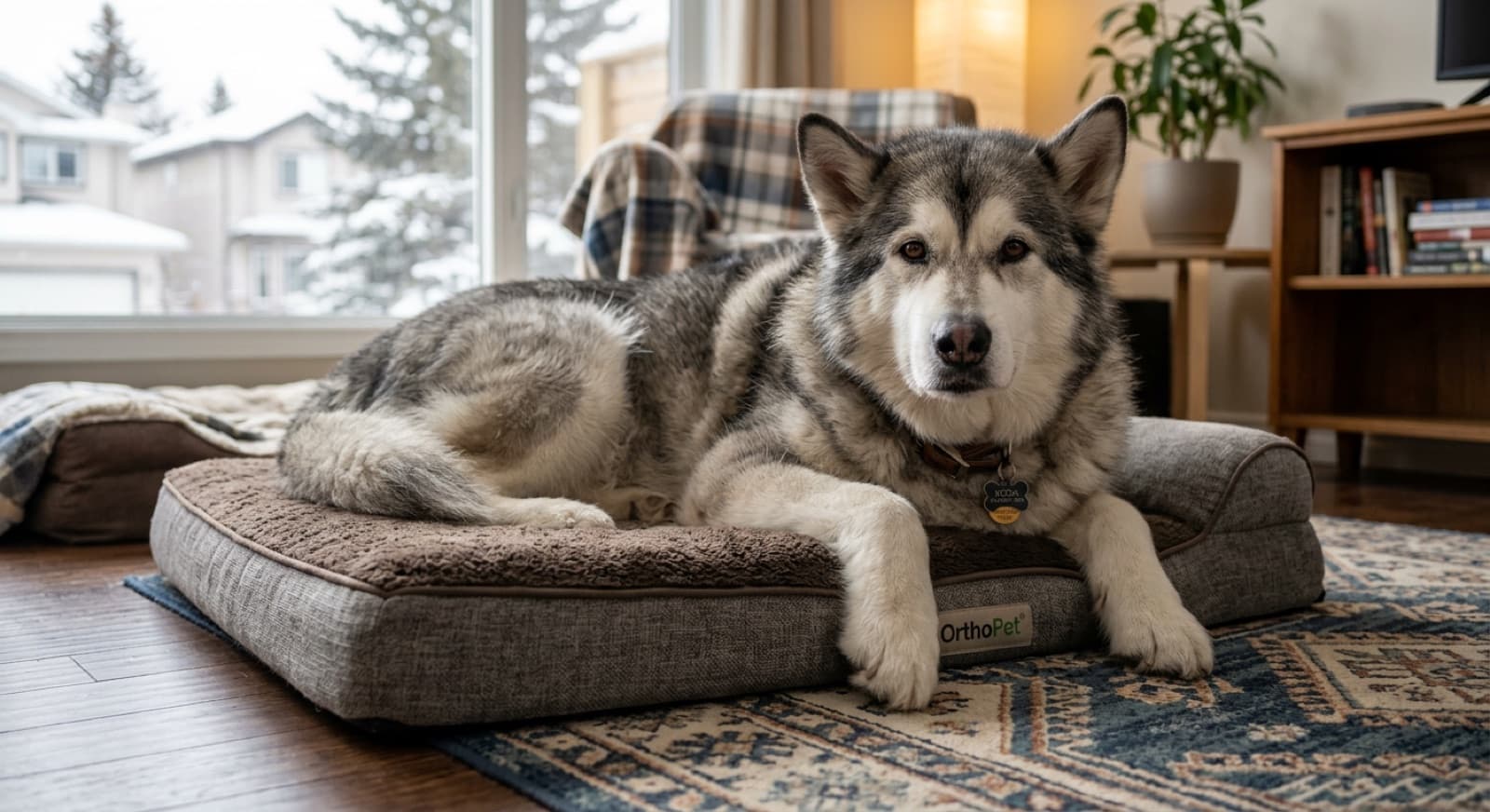
The short answer
The Malamute carries the large-northern-breed health profile: hip and elbow dysplasia, bloat/GDV (a life-threatening emergency, and the standout risk), eye conditions (cataracts, PRA, and breed-specific day blindness), hypothyroidism, and a few hereditary conditions like chondrodysplasia. Lifespan is 10 to 14 years. The highest-impact things you control: know the signs of bloat and act instantly, keep the dog lean, feed an appropriate large-breed diet, avoid overexercising a growing puppy, and discuss gastropexy with your vet. Insure while young and healthy. They love Toronto winters; protect them from summer heat. Browse adoptable Toronto dogs.
Bloat: the emergency to know
Of all the Malamute's health risks, bloat (gastric dilatation-volvulus, GDV) is the one every owner must understand, because it is sudden, life-threatening, and large deep-chested breeds are especially prone to it. The stomach fills with gas and can twist, cutting off blood flow, and without emergency surgery it is rapidly fatal. Learn the signs, a distended belly, unproductive retching, restlessness, drooling, distress, and treat them as an instant emergency requiring a rush to a Toronto emergency vet. Reduce the risk with smaller meals rather than one large one, no heavy exercise right around meals, and a conversation with your vet about preventive gastropexy (often done at spay/neuter). The VCA guide to bloat is essential reading, and our Malamute-vs-Husky guide covers the breed differences.
Joints, eyes, and hereditary conditions
Beyond bloat, the Malamute carries the rest of its profile. Hip and elbow dysplasia are common, and the dog's size loads the joints throughout life, so keeping the dog lean is the single biggest thing you can do, along with an appropriate large-breed diet and avoiding overexercising a growing puppy. The breed is prone to several inherited eye conditions, cataracts, PRA, and a breed-specific cone degeneration (day blindness), making regular eye checks worthwhile. Malamutes also carry a handful of breed-specific hereditary conditions that responsible breeders screen for: chondrodysplasia (a form of dwarfism), polyneuropathy (a nerve condition), and zinc-responsive dermatosis (a skin condition related to zinc absorption). Hypothyroidism occurs too. Adopting an adult through a rescue that has vet-checked the dog gives you a clearer picture of its health and how it moves.
Climate, cost, and insurance
The Malamute is built for cold, so Toronto winters are easy and joyful for them, but that heavy double coat means heat is the real concern: provide cool space, shade, and water, exercise in the cool hours, and never shave the coat (it insulates against heat too). On cost, this is a significant commitment: large-breed food, pricier medications and procedures, and the risk of expensive emergencies like bloat surgery add up, so budget generously and strongly consider pet insurance taken out while the dog is young and healthy, before anything is excluded as pre-existing. Our cost guide has the full Toronto picture. With attentive care and a financial plan, a Malamute is a robust, magnificent companion for its decade-plus with you.
Browse adoptable Alaskan Malamutes in Toronto
Malamutes and Mal mixes from Toronto-area shelters and rescues, with foster notes on temperament and health.
See Available Alaskan Malamutes →Frequently Asked Questions
What health problems are Alaskan Malamutes prone to?
Malamutes are generally a hardy, robust breed, but as a large northern breed they carry several predispositions worth knowing. The main ones: hip and elbow dysplasia (common in large breeds); bloat/gastric dilatation-volvulus (GDV), a life-threatening emergency deep-chested large breeds are prone to; eye conditions including cataracts, progressive retinal atrophy (PRA), and a breed-specific issue called cone degeneration (day blindness); hypothyroidism; chondrodysplasia (a genetic dwarfism affecting the limbs); polyneuropathy (a hereditary nerve condition seen in the breed); and inherited polyneuropathy and zinc-responsive dermatosis (a skin condition related to zinc absorption). None of this means a Malamute will be unhealthy, many are robust and live 10 to 14 years, but choosing a dog from health-tested lines or a rescue that has done a vet check, and keeping up with routine vet care, all help catch issues early.
Are Alaskan Malamutes at risk of bloat?
Yes, and it is the single most important emergency for a Malamute owner to understand, because bloat (gastric dilatation-volvulus, or GDV) is a sudden, life-threatening condition that large, deep-chested breeds like the Malamute are especially prone to. The stomach fills with gas and can twist, cutting off blood flow, and without emergency surgery it is rapidly fatal. Every Malamute owner should know the signs: a distended or swollen belly, unproductive retching or trying to vomit with nothing coming up, restlessness, drooling, and distress, and treat them as an immediate emergency requiring a rush to a Toronto emergency vet. Risk-reduction steps include feeding smaller meals rather than one large one, avoiding heavy exercise right around meals, and discussing preventive gastropexy (a surgical tacking of the stomach, often done at spay/neuter) with your vet. Knowing the signs and acting instantly saves lives.
Do Alaskan Malamutes have hip and joint problems?
They can, like most large breeds. Hip and elbow dysplasia (malformed joints that can lead to pain and arthritis) occur in Malamutes, and their size and working build put load on the joints throughout life. The most important things an owner can do: keep the dog lean, since excess weight dramatically worsens joint stress (this is the single biggest modifiable factor); feed an appropriate large-breed diet, especially during the critical growth phase, to support steady rather than overly rapid growth; provide sensible exercise while avoiding overexercising a growing puppy whose joints are still developing; and provide traction on slippery floors and good bedding for an adult. Malamutes are also prone to chondrodysplasia, a genetic form of dwarfism affecting limb development that reputable breeders screen for. Your vet will monitor the joints, and joint-support supplements or, in significant cases, medication or surgery can help. Adopting an adult from a rescue lets you see how the dog already moves.
What eye problems do Alaskan Malamutes have?
Malamutes are prone to several inherited eye conditions, so eye health is worth monitoring. The main ones are cataracts (clouding of the lens that can impair or lose vision, sometimes hereditary and appearing at a young age), progressive retinal atrophy (PRA, a genetic degeneration of the retina that gradually leads to blindness), and, notably, a breed-specific condition called cone degeneration (also called day blindness or hemeralopia), an inherited disorder where the dog’s cone cells degenerate, causing poor vision in bright light while night vision remains normal. Responsible breeders eye-test and can genetically test for some of these. For an owner, the practical steps are to have your vet check the eyes at regular visits, watch for signs like cloudiness, bumping into things, or difficulty seeing in certain light, and see a vet or ophthalmologist promptly if you notice changes. Dogs adjust remarkably well to gradual vision loss, and adopting from a rescue that has vet-checked the dog helps flag any known eye issues.
How long do Alaskan Malamutes live and how do I keep mine healthy?
Alaskan Malamutes typically live 10 to 14 years, a solid lifespan for a large breed, and attentive care helps them thrive. The highest-impact things: keep the dog lean (protects the joints and overall health); know the signs of bloat and take steps to reduce the risk (smaller meals, no heavy exercise around meals, and discussing gastropexy with your vet); feed an appropriate large-breed diet and avoid overexercising a growing puppy; keep up with joint and eye monitoring given the breed’s predispositions; provide the substantial exercise and mental stimulation this working breed needs; and keep up with routine vet checkups so hip, eye, thyroid, and other issues are caught early. Because they love the cold, Toronto winters are easy, but manage summer heat carefully given the heavy coat. Adopting an adult from a rescue that has done a vet check gives you a clearer picture of the individual dog’s health.
Should I get pet insurance for an Alaskan Malamute?
Pet insurance is strongly worth considering for an Alaskan Malamute, because large breeds are both expensive to treat (larger doses, bigger procedures) and prone to costly emergencies and conditions, emergency bloat surgery alone can run several thousand dollars, and hip surgery, eye treatment, or thyroid and skin management add up. As with any breed, the key is to insure while the dog is young and healthy, before any condition is diagnosed and excluded as pre-existing (relevant given the hereditary joint, eye, thyroid, and neurological risks). Compare Canadian providers on their coverage of hereditary and orthopedic conditions and, importantly, emergency and surgical coverage (relevant for bloat), read the exclusions carefully, and weigh insurance against a substantial dedicated savings fund. Given the large-breed cost profile and the real bloat risk, having a financial plan for a major emergency is one of the most responsible parts of Malamute ownership.
Alaskan Malamute Adoption in Toronto
Where to adopt, costs, and the honest Mal reality.
Malamute vs Husky
Size, temperament, and how to tell them apart.
New dog? Start with these care guides
Everything a new adopter needs to set up a safe, happy home.