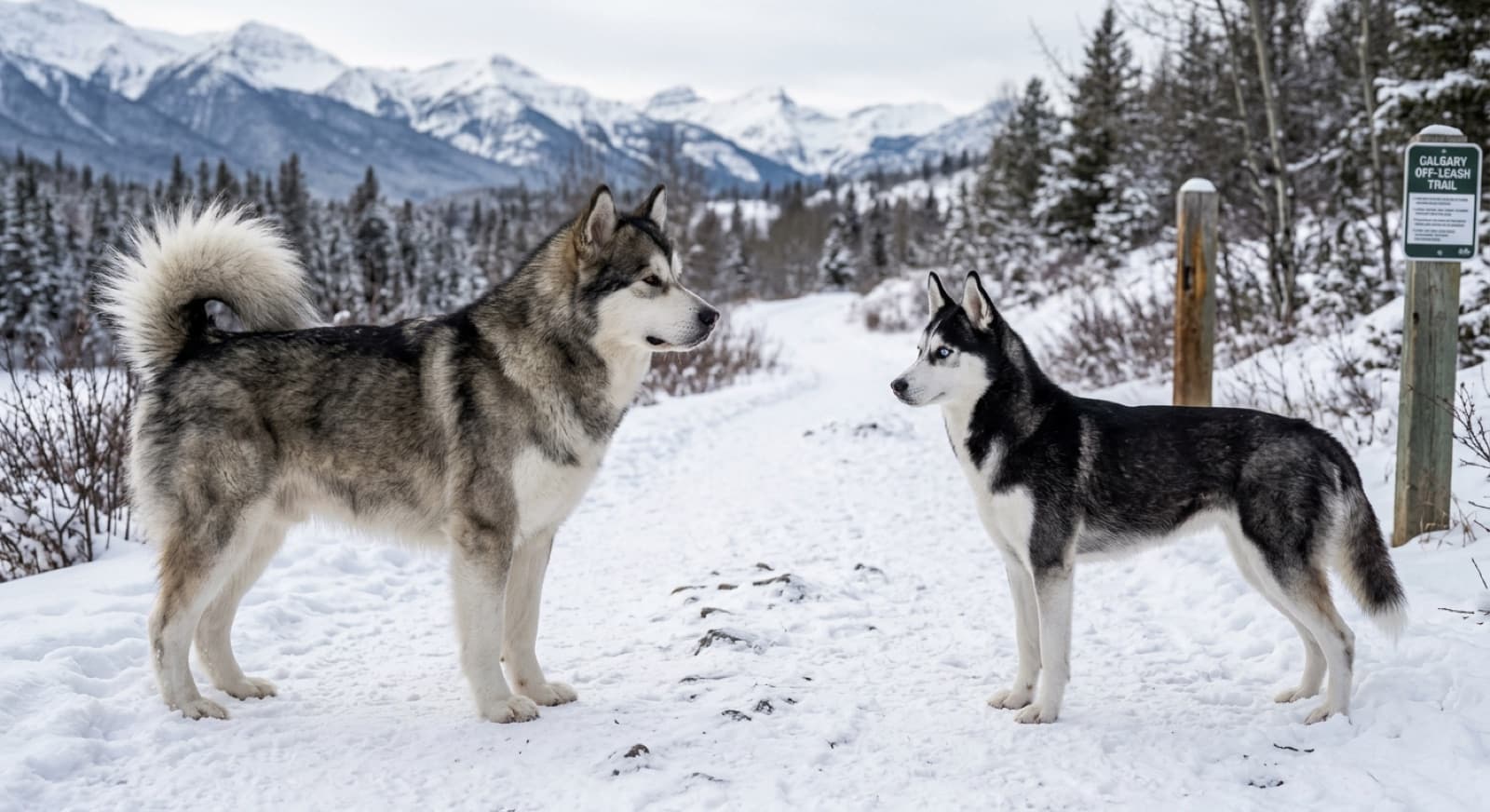
The short answer
The Malamute is the larger, heavier, more powerful dog (75 to 100-plus lbs), bred to haul freight, and tends to be a bit calmer but more stubborn. The Husky is smaller and lighter (35 to 60 lbs), bred to pull at speed, and tends to be more energetic, vocal, and mischievous. Malamutes always have brown eyes; Huskies can have blue. Both shed enormously, have high prey drives (a cat concern), are escape artists needing secure fencing, and are hard to train, so neither is an easy first dog. Choose by size, energy, and what you can handle, or let a rescue help you decide. Browse adoptable Toronto dogs.
Size and build: freight hauler vs racer
The clearest difference reflects the two breeds' jobs. The Malamute was bred to haul heavy freight with power and endurance, so it is the bigger, heavier, more substantially built dog, roughly 75 to 100-plus pounds and 23 to 25 inches tall, with heavy bone. The Husky was bred to pull lighter loads at speed, so it is leaner and lighter, roughly 35 to 60 pounds and 20 to 23.5 inches, built like an athlete. That size gap has practical weight: the Malamute eats more, is stronger on-leash, costs more to feed and medicate, and needs more space, while the Husky, though still demanding, is a touch more manageable in size. Side by side, the Malamute's greater bulk is obvious. Our Malamute adoption guide covers the breed's needs in depth.
Temperament, energy, and training
Both are affectionate, friendly, independent northern breeds, but with different flavours. The Malamute tends to be a bit more mellow and dignified (while still needing lots of exercise), more deliberately stubborn, and sometimes more prone to same-sex dog aggression. The Husky tends to be more energetic, playful, mischievous, and famously vocal, a clever escape artist with a busy mind. Crucially, both share the hard parts: enormous shedding, high prey drives that can make them unsafe with cats, escape-artistry needing secure fencing, and real training challenges rooted in their independent natures, so neither should be trusted off-leash in unfenced areas, and neither is a good pick for someone wanting an obedient, easy dog. The Canadian Kennel Club profiles both breeds, and our Malamute health guide covers the medical side.
Telling them apart, and choosing
To tell them apart: size is the clearest tell (the Malamute is markedly bigger), eyes are another (Malamutes always brown, Huskies can be blue or parti-coloured), and the tail differs (the Malamute's plumed tail waves over the back, the Husky's is a fox-brush). Mixes blur these lines, which is why a rescue's read on the individual dog's size, energy, and temperament matters more than the label. To choose: lean Malamute for a larger, calmer-but-stubborn dog you can physically handle; lean Husky for a somewhat smaller, higher-energy, vocal, mischievous one. But both shed enormously, need lots of exercise, have high prey drives, need secure fencing, and are hard to train, so if that does not fit your life, a different breed may suit you better. A good rescue can help you decide honestly. See the Malamute breed page for adoptable dogs.
Browse adoptable northern breeds in Toronto
Malamutes, Huskies, and northern mixes from Toronto-area shelters and rescues, with foster notes on temperament and energy.
See Available Alaskan Malamutes →Frequently Asked Questions
What is the main difference between an Alaskan Malamute and a Siberian Husky?
The biggest single difference is size and build, and it reflects the different jobs the two breeds were bred for. The Alaskan Malamute is the larger, heavier, more powerfully built dog (typically 75 to 100-plus pounds), bred to haul heavy freight over distance using strength and endurance. The Siberian Husky is smaller and lighter (typically 35 to 60 pounds), bred to pull lighter loads at speed over long distances. So a Malamute is a freight hauler built for power, while a Husky is a racer built for speed and efficiency. Beyond size, both are friendly, independent, high-shedding northern breeds with strong prey drives and a talent for escaping, so they share many traits, but the Malamute is generally bigger, a touch more dignified and stubborn, and the Husky is often more energetic and mischievous. Neither is an easy first dog.
Which is bigger, a Malamute or a Husky?
The Alaskan Malamute is substantially bigger. A typical Malamute stands around 23 to 25 inches at the shoulder and weighs roughly 75 to 100-plus pounds, with a heavy, powerful, substantial build. A Siberian Husky is noticeably smaller and lighter, standing around 20 to 23.5 inches and weighing roughly 35 to 60 pounds, with a leaner, more athletic frame built for speed rather than power. The size difference is one of the most reliable ways to tell them apart, and it has real practical implications: the Malamute needs more food, is stronger on the leash (a consideration if it pulls), costs more to feed and medicate, and takes up more space, while the Husky, though still a substantial and demanding dog, is somewhat more manageable in size. When you see the two side by side, the Malamute's greater bulk and heavier bone are obvious.
Which has a calmer temperament, a Malamute or a Husky?
Generally the Malamute is a bit calmer and more dignified, while the Husky tends to be more energetic, playful, and mischievous, though both are affectionate, friendly, independent northern breeds and individuals vary. Malamutes are often described as more mellow and stately in demeanour (while still needing lots of exercise), and they can be more stubborn and, sometimes, more prone to same-sex dog aggression. Huskies are frequently more high-energy, quick, and clever in a get-into-mischief way, and are famously vocal "talkers." Both are pack-oriented and typically good with their families, both have high prey drives that can make them unsafe with cats and small animals, both are escape artists, and both are challenging to train because of their independent natures. So neither is a low-energy or easy breed, the difference is one of degree and flavour rather than one being calm and the other wild.
Which is easier to train, a Malamute or a Husky?
Honestly, neither is easy, both are intelligent but independent, strong-willed northern breeds that were bred to work somewhat autonomously rather than to take direction, so both are considered challenging to train and neither is a good choice for someone wanting an obedient, biddable dog. If pressed, many trainers find them comparably stubborn, with the difference being in style: Malamutes can be more deliberately stubborn (they will simply decline), while Huskies can be more distractible and "what's-in-it-for-me." Both respond best to patient, consistent, positive-reinforcement training started early, with realistic expectations focused on the essentials (leash manners, recall limitations, and thorough socialization) rather than precise obedience. Crucially, neither should be trusted off-leash in unfenced areas because of their prey drive and roaming instinct. If reliable off-leash obedience is important to you, neither northern breed is the right fit, they are wonderful dogs, but on their own independent terms.
How can I tell a Malamute and a Husky apart by appearance?
A few features help. Size is the clearest: the Malamute is markedly bigger and heavier-boned than the leaner Husky. Eyes are another reliable tell: Malamutes always have brown eyes (never blue), while Huskies can have blue eyes, brown eyes, one of each, or even parti-coloured eyes, so blue eyes essentially rule out a purebred Malamute. The tail differs too: the Malamute carries a plumed tail waving over the back, while the Husky's tail is more of a fox-brush shape often carried in a sickle curve or straight. Malamutes tend to have a broader head and a more substantial muzzle, and their facial markings are often a cap or bar pattern, while Huskies show more varied and sometimes more striking facial masks. That said, mixes are common and can blur these lines, which is exactly why, if you are adopting, the rescue's assessment of the individual dog's size, energy, and temperament matters more than pinning down the precise breed label.
Which breed is right for me, a Malamute or a Husky?
It depends on your home, experience, and what you can handle, because both are demanding northern breeds that suit active, experienced owners rather than first-timers. Lean toward the Malamute if you want a larger, somewhat calmer and more dignified dog, can handle the greater size, strength, and food cost, and perhaps want a dog that can pull carts or packs; be ready for the stubbornness and the possible same-sex dog aggression. Lean toward the Husky if you prefer a somewhat smaller (though still substantial) dog, can meet very high energy needs, and do not mind a vocal, mischievous, clever escape artist; be ready for the "talking" and the busy mind. Both shed enormously, both need a lot of exercise, both have high prey drives (a real issue if you have cats), both are escape artists needing secure fencing, and both are hard to train. If none of that fits your lifestyle, a different breed may suit you better, and a good rescue can help you decide honestly.
Alaskan Malamute Adoption in Toronto
Where to adopt, costs, and the honest Mal reality.
Alaskan Malamute Health Issues
Hips, bloat, eyes, and large-breed care.
New dog? Start with these care guides
Everything a new adopter needs to set up a safe, happy home.