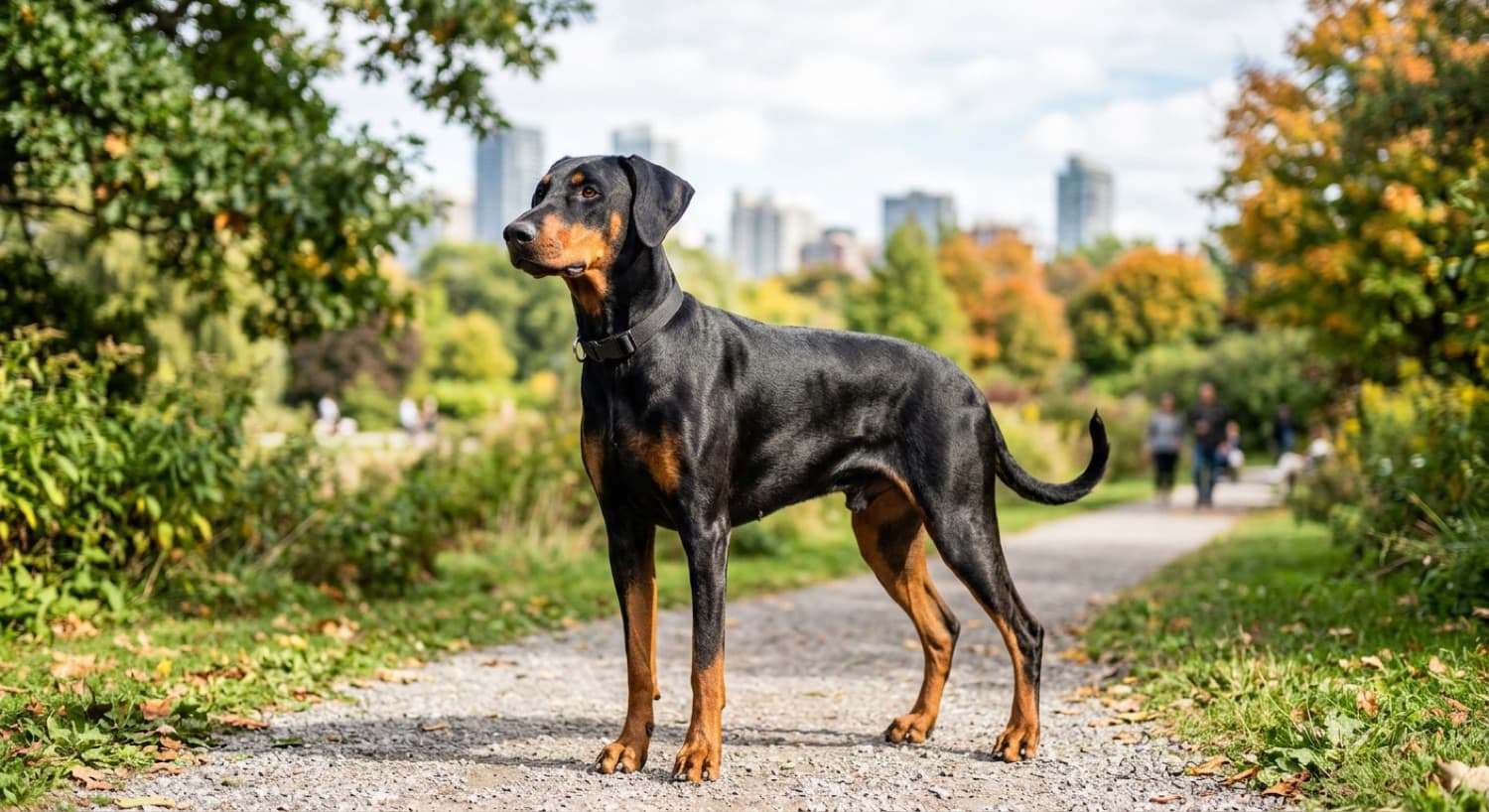
The short answer
Dobermans and Doberman mixes come through Toronto rescue, with fees $150 to $700, though purebreds are less common and often go through breed-specific rescue, so patience helps. They are fully legal in Ontario (only pit-bull-type dogs are restricted), and they are loyal, people-oriented guardians, not the vicious stereotype. What they need is serious daily exercise, training, and companionship. An adult is usually the easier and more available adoption. Browse adoptable Toronto dogs to start watching.
The velcro guardian, not the stereotype
Few breeds carry as much outdated reputation as the Doberman. The reality is that a stable, well-bred, well-socialised Doberman is a loyal, intelligent, people-oriented companion that bonds so intensely to its family it has earned the nickname “velcro dobe.” This is a dog that wants to be with you, following you room to room, not a menacing yard guard. It is naturally alert and discerning about strangers, but affection and devotion to its own people define the breed far more than any edge. The problems people associate with Dobermans come from poor breeding, missing socialisation, and irresponsible ownership, not from the dog's nature. That is exactly why adopting through a foster-based rescue that knows the individual dog is such an advantage: you get a realistic read on temperament rather than a guess.
Legal in Ontario: the facts
An important distinction, because people ask: Dobermans are not banned in Ontario. The province's Dog Owners' Liability Act restricts only pit-bull-type dogs, and Dobermans are fully legal to own and adopt in Toronto and across the province. There is no law affecting the breed here at all. What can affect you are private restrictions, not legislation: some Toronto condo corporations and landlords restrict large or guardian breeds in their rules or leases, and some home and tenant insurance policies exclude or surcharge certain breeds. None of that is a ban, but it can shape where you live and what you pay, so confirm your building's pet policy and your insurance before you commit. We go deeper into the housing and insurance angle in the Doberman temperament and training guide.
Exercise, training, and companionship: the real needs
Here is the part that decides whether a Doberman is right for your home. This is an athletic, high-energy working breed that needs substantial daily exercise, real mental work, consistent training, and genuine companionship. A Doberman left alone in a yard or under-exercised in a condo becomes anxious and destructive fast, because they are built to work alongside people. Off-leash running, structured training, scent games, and long active outings all suit them, and Toronto has good options; our off-leash parks guide is a useful starting point once your dog has reliable recall. Force-free, reward-based training fits the breed far better than heavy-handed methods, and their intelligence makes training rewarding rather than a battle. European working lines tend to run a little more intense and higher-drive than American show lines, but the individual dog matters more than the line, so lean on the foster's assessment of the actual dog.
Why Dobermans end up in rescue, and where to look
Usually not because anything is wrong with the dog. The common drivers are owners underestimating the exercise, training, and companionship the breed demands; the housing and insurance reality catching people out; and the vet-cost side of a breed with a serious cardiac risk (we cover that fully in the Doberman health guide). Adopting an adult is the upside here: the temperament and any early health signs are already known rather than a gamble. To look, start with the City of Toronto Animal Services and the Toronto Humane Society, then watch foster-based rescues like Save Our Scruff, TEAM Dog Rescue, Fetch + Releash, Redemption Paws, and Hopeful Tails, plus any breed-specific Doberman rescue. Adoption fees run the usual Toronto ranges ($150 to $700, spay/neuter and shots included), a fraction of a breeder Doberman; our cost guide has the full budget and the adoption guide walks through the process. For the full breed profile see our Doberman breed page. And once your dog is home, our first week guide helps a bonded, sensitive breed settle in.
Browse adoptable Dobermans in Toronto
Dobermans and Doberman mixes from Toronto shelters and rescues, with foster notes on temperament, drive, training, and how each dog does with people and other pets. Refreshed regularly.
See Available Dobermans →Frequently Asked Questions
Can you adopt a Doberman in Toronto?
Yes, though it takes some patience. Purebred Dobermans are less common in general Toronto rescue than many breeds, and a lot of them move through breed-specific Doberman rescue networks rather than municipal shelters. Doberman mixes show up in general rescue more often. To find one, watch the City of Toronto Animal Services, the Toronto Humane Society, foster-based rescues like Save Our Scruff, TEAM Dog Rescue, Fetch + Releash, Redemption Paws, and Hopeful Tails, and any breed-specific Doberman rescue. LocalPetFinder aggregates adoptable Toronto Dobermans and Doberman mixes in one place, refreshed regularly, so you can watch for one without checking a dozen sites. Being open to a mix or to an adult widens your options considerably.
Are Dobermans banned in Ontario?
No. Dobermans are fully legal to own and adopt in Toronto and across Ontario. The provincial Dog Owners' Liability Act restricts only "pit bull" type dogs, not Dobermans, so there is no law affecting the breed here. What can come up is private restrictions rather than legislation: some condo boards, landlords, and home or tenant insurance policies have their own rules about large or guardian breeds. That is a housing and insurance matter, not a legal ban, but it is worth checking your building and your policy before you commit. A rescue will usually ask about your housing as part of matching.
Are Dobermans good family dogs?
With the right owner, yes. A well-bred, well-socialised Doberman is typically stable, affectionate, and deeply bonded to its people, and many are wonderful with the children they are raised alongside. This is a people-oriented breed that wants to be part of the family, not left alone in a yard. The key words are socialisation and training: Dobermans are large, powerful, intelligent guardians that need early, consistent, positive training and steady exposure to people and situations. They suit active owners who will commit to that engagement, and they are usually not the right pick for someone wanting a low-effort, low-involvement dog.
Are Dobermans aggressive?
The stereotype is unfair and largely outdated. A stable, well-socialised, well-trained Doberman is not a vicious dog; it is a confident, discerning guardian that is devoted to its family and naturally alert to its surroundings. The problems people associate with the breed come from poor breeding, missing socialisation, and irresponsible ownership, not from the dog's nature. Because Dobermans are strong and protective by instinct, responsible ownership genuinely matters more than it does with a small breed, which is exactly why a reputable rescue assesses temperament and places each dog carefully. Adopt a dog whose foster knows its behaviour, and you get a realistic picture rather than a guess.
Do Dobermans need a lot of exercise?
Yes, a great deal, plus mental work. Dobermans are athletic, high-energy working dogs that need substantial daily physical exercise combined with training, problem-solving, and real companionship. A bored, under-exercised Doberman with that intelligence and drive becomes destructive and anxious, and they genuinely do poorly isolated for long stretches. The upside is that they are eager, trainable, and love working with their people, so the exercise and training become a bond rather than a chore. If your life cannot reliably provide daily vigorous activity and daily engagement, this is not the right breed to adopt.
What is the difference between European and American Doberman lines?
Both are the same breed, with some differences in build and drive. European (working-line) Dobermans tend to be a little heavier-boned, more intense, and higher in working drive, bred with protection and sport work in mind. American (show-line) Dobermans are often somewhat sleeker and are frequently described as a touch more mellow, though individual temperament varies far more than the label. For an adopter, the line matters less than the individual dog in front of you: a foster home or rescue assessment of the actual dog's energy, drive, and temperament tells you what you need to know better than any line generalisation.
How much does it cost to adopt a Doberman in Toronto?
Adoption fees follow the usual Toronto ranges: commonly $150 to $350 at the City of Toronto Animal Services and $200 to $700 at foster-based rescues, almost always including spay or neuter, vaccines, and a microchip. That is a small fraction of a breeder Doberman, which runs well into the thousands. The number to plan for with this breed is not the adoption fee but the ongoing cost of a large, active dog, including a cardiac risk that makes vet care and pet insurance worth budgeting for. Our Toronto adoption cost guide breaks down the full first-year budget, and the Doberman health guide covers the medical picture in detail.
Should I adopt a Doberman puppy or an adult?
For most Toronto homes an adult is both the better and the more available choice. Doberman puppies are scarce in rescue and demand enormous time for housebreaking, socialisation, and training through a long, high-energy adolescence. An adult rescue Doberman comes with a known temperament and any early health signs already visible, which matters a lot for a breed with a serious cardiac risk. A foster can tell you how the dog does with children, other pets, strangers, and being handled. Adopting an adult also means you skip the demanding puppy stage and give a grown dog, often surrendered through no fault of its own, a stable home.
Doberman Temperament and Training
An affectionate, loyal, trainable protector: socialisation, reward-based training, exercise and company.
Doberman Health Issues: DCM, vWD, Wobbler
Doberman health issues to plan for: dilated cardiomyopathy and yearly heart screening, von Willebrand bleeding disorder, wobbler syndrome, bloat, bone cancer and coat loss.
Best Dog Rescues in Toronto
The foster-based rescues worth watching for a Doberman.
Toronto Adoption Costs
The full first-year budget for a large, active dog.
New dog? Start with these care guides
Everything a new adopter needs to set up a safe, happy home.