The short answer
Bloat (GDV) is when a dog's stomach fills with gas and twists, and it is a drop-everything, life-threatening emergency. Great Danes have the highest risk of any breed. Know the signs, unproductive retching, a hard or swollen belly, drooling, restlessness, and if you see them, go to an emergency vet immediately. You can lower risk with smaller meals, slowing fast eaters, and avoiding hard exercise around meals, and a preventive gastropexy can stop the deadly twist. This is general information, not veterinary advice; when in doubt, call your vet or go.
What bloat is, and why Danes are highest-risk
Bloat, medically gastric dilatation-volvulus (GDV), happens when the stomach fills with gas and fluid (dilatation) and then rotates on itself (volvulus). The twist seals the gas in, cuts off blood flow to the stomach and spleen, and drives the dog rapidly into shock. The Merck Veterinary Manual identifies a deep, narrow chest as a proven risk factor, which describes the Great Dane precisely: of all breeds, the Dane carries the highest lifetime bloat risk. That is not a reason to fear the breed, but it is the reason this one topic gets its own guide. Every Dane owner needs to treat bloat the way a lifeguard treats drowning: know the signs instantly, and have the response ready before it ever happens.
The warning signs to know on sight
Learn these now, not in the moment. The signs of bloat in a Great Dane include:
- Unproductive retching: trying to vomit but bringing up nothing, or only foam or saliva. This is the most classic early sign.
- A swollen, hard, or distended belly: the abdomen may look visibly enlarged or feel tight like a drum, though in a deep-chested Dane it is not always obvious early.
- Heavy drooling and repeated swallowing.
- Restlessness and pacing: the dog cannot get comfortable, keeps standing up and lying down, and looks anxious or in pain.
- A hunched or “praying” posture, front end down, and obvious discomfort.
- Late signs: pale gums, rapid or laboured breathing, weakness, and collapse. By this stage the dog is critical.
Not every case looks like the textbook, and a Dane's deep chest can hide the swelling early. If your dog is suddenly distressed and retching without producing anything, do not wait for certainty. Act on suspicion.
What to do in the moment
Go to an emergency vet immediately. Do not wait to see if it passes, do not attempt home remedies, and do not wait for morning. Call the nearest 24-hour emergency hospital as you leave so they can prepare for your arrival, and drive. Bloat is one of the few emergencies where the clock genuinely determines survival, and treatment, decompressing the stomach and, in a confirmed GDV, surgery to untwist and tack it, has to happen fast. This is why the single most useful thing you can do as a Dane owner is set up your plan in advance: know your nearest 24-hour Toronto emergency hospital and route, and keep the number in your phone. An unnecessary trip costs you an evening; a missed one costs your dog.
Lowering the risk: feeding and habits
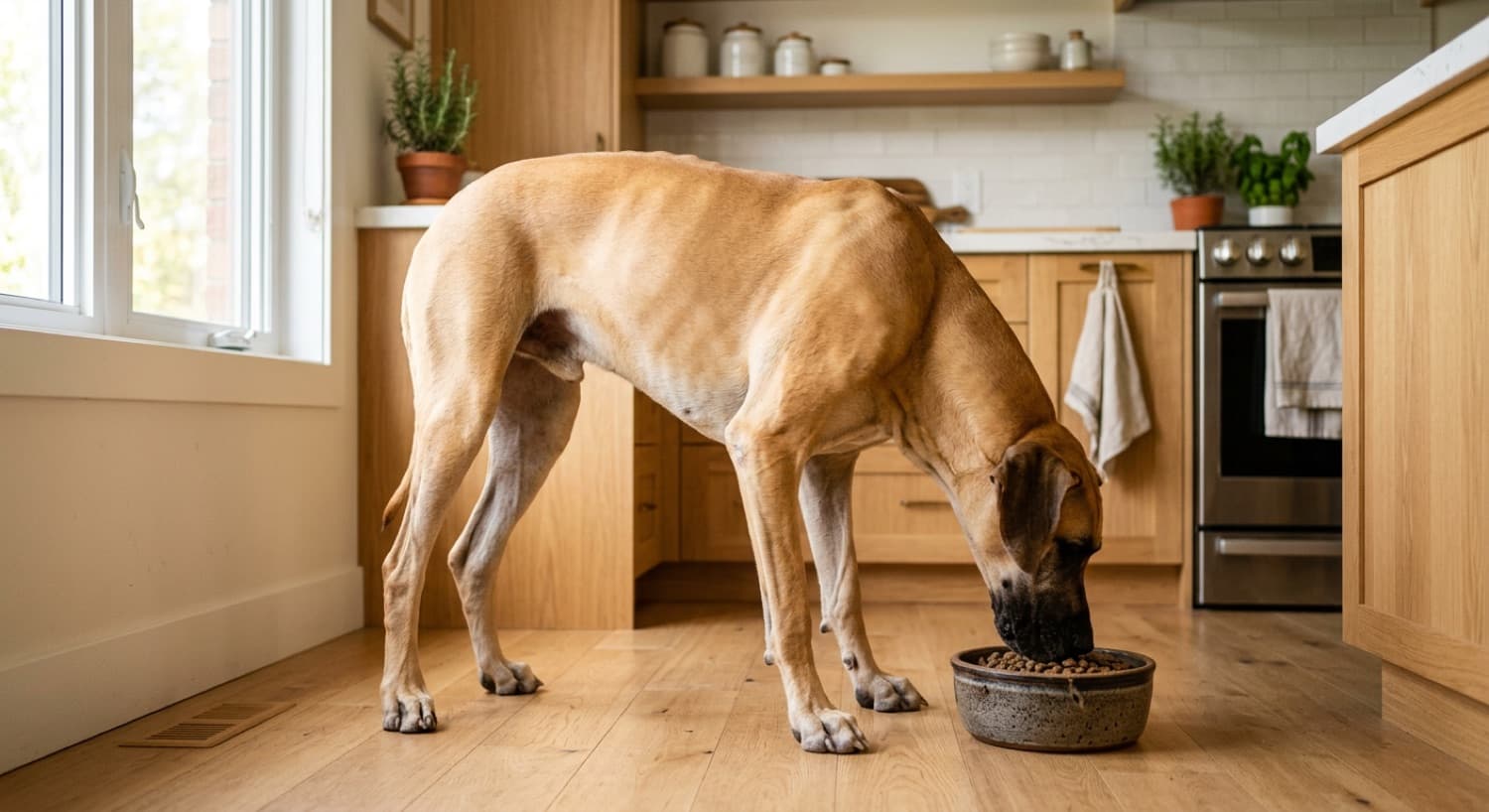
You cannot make the risk zero, but sensible habits help. Commonly recommended steps are feeding two or three smaller meals a day rather than one large one, using a slow-feeder bowl or another method to stop a fast eater from gulping, and avoiding vigorous exercise right before and after meals. One myth is worth correcting directly: raised food bowls were once recommended for giant breeds, but research has actually linked elevated feeders with a higher risk of bloat in large and giant dogs, not a lower one, so a raised bowl is not a prevention tool. If your Dane uses one for a medical reason, discuss it with your vet. For bloat risk specifically, focus on meal frequency, slowing the eater, and exercise timing.
Preventive gastropexy: the strongest single step
The most protective thing you can do is a preventive (prophylactic) gastropexy, a surgery that tacks the stomach to the abdominal wall so it physically cannot rotate. It does not stop the stomach from filling with gas, but it prevents the volvulus, the twist that turns bloat from serious into fatal, and so converts the deadliest form of the emergency into a far more survivable one. Because Great Danes are the single highest-risk breed, many owners and vets choose to have it done, often at the same time as spay or neuter to avoid a second anesthesia. The AKC Canine Health Foundation has funded extensive research into bloat and its risk factors. Whether a gastropexy is right for your dog, and when, is a conversation to have with your veterinarian. For the wider health picture, see our Great Dane health guide.
Browse adoptable Great Danes in Toronto
Going in prepared, knowing the bloat signs and having a plan, is the best gift you can give a rescue Dane. Meet the adoptable Great Danes and Dane mixes near you.
See Available Great Danes →Frequently Asked Questions
What is bloat (GDV) in a Great Dane?
Bloat, or gastric dilatation-volvulus (GDV), is a condition where the stomach fills with gas and fluid and then rotates on itself. The twist traps the gas, cuts off blood supply to the stomach and spleen, and sends the dog into shock. It is a true life-threatening emergency: without rapid veterinary treatment, often surgery, a dog can die within hours. Great Danes have the highest bloat risk of any breed because of their large, deep, narrow chest, which is why every Dane owner needs to know the signs cold and have an emergency plan ready.
What are the warning signs of bloat in a Great Dane?
The classic signs are unproductive retching (trying to vomit but bringing nothing up, or only foam), a swollen, hard, or distended belly, heavy drooling, restlessness and pacing, an inability to get comfortable, and signs of pain or a hunched posture. As it progresses the dog may show pale gums, rapid breathing, weakness, and collapse. Not every case looks textbook, so if your Dane seems suddenly distressed with a tight or enlarging abdomen and is retching without producing anything, treat it as bloat and get to an emergency vet immediately. Minutes matter.
What should I do if I think my Great Dane has bloat?
Go to an emergency vet right now. Do not wait to see if it passes, do not try home remedies, and do not wait for morning. Call the nearest 24-hour emergency hospital on the way so they can prepare, and drive. Bloat is one of the few situations where every minute genuinely changes the outcome. This is exactly why every Dane owner should know their nearest 24-hour Toronto emergency hospital and route before they ever need it, and keep the number saved in their phone. When in doubt, go: an unnecessary trip is far better than a missed one.
Can you prevent bloat in a Great Dane?
You cannot eliminate the risk, but you can lower it and, importantly, you can prevent the deadly twist. On habits: feeding two or three smaller meals a day instead of one large one, slowing down fast eaters, and avoiding hard exercise right around mealtimes are commonly recommended. The most protective single step is a preventive (prophylactic) gastropexy, a surgery that tacks the stomach to the body wall so it cannot rotate; many Dane owners have it done during spay or neuter. Gastropexy does not stop the stomach from bloating, but it prevents the life-threatening volvulus. Discuss it with your vet.
Do raised food bowls prevent bloat in Great Danes?
The evidence does not support that, and it may be the opposite. It was once common advice to feed giant breeds from raised bowls, but research has actually associated elevated feeders with a higher risk of bloat in large and giant breeds, not a lower one. So a raised bowl is not a bloat-prevention tool, and for some dogs it may add risk. If your Dane uses a raised bowl for comfort or a medical reason, that is a conversation for your vet. For bloat risk specifically, focus on meal frequency, slowing fast eaters, exercise timing, and preventive gastropexy instead.
What is a gastropexy and should my Great Dane have one?
A gastropexy is a surgical procedure that attaches the stomach to the abdominal wall so it physically cannot twist. It does not prevent the stomach from filling with gas, but it prevents the volvulus (the twist) that turns bloat deadly, which converts the most fatal version of the emergency into a far more survivable one. Because Great Danes are the highest-risk breed, many owners and vets choose a prophylactic gastropexy, often performed at the same time as spay or neuter to avoid a separate anesthesia. Whether it is right for your dog is a decision to make with your veterinarian.
How fast does bloat progress in a Great Dane?
Very fast. A dog can go from apparently normal to a life-threatening crisis in a matter of hours, sometimes less, which is why bloat is treated as a drop-everything emergency. The speed is exactly why prevention habits, an emergency plan, and knowing the signs matter so much for a Dane: there is no time to research it in the moment. If you own or are adopting a Great Dane, learn the warning signs now, save your nearest emergency hospital in your phone now, and talk to your vet about gastropexy before you ever face the real thing.
Great Dane Health Issues
Heart disease, wobbler, hips, cancer, and the short lifespan.
Great Dane Adoption in Toronto
Where to adopt, the gentle-giant reality, and the costs.
New dog? Start with these care guides
Everything a new adopter needs to set up a safe, happy home.