The short answer
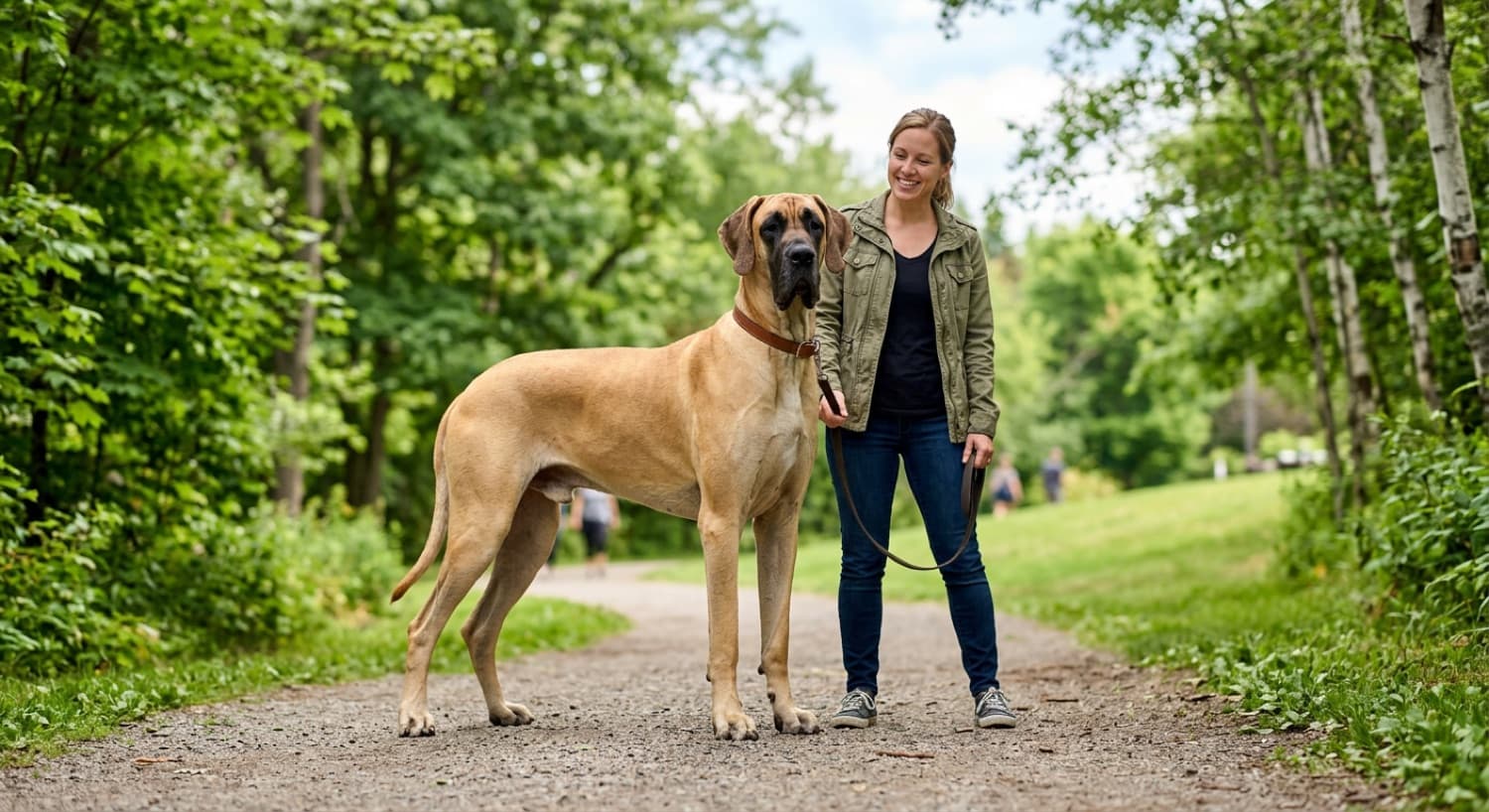
Great Danes and Dane mixes come through Toronto rescue, usually as young adults, with fees $150 to $700. They are legal in Ontario and are genuinely gentle, mellow family dogs, less exercise-hungry than most big breeds. The two things to sit with first: they are one of the shortest-lived breeds (commonly seven to ten years), and giant size makes everything, from food to vet care, expensive. With the space and budget, a rescue Dane is a wonderful companion. Browse adoptable Toronto dogs to start looking.
The genuine gentle giant
Great Danes earn the gentle-giant reputation honestly. Despite standing tall enough to rest their chin on a kitchen counter, most Danes are calm, affectionate, and deeply people-oriented, the kind of dog that thinks it is a lap dog and will try to prove it. The Canadian Kennel Club breed profile describes a friendly, dependable temperament, and that matches what rescues see: Danes bond hard, want to be near their people, and are usually mellow and easygoing indoors. They are not a high-energy working breed and they are not a guard dog by nature. What they are is big, loving, and a little clumsy, which is a wonderful combination in the right home and a genuine logistics puzzle in the wrong one. Adopting through a foster-based rescue that knows the individual dog is the best way to find one that fits your space and household.
The short-lifespan reality
The hardest truth about the breed belongs up front. Great Danes are one of the shortest-lived dogs, commonly living only about seven to ten years. Giant size ages the body quickly and stacks the risk of heart disease, bone cancer, and bloat, and many Dane families describe the breed as an intense, wonderful, heartbreakingly short chapter of their lives. This is not a reason to avoid the breed, plenty of people would not trade those years for anything, but it is a reason to go in with clear eyes. Adopting a Dane means signing up for a shorter arc than most dogs, and the surrenders that reach rescue are often adults whose owners hit a wall of cost or space rather than of love. Our Great Dane health guide covers what shapes that lifespan and how to protect it.
Space, cost, and city living
A Dane needs less exercise than most big dogs but far more room. Adult Danes are famously mellow and are usually content with a couple of good daily walks, but they need physical space to lie down, turn around, and move without knocking things over, and slippery floors and endless stairs are hard on giant-breed joints. City living is workable, a lot of Danes do fine in a house or a large condo, but confirm your building allows a giant breed first, since some condo boards and landlords set weight limits (our apartment dog guide is worth a read). Then there is cost: a giant breed eats a lot, needs large-breed doses of every medication, and turns any serious health event into a four-figure bill. Budget honestly and consider pet insurance before you adopt.
Health, bloat, and adoption costs
On health, Great Danes are associated with dilated cardiomyopathy (a heart-muscle disease), hip dysplasia, wobbler syndrome (a neck and spinal-cord condition), bone cancer, and, above all, bloat (gastric torsion), for which the Dane is the single highest-risk breed. Bloat is a life-threatening emergency every Dane owner must be able to recognize on sight, so please read our Great Dane bloat and GDV guide before adopting. A rescue Dane will have had a vet check; discuss the full profile with your vet and see the breed page. Adoption fees run the usual Toronto ranges ($150 to $700, spay or neuter and shots included); our cost guide has the full first-year budget for a giant breed.
Browse adoptable Great Danes in Toronto
Great Danes and Dane mixes from Toronto shelters and rescues, with foster notes on temperament, house manners, and how each dog does with kids, stairs, and other pets.
See Available Great Danes →Frequently Asked Questions
Where can I adopt a Great Dane in Toronto?
Purebred Great Danes are not common in rescue, but Danes and Dane mixes do turn up, often surrendered when an owner underestimated the size or the cost. Check the City of Toronto Animal Services, the Toronto Humane Society, and foster-based rescues like Save Our Scruff, TEAM Dog Rescue, Fetch + Releash, Redemption Paws, and Hopeful Tails. LocalPetFinder aggregates adoptable Toronto dogs in one place so you can watch several sources at once. For a giant breed, the foster notes on a rescue Dane (how it does with space, stairs, kids, and other pets) are genuinely useful.
Are Great Danes good family dogs?
Yes, they are one of the classic gentle giants. Well-raised Great Danes are typically affectionate, patient, people-oriented, and remarkably mellow indoors for their size, and many are wonderful with children they are raised alongside. The catch is purely physical: this is a dog that can knock over a toddler by accident with a happy tail, so supervision and basic manners matter. Danes bond hard to their families and do not do well left alone for long stretches. For a household with the space, budget, and time, they make a lovely family companion.
How long do Great Danes live?
This is the hard part of loving the breed. Great Danes are one of the shortest-lived dogs, commonly living only about seven to ten years, because giant size ages the body faster and raises the risk of heart disease, bone cancer, and bloat. Many Dane owners describe the breed as a heartbreakingly short but intense chapter. Going in with eyes open, good weight management, early screening, and prompt care give a Dane its best shot at the longer end of that range, but the short lifespan is a real part of the commitment.
Why do Great Danes end up in rescue?
Almost always because someone underestimated the practicalities. A Dane puppy is charming, then it becomes a 130-plus-pound dog that eats a giant-breed budget, needs space, struggles on slippery condo floors, and racks up large vet bills, and a well-meaning owner is overwhelmed. Life changes (a move to a smaller place, a landlord issue, a health cost) tip many Danes into rescue as young adults. The upside is that the ones who reach a good rescue are usually house-trained, mellow, and simply in the wrong situation, and they come with honest foster notes.
How much does it cost to adopt and keep a Great Dane?
Adoption fees run the usual Toronto ranges: roughly $150 to $350 at municipal animal services and $200 to $700 at rescues, with spay or neuter, vaccines, and a vet check included. A Dane puppy from a health-testing breeder runs more like $1,500 to $3,500. But the real number is the ongoing cost: a giant breed eats a lot, needs large-breed doses of everything from flea prevention to anesthesia, and any serious health event (bloat surgery, cardiac care) runs into the thousands. Budget for giant-breed living and strongly consider pet insurance.
Are Great Danes legal to own in Toronto?
Yes. Great Danes are not a restricted breed in Ontario. The provincial Dog Owners' Liability Act restricts only pit-bull-type dogs, so Danes are fully legal to own and adopt in Toronto and across Ontario. What can come up is practical rather than legal: some condo boards and landlords have size or weight limits on dogs, so if you rent or live in a condo, confirm your building allows a giant breed before you commit. A rescue will usually ask about your housing as part of matching.
Do Great Danes need a lot of exercise and space?
Less exercise than you might expect, but more space. Adult Danes are famously mellow and are often happy with a couple of good daily walks and room to stretch out, they are not high-endurance athletes. What they do need is physical room: a big dog needs somewhere to lie down, turn around, and not knock things over, and slippery floors and lots of stairs are hard on giant-breed joints. Growing Dane puppies also need careful, low-impact exercise to protect developing joints. Space and joint-safe movement matter more than raw exercise volume.
Great Dane Health Issues: Bloat, Heart, Bones
Great Dane health issues to plan for: bloat, dilated cardiomyopathy, wobbler syndrome in young Danes, bone cancer, giant-breed growth and kneecaps.
Great Dane Bloat (GDV): Signs and Prevention
Bloat (GDV) in Great Danes: why the breed is at the top of the risk list, the signs to recognise in seconds, what to do, and how a preventive gastropexy helps.
New dog? Start with these care guides
Everything a new adopter needs to set up a safe, happy home.