The short answer
Greyhounds mostly come through breed-specific sighthound rescues (often retired racers), with fees $150 to $700 that usually include a lot of vet work. They are gentle, quiet, low-energy couch dogs despite their speed, and easy to live with, with two firm rules: keep them leashed or fenced (the chase instinct overrides recall) and keep them warm in a Toronto winter (thin coat, little body fat). Ask any rescue about cat and small-dog compatibility. Browse adoptable Toronto dogs and set alerts.
The 45-mph couch potato
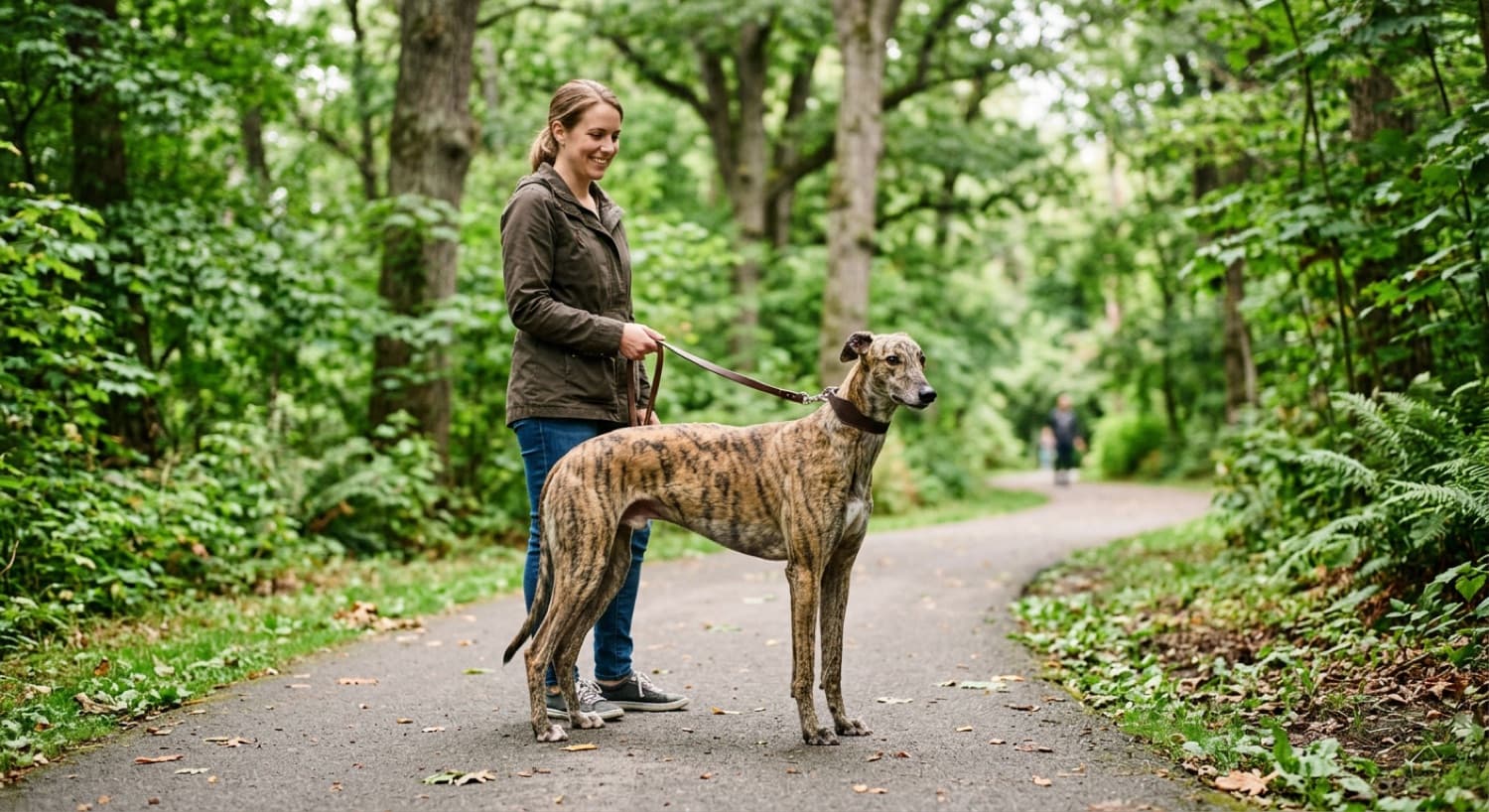
The best-kept secret about Greyhounds is how lazy they are at home. The breed can hit around 45 miles per hour (72 km/h), making it the fastest dog on earth, and yet a typical Greyhound sprints for a minute and then sleeps for most of the day, sixteen to eighteen hours is normal. Indoors they are quiet, gentle, and remarkably undemanding, content to be a warm, elegant presence draped across a soft bed. The Canadian Kennel Club breed profile describes the gentle, affectionate temperament that adopters consistently fall for. This combination, athletic but low-maintenance, calm but affectionate, makes the Greyhound one of the easiest large dogs to fit into city life, provided you respect the two things it genuinely needs. Adopting through a rescue that knows the dog is the best way to find the right match.
The two rules: leashes and warmth
Two facts define responsible Greyhound ownership. The first is the sighthound rule: a Greyhound must stay on a leash or in a fully fenced space, always. Bred over centuries to chase fast-moving animals by sight, a Greyhound will take off after a squirrel, a small dog, or a blowing bag faster than any owner can react, and recall is genuinely unreliable once the chase instinct fires. This is not a training failure; it is the breed. Our off-leash and recall guide covers how to give a Greyhound safe exercise in the city. The second rule is warmth: with a thin coat and very little body fat, a Greyhound feels cold sharply, so a proper winter coat is essential for Toronto walks, and a warm, padded bed indoors is a must. Plan for both and the rest of ownership is easy.
Cats, small dogs, and knowing your dog
The most important compatibility question for the breed is prey drive. Because Greyhounds were bred to chase, individuals vary enormously: some have a strong prey drive that makes them unsafe with cats and small dogs, while others are gentle and live peacefully alongside them. You cannot tell by looking, which is exactly why adopting through a rescue that cat-tests and small-dog-tests its dogs is so valuable, a good rescue will tell you honestly whether a specific Greyhound is cat-safe and how it does with small animals. If you have a cat or a small dog, make this your first question, and follow the rescue's guidance on slow, managed introductions. Retired racers also often need a short adjustment period to learn ordinary house things, stairs, glass doors, and simply being a pet, which a good rescue prepares you for.
Health, cost, and getting started
Greyhounds are legal in Ontario with no breed restrictions. On health, the breed carries an elevated lifetime risk of bone cancer (osteosarcoma) and, as a deep-chested dog, a risk of bloat, and it has breed-specific traits like dental needs, thin tear-prone skin, and a low body fat that means vets use Greyhound-specific anesthesia; our Greyhound health guide and the breed page cover it. Adoption fees run the usual Toronto ranges ($150 to $700, often with substantial vet work included), and ongoing costs are moderate for a large dog, budget for a winter coat, dental care, and pet insurance. Our cost guide has the full budget.
Browse adoptable Greyhounds in Toronto
Greyhounds and retired racers from Toronto-area rescues, with notes on temperament and cat and small-dog compatibility, the details that matter most for a sighthound.
See Available Greyhounds →Frequently Asked Questions
Where can I adopt a Greyhound in Toronto?
Greyhounds are less common in general shelters than many breeds, and most adoptable Greyhounds come through breed-specific sighthound and Greyhound rescues, often retired racers being placed as pets. It is still worth watching the City of Toronto Animal Services, the Toronto Humane Society, and foster-based rescues like Save Our Scruff, TEAM Dog Rescue, Fetch + Releash, Redemption Paws, and Hopeful Tails, and LocalPetFinder aggregates adoptable Toronto dogs in one place. For a sighthound, the foster or rescue assessment (how the dog does with cats, small dogs, stairs, and being alone) is especially valuable, so lean on rescues that know the individual dog.
Are Greyhounds good pets and family dogs?
They are, and they surprise people. Despite being the fastest dog breed, a Greyhound is famously a gentle, quiet, low-energy housemate, often called a 45-mph couch potato because it sprints in short bursts and then sleeps much of the day, commonly sixteen to eighteen hours. They tend to be calm, affectionate, undemanding, and good with people, and many are wonderful family dogs. The main caveats are their strong prey drive (which affects life with cats and small dogs), their need to stay leashed or fenced, and their sensitivity to cold. For a household that can meet those, a Greyhound is one of the easiest large dogs to live with.
Do Greyhounds need a lot of exercise?
Far less than their athletic build suggests. A Greyhound is a sprinter, not an endurance dog, and is usually content with a couple of daily leashed walks plus the occasional chance to run in a safely fenced space. Most of the day they are happy to sleep. What they cannot do is run loose in unfenced areas, because a sighthound will chase moving things faster than you can react and recall is unreliable when the chase instinct kicks in. So the exercise a Greyhound needs is modest, but it must be structured around leashes and fences. Our off-leash and recall guide covers exactly how to give a Greyhound safe exercise in Toronto.
Do Greyhounds get along with cats and small dogs?
It depends entirely on the individual dog, and it is the single most important compatibility question for the breed. Greyhounds were bred to chase small, fast-moving animals, so some have a high prey drive that makes them unsafe with cats and small dogs, while others are gentle and can live happily alongside them. This is exactly why adopting through a rescue that cat-tests and small-dog-tests its dogs matters so much: a good rescue will tell you honestly whether a particular Greyhound is cat-safe. Never assume; always ask, and follow the rescue's guidance on introductions and management.
How do Greyhounds handle Toronto winters?
They need help. A Greyhound has a very thin coat and little body fat, so it feels cold acutely and is not built for a Toronto winter unprotected. A warm coat for walks is essential, not optional, in cold weather, walks may need to be shorter on the coldest days, and booties help on salted, icy sidewalks. Indoors they seek out warm, soft spots and appreciate a well-padded bed off the cold floor. None of this is difficult, it just means a Greyhound owner plans for the cold the way the dog cannot. In summer, their lean build handles moderate heat reasonably but they still need shade and water.
What health issues should I know about before adopting a Greyhound?
A few are worth understanding. Greyhounds carry an elevated lifetime risk of bone cancer (osteosarcoma), and as a deep-chested breed they are at risk of bloat (gastric torsion), a life-threatening emergency. They also have breed-specific quirks: dental care needs attention, their thin skin tears easily, and their low body fat means vets use Greyhound-specific anesthesia protocols. None of this should deter you, retired racers are generally healthy, screened dogs, but it is worth knowing. Read our Greyhound health guide before adopting, and see the breed page for detail.
How much does it cost to adopt a Greyhound?
Adoption fees run the usual Toronto ranges: roughly $150 to $350 at municipal animal services and $200 to $700 at breed-specific and general rescues, typically with spay or neuter, vaccines, dental work, and a vet check included, retired-racer adoptions often bundle a fair amount of veterinary care into the fee. Ongoing costs are moderate for a large dog: Greyhounds are not big eaters for their size and are generally low-maintenance, though you should budget for a winter coat, dental care, and pet insurance given the bone-cancer and bloat risks. Our Toronto cost guide has the full first-year picture.
Greyhound Off-Leash Safety and Recall
Why sighthounds chase, safe fenced running, martingale collars and harnesses, and recall training.
Greyhound Health Issues: Bone Cancer, Bloodwork
Greyhound health issues to plan for: bone cancer, bloodwork that reads differently from other dogs, anaesthesia and cold, teeth, glaucoma and bloat.
New dog? Start with these care guides
Everything a new adopter needs to set up a safe, happy home.