The short answer
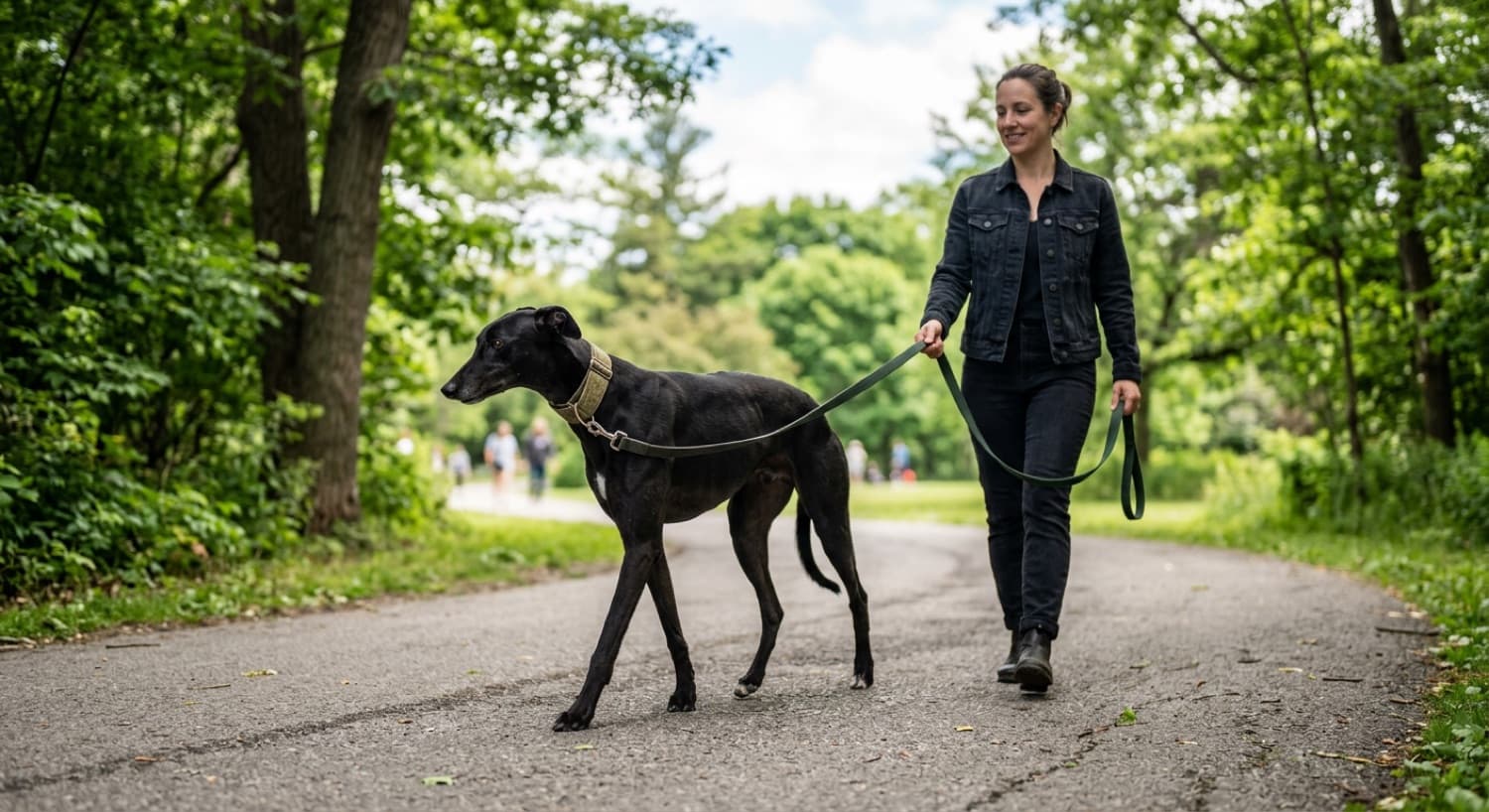
A Greyhound should only ever be off-leash inside a fully fenced, secure space. The breed's sighthound chase instinct fires faster than you can react and overrides recall, and at up to 45 mph a triggered Greyhound can be into a road before you move. This is breed instinct, not a training gap. Exercise a Greyhound with leashed walks plus running in fenced areas, use a martingale collar (their narrow heads slip flat collars), and manage prey drive around cats and small dogs. Get the fence and the collar right and the breed is easy and safe.
The one rule: fenced or leashed, always
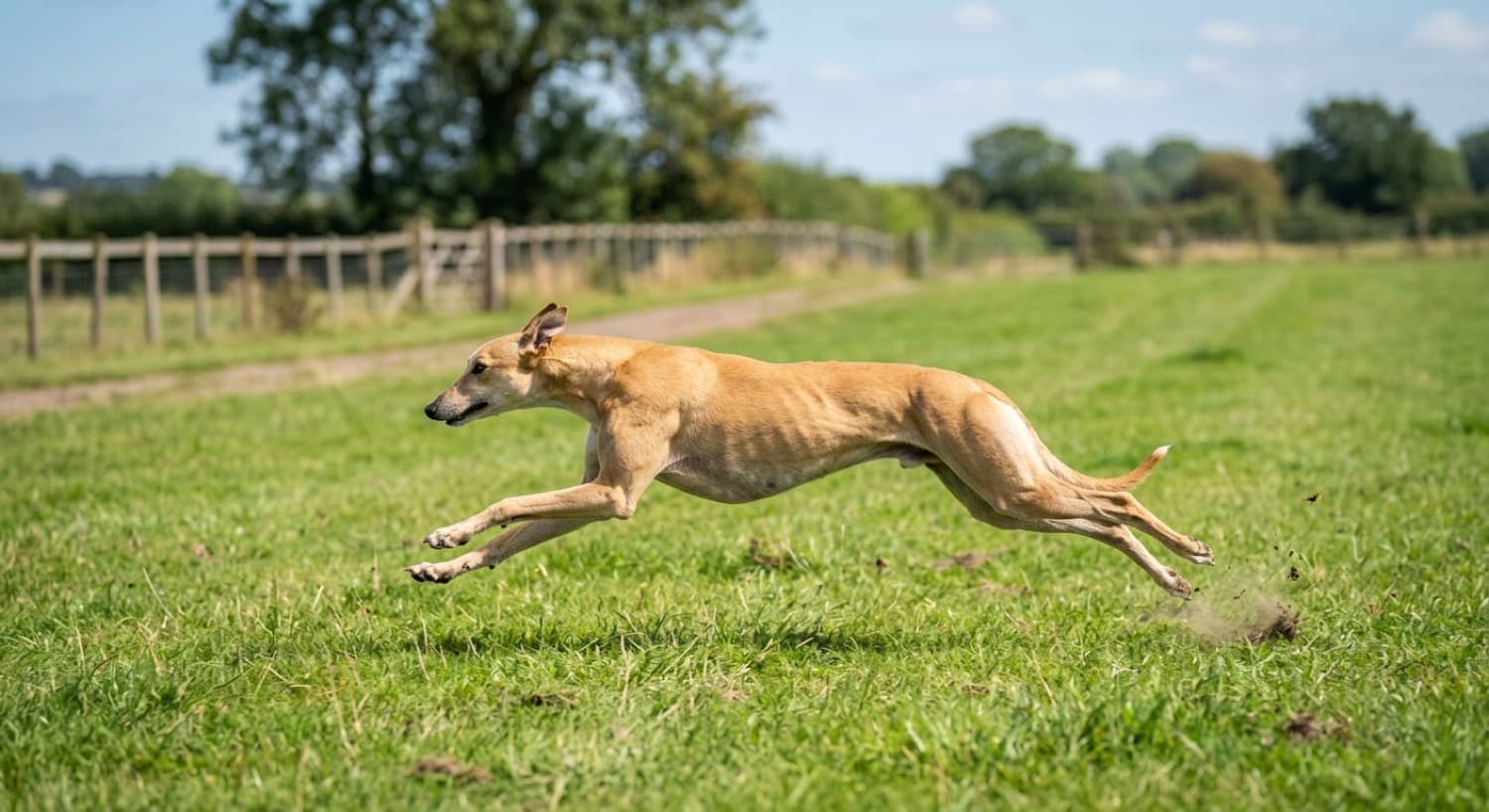
Everything about safely owning a Greyhound flows from a single rule: off-leash only inside a fully fenced, secure space, and leashed everywhere else. It sounds strict, and it is, because the stakes are real. A Greyhound is the fastest dog breed, capable of roughly 45 miles per hour, and it was bred to chase moving things by sight without waiting for a human's cue. Put those together and you get a dog that can spot a squirrel across a park and be gone, into traffic or out of sight, in the time it takes you to inhale. A fence removes that risk entirely; nothing else reliably does. This is why responsible Greyhound owners, and every reputable rescue, treat the fenced-or-leashed rule as non-negotiable, and why the rest of this guide is really about how to give a Greyhound a great, active life within it.
Why recall cannot be trusted with a sighthound
It is worth understanding why, because it changes how you train. Sighthounds evolved to hunt independently, spotting prey at a distance and running it down at speed, all without checking in with a person. That independence is baked into the Greyhound, so when a small animal breaks into view, the chase drive can override everything the dog knows, including a recall it performs perfectly in the backyard. You can, and should, train a solid everyday recall using calm, reward-based methods; the Fear Free approach to low-stress, positive training suits the sensitive Greyhound temperament well. But a trained recall is for ordinary, low-distraction moments, not for the instant a rabbit bolts. The safe working assumption is blunt: a triggered Greyhound will not come back until the chase is over, so never put it in a position where that matters.
How to exercise a Greyhound in the city
The good news is that a Greyhound needs less exercise than its build suggests, so working within the fenced-or-leashed rule is easy. Daily leashed walks cover most of the breed's modest needs, it is a sprinter, not a marathoner, and sleeps most of the day. For the running a Greyhound loves in short bursts, use a fully fenced space: a secure backyard, a properly fenced off-leash park (ideally at quieter times, minding small dogs and gates), or organised sighthound runs where they exist. Some experienced owners use a long training line in large, genuinely open and safe areas well away from roads and wildlife, but that takes real caution and is not a substitute for a fence. In Toronto specifically, let secure fencing, not the wording on a park sign, decide where your Greyhound runs free, an unfenced off-leash zone is not safe for a sighthound.
The gear: martingale collars and muzzles
Two pieces of equipment are genuine Greyhound safety gear. The first is a martingale collar, which tightens gently and only to a limited degree if the dog pulls or tries to back out. Greyhounds need it because their heads are narrower than their necks and they can slip straight out of an ordinary flat collar, precisely the escape that turns dangerous near a road, so rescues almost always send them home in a martingale. The second is the basket muzzle. Many Greyhounds are muzzle-trained from their racing days and are perfectly comfortable in one, and a muzzle is a normal, responsible tool, useful during cat and small-dog introductions, in group runs, and as a sensible precaution given the prey drive, not a sign of an aggressive dog. A basket muzzle still lets a dog pant, drink, and take treats. Good gear, correctly used, is much of what keeps a Greyhound safe.
Prey drive, cats, and small dogs
The same instinct that governs the leash rule also governs life with small animals. Some Greyhounds are gentle enough to live happily with cats and small dogs; others have a prey drive that makes it unsafe. Because you cannot tell by looking, adopting through a rescue that cat-tests and small-dog-tests its dogs is invaluable, they will tell you honestly whether a particular Greyhound is a candidate. If you bring home a Greyhound tested as cat-workable, follow the rescue's guidance: slow, managed introductions, a muzzle in the early meetings, close supervision, and no unsupervised time together until you are genuinely confident. This is management, not a gamble. Handled thoughtfully, a great many Greyhounds settle beautifully into homes with other pets, and the breed's gentle nature does the rest. For the wider picture, see our Greyhound adoption guide.
Browse adoptable Greyhounds in Toronto
Understanding the sighthound safety rule is the best preparation for giving a rescue Greyhound a safe, happy life. Meet the adoptable Greyhounds near you.
See Available Greyhounds →Frequently Asked Questions
Can Greyhounds be let off-leash?
Only inside a fully fenced, secure space, never in an open or unfenced area. This is the single firmest rule of Greyhound ownership. A Greyhound is a sighthound bred over centuries to chase fast-moving things by sight, and once that chase instinct fires, it will run at up to around 45 miles per hour and recall becomes unreliable. In an unfenced space, a squirrel, a small dog, or a blowing bag can send a Greyhound bolting into a road or out of sight before you can react. Inside a securely fenced field or yard, they can run safely and it is a joy to watch. Outside a fence, they stay leashed. No exceptions.
Why is Greyhound recall so unreliable?
It is not a training failure, it is the breed. Sighthounds hunt independently by sight, at distance and speed, without waiting for a human, and that instinct is hardwired. A Greyhound can be beautifully trained and still be unable to override the chase drive when a small animal breaks in front of it, because in that moment instinct outruns thought (and outruns you, at 45 mph). You can absolutely teach a Greyhound a solid recall for everyday, low-distraction situations, and you should, but you must never rely on it near roads, wildlife, or off-leash dogs. The safe assumption is that a triggered Greyhound will not come back until the chase ends.
How do I exercise a Greyhound safely in Toronto?
Structure it around leashes and fences. Daily leashed walks cover most of a Greyhound's modest exercise needs, since the breed is a sprinter, not an endurance dog, and sleeps most of the day. For running, use a fully fenced space: a secure backyard, a fenced dog park (ideally at quiet times or with sighthound-friendly groups), or organised sighthound runs where they exist. Some owners use a long training line in large, genuinely safe open areas, but only with real caution and never near roads or wildlife. The goal is simple, let a Greyhound sprint where a fence guarantees safety, and keep it leashed everywhere else.
What is a martingale collar and why do Greyhounds need one?
A martingale is a collar that tightens gently and to a limited degree when a dog pulls or tries to back out, and it is the standard collar for Greyhounds and other sighthounds. The reason is anatomy: a Greyhound's head is narrower than its neck, so it can slip straight out of an ordinary flat collar, exactly the kind of escape that turns dangerous near a road. A properly fitted martingale prevents that back-out without choking, which is why rescues almost always send Greyhounds home in one. For a breed where a single slip can be catastrophic, the right collar is genuine safety equipment, not an accessory.
Why do some Greyhounds wear muzzles, and does it mean they are aggressive?
No, a muzzle on a Greyhound almost never signals aggression. Many Greyhounds are muzzle-trained from their racing background and are completely comfortable in one, and muzzles are commonly used for good reasons: during introductions to cats or small dogs, in group runs with other Greyhounds, or simply as a sensible precaution given the breed's prey drive and thin skin. A basket muzzle lets a dog pant, drink, and take treats normally. Seeing a muzzled Greyhound in the community is a sign of a responsible owner managing prey drive thoughtfully, not a dangerous dog. If you adopt one, your rescue will advise when a muzzle is useful.
Can a Greyhound live safely with cats and small dogs?
Many can, but it depends entirely on the individual dog's prey drive, and it must be managed carefully. Some Greyhounds are gentle with cats and small dogs; others have a high prey drive that makes cohabitation unsafe. This is why adopting through a rescue that cat-tests and small-dog-tests its dogs matters so much, they can tell you honestly whether a given Greyhound is a candidate. If you bring a prey-driven-tested-safe Greyhound into a home with a cat or small dog, follow the rescue's guidance on slow introductions, use a muzzle during early meetings, supervise closely, and never leave them unsupervised together until you are genuinely confident. Management, not assumption, is the rule.
Are there off-leash dog parks in Toronto I can use with a Greyhound?
Yes, but choose carefully and prioritise secure fencing. Toronto has many designated off-leash areas, and the right ones for a Greyhound are those that are fully and securely fenced, since an unfenced or partially fenced off-leash zone is not safe for a sighthound. Even in a fenced park, be mindful of small dogs and of gates (Greyhounds can bolt through an opening), and consider quieter times. Some owners prefer private fenced-field rentals or organised sighthound meetups for worry-free running. The principle stays the same everywhere: a fence is what makes off-leash safe for this breed, so let the fence, not the rules on a sign, decide where your Greyhound runs free.
Greyhound Adoption in Toronto
Where to adopt, the couch-potato reality, and the costs.
Greyhound Health Issues
Bone cancer, bloat, dental, anesthesia, and cold care.
New dog? Start with these care guides
Everything a new adopter needs to set up a safe, happy home.