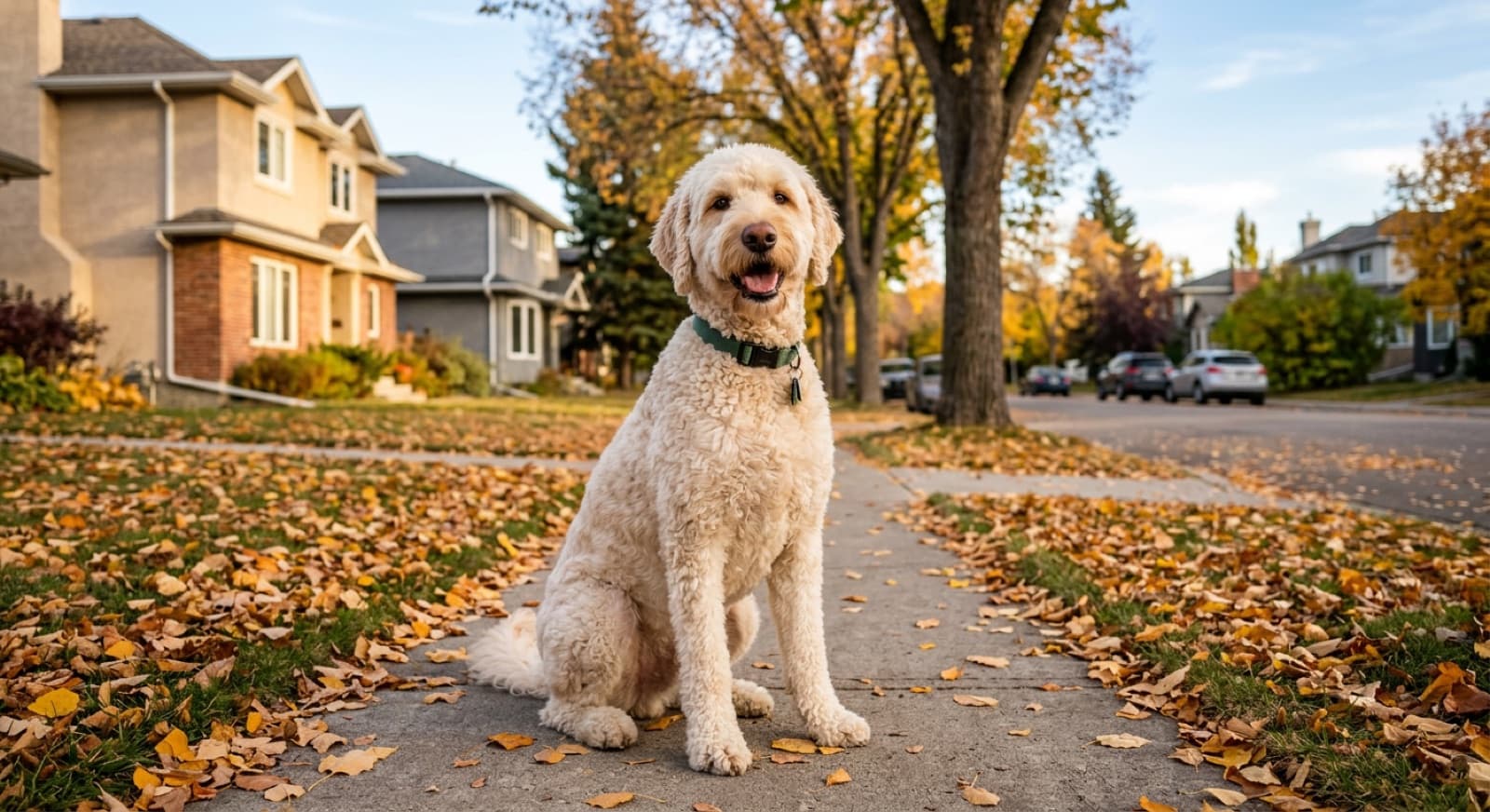
The short answer
Labradoodles come through Toronto rescue regularly, with fees $150 to $800 (versus $2,000 to $4,000-plus from a breeder, and adopting sidesteps the unregulated Doodle market). They are friendly, smart, family-friendly dogs, but the teddy-bear image hides two realities: most are moderate-to-high energy needing an hour-plus of daily exercise and enrichment, and they need regular, costly professional grooming. And they are not guaranteed low-shedding or hypoallergenic, coats vary hugely, so meet the actual dog. Adopting an adult lets you see the real coat and energy. Browse adoptable Toronto dogs.
The friendly, brainy crossbreed
The Labradoodle, a Labrador Retriever crossed with a Poodle, was originally bred aiming to combine the Lab's friendly, trainable nature with the Poodle's low-shedding coat and intelligence. At their best, they are exactly that: warm, sociable, clever, playful family dogs that are great with kids and other pets and a delight to train. But because they are a crossbreed rather than a standardized breed, individuals vary a lot in coat, size, and energy, which is the key thing to understand before adopting. Most share a moderate-to-high energy level and a people-oriented temperament that dislikes long stretches alone. For an active family ready to exercise, train, and groom the dog, the Labradoodle is a wonderful companion, just not the effortless dog the marketing suggests. Adopting an adult from a rescue lets you meet the actual dog rather than gamble on a puppy.
The coat and grooming reality
Two myths need correcting. First, Labradoodles are not guaranteed to be low-shedding or hypoallergenic, because they are a mix, coats range from a curlier low-shedding Poodle type to a shedding Lab type, and no dog is truly hypoallergenic. If low shedding matters for allergies, meet the specific dog and confirm the coat. Second, the coat is not low-maintenance: most Labradoodle coats need frequent at-home brushing plus professional grooming every four to eight weeks to prevent painful matting, a genuine, recurring cost that Doodle owners routinely underestimate. Our generations-and-coat guide explains the coat variation and grooming in depth, and our health guide covers the medical side.
Costs and getting started
Labradoodles are legal everywhere in Ontario with no restrictions, and adopting one is both far cheaper and more ethical than buying, sidestepping the often-unregulated, expensive Doodle breeding market. Adoption fees run $150 to $800 (spay or neuter and shots included) versus a breeder's $2,000 to $4,000-plus, but budget for the real ongoing costs: professional grooming every four to eight weeks ($70 to $120-plus per visit for a medium-to-large Doodle), plus the food and vet costs of an active medium-to-large dog (our cost guide helps). Make sure your lifestyle matches the energy needs before adopting. See the breed page for adoptable Labradoodles near Toronto.
Browse adoptable Labradoodles in Toronto
Labradoodles and Doodle mixes from Toronto shelters and rescues, with foster notes on coat, energy, and temperament.
See Available Labradoodles →Frequently Asked Questions
Where can I adopt a Labradoodle in Toronto?
Labradoodles and Doodle mixes turn up in Toronto rescue regularly, often surrendered when owners underestimate the energy, grooming, or cost of the breed. Check the City of Toronto Animal Services, the Toronto Humane Society, and foster-based rescues like Save Our Scruff, TEAM Dog Rescue, Fetch + Releash, and Redemption Paws, and Poodle or Doodle-specific rescues sometimes have them. LocalPetFinder aggregates adoptable Toronto dogs in one place. Because Doodles are enormously popular and adopted quickly, being open to an adult, a Doodle mix, or a similar Poodle-cross, and setting up a rescue alert, widens your options considerably. Adopting a Doodle from rescue also sidesteps the often-unregulated, expensive Doodle breeding market, and the foster notes on coat, energy, and temperament are worth reading since Doodles vary so much dog to dog.
Are Labradoodles good family dogs?
Yes, Labradoodles are popular family dogs for good reason, they are typically friendly, affectionate, intelligent, playful, and sociable, combining the Lab’s outgoing warmth with the Poodle’s smarts. They are usually excellent with children and other pets, and their trainability and people-oriented nature make them a joy for active families. The main things to understand are that most Labradoodles are moderate-to-high energy (thanks to two active parent breeds) and need real daily exercise and mental stimulation, and that they are people-oriented and dislike being left alone for long. They also need consistent grooming (see below). For an active Toronto family that will exercise, train, and groom the dog, a Labradoodle is a wonderful, affectionate companion, but they are not a low-effort breed despite their teddy-bear looks.
Do Labradoodles really not shed, and are they hypoallergenic?
Not necessarily, and this is the single biggest misconception about the breed. Labradoodles are a cross between a Labrador (a heavy shedder) and a Poodle (a low shedder), and because they are a mix, their coats vary enormously, some inherit a low-shedding, curlier Poodle-type coat, while others inherit a more Lab-like coat that sheds. No dog is truly hypoallergenic, and a Labradoodle is not guaranteed to be low-shedding or allergy-friendly; it depends on the individual dog and its coat type. This is exactly why adopting an adult from rescue is an advantage: you can see and feel the actual coat rather than gambling on a puppy’s future coat. If low shedding is essential for allergies, meet the specific dog, spend time with it, and confirm the coat type rather than assuming. Our generations-and-coat guide explains the coat variation in depth.
Why do Labradoodles end up in rescue?
The main reason is a mismatch between the teddy-bear image and the reality. People drawn to the cute, "non-shedding," easy-dog marketing are often unprepared for a moderate-to-high-energy dog that needs substantial exercise and mental stimulation, plus regular, costly professional grooming, and when the energy and grooming demands set in, some surrender. The breed’s huge popularity has also fueled a lot of backyard and puppy-mill Doodle breeding, producing dogs with health or temperament issues more likely to end up in rescue. Add the high purchase prices that lead to impulse buys, and ordinary life changes, and Doodles land in rescue regularly. A rescue Labradoodle is usually a wonderful dog whose owners underestimated the commitment, and an active, prepared home ready for the exercise and grooming is exactly what it needs.
How much does it cost to adopt and keep a Labradoodle in Toronto?
Adoption fees run the usual Toronto ranges: roughly $150 to $400 at municipal animal services and $300 to $800 or more at rescues, with spay or neuter, vaccines, and a vet check included, dramatically below the $2,000 to $4,000-plus (sometimes much more) that Doodle breeders charge. Beyond the fee, budget for the Doodle-specific ongoing costs, the big one being professional grooming every four to eight weeks ($70 to $120-plus per visit for a medium-to-large Doodle in Toronto, more for a large or matted coat) plus at-home brushing, along with the food and vet costs of a medium-to-large active dog. Pet insurance is worth considering. Our Toronto cost guide has the full picture, and our generations-and-coat guide explains why the grooming is a genuine, recurring commitment that Doodle owners often underestimate.
How much exercise does a Labradoodle need?
Most Labradoodles need a good amount of exercise, they are typically moderate-to-high energy dogs, since both parent breeds (Labrador and Poodle) are active, working-origin breeds. Plan on at least an hour of real activity a day, walks, off-leash running in a safe area, fetch, swimming (many love water, thanks to both parent breeds), plus training and mental stimulation, which their intelligent minds genuinely need. A bored, under-exercised Labradoodle can become destructive, hyperactive, or anxious, so meeting the exercise and enrichment needs is essential, not optional. Energy does vary by individual and by the size and generation of the Doodle (a Standard Poodle cross tends to be more athletic), so adopting an adult lets you gauge the actual energy level. For an active Toronto owner who enjoys getting out with their dog, the Labradoodle’s energy is a feature; for a sedentary household, it is a poor match.
Labradoodle Health Issues: Joints, Ears, Eyes
Labradoodle health issues to plan for: hip and elbow dysplasia, weight, exercise-induced collapse, Addison’s disease, ear infections, eye disease and bloat.
Labradoodle Generations & Coat
F1, F1B, multigen, coat types, and grooming.
New dog? Start with these care guides
Everything a new adopter needs to set up a safe, happy home.