The short answer
Generation labels (F1, F1B, F2, multigen) describe how much Poodle is in the mix, higher-Poodle generations like F1B tend toward curlier, lower-shedding coats, but never guarantee it. Coats come in three rough types: hair (Lab-like, sheds, easy grooming), fleece (soft, wavy, the ideal), and wool (curly, lowest-shedding, highest-maintenance). Curlier coats suit allergies better but no dog is truly hypoallergenic. All but the hair coat need frequent brushing plus grooming every four to eight weeks. Sizes range from Miniature to Standard. Adopting an adult lets you see the actual coat and size. Browse adoptable Toronto dogs.
The generations, decoded
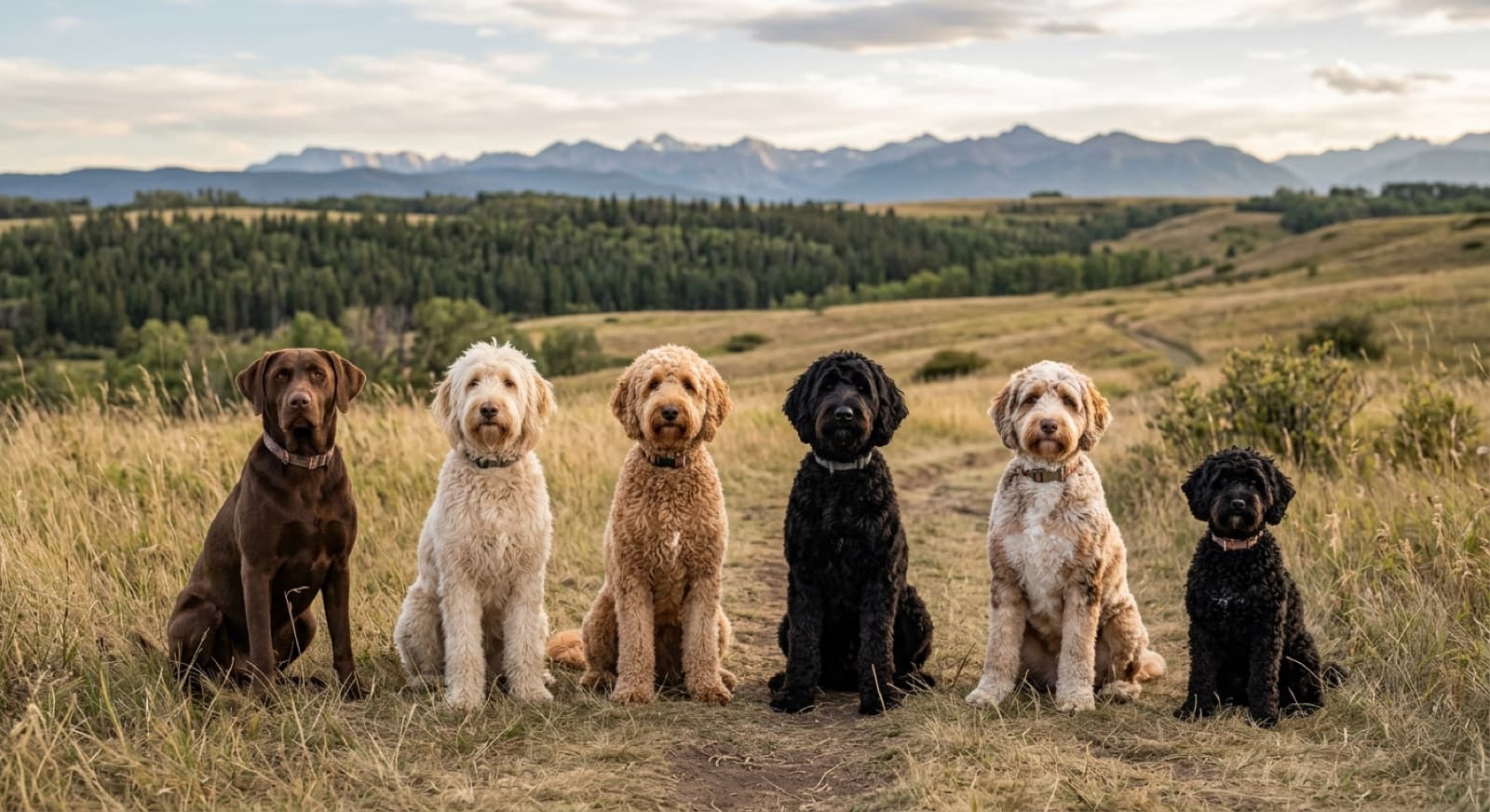
The generation labels sound technical but boil down to how much Poodle is in the dog. F1 is a straight Lab-to-Poodle cross (50/50), with the most variable coats. F1B is an F1 bred back to a Poodle (about 75% Poodle), tending toward curlier, lower-shedding coats, hence its popularity with allergy-conscious buyers. F2 is two Labradoodles crossed, again variable. Multigen comes from several generations of Doodle breeding aimed at more consistent, reliably low-shedding coats. The honest takeaway for an adopter: generation shifts the odds of a low-shedding coat but never guarantees it, and if you are adopting an adult from a rescue, the coat in front of you matters far more than any label (which may be unknown). Our adoption guide covers why meeting the actual dog is key.
Coat types and allergies
Labradoodle coats fall into three rough types. The hair (flat) coat is Lab-like: straighter, sheds, least allergy-friendly, easiest to groom. The fleece coat is soft and wavy, relatively low-shedding and manageable, often considered ideal. The wool (curly) coat is Poodle-like: tightly curled, lowest-shedding, but the most matting-prone and highest-maintenance. Curlier coats suit allergy homes better, but two honest caveats stand: no dog is truly hypoallergenic (low-shedding reduces but does not eliminate allergens), and because coats vary dog to dog, you cannot assume any Labradoodle is allergy-friendly by name. The reliable move, a real advantage of adopting an adult, is to meet and spend time with the specific dog and confirm the actual coat, rather than gambling on a puppy's uncertain future coat.
Grooming, sizes, and Toronto seasons
Whatever the coat, grooming is a real commitment: fleece and wool coats mat readily and need frequent brushing to the skin plus professional grooming every four to eight weeks ($70 to $120-plus per visit in Toronto), while hair coats are easier but shed more. Sizes range from Miniature (15 to 30 lbs) to Standard (45 to 65-plus lbs), affecting exercise, cost, space, and even bloat risk, another reason adopting an adult, whose grown size you can see, is an advantage. Seasonally, wipe salt and snow from the coat and paws after Toronto winter walks, keep the coat shorter in summer for heat and matting (but never shaved to the skin), and dry the coat and ears thoroughly after swimming to prevent matting and ear infections. The AKC Labradoodle overview has more background, and our health guide covers the ear care that pairs with coat care.
Browse adoptable Labradoodles in Toronto
Adopting an adult lets you see the real coat, size, and energy. Browse adoptable Labradoodles and Doodle mixes near Toronto.
See Available Labradoodles →Frequently Asked Questions
What do F1, F1B, F2, and multigen mean for a Labradoodle?
These labels describe a Labradoodle’s generation, which affects its coat and shedding. F1 is a first cross: a purebred Labrador bred to a purebred Poodle (50/50), producing the most variable coats, some shed, some do not. F1B is an F1 Labradoodle bred back to a Poodle (roughly 75% Poodle), which tends to produce curlier, lower-shedding coats and is often chosen by allergy-conscious buyers. F2 is two Labradoodles bred together, with variable results. Multigenerational (multigen) Doodles come from several generations of Labradoodle-to-Labradoodle (or Doodle-to-Poodle) breeding, aiming for more consistent, reliably low-shedding coats. The practical point for an adopter: generation influences the odds of a low-shedding coat but never guarantees it, and if you are adopting an adult from rescue, the dog’s actual coat in front of you matters far more than its generation label (which may be unknown anyway).
What coat types do Labradoodles have?
Labradoodles generally come in three coat types, and knowing them helps set expectations. The hair (or "flat") coat is the most Lab-like: straighter, and it sheds, so it is the least allergy-friendly but the easiest to groom. The fleece coat is soft, wavy, and often described as the ideal Doodle coat: relatively low-shedding and manageable. The wool (or "curly") coat is the most Poodle-like: tightly curled, the lowest-shedding, but the most prone to matting and the highest-maintenance to groom. Most Labradoodles fall somewhere on this spectrum, and coat type varies even within a single litter. For an adopter, the takeaway is to look at and feel the actual coat: a curlier, woollier coat means lower shedding but more grooming, while a flatter coat sheds more but is easier to maintain. Our adoption guide covers why meeting the specific dog matters so much.
Which Labradoodle coat is best for allergies?
If allergies are the concern, the curlier, more Poodle-like coats (wool/curly, and often the fleece) are generally the lower-shedding, more allergy-friendly options, and higher-Poodle-percentage generations like F1B are more likely to produce them. But two honest caveats matter. First, no dog is truly hypoallergenic, low-shedding reduces the dander and hair that trigger reactions, but does not eliminate allergens, and individual sensitivity varies. Second, because coat type varies dog to dog, you cannot assume any given Labradoodle is allergy-friendly based on the breed name alone. The reliable approach, especially valuable when adopting an adult from rescue, is to meet and spend real time with the specific dog before committing, ideally enough to gauge your allergic response, and to confirm the actual coat type. This is a genuine advantage of adopting an adult over gambling on a puppy’s uncertain future coat.
How much grooming does a Labradoodle coat need?
A lot more than most people expect, and this is one of the most underestimated realities of the breed. Most Labradoodle coats, especially the fleece and wool types, mat readily and need frequent at-home brushing (several times a week, often daily for a curly coat) plus professional grooming every four to eight weeks to keep the coat healthy and prevent painful matting. A neglected Doodle coat mats close to the skin and may have to be shaved down entirely. Professional grooming for a medium-to-large Doodle in Toronto typically runs $70 to $120-plus per visit, a genuine recurring cost. The flatter, hair-type coats are easier but shed more. Whatever the coat, brushing right down to the skin (not just the surface, where mats hide underneath) is essential, and keeping the coat in a shorter "teddy bear" trim makes maintenance far more manageable. Budget the time and money for grooming before adopting.
What sizes do Labradoodles come in?
Labradoodles come in a range of sizes, depending mainly on the size of the Poodle parent (Standard, Miniature, or Toy). The general categories are Standard (the largest, often 45 to 65-plus pounds, from a Standard Poodle cross), Medium, and Miniature (the smallest, often 15 to 30 pounds, from a Miniature Poodle cross). Size affects a lot: exercise needs (larger Doodles are often more athletic and need more), living space, food and vet costs, grooming cost and time, and even health risks (larger, deeper-chested Doodles are more prone to bloat). Because Doodles are a crossbreed, adult size can be somewhat unpredictable in a puppy, which is another reason adopting an adult from rescue is an advantage: you see the actual grown size. When choosing, match the size to your home, activity level, and budget, a Standard Labradoodle is a big, active dog, while a Miniature is more apartment-manageable.
Does Toronto’s climate affect Labradoodle coat care?
Somewhat, and it is manageable. In winter, a Labradoodle’s coat (especially the curlier types) picks up snowballs and ice on the legs and belly, and Toronto road salt clings to the coat and irritates the paws, so wipe the legs, belly, and paws after winter walks and rinse off salt. Many owners keep the coat a bit longer in winter for warmth and shorter in summer for comfort. In summer, do not shave a Doodle down to the skin, the coat provides some sun and heat protection, but a shorter trim helps with heat and matting. If your Doodle swims (many love water), dry the coat and especially the ears thoroughly afterward, since a damp curly coat mats fast and moist ears invite infection, a real Doodle vulnerability. Year-round, the theme is the same as the grooming itself: brush frequently to the skin, keep the coat and ears clean and dry, and adjust the trim to the season.
Labradoodle Adoption in Toronto
Where to adopt, costs, and the honest Doodle reality.
Labradoodle Health Issues: Joints, Ears, Eyes
Labradoodle health issues to plan for: hip and elbow dysplasia, weight, exercise-induced collapse, Addison’s disease, ear infections, eye disease and bloat.
New dog? Start with these care guides
Everything a new adopter needs to set up a safe, happy home.