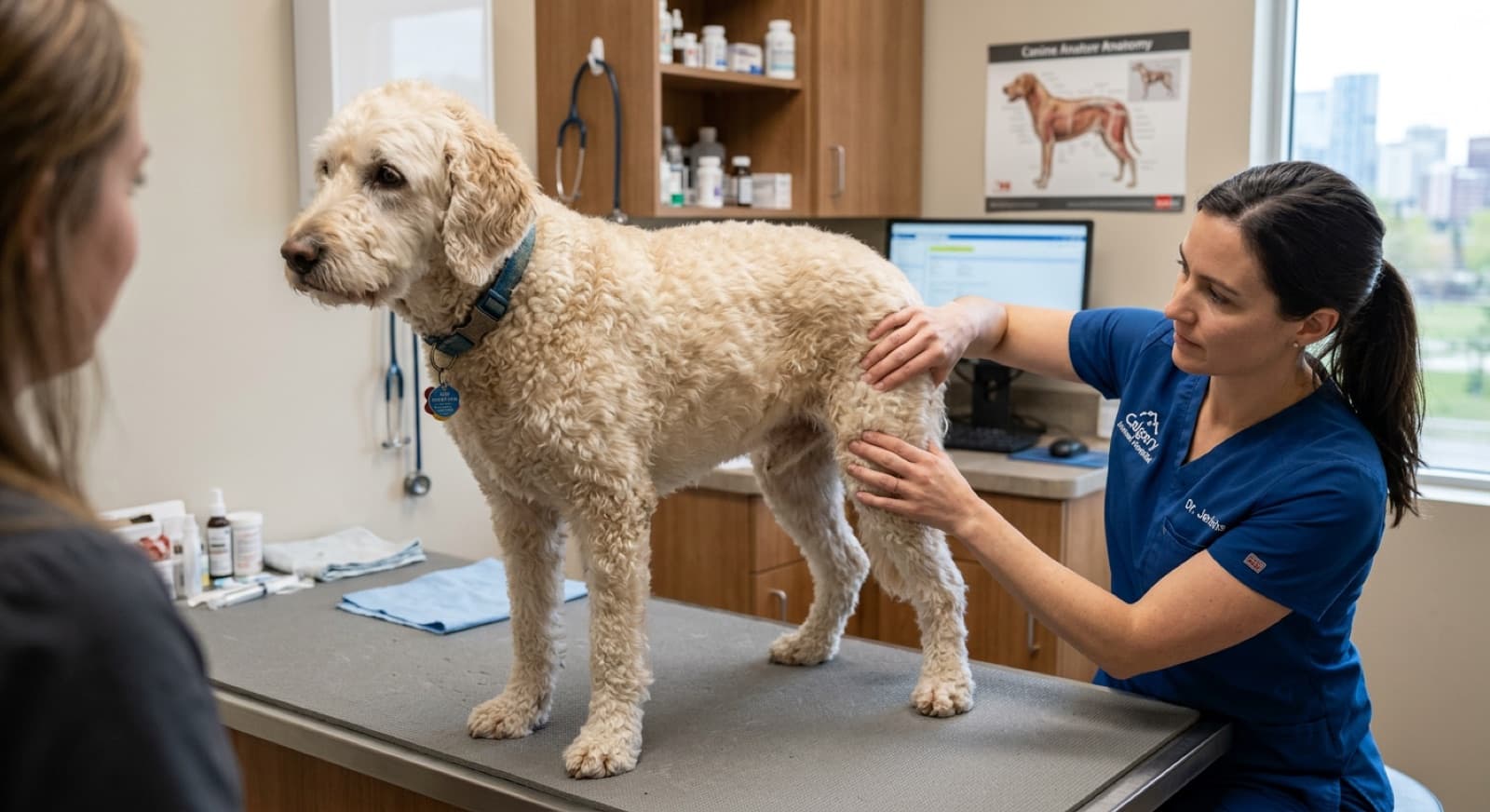
The short answer
A Labradoodle can inherit conditions from either parent breed: hip and elbow dysplasia, eye conditions (PRA, cataracts), frequent ear infections (floppy, hairy ears), allergies, and bloat in larger dogs. The “hybrid vigour” claim is overstated, especially with unregulated breeding, so don't assume a Doodle is automatically healthier. Lifespan is about 12 to 15 years. The highest-impact things you control: keep the dog lean, stay rigorous about ear care, groom regularly, and (for larger Doodles) take bloat precautions. Insure while young and healthy. Adopting an adult lets you assess the real dog. Browse adoptable Toronto dogs.
Hips, eyes, and the hybrid-vigour myth
Because the Labradoodle draws from two breeds, it can inherit the joint and eye problems of both. Hip and elbow dysplasia are common in Labs and Poodles alike, and progressive retinal atrophy (PRA) and cataracts run in the lines too. The much-hyped “hybrid vigour” that supposedly makes Doodles healthier is real only in a limited sense and is frequently oversold: a Doodle can inherit problems from either side, and in the largely unregulated Doodle-breeding world where parents often are not health-tested, poorly bred Doodles can have more issues, not fewer. So assess the individual dog rather than trusting the label. The VCA guide to PRA is worth reading, and our generations guide explains how breeding affects the dog.
Ears, allergies, and bloat
Beyond hips and eyes, three practical issues shape Doodle care. Ear infections are extremely common, the floppy, often hairy ears trap moisture, so keep the ears clean and dry, dry them after swimming, have the groomer manage the ear hair, and watch for head shaking or odour. Allergies and skin conditions occur and can drive itching and recurrent ear or skin issues. And bloat/GDV is a real risk in larger, deeper-chested Doodles, a sudden life-threatening emergency, so know the signs (distended belly, unproductive retching, restlessness) and consider preventive steps for a big Doodle. Keeping the dog lean helps across the board. Adopting through a rescue that has vet-checked the dog can flag known ear, skin, or joint issues up front.
Keeping a Labradoodle healthy, and insurance
The care that matters most is consistent: keep the dog lean, stay rigorous about ear care, groom regularly to protect skin and coat, feed appropriately and take bloat precautions for a larger Doodle, monitor the joints, provide the substantial exercise this active crossbreed needs, and keep up with routine vet checkups. On the money side, pet insurance is worth considering, because hip or eye surgery, chronic ear or allergy management, or bloat surgery can run into the thousands, and the key is to insure while the dog is young and healthy, before anything is diagnosed and excluded (important given the range of possible inherited conditions). Our cost guide has the full Toronto picture. With attentive care, most Labradoodles are healthy, active companions for well over a decade.
Browse adoptable Labradoodles in Toronto
Labradoodles and Doodle mixes from Toronto shelters and rescues, with foster notes on coat, energy, and health.
See Available Labradoodles →Frequently Asked Questions
What health problems are Labradoodles prone to?
Because the Labradoodle is a cross of the Labrador and the Poodle, it can inherit health conditions common to either parent breed. The main ones to know: hip and elbow dysplasia (common in both parent breeds); eye conditions including progressive retinal atrophy (PRA) and cataracts; ear infections (the floppy, often hairy ears trap moisture, a frequent Doodle issue); allergies and skin conditions; bloat/gastric dilatation-volvulus (GDV) in larger, deeper-chested Doodles; and conditions like Addison’s disease, epilepsy, and von Willebrand disease that occur in Poodles. Some Doodles are robustly healthy while others inherit problems from either side, it varies. The idea that crossbreeding guarantees a healthier dog ("hybrid vigour") is overstated, especially when the breeding is unregulated. Adopting an adult from rescue lets you assess the actual dog, and keeping up with vet care, ear care, and weight control all help.
Do Labradoodles really have "hybrid vigour" and fewer health problems?
This is one of the most oversold claims about Doodles, and it deserves an honest answer: not reliably. "Hybrid vigour" is the idea that crossing two breeds produces a healthier dog by reducing the concentration of breed-specific genetic problems, and while there is some truth to the general concept, it is frequently overstated in Doodle marketing. A Labradoodle can inherit the health problems of both the Labrador and the Poodle, and much depends on whether the parent dogs were health-tested, which in the largely unregulated Doodle breeding world they often are not. Poorly bred Doodles from backyard breeders or puppy mills can actually have more health and temperament problems, not fewer. So do not assume a Doodle is automatically healthier than a purebred; assess the individual dog. Adopting an adult from rescue, where you can see the dog’s actual health, is a sound way to sidestep the guesswork.
Why do Labradoodles get so many ear infections?
Ear infections are one of the most common health complaints in Labradoodles, and it comes down to ear anatomy. Many Doodles have floppy ears (from the Poodle and Lab heritage) that trap moisture and reduce airflow, and many also grow hair inside the ear canal (a Poodle trait), which further traps moisture and debris, creating a warm, damp environment where yeast and bacteria thrive. The result is frequent, sometimes chronic, ear infections if not managed. Prevention is straightforward and important: keep the ears clean and dry, check them regularly, dry them thoroughly after swimming or baths (many Doodles love water), and have your groomer manage the ear hair. Watch for head shaking, scratching, odour, redness, or discharge and see the vet promptly. Staying on top of ear care is a core part of Doodle ownership and prevents a lot of discomfort and vet visits.
Are Labradoodles at risk of bloat?
Larger Labradoodles can be, so it is worth understanding. Bloat, or gastric dilatation-volvulus (GDV), is a sudden, life-threatening emergency where the stomach fills with gas and can twist, and deeper-chested, larger dogs are more prone to it, so a Standard Poodle cross or a larger Labradoodle carries more risk than a small one. Every owner of a larger Doodle should know the signs: a distended or swollen belly, unproductive retching or trying to vomit with nothing coming up, restlessness, drooling, and distress, and treat them as an immediate emergency requiring a rush to a Toronto emergency vet. Risk-reduction steps include feeding smaller meals rather than one large one, avoiding heavy exercise right around meals, and, for a large deep-chested Doodle, discussing preventive gastropexy with your vet. Knowing the signs and acting instantly can save the dog’s life.
How long do Labradoodles live and how do I keep mine healthy?
Labradoodles typically live around 12 to 15 years, with smaller Doodles often living a bit longer than larger ones, as is generally true across dogs. Attentive care helps them thrive. The highest-impact things: keep the dog lean (protects the joints and overall health); stay rigorous about ear care to prevent the common infections; keep up regular grooming to protect the skin and coat; feed an appropriate diet and, for a larger Doodle, take bloat-prevention steps; keep up with joint monitoring, especially given the dysplasia risk; provide the substantial exercise and mental stimulation this active crossbreed needs; and keep up with routine vet checkups so hip, eye, ear, and other issues are caught early. Consider pet insurance while the dog is young. Adopting an adult from a rescue that has done a vet check gives you a clearer picture of the individual dog’s health than gambling on a puppy.
Should I get pet insurance for a Labradoodle?
Pet insurance is worth serious consideration for a Labradoodle. As a medium-to-large active crossbreed that can inherit conditions from either parent breed, they are prone to issues that can be costly, hip or elbow surgery, eye treatment, chronic ear-infection or allergy management, and bloat surgery in larger dogs among them, and a single major issue can run into the thousands. As with any breed, the key is to insure while the dog is young and healthy, before any condition is diagnosed and excluded as pre-existing (relevant here given the joint, eye, ear, and allergy tendencies). Compare Canadian providers on their coverage of hereditary and chronic conditions, read the exclusions carefully, and weigh insurance against a dedicated savings fund. Given the Doodle’s size, activity level, and range of possible inherited conditions, having a financial plan for the occasional big vet bill is simply prudent.
Labradoodle Adoption in Toronto
Where to adopt, costs, and the honest Doodle reality.
Labradoodle Generations & Coat
F1, F1B, multigen, coat types, and grooming.
New dog? Start with these care guides
Everything a new adopter needs to set up a safe, happy home.