The short answer
Vizslas and Vizsla mixes come through Toronto rescue, often surrendered over energy or separation anxiety, with fees $150 to $700 (versus $2,000 to $3,500 from a breeder). They are affectionate, gentle, athletic, and deeply people-bonded, wonderful for an active owner who is home a lot, and a real struggle for a household that is out all day. They need one to two-plus hours of hard daily exercise, lots of company, and careful management of alone-time. Get those right and a Vizsla is a joy. Browse adoptable Toronto dogs.
The velcro gundog
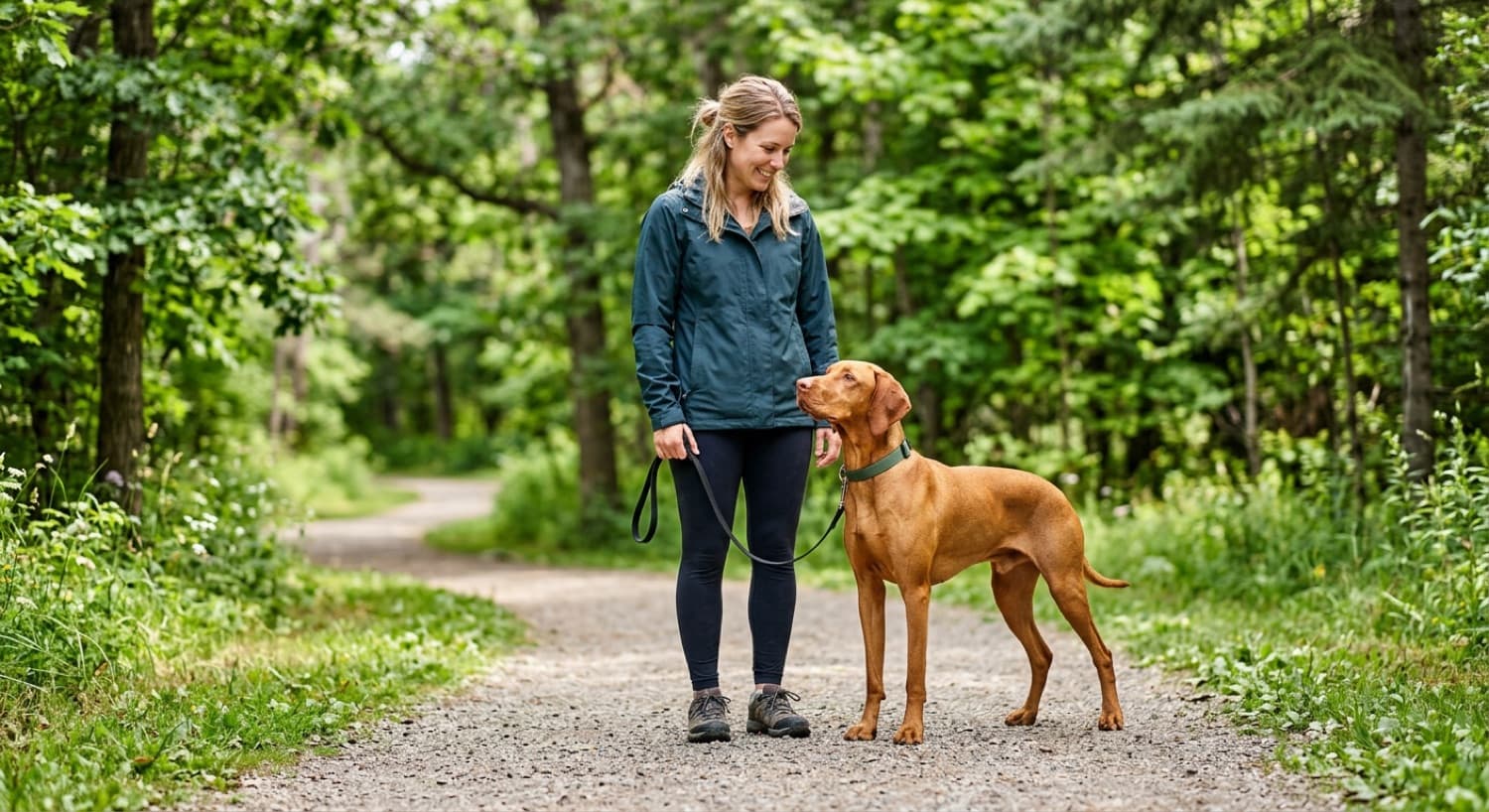
To understand a Vizsla, understand its bond. Bred in Hungary as a close-working hunting companion that stayed near its handler all day, the Vizsla is one of the most intensely people-oriented breeds in existence, so devoted that it earned the affectionate nickname velcro Vizsla for its habit of shadowing its person from room to room. The Canadian Kennel Club breed profile describes a lively, affectionate, sensitive dog that thrives on human companionship. That devotion is the breed's greatest gift and its central challenge: a Vizsla wants to be with you, working, playing, and resting at your side, and it does not do well as a dog kept at arm's length or left alone all day. Adopting one means welcoming a genuine shadow into your life, which a good rescue can help you match to your household honestly.
Energy and attachment: the two big needs
Everything hard about the Vizsla flows from two traits, and both are manageable in the right home. First, the energy: this is a true athlete bred to hunt all day, needing one to two hours or more of vigorous daily exercise plus real mental work, and a Vizsla that does not get it becomes restless, anxious, and destructive. Second, the attachment: because the breed bonds so hard, it is prone to separation anxiety and genuinely struggles when left alone too much. The two feed each other, an under-exercised, under-companioned Vizsla is a recipe for misery on both sides. The good news is that a well-exercised Vizsla with enough company is a calm, gentle, delightful housemate, and our exercise and separation-anxiety guide covers exactly how to meet both needs in a Toronto home.
A sensitive, trainable, thin-coated dog
Beyond energy and attachment, a few traits shape daily life with a Vizsla. They are intelligent and highly trainable, but also sensitive, so they respond beautifully to calm, positive, reward-based training and poorly to harsh handling, which can shut a sensitive dog down. They are clean and low-grooming with a short coat, but that same thin coat and lean build mean they feel the cold, so a Vizsla needs a warm coat for Toronto winter walks. And their affectionate, sometimes intense nature is best channelled through training, exercise, and dog sports rather than suppressed. Matched with an owner who enjoys an involved, active, sensitive dog, the Vizsla is endlessly rewarding; our Vizsla health guide covers the medical side.
Costs, legality, and getting started
Vizslas are legal in Ontario with no breed restrictions, and their size rarely triggers condo or landlord limits, the real city consideration is exercise and alone-time, not paperwork. Adoption fees run the usual Toronto ranges ($150 to $700, spay or neuter and shots included), a fraction of a breeder's $2,000 to $3,500, and because the breed is generally healthy and long-lived, routine costs are moderate, though you should budget for a winter coat and, realistically, for daycare or a dog walker to break up long days (our cost guide helps). See the breed page, be honest with yourself about your activity level and schedule, and if it fits, a rescue Vizsla will repay you with total devotion.
Browse adoptable Vizslas in Toronto
Vizslas and Vizsla mixes from Toronto shelters and rescues, with foster notes on energy, how each dog copes with alone-time, and how it does with other pets.
See Available Vizslas →Frequently Asked Questions
Where can I adopt a Vizsla in Toronto?
Vizslas and Vizsla mixes turn up in Toronto rescue, often surrendered when an owner underestimated the exercise needs or the separation anxiety. Check the City of Toronto Animal Services, the Toronto Humane Society, and foster-based rescues like Save Our Scruff, TEAM Dog Rescue, Fetch + Releash, Redemption Paws, and Hopeful Tails, and breed-specific sporting-dog rescues sometimes have them. LocalPetFinder aggregates adoptable Toronto dogs in one place. For a high-energy velcro breed, the foster notes (energy level, how the dog copes alone, and how it does with other pets) are especially useful before you commit.
Are Vizslas good family dogs?
For the right family, they are wonderful. Vizslas are affectionate, gentle, intensely people-oriented, and deeply bonded to their humans, which makes them loving family companions and earns them the nickname velcro Vizsla. They tend to be good with children and other dogs when well socialised and, crucially, well exercised. The two big caveats are energy and attachment: this is a high-drive sporting breed that needs a lot of vigorous activity, and it does poorly left alone for long stretches. An active family that wants a dog fully involved in their life will adore a Vizsla; a household that is out all day will struggle.
How much exercise does a Vizsla need?
A lot, more than most people expect. Vizslas were bred as all-day hunting dogs, and a typical adult needs one to two hours or more of genuinely vigorous daily exercise, running, fetch, off-leash play in safe spaces, plus real mental work, not just a stroll around the block. A Vizsla that does not get enough exercise becomes restless, anxious, and often destructive, and much of what lands the breed in rescue traces back to under-exercise. This is not a dog you can tire out with a short walk. If you cannot reliably commit to serious daily activity, a Vizsla is not the right breed, however lovely they are.
Do Vizslas have separation anxiety?
Many do, and it is one of the defining challenges of the breed. Vizslas bond so intensely with their people that being left alone can genuinely distress them, and separation anxiety, with the barking, destruction, and misery it brings, is common in the breed, especially in dogs left alone too much or too suddenly. This does not mean a Vizsla can never be left; it means the breed needs a home that can minimise long absences, build up alone-time carefully, and provide enough exercise and enrichment that the dog can settle. Our exercise and separation-anxiety guide covers how to set a Vizsla up to cope. If your household is empty all day, think hard before adopting one.
Why do Vizslas end up in rescue?
Almost always a mismatch of lifestyle. People are drawn to the Vizsla's beauty and affection and underestimate the reality: the relentless energy, the need for constant company, and the separation anxiety and destructiveness that follow when those needs are not met. A Vizsla in a home that cannot exercise it enough or is out all day becomes an unhappy, difficult dog, and a well-meaning owner is overwhelmed. The good news is that a Vizsla who reaches a good rescue is usually a fundamentally sound, loving dog who was simply in the wrong situation, and comes with honest foster notes about energy and how it copes alone.
Are Vizslas good apartment or city dogs?
They can be, but only with the right owner effort. A Vizsla's size is fine for a condo, and they are clean, short-coated, and affectionate indoors, but city living raises the stakes on their two big needs. An apartment Vizsla must get serious daily exercise elsewhere, since it has no yard to burn energy in, and the close quarters and thin walls make separation-anxiety barking a real issue for neighbours. Plenty of Vizslas thrive in the city with a committed, active owner who exercises them hard and manages alone-time well. For an owner who cannot, an apartment makes every Vizsla challenge worse.
How much does it cost to adopt and keep a Vizsla?
Adoption fees run the usual Toronto ranges: roughly $150 to $350 at municipal animal services and $200 to $700 at rescues, with spay or neuter, vaccines, and a vet check included. A breeder Vizsla is more, commonly $2,000 to $3,500. Vizslas are generally a healthy, long-lived breed, so routine costs are moderate, but budget for the things active dogs need, good food, a winter coat (their thin coat feels the cold), and possibly daycare or a dog walker to break up long days and help with alone-time. Pet insurance is still worth considering. Our Toronto cost guide has the full picture.
Vizsla Exercise and Separation Anxiety
Why the velcro dog struggles alone, signs of separation distress, gradual departure training and daily exercise.
Vizsla Health Issues: Epilepsy, Skin, Muscle
Vizsla health issues to plan for: epilepsy, sebaceous adenitis and allergies, an immune-related muscle disease that affects swallowing, hips and bloat.
New dog? Start with these care guides
Everything a new adopter needs to set up a safe, happy home.