The short answer
A Vizsla needs one to two-plus hours of genuinely vigorous daily exercise (running, fetch, off-leash play, dog sports) plus mental work, a walk is not enough. Because the breed bonds so intensely, it is prone to real separation anxiety and struggles left alone all day. The two are linked: a well-exercised Vizsla copes far better alone. Manage it with gradual alone-time training, pre-departure exercise, enrichment, calm goodbyes, and a dog walker or daycare for long days. For severe anxiety, involve a qualified trainer or your vet. This is general guidance, not a substitute for professional behaviour or veterinary advice.
How much exercise, and why it matters so much
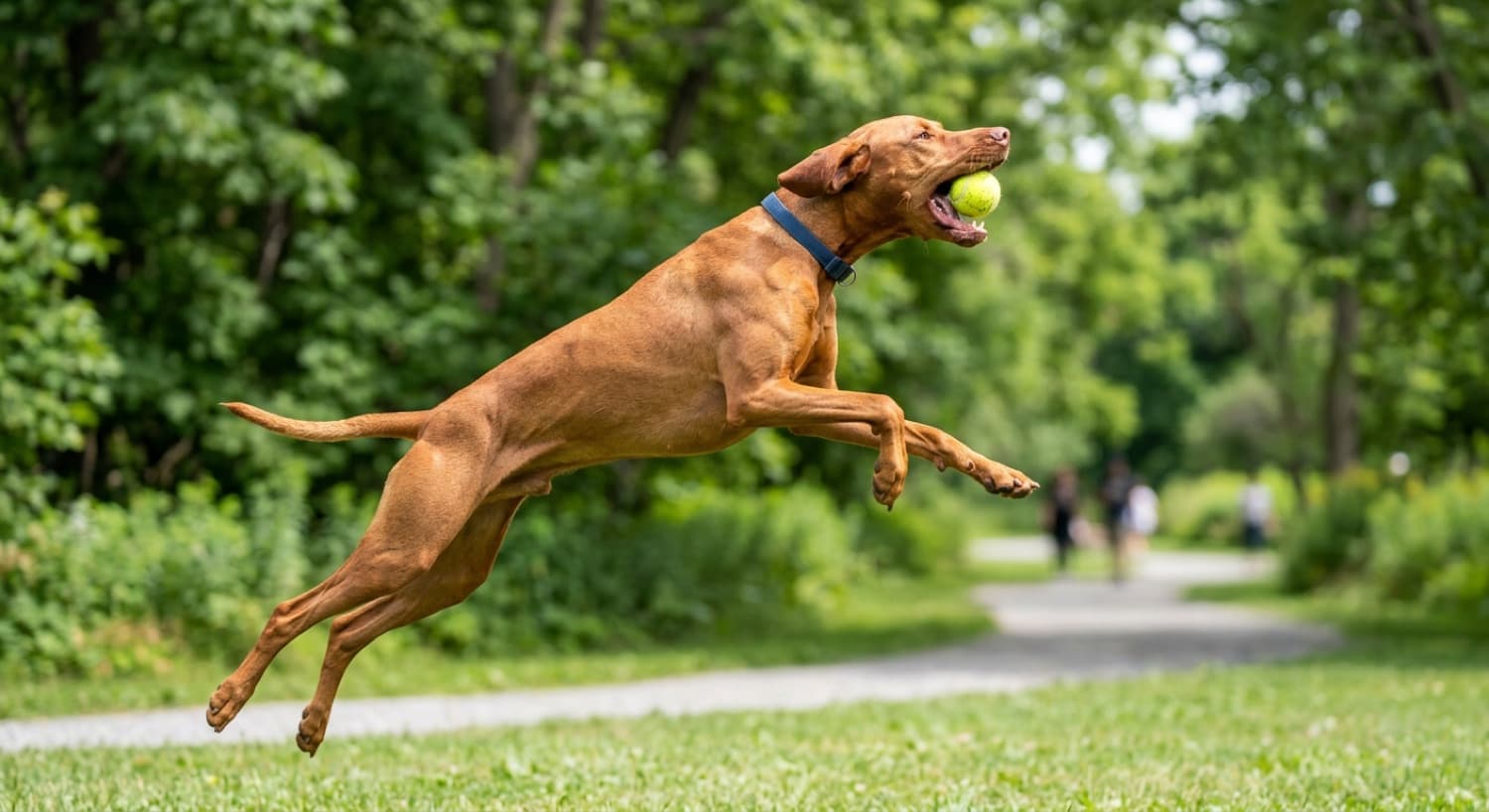
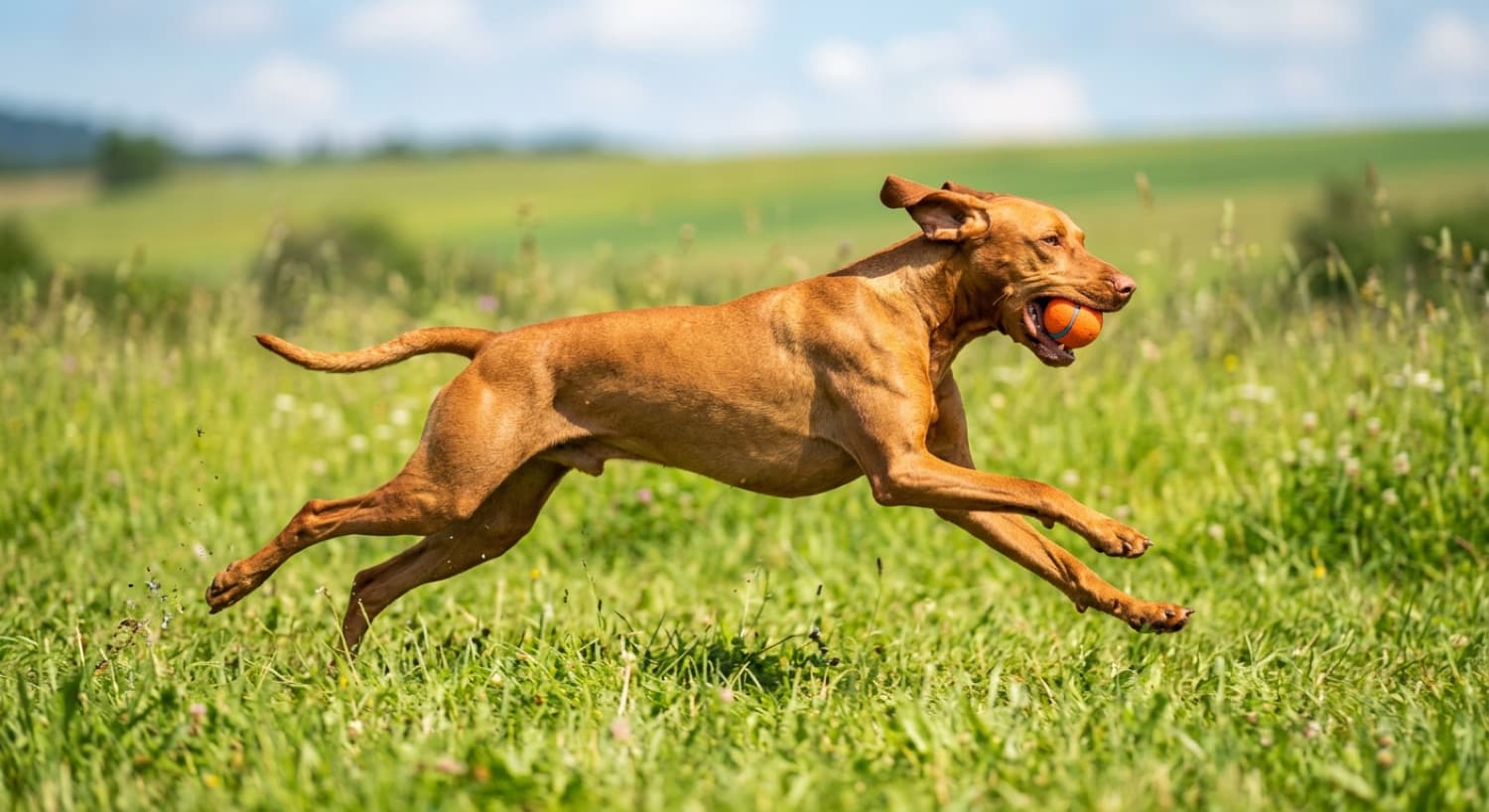
Start with the number, because people consistently underestimate it: a healthy adult Vizsla needs one to two hours or more of genuinely vigorous exercise every single day, plus mental engagement on top. The Canadian Kennel Club breed profile describes an energetic sporting dog that needs plenty of activity, and that is not a formality, it is the core of the breed. A Vizsla was built to range across fields all day, so leash walks alone leave it wired. It needs to truly run: off-leash sprinting in safe spaces, long fetch, swimming, or dog sports. And because the breed is clever, it needs its mind worked too. The reason this matters beyond fitness is behavioural: nearly every Vizsla problem, destructiveness, anxiety, hyperactivity, and worse separation anxiety, traces back to too little exercise, and nearly every one improves when the exercise need is genuinely met.
Exercising a Vizsla in the city
Meeting that need in Toronto is very doable with a plan. For the body, use securely fenced off-leash areas for real running, long games of fetch, swimming in warm weather, and running or cycling alongside a fit adult dog (wait until a young Vizsla is fully grown before high-impact running to protect developing joints). For the mind, lean on training sessions, scent games, food-puzzle toys, and dog sports, agility especially suits the breed. Daycare a few days a week gives social exercise and breaks up long days at the same time, and structured dog-sport classes channel the energy productively. The target is simple: a Vizsla that is genuinely tired in both body and mind. Hit that, and the intense, athletic dog becomes a calm, affectionate presence at home, which is exactly when the breed is at its best.
Why the velcro Vizsla struggles alone
The flip side of the Vizsla's wonderful devotion is its difficulty with being alone. Bred to work in constant partnership with a person, the Vizsla bonds harder than almost any breed, and that closeness is why separation anxiety, genuine panic at being left, not mere boredom, is so common in the breed. It shows up as persistent barking or howling, destruction aimed at doors and windows, house-soiling despite being trained, pacing, drooling, or refusing to eat while alone. It is important to read this correctly: a Vizsla doing these things is not being spiteful or badly behaved, it is a dog in real distress. That distinction matters, because distress responds to patient management and support, not to punishment, which only makes an anxious dog more anxious.
Building a Vizsla that can cope alone
You cannot make a Vizsla love being alone, but you can help it cope, and much of the work is setup. Build alone-time gradually: start with very short absences and slowly extend them, so the dog learns you always return rather than being thrown into long solo stretches. Exercise the dog hard before you leave, since a physically satisfied Vizsla settles far more easily. Leave engaging enrichment, a food puzzle or a frozen stuffed toy, so being alone comes with something good. Keep departures and homecomings calm and unremarkable rather than emotional. And break up long days with a dog walker, daycare, or a sitter so solo stretches stay reasonable. The Fear Free approach to low-stress living fits the sensitive Vizsla well. For genuine, severe separation anxiety, work with a qualified positive-reinforcement trainer or a veterinary behaviourist, and involve your vet, since serious cases sometimes benefit from a structured behaviour plan.
Be honest about your schedule
The kindest thing you can do for a Vizsla, and for yourself, is be honest before you adopt. This is one of the least suitable breeds for a home that is empty ten hours a day with no support, and no amount of love makes up for a schedule the breed cannot handle. That does not mean only stay-at-home owners need apply, plenty of working people give Vizslas excellent lives, but they do it with a real plan: reasonable solo stretches, a dog walker or daycare, hard daily exercise, and patient alone-time training. If you can offer those, a Vizsla will be a devoted, joyful companion. If you genuinely cannot, choosing a more independent breed is the responsible, compassionate call. For the full picture of living with the breed, see our Vizsla adoption guide.
Browse adoptable Vizslas in Toronto
Understanding the exercise and companionship needs is the best preparation for giving a rescue Vizsla a happy home. Meet the adoptable Vizslas and Vizsla mixes near you.
See Available Vizslas →Frequently Asked Questions
How much exercise does a Vizsla actually need?
A lot. A typical adult Vizsla needs one to two hours or more of genuinely vigorous exercise every day, running, fetch, off-leash play in safe spaces, swimming, or dog sports, plus real mental work on top. This is a breed developed to hunt in the field all day, so a walk around the block does not touch it. Just as important, the exercise needs to be aerobic and engaging, not just long: a Vizsla that gets to truly run and use its brain settles beautifully at home, while one that only gets leash walks stays wired. If you cannot reliably provide serious daily activity, this is not the right breed.
What happens if a Vizsla does not get enough exercise?
It becomes a difficult dog, and this is where most Vizsla problems start. An under-exercised Vizsla channels its unspent energy into restlessness, destructiveness (chewing, digging, wrecking things), hyperactivity, attention-seeking, and anxiety, and that under-exercise also feeds separation anxiety, since a dog with pent-up energy copes far worse with being alone. Much of what lands Vizslas in rescue traces directly back to not enough exercise. The flip side is the good news: the single most effective thing you can do for a Vizsla's behaviour is meet its exercise needs. A properly exercised Vizsla is a calm, gentle, easy housemate; the same dog under-exercised is a handful.
Why do Vizslas get separation anxiety?
Because of how intensely they bond. Vizslas were bred to work in constant close partnership with a person and are among the most people-attached breeds there is, the velcro Vizsla, so being left alone runs against the grain of the breed and can genuinely distress them. Separation anxiety, real panic at being alone rather than mere boredom, is common in Vizslas, especially those left alone too long, too often, or too suddenly. It shows up as persistent barking or howling, destruction focused on exits, house-soiling, pacing, drooling, or refusing to eat when alone. It is not the dog being naughty; it is a dog in distress, and it is one of the defining challenges of owning the breed.
How do I prevent or reduce separation anxiety in a Vizsla?
Build alone-time deliberately and set the dog up to succeed. Start with short absences and gradually extend them so the dog learns that you always come back, rather than facing long absences from day one. Exercise the dog well before you leave, a tired Vizsla settles far more easily, and leave engaging enrichment (a food puzzle or a frozen stuffed toy) so being alone has an upside. Keep departures and arrivals calm and low-drama rather than emotional. Break up long days with a dog walker, daycare, or a sitter so the dog is not alone for very long stretches. For genuine, severe separation anxiety, work with a qualified positive-reinforcement trainer or a veterinary behaviourist, and involve your vet, since some cases benefit from a structured behaviour plan.
Can a Vizsla be left alone during a work day?
Not comfortably for a full, long day, and this is the honest dealbreaker for many households. A Vizsla left alone for eight to ten hours daily is very likely to become anxious, destructive, and unhappy, and it is one of the least suitable breeds for a home that is empty all day. That does not mean you must be home constantly, but you do need a realistic plan: a dog walker or daycare to break up the day, a schedule that keeps solo stretches reasonable, and the alone-time training above. Many working owners manage a Vizsla well with those supports. If you cannot provide any of them, please consider a more independent breed instead.
What kind of exercise and enrichment is best for a Vizsla in the city?
Aim for a mix of hard physical exercise and brain work. For the body: off-leash running in securely fenced areas, long games of fetch, swimming, running or cycling alongside a fit adult dog, and dog sports like agility, which suit the breed brilliantly. For the mind: scent games, training sessions, food-puzzle toys, and learning new skills, since a Vizsla is smart and loves having a job. In Toronto specifically, fenced off-leash parks, daycare for social exercise, and structured dog-sport classes all help a city Vizsla get enough. The goal is a dog that is genuinely tired in body and mind, because a mentally and physically satisfied Vizsla is calm, affectionate, and easy, everything the breed is meant to be.
Does getting a second dog fix a Vizsla's separation anxiety?
Sometimes it helps, but it is not a reliable cure, and it is a big decision to make for the wrong reason. Some Vizslas are calmer with canine company, but true separation anxiety is often about the bond with the person, so a second dog may not resolve it, and you can end up with two dogs to exercise and, occasionally, two anxious dogs. If you want a second dog for its own sake and can meet both dogs' considerable needs, it may help; if you are considering it purely as a fix for separation anxiety, address the anxiety directly first, through alone-time training, enrichment, exercise, and professional help if needed, rather than assuming another dog will solve it.
Vizsla Adoption in Toronto
Where to adopt, the velcro temperament, and the costs.
Vizsla Health Issues
A generally healthy breed, and what to watch for.
New dog? Start with these care guides
Everything a new adopter needs to set up a safe, happy home.