The short answer
A Malamute needs a lot: at least an hour or two of real daily exercise (walks, hikes, running, and breed-appropriate pulling activities like carting or skijoring, which Montreal winters are ideal for), plus mental stimulation. It's a notorious escape artist (climbs and digs), so containment must be high, dig-proofed, and secure, and it's unreliable off-leash (independent, strong prey drive), so keep it leashed in unfenced spaces. Manage its prey drive (often unsafe with cats/small pets) and possible same-sex dog aggression. Groom the heavy shedding double coat regularly, and never shave it. Meet these needs and the Malamute thrives; neglect them and it digs, escapes, and destroys, the reason so many land in rescue.
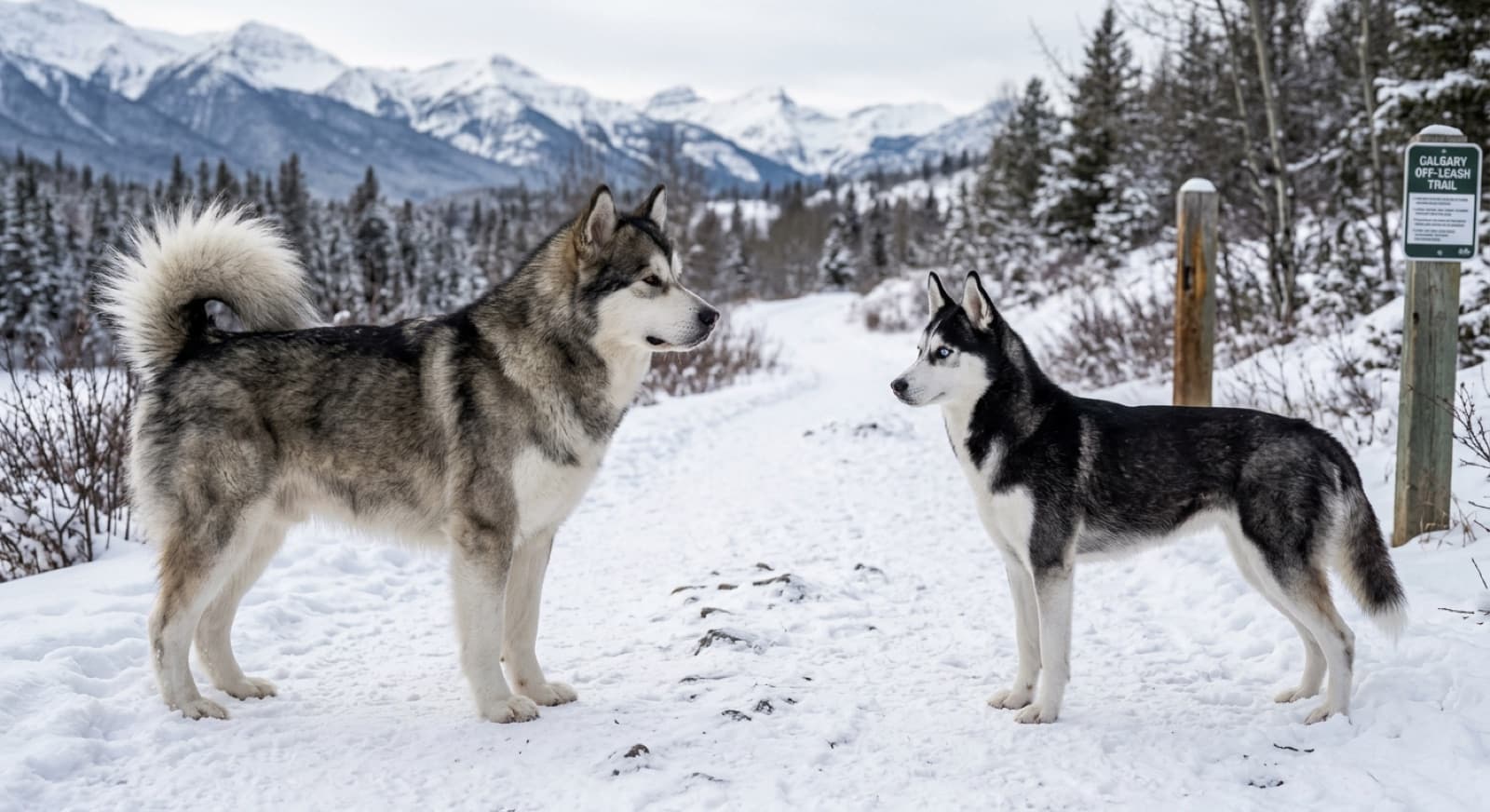
Everything wonderful and everything difficult about a Malamute comes from the same place: it's a powerful, intelligent, independent Arctic freight dog bred to work hard at a distance from its handler. That heritage means huge exercise needs, a talent for escaping, a strong prey drive, and a heavy coat. Get the daily management right and you have a magnificent companion. Get it wrong and you have a frustrated, destructive dog headed for rescue. This is the honest owner's manual.
Exercise: a lot, and mental too
Plan for at least an hour or two of real exercise every day (more for a young dog), genuine activity, not a stroll: long walks, hikes, jogging, running. Malamutes also love and excel at activities that channel their pulling instinct: hiking, backpacking, carting/dryland mushing, skijoring, and sledding, wonderful outlets that Montreal winters are perfect for. Pair the physical work with mental stimulation (puzzle toys, training, jobs), an intelligent working breed that's bored is a destructive one.
Montreal caveat: the Malamute is heat-sensitive (heavy coat), so in summer exercise only in the cool hours (early morning, late evening), never in the heat (see the health guide). In winter, though, the Malamute is in its element, cold and snow are a joy, and it can and should get lots of outdoor exercise.
Escape-proofing: containment is non-negotiable
Malamutes are notorious escape artists, intelligent, immensely strong, independent, and driven (by curiosity, boredom, or prey drive). They climb fences and dig under them, and once out, a Malamute's independence, prey drive, and weak recall mean it may roam far and be hard to catch, which is dangerous. Secure containment is essential:
- •High, secure fencing, a determined Malamute scales a low fence.
- •Dig-proofing, extend fencing below ground, or use an L-footer (bent inward at the base), concrete, or paving stones to stop digging under.
- •Anti-climb measures for a serious climber, a top overhang or lean-in.
- •Never leave the dog unattended in a yard for long, even a secure one, a bored Malamute works on escaping.
Escape-proofing takes real thought and often real money, and it's essential, not optional, for responsibly owning the breed.
Off-leash and recall: keep it leashed
Malamutes are widely considered unreliable off-leash: they're independent (not bred to check in with a handler) and strongly prey-driven (a Malamute may bolt after prey and go deaf to recall), and lack the natural biddability of a retriever. Even a well-trained Malamute can choose to ignore recall in the moment, and a fast, strong, driven dog running is very hard to recover. Keep a Malamute on-leash in all public, unfenced spaces (standard or long-line), and allow off-leash freedom only in a securely fenced area.
This isn't a training failure, it's a realistic acknowledgment of the breed's nature, and experienced Malamute people widely accept it. Do still train a solid recall with positive-reinforcement methods and high-value rewards (valuable for fenced-area and emergency situations), but don't rely on it in open, unfenced environments. If off-leash hiking is essential to you, the Malamute may not be your breed. A note on dog parks: because Malamutes can be dog-selective or same-sex aggressive, off-leash parks aren't always a good fit, assess your individual dog.
Prey drive, cats, and other dogs
With cats and small animals: the Malamute's strong prey drive means it may see cats, rabbits, and other small pets as prey, so it's often not safe with small pets. Some Malamutes raised with a cat from puppyhood learn to coexist, but it's never guaranteed and always requires management. If you have a cat or small pets, be very cautious, and talk frankly with the rescue, who can tell you whether a particular dog has been cat-tested and how it did (an adult with a known history is far easier to assess than an unknown puppy).
With other dogs: Malamutes can be sociable with dogs they know, but the breed tends toward dog-selectivity and same-sex aggression, so careful socialization, thoughtful introductions, and ongoing management matter, and a same-sex multi-dog household needs particular care. With children: typically friendly and affectionate and often good with kids, though the size, strength, and exuberance mean supervision with young children is essential.
The heavy double coat
The Malamute has a dense double coat, a coarse outer coat and thick woolly undercoat, built for Arctic cold. Brush regularly (a few times a week minimum) with an undercoat rake, slicker, and de-shedding tool. Twice a year (spring and fall) the Malamute “blows” its undercoat, shedding enormous volumes over a messy, weeks-long process where you'll brush daily to keep up. They're relatively clean, low-odor dogs and don't need frequent bathing; dry the dense coat thoroughly.
Never shave a Malamute's double coat. It's a common, well-meaning mistake (thinking it helps in summer), but the coat insulates against heat as well as cold and protects the skin, and shaving impairs temperature regulation and can ruin the coat's regrowth. Manage summer heat through environment and behavior; keeping the coat well-brushed and free of dead undercoat actually helps air circulate and keeps the dog cooler.
Some owners use a professional groomer periodically for a thorough de-shedding, especially during coat blow. Add routine nail trims, ear checks, and dental care. The coat is a real, ongoing commitment (and a lot of shedding), factor the time, effort, and mess into your decision.
Browse adoptable dogs in Montreal
If you can genuinely meet a Malamute's exercise, containment, and management needs, adopting an adult, whose energy and temperament are known, is the wise route. Refreshed regularly across Montreal-area organizations.
See Available Dogs →Frequently Asked Questions
How much exercise does an Alaskan Malamute need?
A lot, at least an hour or two of real daily exercise (walks, hikes, running), more for a young dog, plus mental stimulation. Malamutes love pulling activities (carting, skijoring, sledding), ideal for Montreal winters. In summer, exercise only in cool hours (they overheat). An under-exercised Malamute becomes destructive and is a leading reason the breed ends up in rescue.
Why are they such escape artists?
They're intelligent, immensely strong, independent, and driven, so they climb fences and dig under them, and once out are hard to catch. Containment must be high, dig-proofed (below-ground or L-footer), and secure, with anti-climb measures for serious climbers. Never leave a Malamute unattended in a yard for long, a bored one will work on escaping.
Can you let one off-leash?
Generally no, not in unfenced areas. Malamutes are independent and strongly prey-driven, so they're widely considered unreliable off-leash, even a well-trained one can ignore recall and bolt. Keep it leashed in public unfenced spaces; allow off-leash only in a securely fenced area. Train recall anyway, but don't rely on it for safety in the open.
Do they get along with other dogs and pets?
It depends and needs management. Strong prey drive means Malamutes are often not safe with cats or small pets (be cautious; ask the rescue about cat-testing). They can be dog-selective or same-sex aggressive, so socialize, introduce thoughtfully, and manage, and off-leash dog parks aren't always a fit. Typically good with kids, with essential supervision given their size.
How do I groom the coat?
Brush the heavy double coat regularly (a few times a week; daily during the twice-yearly “coat blow,” a messy weeks-long shed) with an undercoat rake and de-shedding tool. They bathe infrequently. Never shave the double coat, it insulates against heat too and protects the skin; manage summer heat through environment instead, and keep the coat brushed out to help air circulate.
What happens if you don't meet their needs?
A Malamute whose needs go unmet becomes destructive, frustrated, and unhappy, digging, escaping, chewing, howling, the predictable result of a powerful working breed not getting exercise, stimulation, and management, and the top reason the breed is surrendered. Met those needs and it's magnificent. Honestly ask: can I meet this for 10 to 14 years? If not, another breed is the kind choice.
Related Montreal guides
Alaskan Malamute Adoption in Montreal
Where to adopt, the powerful independent temperament, family and climate fit, real costs, and who the breed suits.
Alaskan Malamute Health Issues
Hip and elbow dysplasia, eye conditions, hypothyroidism, bloat, breed-specific polyneuropathy and chondrodysplasia, and the heat risk.
Adoptable Dogs in Montreal
All currently available dogs across Montreal-area organizations, including Malamutes and northern-breed mixes. Updates regularly.
Montreal Dog Adoption Resources
All our Montreal dog adoption guides in one place.
New dog? Start with these care guides
Everything a new adopter needs to set up a safe, happy home.