The short answer
Alaskan Malamutes are generally hardy but, as a large deep-chested breed, are prone to hip and elbow dysplasia, eye conditions (cataracts, PRA), hypothyroidism, and bloat/GDV (a life-threatening emergency, know the signs), plus breed-specific polyneuropathy (AMPN), chondrodysplasia (dwarfism), and zinc-responsive dermatosis. They live ~10 to 14 years. Critically for Montreal: they love winter but are heat-sensitive in summer (keep cool, exercise in cool hours, never shave the coat). Keep the dog lean, know the bloat signs, keep up preventive care, and consider pet insurance (enroll while young), large-dog vet care adds up.
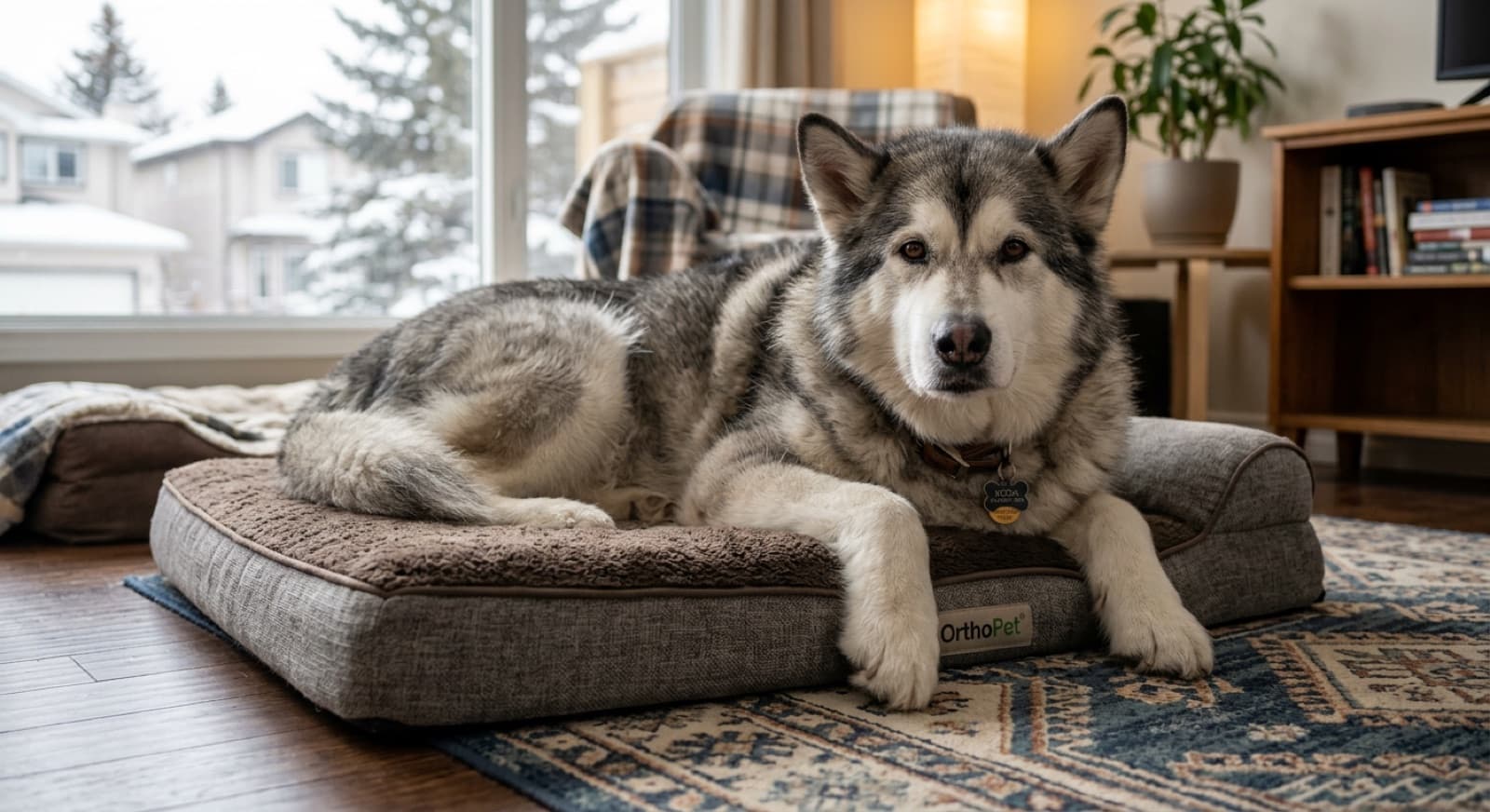
Malamutes are tough, robust dogs, built to haul freight across the Arctic, and many live long, healthy lives. But “hardy” isn't “invincible.” As a large, deep-chested breed they carry the big-dog risks (joints, bloat), plus a handful of breed-specific inherited conditions, and one seasonal issue that matters enormously in Montreal: heat. Here's the honest health picture, and what you can do about each.
Joints: hip and elbow dysplasia
Hip dysplasia, an inherited malformation of the hip joint, is a significant concern in the breed (as in most large dogs), causing pain, lameness, and arthritis over time. Elbow dysplasia is a similar developmental joint condition. Responsible breeders screen breeding dogs (OFA/PennHIP for hips), which is one reason sourcing matters if you go the breeder route.
You can't change genetics, but you strongly influence outcomes: keep the dog lean (excess weight dramatically worsens joint disease, the single biggest lever you control), provide appropriate exercise to build supporting muscle without overdoing high-impact work in a growing pup, and address lameness early. Arthritis is very manageable (weight, joint supplements, medication, physiotherapy), and Montreal winter cold can stiffen arthritic joints, so senior Malamutes may need extra joint support.
Eyes, thyroid, and skin
Malamutes can inherit several eye conditions, including cataracts (sometimes young), progressive retinal atrophy (PRA, leading to blindness), and rare day blindness (cone degeneration), reputable breeders do annual eye exams. Hypothyroidism (underactive thyroid) is relatively common, causing weight gain, lethargy, and coat/skin problems, it's easily diagnosed with a blood test and well-managed with inexpensive daily medication (worth testing for if a well-fed dog gains weight inexplicably).
Zinc-responsive dermatosis is a skin condition seen in northern breeds including Malamutes, where the dog can't properly absorb or use zinc, causing skin lesions and crusting (often around the face). It's managed with zinc supplementation under veterinary guidance, don't supplement zinc on your own, as too much is harmful; let a vet diagnose and dose.
Bloat (GDV): the emergency every owner must know
Bloat/GDV is a life-threatening emergency in large, deep-chested breeds like the Malamute. The stomach fills with gas and can twist, and it can kill within hours without emergency surgery. Learn the signs now:
- •Swollen, distended, or hard abdomen
- •Unproductive retching (trying to vomit, nothing comes up)
- •Restlessness, pacing, obvious distress
- •Excessive drooling; rapid, labored breathing
If you see these, get to an emergency vet immediately. Know your nearest Montreal 24-hour emergency hospital before you ever need it.
To reduce risk: feed two or more smaller meals a day (not one big one), avoid vigorous exercise right before and for about an hour after eating, don't let the dog gulp large amounts of water at once, and slow down fast eaters with a slow-feeder bowl. Some owners of large deep-chested breeds opt for a preventive gastropexy (tacking the stomach), sometimes at spay/neuter, discuss with your vet.
Breed-specific: polyneuropathy and chondrodysplasia
Two inherited conditions are specific to the breed. Alaskan Malamute polyneuropathy (AMPN) is a neurological condition affecting the peripheral nerves, usually appearing in young dogs (often under 2), causing progressive weakness, incoordination, exercise intolerance, and sometimes voice/breathing changes. A DNA test exists, and responsible breeders test to avoid producing affected puppies (a dog needs two copies of the mutation to be affected). There's no cure; management is supportive.
Chondrodysplasia (ChD, “dwarfism”) is a breed-specific inherited condition causing abnormal cartilage and bone development and shortened, deformed limbs. A genetic test and registry exist, and responsible breeders test. Both conditions are reasons the breeder route (if you take it) demands a health-testing breeder, and if you adopt an adult past the typical age of onset who moves normally, these are much less of a concern for that individual.
Heat sensitivity: the Montreal summer risk
The Malamute loves and thrives in Montreal winters, but that heavy Arctic double coat makes it heat-sensitive and prone to overheating, and Montreal summers get hot and humid. Heatstroke is a life-threatening emergency. Protect the dog: keep it cool (air conditioning on hot days), exercise only in cool hours (early morning, late evening), always provide water and shade, never leave the dog in a parked car, and watch for overheating signs (heavy panting, drooling, weakness, bright red gums, vomiting, collapse). Critically: do NOT shave the double coat, it insulates against heat as well as cold and protects the skin; manage heat through environment and behavior, not shaving.
Lifespan and the pet-insurance case
Malamutes live about 10 to 14 years. Keep the dog lean, well-exercised (see the exercise & escape guide), and current on preventive care, and stay alert to joints, eyes, thyroid, bloat, and the breed-specific conditions so problems are caught early.
Given the breed's size and risk profile (dysplasia surgery, cataract surgery, lifelong thyroid medication, potential emergency bloat surgery running into the thousands), and that large-dog vet care is generally pricier, pet insurance is worth serious consideration. Enroll while the dog is young and healthy (before anything becomes a pre-existing exclusion), compare how policies handle hereditary/breed conditions, and keep an emergency fund regardless, bloat can strike suddenly.
Browse adoptable dogs in Montreal
Adopting an adult Malamute lets a rescue share the dog's known health history and temperament, and you skip the demanding puppy stage. Refreshed regularly across Montreal-area organizations.
See Available Dogs →Frequently Asked Questions
What health problems are Alaskan Malamutes prone to?
As a large deep-chested breed: hip and elbow dysplasia, eye conditions (cataracts, PRA), hypothyroidism, and bloat/GDV, plus breed-specific polyneuropathy (AMPN), chondrodysplasia (dwarfism), and zinc-responsive dermatosis. Not every Malamute gets these, and many are healthy, but awareness, preventive care, a lean weight, and pet insurance all help.
How long do Alaskan Malamutes live?
About 10 to 14 years. Keep the dog lean (obesity stresses joints), well-exercised, current on preventive care, and alert to the breed's health issues. Watch for arthritis in seniors, which the Montreal winter cold can aggravate.
What is Alaskan Malamute polyneuropathy?
A breed-specific inherited neurological condition (AMPN) affecting the peripheral nerves, usually in young dogs, causing progressive weakness, incoordination, and exercise intolerance. A DNA test exists and responsible breeders test. No cure; management is supportive. Much less of a concern in an adopted adult who moves normally past the typical age of onset.
Do Alaskan Malamutes get bloat?
Yes, they're a large deep-chested breed, the shape most at risk. Bloat/GDV is a life-threatening emergency (swollen hard abdomen, unproductive retching, restlessness, drooling, labored breathing), get to an emergency vet immediately. Reduce risk with smaller frequent meals, no vigorous exercise around mealtimes, and a slow-feeder; ask your vet about preventive gastropexy.
Is pet insurance worth it?
For many owners, yes. The Malamute is a large breed with several potentially costly conditions (dysplasia, cataracts, thyroid, bloat surgery), and large-dog vet care is pricier. Enroll while the dog is young and healthy (before pre-existing exclusions), compare how policies handle hereditary conditions, and keep an emergency fund regardless.
Are they affected by heat?
Very much so, and it matters in Montreal. The heavy Arctic double coat makes Malamutes heat-sensitive and prone to overheating in hot, humid summers (heatstroke is an emergency). Keep the dog cool (air conditioning), exercise only in cool hours, provide water and shade, never leave it in a car, and never shave the coat (it insulates against heat too).
Related Montreal guides
Alaskan Malamute Adoption in Montreal
Where to adopt, the powerful independent temperament, family and climate fit, real costs, and who the breed suits.
Malamute Exercise, Escape & Management
The huge exercise needs, escape-proofing a determined digger and climber, prey drive and dog-aggression, and the heavy coat.
Adoptable Dogs in Montreal
All currently available dogs across Montreal-area organizations, including Malamutes and northern-breed mixes. Updates regularly.
Montreal Dog Adoption Resources
All our Montreal dog adoption guides in one place.
New dog? Start with these care guides
Everything a new adopter needs to set up a safe, happy home.