The short answer
The Basset's body shape drives its “big three” health issues: back problems (IVDD) (the long back and short legs make disc problems a serious risk, protect the back by managing stairs and jumping), chronic ear infections (the long, heavy ears trap moisture, needs diligent regular cleaning), and obesity (they're food-obsessed, and excess weight dramatically worsens the back and joints, keep the dog LEAN). Also: eye conditions (glaucoma, cherry eye), joint issues, and bloat (know the signs). Lifespan is ~10 to 13 years. The good news: the biggest risks respond well to management you control, weight, back protection, and ear care. Given the IVDD risk especially, insurance is genuinely worth considering, insure while young.
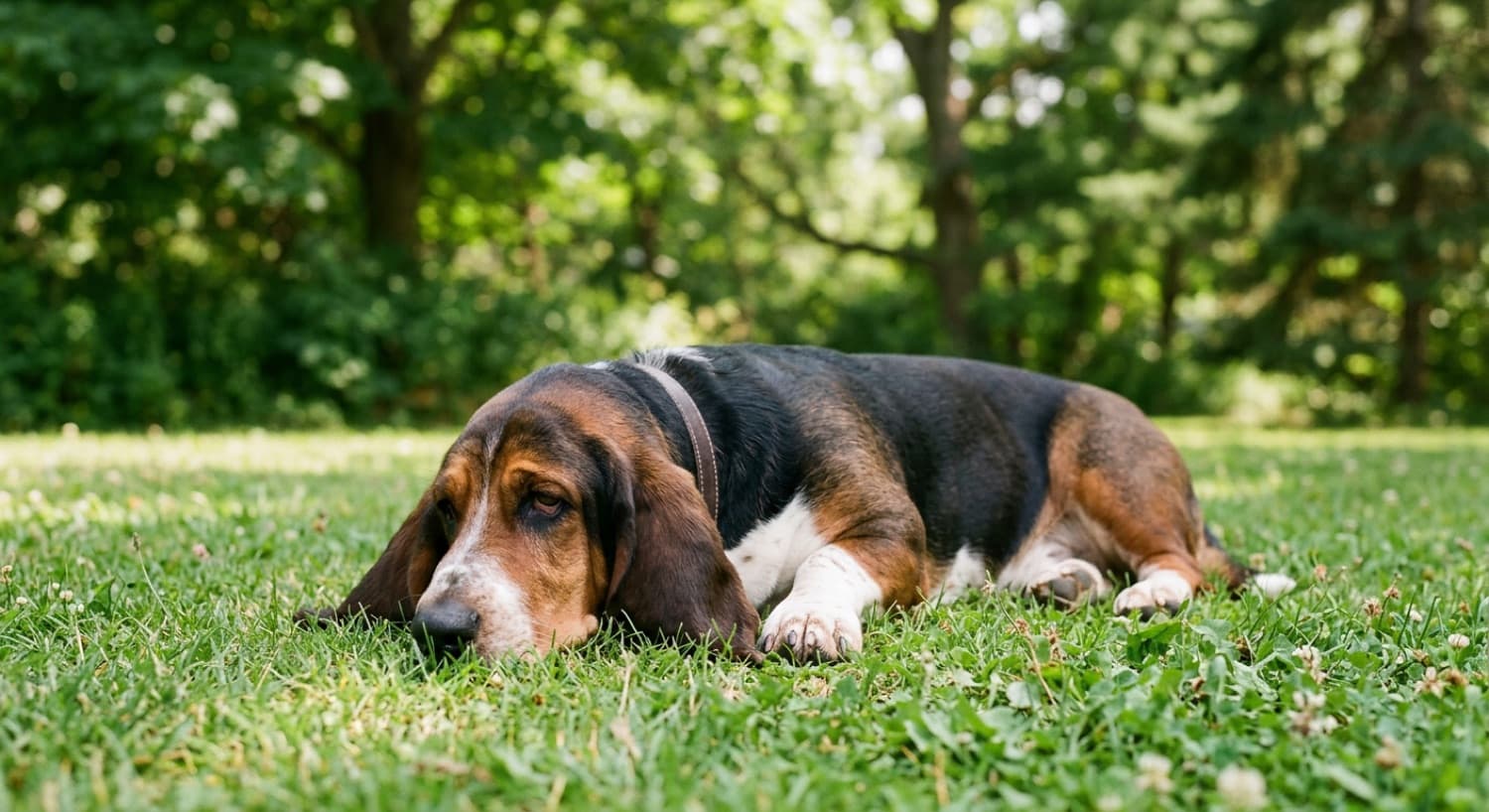
The Basset's adorable, unmistakable shape, that long body, those short legs, those glorious ears, is also the source of most of its health issues. The encouraging news is that the breed's biggest risks respond genuinely well to management you control: keeping the dog lean, protecting the back, and caring for the ears. Here's the health picture, condition by condition.
Back problems (IVDD): the most serious risk
The Basset is a chondrodystrophic breed (a form of dwarfism giving the short legs and long body), which predisposes it to premature disc degeneration and intervertebral disc disease (IVDD), where discs bulge or rupture and press on the spinal cord. It ranges from back pain to, in severe cases, weakness or paralysis (sometimes sudden). Signs: yelping or sensitivity, a hunched posture, reluctance to move or climb, hind-leg weakness or dragging, loss of coordination. Sudden weakness or paralysis is a veterinary emergency, prompt treatment gives the best chance of recovery.
You can't change genetics, but you can significantly reduce the risk: keep the dog LEAN (excess weight dramatically increases spinal strain, the biggest factor you control), manage stairs and jumping (discourage jumping on/off furniture, use ramps or steps, and lift the dog properly with support under chest and hindquarters), avoid rough play that twists or jars the back, and never pick a Basset up by the front end alone. Treatment ranges from rest and medication to surgery and can be expensive, a major reason to consider insurance. Ask a rescue about any back history.
Ear care: the long-ear tax
The Basset's long, heavy, low-hanging ears cover the ear canal and trap moisture and debris, making the breed very prone to recurrent, sometimes chronic, ear infections (the ears also drag on the ground). Diligent ear care is genuinely important and largely within your control.
Good ear care: regularly check the ears (for redness, discharge, or a bad smell, and watch for head-shaking, scratching, or odor), clean regularly with a vet-recommended cleaner (frequency varies, your vet will advise), keep the ears dry (after baths, wet weather, or drinking), and keep the ear area clean. If an infection develops (it can, despite good care), see your vet for proper treatment, untreated infections cause pain and can become chronic. Recurrent infections can point to underlying allergies (worth investigating). Get an adopted Basset comfortable with ear handling early, and ask about any history of chronic ear problems.
Obesity: preventable, and especially dangerous here
Obesity is a particular, serious concern because Bassets are very prone to it (notoriously food-obsessed, enthusiastic beggars and scavengers, relatively low-energy) and because excess weight is especially harmful for this breed: it dramatically worsens the back (IVDD) and joint problems the body shape already predisposes it to. Keeping a Basset lean is arguably more impactful than for almost any other breed.
Weight management means: feeding measured, appropriate portions (not free-feeding, and resisting the pleading eyes), being disciplined with treats and table scraps, ensuring regular moderate exercise (mindful of the back), and monitoring body condition (you should feel the ribs and see a waist; ask your vet about ideal weight). It can be hard to resist a Basset's begging, but doing so is a real act of care, keeping the dog lean protects it from the breed's biggest health risks. For an already-overweight adopted Basset, work with your vet on a safe weight-loss plan.
Other conditions, lifespan, and insurance
Bassets can also be prone to eye problems (glaucoma, cherry eye, entropion/ectropion, related partly to loose facial skin and prominent eyes), joint issues and arthritis, bloat/GDV (a life-threatening emergency, know the signs: distended hard abdomen, unproductive retching, distress, get to an emergency vet immediately), skin-fold issues, and von Willebrand's disease. Lifespan is ~10 to 13 years.
On insurance: genuinely worth considering, back problems (IVDD, from managed rest to expensive surgery), chronic ear infections, eye conditions (glaucoma can need urgent care), joint issues, and bloat can be costly. Take it out while the dog is young and healthy, before any condition (especially back or chronic ear issues) is excluded. If you self-insure, keep a solid vet fund with back problems particularly in mind. For an adopted adult or senior, some conditions (back, ears, weight) may already be present, so go in aware and manage weight and back care from day one. With diligent weight management, back protection, and ear care, many Bassets live comfortable, happy lives. See the adoption guide.
Browse adoptable dogs in Montreal
A good rescue shares a dog's known health history, including any back or ear issues. Refreshed regularly across Montreal-area organizations.
See Available Dogs →Frequently Asked Questions
What are the main health problems?
The breed's body shape drives a “big three”: back problems (IVDD, the most serious), chronic ear infections (the long ears), and obesity (which worsens the first two). Also eye conditions (glaucoma, cherry eye), joint issues, and bloat. Lifespan is ~10 to 13 years. The good news: the biggest risks respond well to management you control, weight, back protection, and ear care.
Why are they prone to back problems (IVDD)?
The Basset is chondrodystrophic (dwarfism giving the short legs and long body), which predisposes it to premature disc degeneration and IVDD, where discs press on the spinal cord, causing pain to, in severe cases, paralysis. Reduce the risk: keep the dog lean, manage stairs and jumping (use ramps, lift properly), and avoid rough play. Sudden weakness or paralysis is an emergency.
How do I care for their ears?
The long, heavy ears trap moisture and debris, making the breed very prone to infections. Check the ears regularly (for redness, discharge, odor, head-shaking), clean with a vet-recommended cleaner (frequency varies), keep them dry, and treat any infection promptly with your vet. Recurrent infections can point to allergies. Get an adopted Basset used to ear handling early.
Why is obesity such a concern?
Bassets are food-obsessed and low-energy, so very prone to weight gain, and excess weight is especially harmful because it dramatically worsens the back (IVDD) and joint problems the breed is already prone to. Keeping a Basset lean is one of the most impactful things you can do: feed measured portions, be disciplined with treats, ensure moderate exercise, and monitor body condition (feel the ribs, see a waist).
How long do they live, and is insurance worth it?
Typically 10 to 13 years. Insurance is genuinely worth considering, back problems (IVDD surgery can be a major expense), chronic ear infections, eye conditions, joint issues, and bloat can be costly. Insure while young and healthy (before back or ear issues are excluded), or keep a solid vet fund with back problems particularly in mind.
Related Montreal guides
Basset Hound Adoption in Montreal
Where to adopt, the mellow but stubborn temperament, family and climate fit, real costs, and who the breed suits.
Basset Hound Training & Recall
The stubborn scent-hound nature, why Bassets can't be trusted off-leash, working with the nose, house-training, and managing the baying.
Adoptable Dogs in Montreal
All currently available dogs across Montreal-area organizations, including Bassets and hound mixes. Updates regularly.
Montreal Dog Adoption Resources
All our Montreal dog adoption guides in one place.
New dog? Start with these care guides
Everything a new adopter needs to set up a safe, happy home.