The short answer
The Basset is a scent hound with one of the best noses in dogdom and a famously stubborn, independent streak. The most important consequence: on a scent, a Basset tunes everything out and follows its nose, so it's unreliable on recall and generally can't be trusted off-leash in unfenced areas, leashed walking and secure fencing are the reality, and that's non-negotiable for safety. Train with the breed's strong food drive (positive, reward-based, patient, harsh methods backfire), and set realistic expectations. Channel the nose with sniffy walks and scent games (great enrichment). Expect house-training to take extra patience, and the famous bay/howl (manageable by meeting the dog's needs, but a real trait to be prepared for, especially with close neighbours).
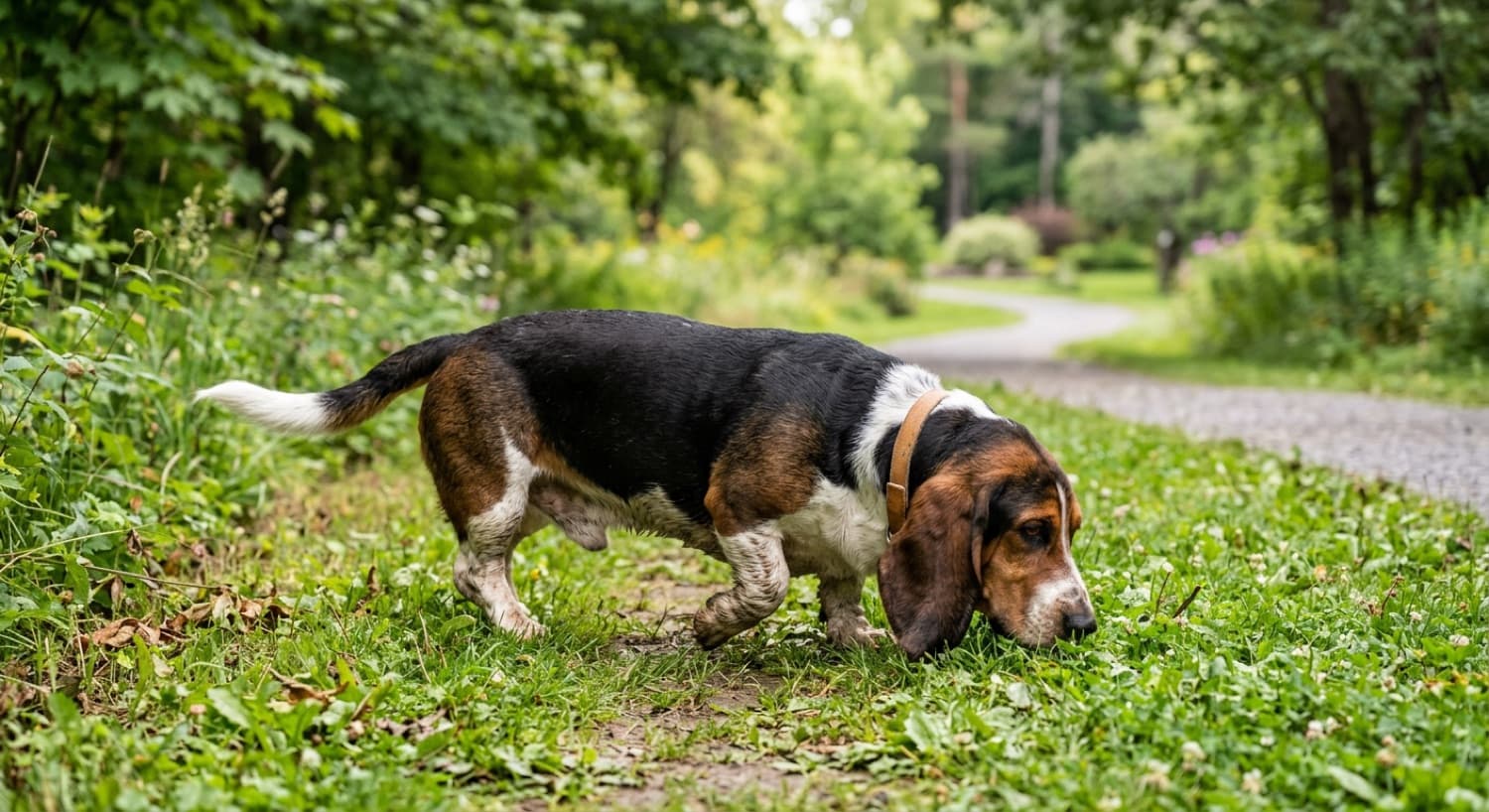
Every lovable thing about the Basset, the mellow charm, the soulful expression, comes with a nose that runs the show and a stubborn streak that's the stuff of legend. Training a Basset isn't about overpowering that; it's about working with it, keeping the dog safe, and setting realistic expectations. Here's how.
Why Bassets can't be trusted off-leash
As a rule, Bassets can't be trusted off-leash in unfenced areas. The Basset was bred to follow scent trails single-mindedly, and has one of the best noses of any breed (second only to the Bloodhound). On a scent, its hardwired instinct is to follow the trail, nose down, tuning out its surroundings and its owner, this isn't ordinary disobedience. Combined with the breed's stubbornness, a Basset on a scent will often ignore recall entirely and wander off, risking getting lost or ending up near roads.
This isn't a training failure to be fixed, work on recall (below), but the breed's scent-driven, stubborn nature means even a reasonably-trained Basset generally shouldn't be trusted off-leash in an unfenced area, because a scent can override training at any time, with potentially tragic results. The practical rules: keep it on-leash outdoors in any unfenced area (well-fitted harness), only allow off-leash freedom within secure fencing (and know a determined Basset on a scent may seek a way out), and never rely on recall in the open. Owners dreaming of off-leash hikes should know the Basset generally isn't that breed, leashed walking (which the mellow, moderate-energy Basset otherwise suits well) is the reality.
Training a stubborn hound, with the food drive
Bassets are intelligent but not eager-to-please, they're independent scent hounds with a well-earned reputation for stubbornness and selective obedience. The good news: they're very food-motivated, your single best training tool. Positive, reward-based training built around high-value food works far better than anything else, and harsh or forceful methods backfire (a stubborn hound shuts down or digs in).
Keys: leverage the food drive with rewards, be patient, consistent, and persistent (progress can be slow, that's normal for the breed, not a reflection of you or the dog), keep sessions short and rewarding (a bored or nagged Basset disengages), start in low-distraction settings, and accept that obedience will always be less reliable around interesting scents. Focus on what matters most: loose-leash walking, manners, impulse control, and as much recall as you can build (worthwhile, but never fully relied on off-leash). A positive-reinforcement trainer who understands hounds (in Montreal, seek one out or positive-method group classes) can help. The mindset: leverage the food drive, keep it positive and patient, set realistic expectations, and find the stubbornness endearing rather than frustrating.
Managing and channelling the powerful nose
The Basset's extraordinary nose is central to the breed, so rather than fighting the scent drive (futile), manage it for safety and channel it for enrichment. For safety, the leashed-and-fenced reality above is the key management. On walks, expect and allow lots of sniffing, a Basset walk is as much about the nose as the legs, and letting the dog sniff and “read” the environment (on-leash) is genuinely enriching (marching a Basset along without sniffing is frustrating for it and a missed opportunity).
Because scent work is so natural and satisfying, scent-based enrichment is a wonderful way to engage a Basset's mind and instincts: simple “find it” nose games (hiding treats to sniff out), food puzzles and snuffle mats, and even formal nose work/scent work as an activity (many hounds love and excel at it). Mental, scent-based enrichment tires a dog out in a way physical exercise alone doesn't, gives the powerful nose a constructive outlet, and helps a low-energy, food-motivated dog stay engaged and less bored.
Understanding that the nose will always, in a sense, “win” is key: you can't train a Basset out of being a scent hound, but you can keep it safe and give its remarkable nose a positive outlet, which makes for a happier, more fulfilled dog. See our adoption guide and health guide.
House-training and the famous bay
House-training a Basset can take extra patience, the stubborn, independent streak can make it slower than with a biddable breed, though it's very manageable with consistency. The keys: a consistent routine (frequent, scheduled trips outside, especially after waking, eating, and playing), close supervision and management (humane crate use or a dog-proofed area when you can't supervise), reward heavily and immediately for going in the right place (leverage the food drive), and never punish accidents (clean thoroughly with an enzymatic cleaner to remove the scent, important given the nose, and prevent future ones). In a Montreal winter, a short-legged, cold-sensitive Basset may resist deep snow or extreme cold, so clear a potty area and be patient and encouraging. Ask a rescue about an adopted dog's house-training status.
The famous Basset bay/howl is a classic hound trait (bred in so hunters could follow the hounds by ear), and many Bassets bay, howl, and “talk” when excited, on a scent, wanting attention, or bored/lonely. Manage it by meeting the dog's needs (a well-exercised, enriched, not-overly-isolated Basset bays less from boredom or loneliness), not rewarding demand-baying with attention, addressing boredom/separation at the source, and teaching a “quiet” cue. Be realistic: a Basset will bay sometimes, if very close neighbours or strict noise rules can't accommodate an occasionally-loud dog, the breed may not suit.
For most owners, with the dog's needs met and some sensible training, a Basset's vocalness is a manageable, often endearing, part of its characterful personality, an occasionally, characterfully loud hound, not usually a constant nuisance-barker. Ask a rescue about an individual dog's vocal tendencies (they vary).
Browse adoptable dogs in Montreal
If you embrace the stubborn, nose-driven charm, a Basset is a lovable, characterful companion. Refreshed regularly across Montreal-area organizations.
See Available Dogs →Frequently Asked Questions
Why can't Bassets be trusted off-leash?
Because they're scent hounds with one of the best noses of any breed, bred to follow trails single-mindedly. On a scent, a Basset tunes out its surroundings and owner and follows its nose, and combined with the breed's stubbornness, it'll often ignore recall entirely. Even a reasonably-trained Basset shouldn't be off-leash in unfenced areas, a scent can override training at any time. Keep them leashed, use secure fencing.
How do I train such a stubborn dog?
Work with the breed's strong food drive, positive, reward-based training built around high-value food works far better than harsh methods (which backfire). Be patient, consistent, and persistent (progress is slow, that's normal), keep sessions short and rewarding, and set realistic expectations. Focus on loose-leash walking, manners, impulse control, and as much recall as you can build. A hound-savvy positive trainer helps.
How do I manage the powerful nose?
Manage it for safety (leashed walking, secure fencing, never relying on recall in the open) and channel it for enrichment. Allow lots of sniffing on walks (it's enriching), and provide scent-based games, “find it” nose games, snuffle mats, food puzzles, and even formal nose work. Scent enrichment tires a dog out mentally and gives the nose a positive outlet. You can't train a Basset out of being a scent hound.
Are they hard to house-train?
They can take extra patience, the stubborn streak can make it slower, but it's manageable with consistency: a consistent routine, close supervision/management, heavy immediate rewards (leverage the food drive), and never punishing accidents (clean thoroughly with an enzymatic cleaner). In a Montreal winter, a cold-sensitive Basset may resist snow, so clear a potty area and be patient. It just may take a bit longer, which is normal.
Do they bay and howl a lot?
Bassets are known for a loud, deep bay and howl (a classic hound trait), and can be vocal when excited, on a scent, wanting attention, or bored/lonely, a real trait to be prepared for, especially with close neighbours. Manage it by meeting the dog's needs (exercise, enrichment, companionship), not rewarding demand-baying, and teaching a “quiet” cue. A well-cared-for Basset is an occasionally loud hound, not usually a constant nuisance-barker.
Related Montreal guides
Basset Hound Adoption in Montreal
Where to adopt, the mellow but stubborn temperament, family and climate fit, real costs, and who the breed suits.
Basset Hound Health Issues
Back problems (IVDD), ear infections, obesity, eye and joint conditions, bloat, and the pet-insurance case.
Adoptable Dogs in Montreal
All currently available dogs across Montreal-area organizations, including Bassets and hound mixes. Updates regularly.
Montreal Dog Adoption Resources
All our Montreal dog adoption guides in one place.
New dog? Start with these care guides
Everything a new adopter needs to set up a safe, happy home.