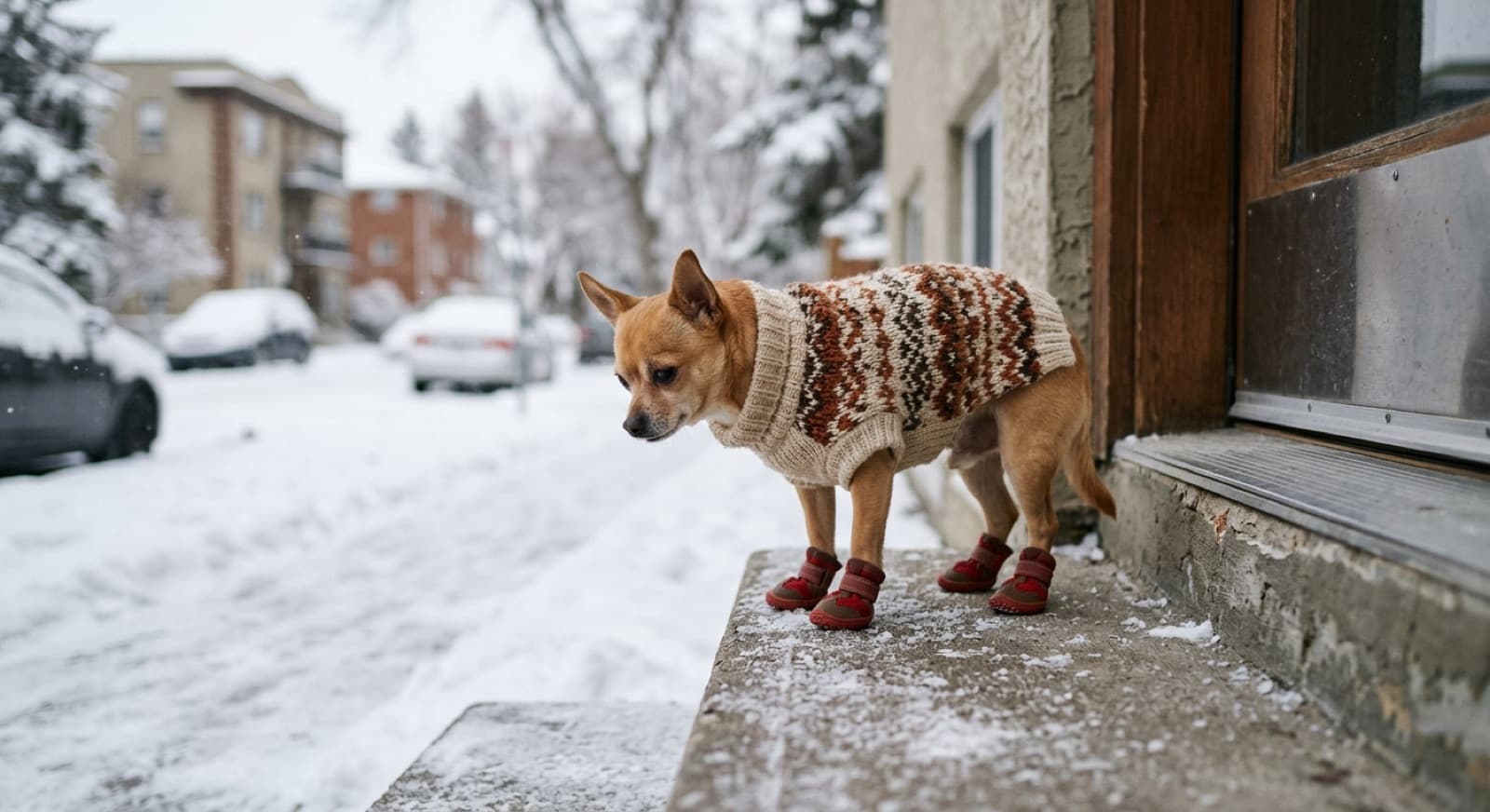
The short answer
Get a coat that fits properly, make winter outings short and frequent rather than long, rinse and dry the paws every time you come in, and let the dog tell you when to stop rather than working to a clock. Move enrichment indoors from December. This is general guidance, not veterinary advice.
Why this breed specifically
Plenty of dogs are fine in a Montreal winter, and a Chihuahua is not one of them without help. Two things stack up. A very small animal has a poor ratio of body mass to surface area, which is the same reason a mug of coffee cools faster than a pot, and this breed carries a short single coat with almost no insulating undercoat underneath it. A Husky doing the identical walk is having an entirely different experience.
None of that makes a Chihuahua the wrong dog for this city. Thousands live here perfectly happily. It does mean the winter has to be planned rather than improvised, and that the owner who says a coat is silly is making the dog do something it is not equipped for.
Work to the dog, not to a clock
People want a number of minutes, and there is not an honest one, because it depends on the temperature, the wind, whether the dog is moving, and the individual animal. What there is instead is a reliable set of signals. Shivering. Lifting a paw or refusing to put one down. Hunching, slowing, or turning back toward home. Any of those means the outing is finished, not that the dog is being dramatic.
The rule of thumb that does travel is one the Canadian Veterinary Medical Association states directly: if the weather is too cold or windy for you to spend a prolonged period outdoors, the same is likely true of your pet. Given a four-pound dog in a knitted jumper against you in a proper winter coat, it is colder than you are. The CVMA also notes that tails, ear tips and toes are poorly insulated and prone to frostbite, which is worth remembering on a breed whose ears are large, upright and thinly furred. Several short trips beat one long one right through the season, and that pattern happens to suit toileting as well.
Signs to go in immediately
Persistent shivering that does not settle, moving slowly or seeming disoriented, weakness, or a dog that has simply stopped wanting to move. Those indicate a dog getting genuinely too cold rather than a reluctant one. Get indoors and warm the dog gradually rather than pressing on or warming it abruptly. If it does not pick up quickly once inside, or you are unsure at all, ring your veterinarian. Nothing here replaces veterinary judgement about your own animal.
Paws, salt and the belly
Montreal salts heavily, and salt and ice-melt irritate paw pads and then get licked off. Ice balls forming between the toes are painful on feet this small. Boots are worth persisting with, and the way to get there is short indoor sessions with food rather than strapping on all four before a walk and hoping. Most dogs object at first and most come round.
If boots genuinely will not work for your dog, the fallback is discipline about rinsing: lukewarm water on the paws every time you come in, dried between the toes, with a paw balm as a barrier before going out. Do it every time rather than when the dog looks bothered, because a small dog limping is a problem that has already happened. Watch the belly too. A dog this low to the ground collects slush and salt spray on its underside in a way a taller dog never does.
The winter poison nobody plans for
Antifreeze is the cold-weather hazard most owners never think about. Ethylene glycol is extremely toxic to dogs, it turns up far more in winter for obvious reasons, and it collects in exactly the places a very small dog walks: garage floors, parking spots, the edges of driveways and puddles under parked cars. A dog whose nose is a few inches off the ground meets it before you notice it is there.
The CVMA also flags a second seasonal one: rodents move indoors when it gets cold, so rodenticide use rises at the same time, and that is toxic to pets too. Neither is a reason to keep a dog inside all winter. It is a reason to watch where a small dog puts its face in a garage or car park, and to treat any suspected exposure to either as an emergency worth phoning your veterinarian about immediately rather than waiting to see whether symptoms appear.
Move the exercise indoors
The good news is that this breed is easier to satisfy indoors than almost any other. A Chihuahua wants company and something to think about far more than it wants kilometres, so the February exercise problem largely solves itself: food puzzles, scent games with treats hidden around a room, short training sessions twice a day, and handling practice that pays off at the vet later.
What indoor work cannot replace is toileting, and that is where winter genuinely bites. A short-coated dog will hold on rather than face the cold and then have an accident inside, which reads as disobedience and is really weather. Our Montreal behaviour and socialization guide covers winter house training properly, including the indoor pad option many owners run through the coldest weeks, so this article does not duplicate it.
Browse adoptable Chihuahuas in Montreal
A foster home can tell you how a particular dog actually handles the cold, which beats finding out in January.
See Available Chihuahuas →Questions Montreal owners ask
Do Chihuahuas really need a coat in Montreal?▼
Yes, and it is equipment rather than decoration for this breed specifically. A dog weighing a few pounds has very little body mass to hold heat and a large amount of surface area to lose it from, so it cools far faster than a larger dog doing exactly the same walk. Add a short single coat with almost no undercoat and you have an animal that is genuinely poorly equipped for a Montreal January. A coat that actually fits buys you outings you would otherwise skip.
How long can a Chihuahua safely be outside in winter?▼
Shorter than you think, and the honest answer is that it depends on the temperature, the wind and the individual dog rather than on a fixed number of minutes. Rather than working to a clock, work to the dog: shivering, lifting or refusing to put down a paw, hunching, slowing down, or turning back toward home all mean the outing is over. Several short trips beat one long one all winter. If you are cold in a coat, a four-pound dog in a jumper is colder.
Are boots worth it, or is that excessive?▼
For a dog this size in a city that salts heavily, they are worth persisting with. Road salt and ice-melt irritate paw pads and get licked off afterwards, and ice balls between the toes are genuinely painful for very small feet. Most dogs hate boots at first and accept them if you introduce them in short indoor sessions with food rather than putting all four on before a walk. If boots truly will not work, rinse and dry the paws when you get in and consider a paw balm as a barrier.
What should I do about road salt?▼
Rinse the paws with lukewarm water when you come in and dry between the toes, which is where irritation and ice balls both start. Do it every time rather than only when the dog looks bothered, because by the time a small dog is limping the damage is already done. Keep an eye on the belly too, since a dog this low to the ground picks up slush and salt spray on its underside in a way a taller dog does not.
What are the signs I should get my dog indoors immediately?▼
Persistent shivering that does not settle, moving slowly or seeming disoriented, weakness, or a dog that has stopped wanting to move at all. Those are signs of a dog getting too cold rather than of a dog being fussy, and the response is to get inside and warm the animal gradually rather than to press on. If a dog does not recover quickly once indoors, or you are at all unsure, call your veterinarian. This is general guidance and not a substitute for veterinary judgement.
Can I skip walks entirely in the coldest weeks?▼
You can shorten them a great deal, and you should not skip them entirely without replacing what they provide. A Chihuahua needs company and mental work far more than it needs distance, so in February the exercise question mostly answers itself indoors: food puzzles, scent games with treats hidden around a room, and a few minutes of training twice a day. What you cannot replace indoors is toileting, so keep those trips very short and very frequent instead of long.
Does the cold make house training harder?▼
Considerably, and it is the single most common winter complaint from owners of very small dogs. A short-coated dog will hold on rather than face the cold and then have an accident indoors, which looks like disobedience and is really weather. Our Montreal behaviour and socialization guide covers winter house training in detail, including the indoor pad option many owners use through the coldest weeks.
Is a Chihuahua the wrong choice for a Montreal winter?▼
No, but it is a breed that needs the winter planned for rather than improvised. Thousands of them live happily in cold Canadian cities. What that takes is a coat that fits, short frequent outings instead of long ones, attention to paws and salt, and a willingness to move most of the enrichment indoors from December to March. Adopting an adult helps here too, because the rescue can tell you how the dog actually handles cold rather than leaving you to find out.
Renting With a Chihuahua →
Quebec lease law on pets, and how to ask a landlord.
Behaviour and Socialization →
Barking, snappiness, training and winter house training.
Chihuahua Health Issues →
Teeth, knees, windpipe and heart, and what they cost.
Chihuahua Adoption in Montreal →
Where to look, real costs, and what to ask a foster.
New dog? Start with these care guides
Everything a new adopter needs to set up a safe, happy home.