The short answer
The Great Pyrenees is calm, gentle, devoted, and majestic indoors, but it's a livestock-guardian breed with very particular traits: it's independent and hard to train, barks a lot (often at night), has a strong urge to roam and escape, and carries a heavy shedding coat. It loves and thrives in Montreal winters (built for mountain cold) but is heat-sensitive in summer (never shave). It strongly needs a house with a large, very securely fenced yard, an apartment or dense-urban setting is a poor fit, largely because of the barking and containment needs. Start on LocalPetFinder's Montreal listings, the Montreal SPCA, and guardian-breed rescue (an adult's barking and temperament are known). Adoption runs ~$300 to $700; they live ~10 to 12 years.
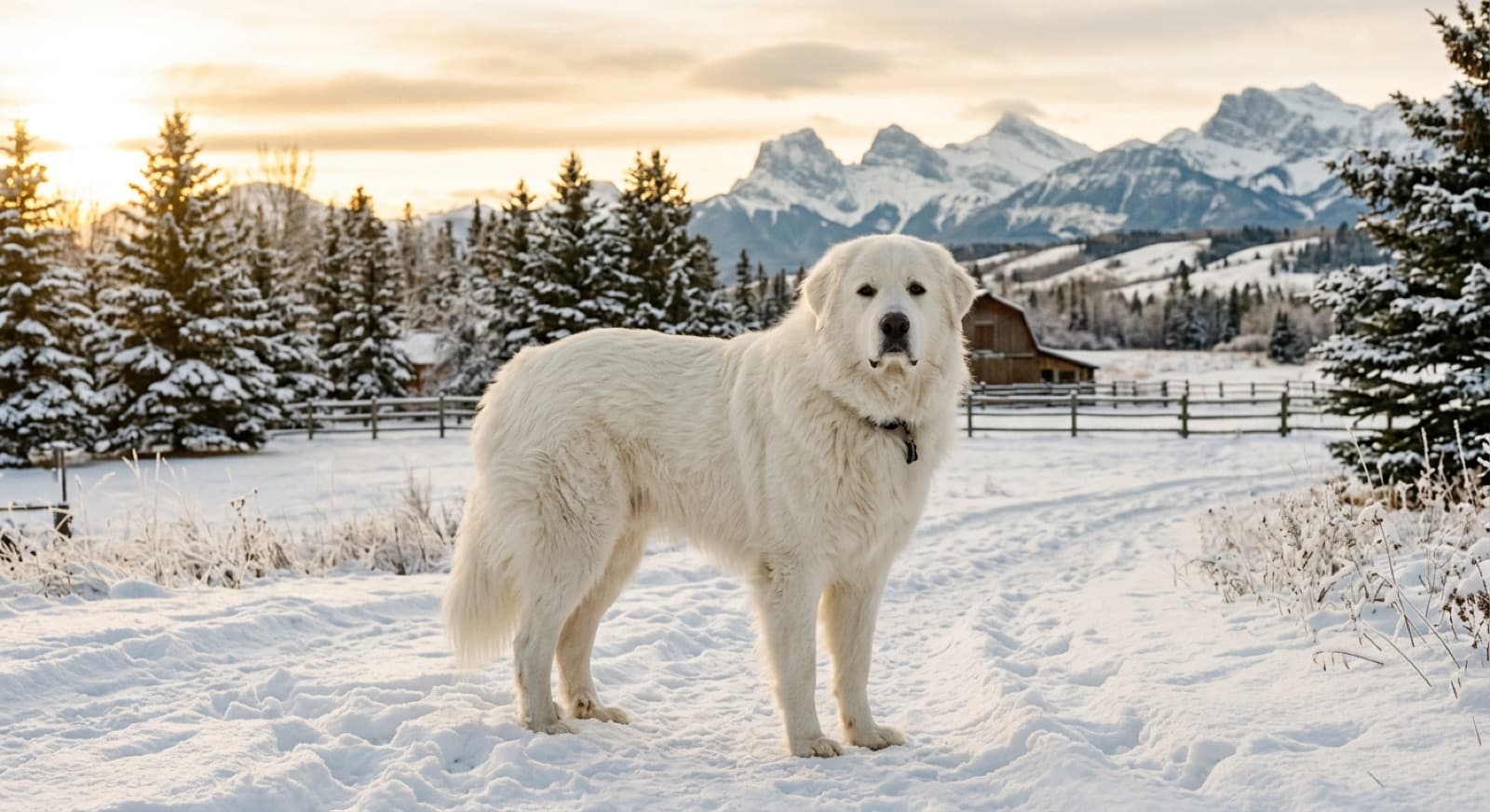
Few dogs are as strikingly beautiful, or as gentle indoors, as a Great Pyrenees: a huge, calm, white guardian that watches over its family with quiet devotion. It's also a working livestock-guardian breed, and that heritage means loud barking, a wanderer's instinct, a mountain of shed coat, and a mind of its own. For the right home, with space and tolerance for the quirks, it's magnificent. Here's the honest picture.
Where to adopt in Montreal
A few routes, though purebred Pyrenees are less common in general rescue (Pyr mixes turn up more), so patience helps:
- •LocalPetFinder's Montreal dog listings, aggregating adoptable dogs from Montreal-area shelters and rescues, refreshed regularly. Search Great Pyrenees and Pyrenees mixes.
- •The Montreal SPCA, Quebec's largest animal-protection organization.
- •Montreal-area general, giant-breed, and livestock-guardian-breed rescues, many foster-based, posting dogs through their websites and social media.
- •Great Pyrenees and livestock-guardian-dog rescue networks in Canada that sometimes cover Quebec.
Adopting an adult is especially valuable for this particular breed, you can know the size, temperament, and, crucially, the dog's barking, guarding, and roaming tendencies, and a rescue advises on fit (and you skip the giant-puppy stage). Many Pyrenees are in rescue precisely because owners underestimated the size, barking, shedding, roaming, or independence, so adopting can mean giving one a home with an owner who can live with its needs.
The gentle-but-independent guardian temperament
Bred for centuries to guard flocks in the Pyrenees mountains, largely alone, the Great Pyrenees is a livestock-guardian dog (LGD), and that heritage explains almost everything. Indoors it's typically calm, gentle, quiet, dignified, and affectionate with its family (often wonderful with children and raised-with pets), and a devoted, watchful, protective guardian of family and territory.
But the LGD wiring is real: it's independent and strong-willed (bred to work alone and make its own decisions, so not naturally obedient, a patient training challenge, see the guardian & barking guide), it barks a lot, often at night (guarding by barking is core to the breed, a serious consideration with neighbours), it roams and escapes (LGDs patrol territory; notorious for getting over/under fences), and it can be aloof or wary with strangers (so socialization matters).
It's a magnificent companion for an owner who understands and accepts a livestock-guardian breed, but genuinely not for everyone, and a poor fit for people wanting an obedient, quiet, easily-contained dog, or for close-quarters living. See our health guide.
Family fit and the Montreal climate
A Pyrenees can be a wonderful family dog, its calm, gentle, patient, protective nature makes it a lovely companion, often excellent with children (the guardian instinct extends gently to the family's kids, though the giant size means sensible supervision with small children), and frequently good with other pets it's raised with (its instinct is to protect, not chase).
Climate is a real plus: the thick double coat is built for mountain cold, so the Pyrenees loves snow and thrives in Montreal winters (the flip side: heat sensitivity in summer, keep cool, shade, water, cool-hour activity, never shave). Setting is the big one: a giant, roaming, loudly-barking guardian strongly needs a house with a large, very securely fenced yard, and rural/suburban settings suit it far better than dense urban living, an apartment is genuinely a poor fit (size, barking, and containment all work against it, and the barking would likely be a serious neighbour problem). Containment (tall secure fencing) and grooming (heavy shedding double coat) round out the needs (see the guardian & barking guide).
For a Montreal-area individual or family with the right setting (a house with a large securely-fenced yard), tolerance for barking and shedding, no close-neighbour barking issue, and an understanding of the independent guardian temperament, a Great Pyrenees can be a magnificent, gentle, snow-loving companion that thrives in the winter, but a poor fit for apartments, dense urban living, or owners wanting an obedient, quiet, low-maintenance dog. Honest self-assessment is essential.
The real cost
Adoption fees run ~$300 to $700 (usually covering spay/neuter, vaccinations, and microchipping), vs $1,500 to $3,000+ from a breeder. Ongoing costs are significant for a giant breed: large quantities of food, more expensive giant-dog vet care (plus a fund or insurance for potential issues, hip/elbow dysplasia, bloat/GDV), substantial grooming (the heavy shedding double coat, sometimes professional), secure tall fencing (essential for a roaming guardian, a real cost), heavy-duty giant-dog supplies, possibly a larger vehicle, and summer cooling.
A warm coat generally isn't needed (the Pyrenees' own coat handles the cold). Pet insurance is worth considering (take it out while the dog is young and healthy). Under Quebec's Civil Code (article 898.1), animals are recognized as sentient beings, not mere property. A Pyrenees is a significant cost and commitment, given its giant size, grooming, fencing, and potential health costs, so prospective adopters must be financially and practically prepared, and underestimating the breed's needs and cost is a common reason Pyrenees end up in rescue.
Browse adoptable dogs in Montreal
For a particular breed like the Pyrenees, adopting an adult, whose barking, guarding, and temperament are known, and getting a rescue's honest guidance on fit, is the wisest route. Refreshed regularly across Montreal-area organizations.
See Available Dogs →Frequently Asked Questions
Where can I adopt a Great Pyrenees in Montreal?
Start with LocalPetFinder's Montreal listings, the Montreal SPCA (spca.com), general, giant-breed, and livestock-guardian-breed rescues, and Canadian Great Pyrenees rescue. Purebreds are less common (Pyr mixes turn up more), so be patient. Adopting an adult lets you know the size and, crucially, the barking, guarding, and roaming tendencies, valuable for such a particular breed.
What is their temperament like?
Calm, gentle, devoted, and majestic indoors (often wonderful with children and raised-with pets), but a livestock-guardian breed: independent and hard to train (bred to work alone), a frequent, loud, often nocturnal barker, prone to roaming and escaping, and watchful with strangers. Magnificent for an owner who understands an LGD, not for someone wanting an obedient, quiet, easily-contained dog.
Is it a good family dog, and can it live in Montreal?
A wonderful family dog (often excellent with children, with sensible supervision given the giant size) and it loves and thrives in Montreal winters (built for mountain cold; heat-sensitive in summer, never shave). But it strongly needs a house with a large, very securely fenced yard, an apartment or dense-urban setting is a poor fit, largely because of the loud barking and roaming/containment needs.
How much does it cost?
Adoption runs ~$300 to $700 (usually including spay/neuter, vaccinations, microchipping), vs $1,500 to $3,000+ from a breeder. Ongoing costs are significant for a giant breed: large quantities of food, giant-dog vet care, substantial grooming (heavy shedding), secure tall fencing, heavy-duty supplies, possibly a larger vehicle, and summer cooling, plus a fund or insurance for potential issues. They live ~10 to 12 years.
What should I know before adopting one?
It's a giant, independent livestock-guardian breed: it barks a lot (often at night), roams and escapes (needs secure tall fencing), is hard to train (bred to think for itself), sheds heavily, and loves winter but overheats in summer (never shave). Calm, gentle, and protective indoors, wonderful with family, but strongly prefers a house with a large fenced yard, a poor fit for apartments. A giant, long commitment (~10 to 12 years).
Should I buy a puppy or adopt?
Consider adoption first. Buying runs $1,500 to $3,000+, and a reputable, health-testing breeder matters (cheap puppies are a warning sign). Adoption costs far less and, with an adult, lets you know the size and, crucially, the barking, guarding, and roaming tendencies (valuable for this particular breed) and skips the giant-puppy stage. Most important: honestly assess whether you can live with the size, barking, coat, and independence, that matters more than sourcing.
Related Montreal guides
Great Pyrenees Health Issues
Hip and elbow dysplasia, bloat/GDV, patellar luxation, bone cancer, and other giant-breed conditions, lifespan, and the pet-insurance case.
Pyrenees Guardian Instincts, Barking & Roaming
Living with the livestock-guardian temperament, managing the loud nocturnal barking, containing a roamer, and training an independent breed.
Adoptable Dogs in Montreal
All currently available dogs across Montreal-area organizations, including Great Pyrenees and Pyr mixes. Updates regularly.
Montreal Dog Adoption Resources
All our Montreal dog adoption guides in one place.
New dog? Start with these care guides
Everything a new adopter needs to set up a safe, happy home.