The short answer
Great Pyrenees are hardy for a giant breed but prone to hip and elbow dysplasia, bloat/GDV (a life-threatening emergency, know the signs), patellar luxation, bone cancer (osteosarcoma), and eye and heart conditions. Giant-breed puppies need careful large-breed nutrition and gentle exercise while growing to protect developing joints (an advantage of adopting an adult). They live ~10 to 12 years (good for a giant breed). The heavy coat makes them superb in Montreal winters but heat-sensitive in summer (never shave). Keep the dog lean, know the bloat signs, keep up preventive care, and consider pet insurance (enroll while young), giant-dog vet care is costly.
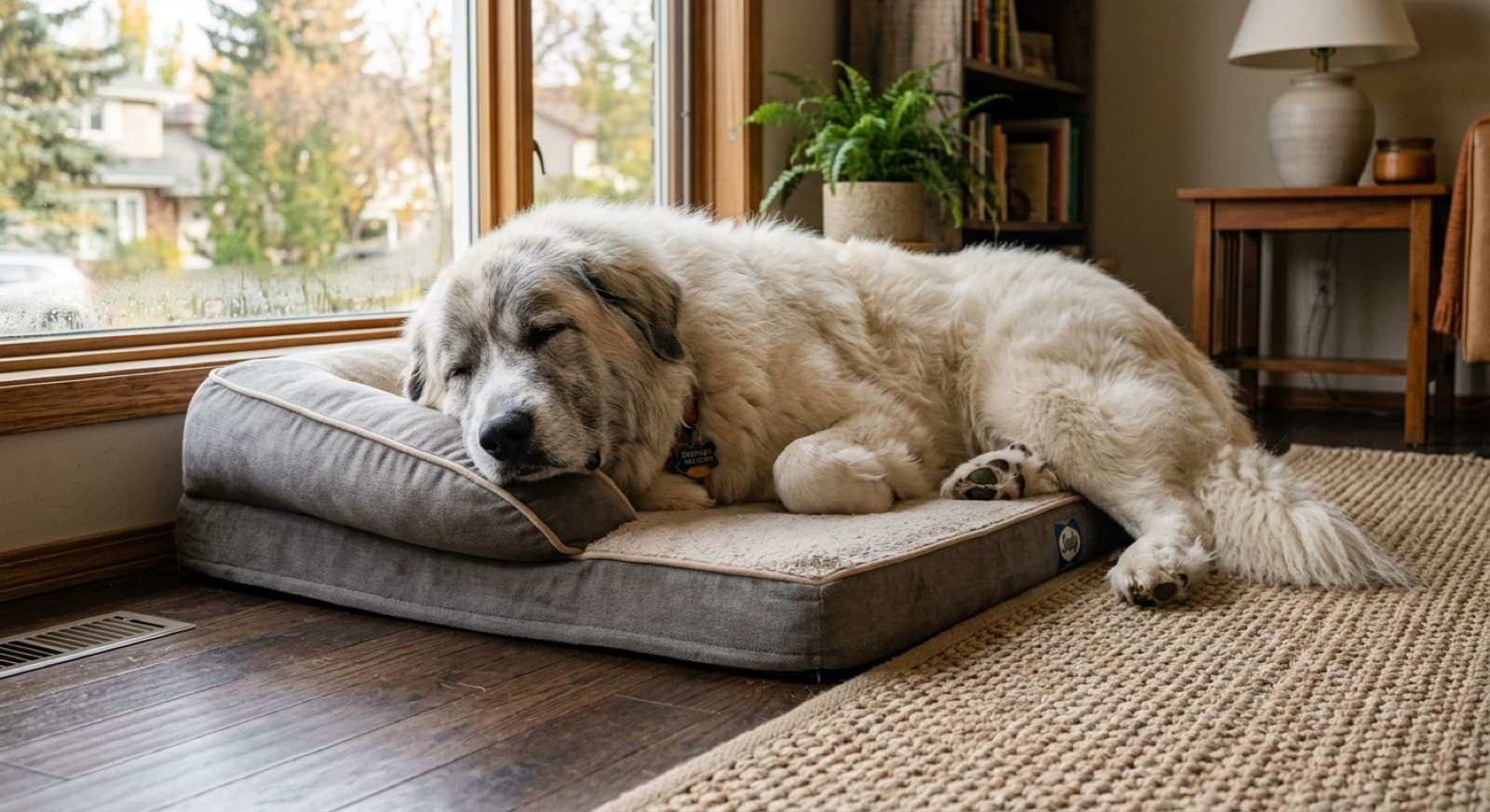
For a dog its size, the Great Pyrenees is remarkably robust, and its ~10 to 12 year lifespan is genuinely good for a giant breed. But “good for a giant” still means giant-breed risks: joints, bloat, bone cancer, and the special care a huge puppy needs while growing. Here's the honest health picture, condition by condition, and what you can do about each.
Joints: hip and elbow dysplasia
Hip and elbow dysplasia, inherited malformations of these joints, are a significant concern in the giant Pyrenees, causing pain, lameness, and arthritis over time. Responsible breeders screen breeding dogs (OFA/PennHIP for hips). Patellar luxation (slipping kneecaps) also occurs.
You strongly influence outcomes: keep the dog lean (excess weight dramatically worsens joint disease in a giant breed, the biggest lever you control), provide appropriate moderate exercise to build supporting muscle (without over-exercising a growing puppy, see below), and address lameness early. Arthritis is manageable (weight, joint supplements, medication, physiotherapy); Montreal winter cold can stiffen arthritic joints, so senior Pyrenees may need joint support (though the heavy coat keeps them warm).
Bloat (GDV): the emergency to know
Bloat/GDV is a life-threatening emergency in giant, deep-chested breeds like the Pyrenees. The stomach fills with gas and can twist, and it can kill within hours without emergency surgery. Learn the signs now:
- •Swollen, distended, or hard abdomen
- •Unproductive retching (trying to vomit, nothing comes up)
- •Restlessness, pacing, obvious distress
- •Excessive drooling; rapid, labored breathing
If you see these, get to an emergency vet immediately (and note a giant dog in distress is hard to move, so have a plan). Know your nearest Montreal 24-hour emergency hospital before you ever need it.
To reduce risk: feed two or more smaller meals a day (not one big one), avoid vigorous exercise right before and for about an hour after eating, don't let the dog gulp large amounts of water at once, and slow down fast eaters with a slow-feeder bowl. Because the Pyrenees is a genuine-risk giant breed, a preventive gastropexy (tacking the stomach), often done at spay/neuter, is well worth discussing with your vet.
Bone cancer, eyes, heart, and the double dewclaws
Giant breeds have an elevated risk of osteosarcoma (bone cancer), an aggressive cancer worth being aware of, especially in older dogs, watch for lameness or a firm swelling on a limb and have any persistent limb lameness checked. Pyrenees can also have eye conditions (entropion, ectropion, cataracts, progressive retinal atrophy) and certain heart conditions, plus, in some lines, neurological conditions and a bleeding disorder.
A breed quirk worth noting: Pyrenees have distinctive double dewclaws on the hind legs, which need routine nail care to avoid overgrowth or injury, just part of the grooming routine.
Giant-breed puppies: growing safely
Giant-breed puppies grow enormously and fast, which makes the developing skeleton vulnerable, so feeding and exercise matter for lifelong joint health. Diet: feed a large/giant-breed puppy formula (or an appropriate food on vet advice), the goal is steady, moderate growth, not as big or fast as possible (overfeeding is genuinely harmful). Exercise: avoid high-impact, repetitive, or forced exercise (long runs, jumping, stairs) in a growing puppy, let it move freely at its own pace. Weight: keep the puppy lean. Patience: Pyrenees mature slowly (often not full-grown until 2+ years). Much of this is moot if you adopt an adult, a quiet advantage of doing so.
The heavy coat and Montreal's seasons
The thick double coat is built for mountain cold, so in a Montreal winter the Pyrenees is in its element, superbly equipped for cold and snow, loving it, and not needing a coat or indoor-warmth the way a thin-coated breed does.
Summer is the flip side: that heavy coat means real heat sensitivity, so on hot, humid Montreal days keep the dog cool (shade, air conditioning), provide water, exercise only in cool hours, never leave it in a car, and watch for overheating. Never shave the double coat, it insulates against heat as well as cold and protects the skin; manage heat through environment and keep the coat brushed out (which helps air circulate). The coat sheds a lot (heavier seasonal blows) and needs regular brushing year-round, a real commitment.
Lifespan and the pet-insurance case
Pyrenees live about 10 to 12 years, good for a giant breed. Keep the dog lean, appropriately exercised, current on preventive care (including the double-dewclaw nails), and alert to joints, bloat, and older-dog bone-cancer signs so problems are caught early.
Given the giant size and risk profile (dysplasia surgery, emergency bloat surgery, bone-cancer treatment, eye/heart conditions), and that giant-dog vet care is pricier across the board, pet insurance is worth serious consideration. Enroll while the dog is young and healthy (before pre-existing exclusions), compare how policies handle hereditary/breed conditions, and keep an emergency fund regardless, bloat can strike suddenly and giant-dog emergencies are costly.
Browse adoptable dogs in Montreal
Adopting an adult Pyrenees lets a rescue share the dog's known health history and temperament, and you skip the giant-puppy growth stage. Refreshed regularly across Montreal-area organizations.
See Available Dogs →Frequently Asked Questions
What health problems are Great Pyrenees prone to?
As a giant deep-chested breed: hip and elbow dysplasia, bloat/GDV, patellar luxation, bone cancer (osteosarcoma), and eye (entropion, cataracts, PRA) and heart conditions, plus routine care of the distinctive double dewclaws. Not every Pyrenees gets these, and many are hardy for a giant breed, but awareness, preventive care, a lean weight, and pet insurance all help.
Do Great Pyrenees get bloat?
Yes, they're a giant, deep-chested breed, the shape most at risk. Bloat/GDV is a life-threatening emergency (swollen hard abdomen, unproductive retching, restlessness, drooling, labored breathing), get to an emergency vet immediately. Reduce risk with smaller frequent meals, no vigorous exercise around mealtimes, and a slow-feeder; a preventive gastropexy is well worth discussing for this breed.
How long do Great Pyrenees live?
About 10 to 12 years, which is good for a giant breed. Keep the dog lean (obesity stresses joints), appropriately exercised, current on preventive care, aware of bloat risk, and alert to joints and older-dog bone-cancer signs. Watch for arthritis in seniors, aggravated by the Montreal winter cold (though the heavy coat keeps them warm).
Are giant-breed puppies at special risk while growing?
Yes. Rapid growth makes the developing skeleton vulnerable, so feed a large/giant-breed puppy diet aiming for steady, moderate growth (not as big/fast as possible, overfeeding is harmful), avoid high-impact or forced exercise (long runs, jumping, stairs) in a growing puppy, keep it lean, and be patient (Pyrenees mature at 2+ years). Adopting an adult sidesteps most of this.
Is pet insurance worth it?
For many owners, yes. The Pyrenees is a giant breed prone to costly conditions (dysplasia, bloat surgery, bone cancer, eye/heart issues), and giant-dog vet care is pricier across the board. Enroll while the dog is young and healthy (before pre-existing exclusions), compare how policies handle hereditary conditions, and keep an emergency fund regardless.
Does the heavy coat affect health in Montreal?
Mostly favourably in winter, the coat is built for cold, so the Pyrenees thrives in Montreal winters and doesn't need a coat for warmth. In summer, that heavy coat means real heat sensitivity, so keep the dog cool, exercise in cool hours, provide water and shade, and never leave it in a car. Never shave the double coat (it insulates against heat too); manage heat by environment and keep it brushed out. It sheds a lot year-round.
Related Montreal guides
Great Pyrenees Adoption in Montreal
Where to adopt, the gentle-but-independent guardian temperament, family and climate fit, real costs, and who the breed suits.
Pyrenees Guardian Instincts, Barking & Roaming
Living with the livestock-guardian temperament, managing the loud nocturnal barking, containing a roamer, and training an independent breed.
Adoptable Dogs in Montreal
All currently available dogs across Montreal-area organizations, including Great Pyrenees and Pyr mixes. Updates regularly.
Montreal Dog Adoption Resources
All our Montreal dog adoption guides in one place.
New dog? Start with these care guides
Everything a new adopter needs to set up a safe, happy home.