The short answer
The Great Pyrenees is a livestock-guardian breed, and its defining traits are instinct, not misbehavior. It barks a lot, often at night (guarding by barking is its job, you can manage but not eliminate it, keeping the dog indoors at night helps most). It roams and escapes (bred to patrol territory), so it needs a tall, secure, dig-proofed fence, never an invisible fence, and must stay leashed off-property. It's independent and hard to train (bred to think for itself, recall is unreliable), so use patient positive methods, socialize well, and rely on management over control. Surprisingly, it's NOT high-energy, moderate walks plus a yard to patrol suffice. All of this makes it a poor fit for apartments or dense-urban living, mainly because of the barking.
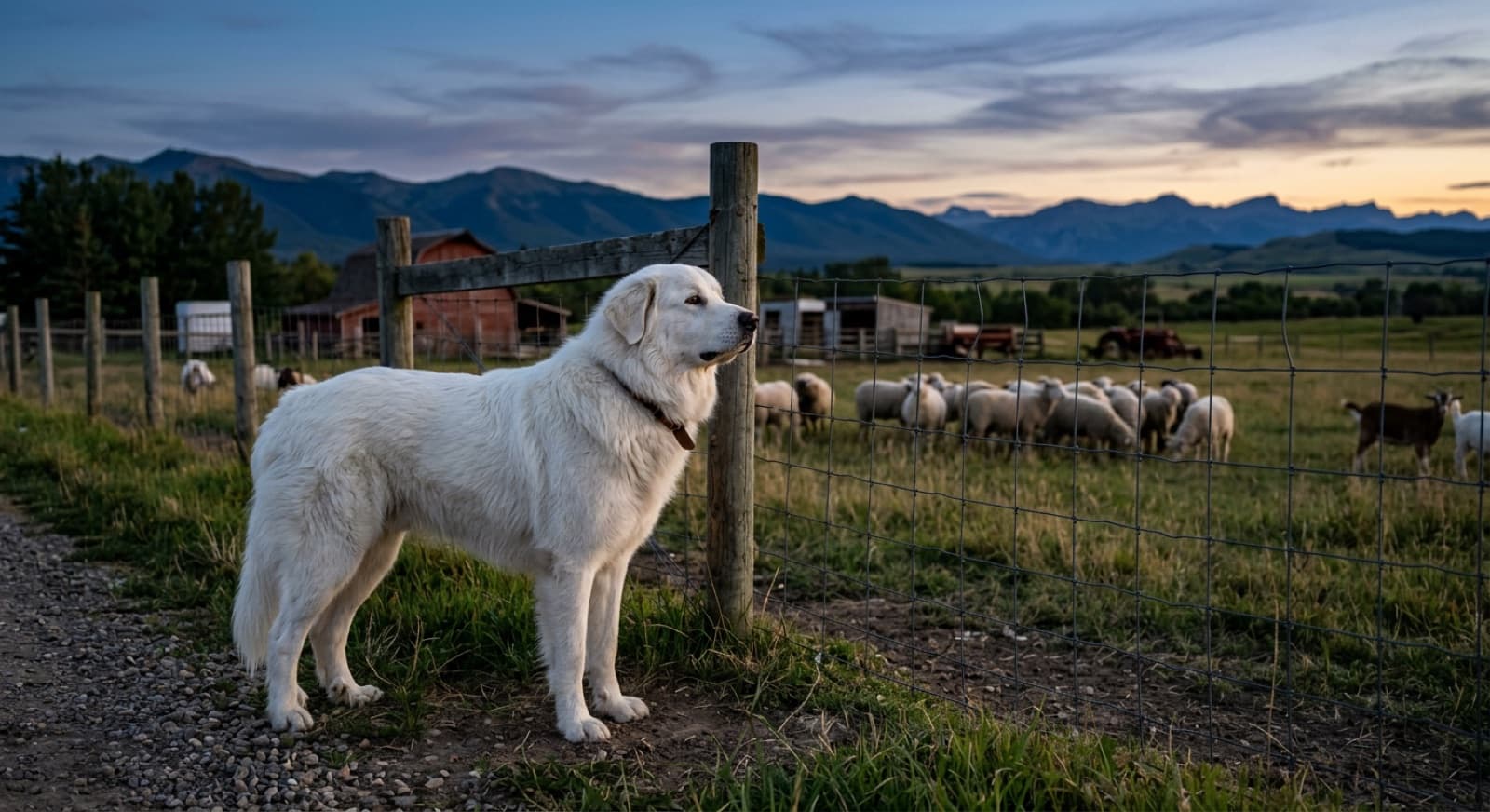
To live successfully with a Great Pyrenees, you have to understand what it is: a livestock-guardian dog bred for centuries to watch over flocks in the mountains, largely alone. Every “difficult” Pyrenees trait, the barking, the wandering, the mind of its own, is that job showing through. You can't train the guardian out of a Pyrenees, but you can manage it well, and knowing what you're signing up for is the whole game. Here's the honest owner's manual.
Why they bark, and managing it
Barking is core to the Pyrenees' job: an LGD protects its flock by barking to warn off and deter threats before they get close. So a Pyrenees is hardwired to bark at anything worth announcing, unfamiliar sounds, movement, passersby, and especially things at night (LGDs are more vigilant after dark, when predators historically threatened flocks). Expect loud, deep, frequent barking, including significant nighttime barking.
You cannot train the guardian instinct out, but you can manage: bring the dog indoors at night (the single biggest help), reduce triggers, provide companionship and stimulation, respond calmly (going to check and settle, not yelling), and, with patience, teach a calm “enough” once the dog has alerted. Realistic expectations are essential: a Pyrenees will bark, sometimes a lot, sometimes at night, so if you or your neighbours can't tolerate that, especially in an apartment, townhouse, or dense-urban setting, the Pyrenees is genuinely the wrong breed. This is a major surrender reason.
Can you stop the nighttime barking?
You can significantly reduce it, but not eliminate it, night vigilance is deeply instinctive. The single most effective step is to bring the dog indoors at night: a Pyrenees left outside overnight barks at every sound in the dark (disturbing you and neighbours), while one sleeping inside has far fewer triggers and barks much less (and Pyrenees should be indoor-at-night dogs anyway). Beyond that: block sightlines and use white noise to mask outdoor sounds, ensure enough daytime activity, give a comfortable indoor sleeping spot, respond calmly to alerts, and work over time on a calm “enough” cue.
What doesn't work: leaving the dog out overnight and hoping for quiet (it won't be), punishment (unfair to an instinct-driven dog, and it increases anxiety), or debarking (inhumane and ineffective). Bottom line: indoors at night plus sensible management gets most Pyrenees to a livable level, but if you need reliable night silence or live where night barking would seriously trouble close neighbours, this is the wrong breed.
Roaming and containment
Pyrenees roam because LGDs are driven to patrol and expand their territory, they don't naturally stay in a small area. This makes them notorious wanderers and escape artists that will get over, under, or through inadequate fencing, and a loose Pyrenees can travel far and get into danger. Secure containment is absolutely essential:
- •A tall, sturdy fence (many recommend at least 5 to 6 feet, higher for determined dogs) that it can't jump or push through.
- •Dig/push-proof the base (buried fencing, an L-footer, or a barrier).
- •Never rely on an invisible/electric fence, the patrol drive overrides the correction, and it doesn't keep others out; it's inappropriate for the breed.
- •Always leash off-property (recall is unreliable, see below) and secure gates (Pyrenees learn to open them).
Containing a Pyrenees takes real, secure infrastructure (and cost), and it's non-negotiable, another reason the breed suits homes with proper fenced yards far better than apartments or urban settings without secure outdoor space.
Training an independent guardian
Pyrenees are intelligent but genuinely challenging to train in the obedience sense, because they're independent, self-directed dogs bred to work alone and make their own decisions, not eager-to-please partners. This isn't stubbornness or stupidity; it's an independent, decision-making temperament. So recall is unreliable (hence leashing off-property), obedience takes patience and realism (no snappy reliability, and drilling bores them), and you must use positive, reward-based methods (harsh or forceful approaches fail and damage trust).
The right mindset is to work WITH the guardian nature, not against it: socialize well from a young age (so wariness with strangers becomes appropriate discernment, not fear), teach genuinely useful manners and impulse control (a giant dog must walk politely and not jump), and rely on management for the instincts you can't train away (secure fencing for roaming, indoors at night for barking). A Pyrenees will never be a heel-perfect obedience dog, and that's fine, it's a magnificent guardian companion, just a different kind of dog.
The one easy part: exercise
Here's a surprise: the Pyrenees is NOT a high-energy breed. As a guardian bred to conserve energy and stay with the flock (alert but calm, acting only when needed), the adult Pyrenees is relatively low-to-moderate energy, often quite mellow. It needs regular, moderate exercise (a good walk or two, time to move and patrol) plus mental engagement, but not the intense, prolonged exercise a herding or sporting breed demands. A securely fenced yard to patrol at its leisure suits it well.
Caveats: don't over-exercise a giant-breed puppy (no high-impact or forced exercise while growing, it harms developing joints, see the health guide), manage summer heat (exercise in cool hours; in winter the Pyrenees loves the cold), and provide mental stimulation (a bored young Pyrenees barks and chews more). So the exercise need is one of the breed's easier parts, the hard parts are the barking, roaming, size, coat, and independence.
Browse adoptable dogs in Montreal
If you have the right setting for a guardian breed, adopting an adult Pyrenees, whose barking, guarding, and roaming tendencies are known, and getting a rescue's honest guidance, is the wisest route. Refreshed regularly across Montreal-area organizations.
See Available Dogs →Frequently Asked Questions
Why do Great Pyrenees bark so much?
Because barking is core to their job as livestock-guardian dogs, they warn off and deter threats by barking, and are especially vigilant at night. It's instinct, not misbehavior, and you can't train it out. Manage it (indoors at night, reduce triggers, calm responses), but expect loud, frequent, sometimes nocturnal barking. If you or neighbours can't tolerate that, the breed is wrong for you, especially in an apartment.
Can you stop the nighttime barking?
Reduce it significantly, not eliminate it. The biggest step is bringing the dog indoors at night (far fewer triggers than outside, and Pyrenees should be indoor-at-night dogs anyway). Also block sightlines, use white noise, ensure daytime activity, and respond calmly. Punishment and debarking don't work. If you need reliable night silence or have close neighbours, this is the wrong breed.
Why do they roam, and how do I contain one?
LGDs are driven to patrol and expand their territory, so Pyrenees wander and escape over, under, or through weak fencing. You need a tall (5 to 6+ ft), sturdy, dig-proofed fence, secure gates, and always a leash off-property (recall is unreliable). Never use an invisible/electric fence, the patrol drive overrides it. Secure containment is non-negotiable and a real cost.
Are Great Pyrenees hard to train?
Yes, in the obedience sense, they're independent, self-directed guardians bred to think for themselves, so recall is unreliable and they won't perform with a biddable breed's precision. Use patient, positive methods (never harsh), socialize well from a young age, teach useful manners and impulse control, and rely on management (fencing, indoors at night) for instincts you can't train away. Work with the nature, not against it.
Do they need a lot of exercise?
No, surprisingly. As a guardian bred to conserve energy, the adult Pyrenees is relatively low-to-moderate energy, needing regular moderate walks plus a yard to patrol and some mental engagement, not intense exercise. Don't over-exercise a giant-breed puppy (harms growing joints), manage summer heat, and provide enrichment. The exercise need is one of the breed's easier parts.
Can it be a good guard dog or family protector?
Yes, it's an excellent natural guardian, but of the calm, deterrent, watchful kind, not an aggressive attack dog. A well-socialized Pyrenees warns (barks) and its imposing presence deters, while staying gentle with its own family (especially children). Socialize it well, manage it responsibly around visitors, and never encourage aggression, the breed guards naturally and appropriately on its own.
Related Montreal guides
Great Pyrenees Adoption in Montreal
Where to adopt, the gentle-but-independent guardian temperament, family and climate fit, real costs, and who the breed suits.
Great Pyrenees Health Issues
Hip and elbow dysplasia, bloat/GDV, bone cancer, giant-breed puppy care, and the pet-insurance case.
Adoptable Dogs in Montreal
All currently available dogs across Montreal-area organizations, including Great Pyrenees and Pyr mixes. Updates regularly.
Montreal Dog Adoption Resources
All our Montreal dog adoption guides in one place.
New dog? Start with these care guides
Everything a new adopter needs to set up a safe, happy home.