The short answer
Two daily tasks do more for a Pug than anything else. Eyes: the prominent, shallow-set eyes are injury-prone (ulcers, dry eye, and, worst case, proptosis, the eye coming out of the socket, a true emergency), so protect them from trauma, keep the face clean, check them daily, and see a vet fast for any pain, redness, cloudiness, or discharge. Weight: Pugs are food-obsessed and low-energy, so they gain weight easily, and obesity worsens their breathing, heat tolerance, joints, spine, and lifespan, more than for most breeds, so measure food, control treats, keep the dog lean, and give modest, gentle exercise only (never in Montreal summer heat). Clean the facial folds regularly too. These two tasks are front-line healthcare, not cosmetics.
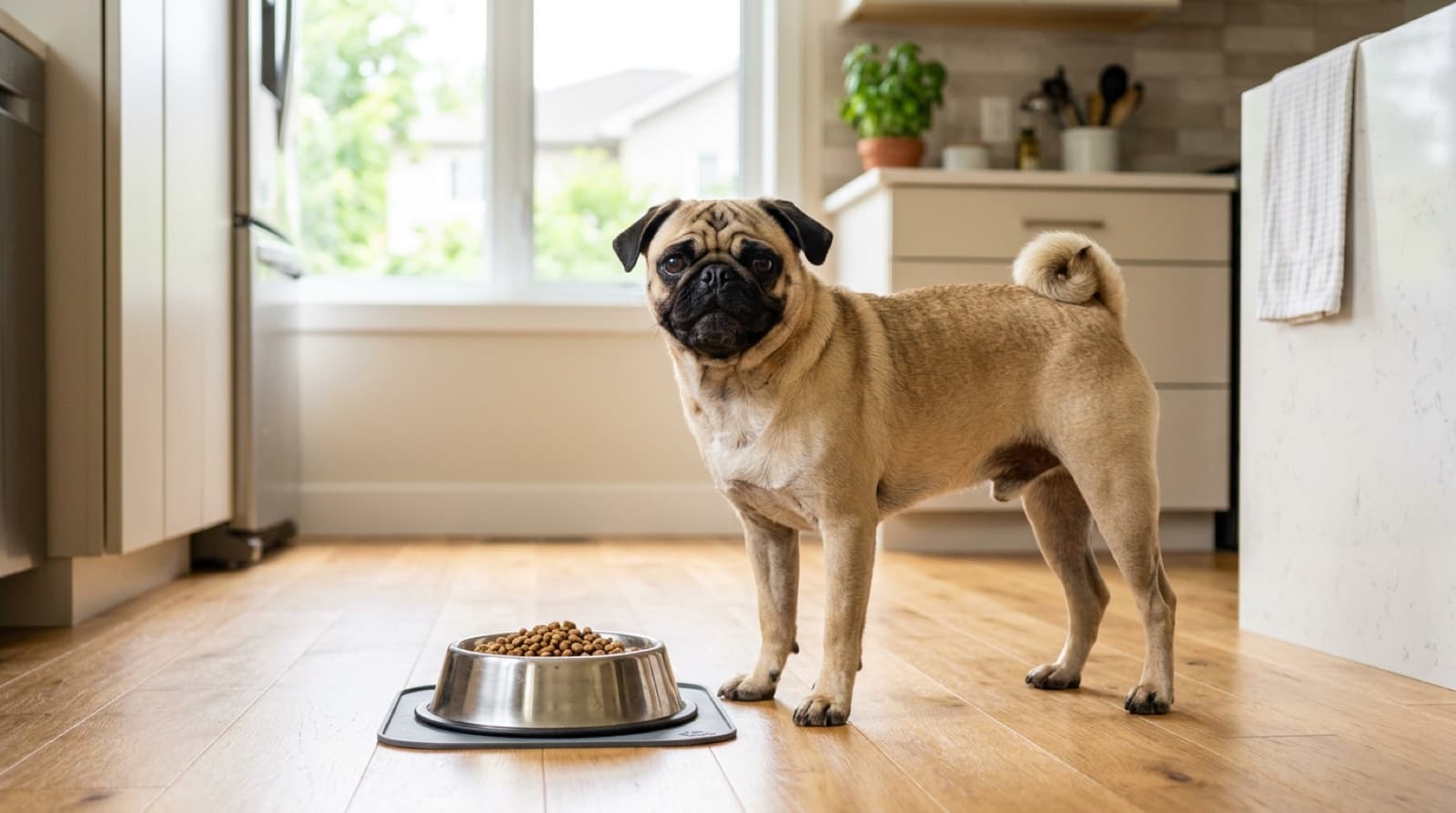
The health guide covers the full list of Pug conditions. But two of them, eye trouble and obesity, aren't just things that happen to a Pug; they're things you actively manage every day, and getting them right prevents a large share of the breed's problems. This is the practical, daily-front-line guide to both, plus the facial-fold care and Montreal-weather exercise balance that support them.
Why Pug eyes are so vulnerable, and how to protect them
Pugs have large, prominent, shallow-set eyes in a flat face, so the eyes protrude and are less protected by the bony socket than a longer-nosed dog's. That leaves them prone to corneal ulcers and scratches (exposed and easily bumped), dry eye (KCS, too few tears), pigmentary keratitis (dark pigment over the cornea), entropion (eyelids rolling in), and, worst case, proptosis (the eyeball coming forward of the socket, usually from trauma).
Protect them: avoid eye trauma (careful with rough play, brush, bigger dogs, and children who might poke; never let a Pug hang its head out of a moving car window), keep the face clean (wipe the eye area, keep fold-hair from irritating), check the eyes daily, address problems promptly (any redness, squinting, cloudiness, discharge, or pawing warrants a prompt vet visit), and manage dry eye if diagnosed (some Pugs need lifelong drops).
Know an eye emergency
Pug eye problems can escalate within a day or two, so know the signs that need a same-day or emergency visit:
- •Proptosis (eyeball out of/bulging past the socket), a true emergency, cover with a clean moist cloth and get to an emergency vet immediately
- •Sudden squinting, holding the eye shut, or pawing/rubbing (pain, often an ulcer)
- •Redness, cloudiness, or a blue/hazy film (ulcer, glaucoma)
- •Thick yellow/green discharge (infection), or a dry, dull eye (dry eye)
- •Visible injury, or sudden vision problems (bumping into things)
With Pug eyes, time matters. Know your nearest Montreal 24-hour emergency hospital.
Why weight matters more for a Pug
Pugs gain weight extremely easily, they're food-obsessed and expert beggars, low-energy, small (so extra food is proportionally large), and hard to resist. And it matters more than for most breeds, because obesity worsens nearly every Pug vulnerability:
- •Breathing: fat around the neck and chest further restricts an already-compromised airway, so an overweight Pug's BOAS gets significantly worse.
- •Heat: obesity worsens heat tolerance, making the heat-sensitive Pug even more prone to dangerous overheating (a Montreal-summer concern).
- •Joints and spine: extra weight strains joints (patellas, hips) and the spine (a concern given hemivertebrae and IVDD risk).
- •Overall health and lifespan: obesity contributes to diabetes, heart strain, and a shorter life.
Because obesity amplifies the Pug's specific weaknesses so directly, keeping a Pug lean is arguably the single most impactful thing an owner can do for the dog's health and longevity.
Keeping a Pug lean
- •Measure the food, feed a measured amount of good-quality food (guidelines often overestimate for a low-energy small dog), and don't free-feed.
- •Control treats, they add up fast in a small dog; use small, healthy treats or kibble pieces, count them in the daily total, and resist the begging.
- •Know a healthy body condition, you should feel the ribs easily and see a waist from above and a belly tuck from the side; ask your vet for body-condition scoring and the ideal weight.
- •Weigh regularly and act early if it creeps up.
- •Gentle, appropriate exercise (see below), and involve your vet for any weight-loss plan (no crash diets; rule out hypothyroidism).
- •Get the whole household on board, one person over-treating undoes everyone's discipline.
A slightly hungry-seeming, lean Pug is a far healthier, longer-lived dog than a well-fed, chubby one. This is front-line healthcare, not cosmetics.
Facial folds, and exercise through Montreal's seasons
Facial folds: clean the wrinkles (especially the nose rope) regularly, every few days, or daily if dirty/moist, by gently wiping inside with a soft damp cloth or vet-recommended wipe, then drying thoroughly (trapped moisture causes skin-fold dermatitis). If a fold looks red, smells, or seems irritated, see the vet. Add routine nail trims (inactive Pugs overgrow nails), ear checks, and dental care (the crowded mouth is prone to disease).
Exercise and weather: Pugs need modest, gentle daily activity (helps weight and wellbeing) but must never be over-exercised, the compromised breathing means they tire and overheat fast. In summer, avoid heat entirely, walk only in cool hours, keep it short, bring water, and on hot humid days skip the walk for indoor air-conditioned play (a missed walk beats heatstroke). In winter, the short coat and flat face mean a warm coat for walks and limited time in extreme cold. Spring and fall are the easiest Pug-walking seasons in Montreal.
Give the Pug the gentle exercise it needs for health and weight, but always adjust to the weather and respect the breed's real limits. Combined with careful feeding, this keeps a Pug lean without endangering its breathing.
Browse adoptable dogs in Montreal
Adopting an adult Pug lets a rescue share the dog's eye history and body condition, so you know what daily care it needs. Refreshed regularly across Montreal-area organizations.
See Available Dogs →Frequently Asked Questions
Why are Pug eyes so vulnerable, and how do I protect them?
The large, prominent, shallow-set eyes protrude and are poorly protected by the flat face, so they're prone to ulcers, dry eye, pigmentary keratitis, entropion, and proptosis. Protect them: avoid trauma (rough play, brush, poking children, car windows), keep the face clean, check the eyes daily, and see a vet promptly for any redness, squinting, cloudiness, or discharge. Some Pugs need lifelong dry-eye drops.
What are the signs of a Pug eye emergency?
Proptosis (eyeball out of the socket, a true emergency, cover with a moist cloth and go immediately), sudden squinting or pawing (pain/ulcer), redness or cloudiness (ulcer/glaucoma), thick discharge (infection) or a dry dull eye, visible injury, or sudden vision loss. Pug eye problems escalate fast, so any noticeable change warrants a same-day or emergency visit. Know your nearest 24-hour hospital.
Why do Pugs gain weight so easily, and why does it matter?
They're food-obsessed, low-energy, small, and expert beggars. It matters more than for most breeds because obesity worsens breathing (BOAS), heat tolerance, joints, spine, and lifespan, amplifying every Pug vulnerability. Keeping a Pug lean is arguably the single most impactful thing an owner can do for its health.
How do I keep my Pug at a healthy weight?
Measure the food (guidelines overestimate for a low-energy small dog), control treats (count them, resist the begging), learn body-condition scoring (feel the ribs, see a waist), weigh regularly, give gentle appropriate exercise, involve your vet for weight loss (no crash diets), and get the whole household on board. A lean Pug is far healthier and longer-lived than a chubby one.
How do I care for the facial folds and eyes day to day?
Clean the folds (especially the nose rope) every few days with a soft damp cloth or vet wipe, then dry thoroughly (trapped moisture causes infection). Wipe normal eye discharge gently, keep hair off the eyes, and check the eyes daily for problems. Some Pugs need dry-eye drops. Add nail trims, ear checks, and dental care. A few minutes regularly heads off the breed's two commonest everyday problems.
Do Pugs need much exercise, given Montreal weather?
Only modest, gentle exercise, and never over-exercise (their breathing limits them). In summer, avoid heat, walk in cool hours only, keep it short, and skip walks on hot humid days for indoor air-conditioned play (heatstroke is a real risk). In winter, use a warm coat and limit time in extreme cold. Spring and fall are the easiest Pug-walking seasons in Montreal.
Related Montreal guides
Pug Adoption in Montreal
Where to adopt, the charming companion temperament, family and apartment fit, real costs, and who the breed suits.
Pug Health Issues
Brachycephalic breathing (BOAS), eye and skin-fold conditions, joint and spinal problems, heat risk, PDE, and the pet-insurance case.
Adoptable Dogs in Montreal
All currently available dogs across Montreal-area organizations, including Pugs and Pug mixes. Updates regularly.
Montreal Dog Adoption Resources
All our Montreal dog adoption guides in one place.
New dog? Start with these care guides
Everything a new adopter needs to set up a safe, happy home.