The short answer
Pugs are lovable but health-challenged, mostly because of the flat face. The big ones: BOAS (brachycephalic breathing difficulty, sometimes needing surgery), serious heat sensitivity (heatstroke risk, dangerous in Montreal summers), vulnerable prominent eyes (ulcers, dry eye, proptosis), skin-fold infections, dental crowding, easy weight gain, and orthopedic/spinal issues (patellas, hip dysplasia, hemivertebrae, IVDD). Rare but serious: Pug dog encephalitis (PDE). They live ~12 to 15 years. Keep the dog lean (the single biggest lever), avoid heat, use a harness not a collar, care for the eyes and folds, and get pet insurance while young, arguably more worthwhile for a Pug than almost any breed.
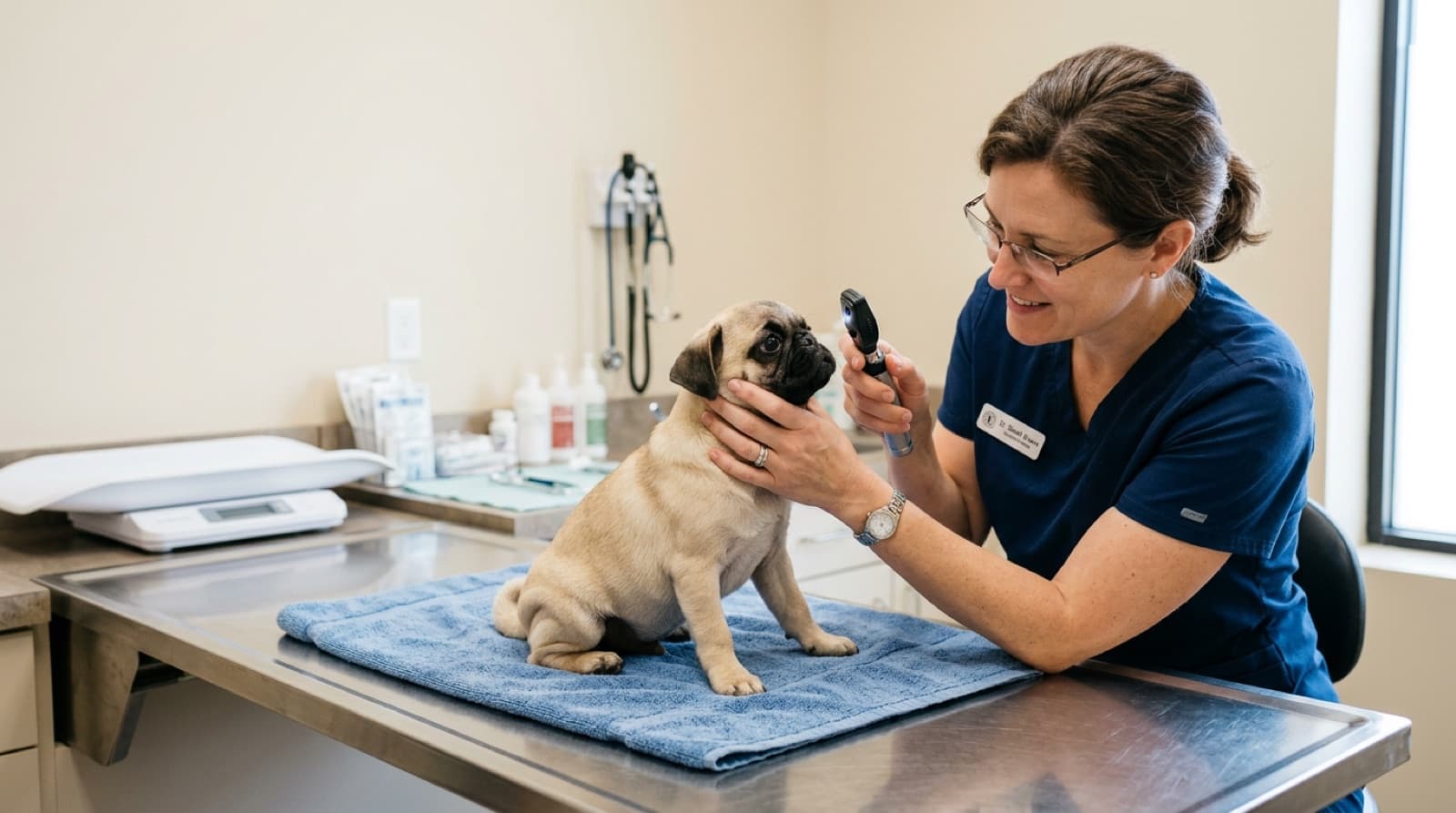
There's no kind way to sugarcoat it: the Pug is one of the more health-challenged breeds, and most of it traces back to the extreme flat face. That doesn't mean a Pug can't live a long, happy life, many do, but it does mean an owner needs to go in informed and prepared to manage real issues. Here's the honest picture, condition by condition, and what you can do about each.
BOAS: the breathing problem
Brachycephalic obstructive airway syndrome (BOAS) is the Pug's most significant issue. The short skull crams normal soft tissue into a small space, giving narrowed nostrils, an elongated soft palate, a narrow windpipe, and more. Many Pugs breathe with more effort than a normal-nosed dog, hence the snoring and snorting (endearing, but a sign of restricted airflow), and significantly affected dogs show labored breathing, poor exercise and heat tolerance, gagging, and, at worst, respiratory distress.
Management: keep the dog lean (obesity dramatically worsens BOAS, the biggest lever you control), avoid heat and over-exertion (crucial in Montreal summers), and use a harness, never a collar. For significantly affected dogs, corrective surgery (widening nostrils, shortening the soft palate) can meaningfully improve breathing and quality of life, best done relatively young. Ask a rescue about a dog's breathing, and if buying, a breeder who breeds for moderate features and better breathing is essential.
Heat sensitivity: the Montreal summer danger
Dogs cool by panting, but a Pug's obstructed airways make panting far less effective, so Pugs overheat quickly and are at real risk of heatstroke, a life-threatening emergency, especially in Montreal's hot, humid summers. Protect the dog: keep it cool (air conditioning), no exercise in the heat (walk in cool hours only), always provide water and shade, never leave it in a parked car (deadly and fast), and keep it lean. Learn the signs (frantic panting, drooling, bright red gums, weakness, vomiting, collapse), cool the dog and get to an emergency vet immediately.
Eyes, skin folds, and teeth
The Pug's prominent, shallow-set eyes are very vulnerable, prone to corneal ulcers, dry eye (KCS), pigmentary keratitis, entropion, and even proptosis (the eye coming out of the socket from trauma). Eye problems are among the most common Pug issues, and they're important enough that we cover eye protection in depth in the eye & weight-care guide.
The facial skin folds trap moisture and debris and can become infected (skin-fold dermatitis) if not cleaned regularly, a simple routine that prevents a common problem. And the crowded flat jaw leads to dental crowding and disease, so dental care matters.
Joints, spine, and weight
Pugs can have hip dysplasia, luxating patellas (slipping kneecaps), and Legg-Calve-Perthes disease, and they're prone to spinal conditions including hemivertebrae (malformed vertebrae, linked to the curly tail) and intervertebral disc disease (IVDD). There's also a neurological condition sometimes called “pug myelopathy.”
Underlying nearly all of this is weight. Pugs love food and gain weight extremely easily, and obesity worsens breathing, joints, spine, heat tolerance, and lifespan. Keeping a Pug lean is the single most impactful thing an owner does, we give it a full treatment in the eye & weight-care guide.
PDE, lifespan, and the insurance case
Pug dog encephalitis (PDE / NME) is a serious, usually fatal breed-specific inflammatory brain disease (seizures, disorientation, incoordination), typically in young to middle-aged Pugs. It's uncommon, most Pugs never develop it, so it shouldn't be the main worry (the everyday realities of BOAS, heat, eyes, and weight matter far more), but it's a recognized condition, and any young Pug showing seizures or neurological signs should see a vet promptly. Pugs live about 12 to 15 years, and a lean, well-cared-for Pug that avoids overheating has a good shot at a long life.
Given the Pug's real potential for costly issues (BOAS surgery, eye conditions, dental work, patella/IVDD surgery, heatstroke treatment), pet insurance is especially worth it, arguably more than for most breeds. Enroll while young and healthy (before issues become pre-existing exclusions, and Pugs often develop issues), and read the fine print on how policies handle brachycephalic/breed-related conditions, some limit or exclude them. Keep an emergency fund regardless.
Browse adoptable dogs in Montreal
Adopting an adult Pug lets a rescue share the dog's known health history, breathing, and eyes, especially valuable for this breed. Refreshed regularly across Montreal-area organizations.
See Available Dogs →Frequently Asked Questions
What health problems are Pugs prone to?
Largely from the flat face: BOAS (breathing), heat intolerance, vulnerable prominent eyes (ulcers, dry eye, proptosis), skin-fold dermatitis, dental crowding, easy obesity, orthopedic issues (patellas, hip dysplasia, Legg-Calve-Perthes) and spinal conditions (hemivertebrae, IVDD), and the rare but serious PDE. Not every Pug gets all of these, but the breed has more challenges than most, so stay informed, lean, and insured.
What is BOAS?
Brachycephalic obstructive airway syndrome, the breathing difficulty from the flat face (narrow nostrils, elongated soft palate, narrow windpipe). Causes snoring/snorting and, in worse cases, labored breathing and heat/exercise intolerance. Manage by keeping the dog lean, avoiding heat and over-exertion, and using a harness; corrective surgery helps significant cases, best done young.
How long do Pugs live?
About 12 to 15 years, and many live long happy lives with good care. Longevity depends heavily on keeping the Pug lean (the single biggest factor), avoiding heatstroke, caring for the eyes and folds, dental care, and preventive vet care. A lean, well-bred, well-managed Pug does far better than an overweight or poorly-bred one.
Why are they so heat-sensitive?
Dogs cool by panting, but a Pug's obstructed airways make panting far less effective, so Pugs overheat quickly and risk heatstroke, dangerous in Montreal summers. Keep the dog cool (air conditioning), exercise only in cool hours, provide water and shade, never leave it in a car, keep it lean, and learn the overheating signs, heatstroke is a true emergency.
Is pet insurance worth it?
Especially so for a Pug, arguably more than most breeds, given the real potential for BOAS surgery, eye conditions, dental work, patella/IVDD surgery, and heatstroke treatment. Enroll while young and healthy (before pre-existing exclusions), and read carefully how policies handle brachycephalic/breed-related conditions, some limit them. Keep an emergency fund regardless.
What is Pug dog encephalitis (PDE)?
A serious, breed-specific, usually fatal inflammatory brain disease (seizures, disorientation, incoordination), typically in young to middle-aged Pugs. It's uncommon, so it shouldn't be the main worry (BOAS, heat, eyes, and weight matter far more day to day), but it's recognized, and any young Pug with seizures or neurological signs should see a vet promptly.
Related Montreal guides
Pug Adoption in Montreal
Where to adopt, the charming companion temperament, family and apartment fit, real costs, and who the breed suits.
Pug Eye Care & Weight Management
Protecting the vulnerable prominent eyes, spotting eye emergencies, and keeping a food-loving Pug lean, the two care tasks that most affect a Pug's life.
Adoptable Dogs in Montreal
All currently available dogs across Montreal-area organizations, including Pugs and Pug mixes. Updates regularly.
Montreal Dog Adoption Resources
All our Montreal dog adoption guides in one place.
New dog? Start with these care guides
Everything a new adopter needs to set up a safe, happy home.