The short answer
Put the cat in one quiet safe room with a litter box, food, water and a hiding spot, and mostly leave it alone for the first few days. Expect hiding. Keep the shelter's food and litter at first, then change both slowly over a week. Book a get-acquainted visit at the Animal Health Clinic of Humboldt and keep its number handy. Go to a vet right away for a male cat straining to pee, repeated vomiting, laboured breathing, or refusing food and water.
The first week decides how the next year goes. A rescue cat has just lost every familiar smell, sound and routine, and its instinct is to hide and assess. Your job is not to win it over. Your job is to be calm, predictable and boring, which is exactly what lets a frightened cat decide the place is safe.
The single biggest mistake new adopters make is doing too much: too much handling, too much space, too many visitors, too fast. Slow down, and the cat speeds up.
Set up the safe room first
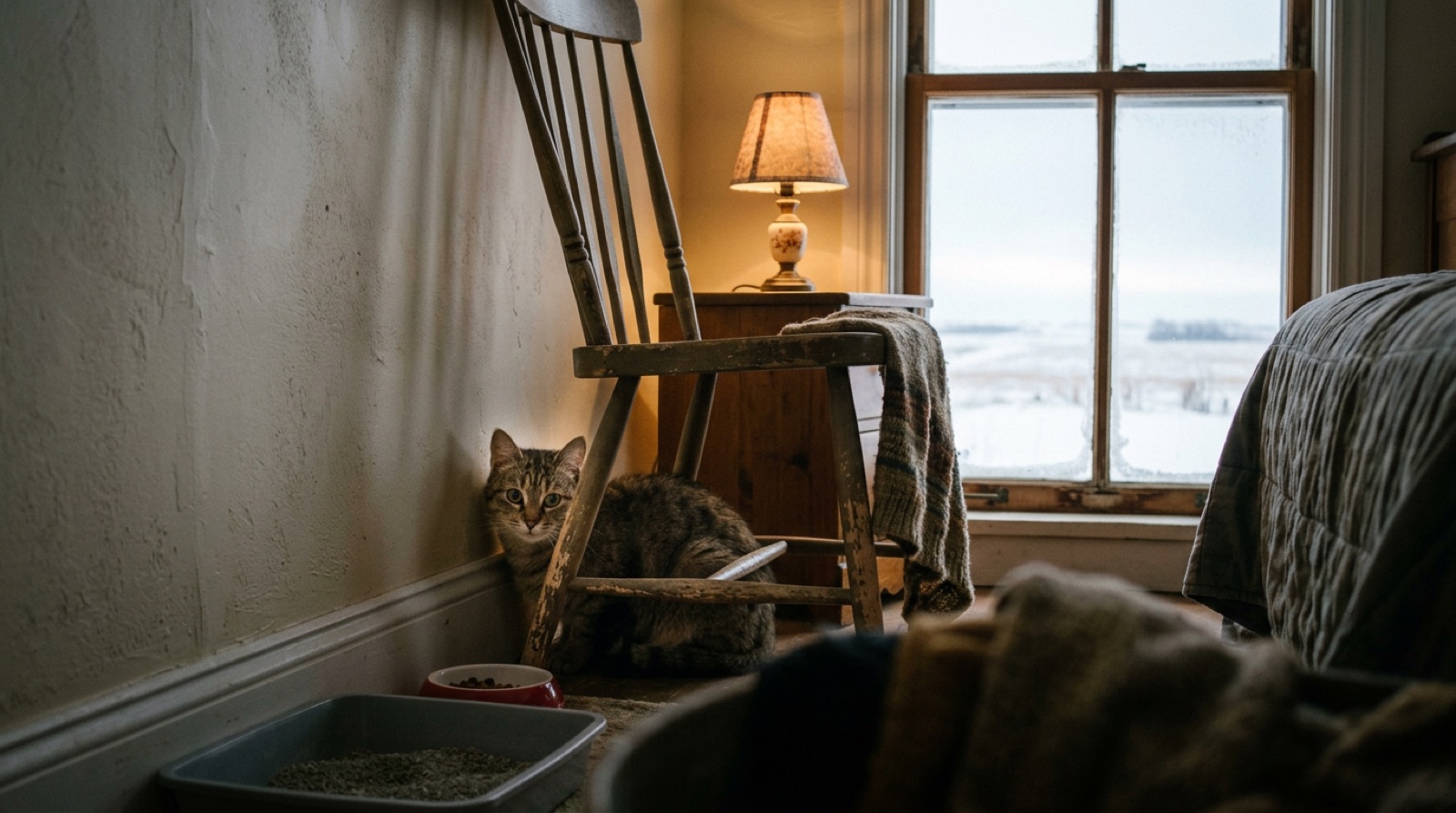
Before the cat comes home, pick one room with a door that closes: a spare bedroom, an office, even a large bathroom. Set it up so the cat has everything it needs in one small, controllable space.
- ✓A quiet safe room with a door that closes
- ✓Litter box, and ideally the same litter the shelter used
- ✓Food and water bowls set apart from the litter box
- ✓A few days of the same food the shelter fed
- ✓A hiding spot: an open carrier, a box on its side, or under a bed
- ✓A scratching post and one or two simple toys
Keep the litter box and the food bowls apart, since cats dislike eating next to where they go. Put the carrier in the room with the door open so it becomes a familiar hiding spot rather than a scary object.
The First Week, Day by Day
| When | What to do |
|---|---|
| Day 1 | Set the cat up in the safe room and leave it alone. Let it come out of the carrier on its own. Do not chase, hold or introduce it to anyone. Quiet is the whole job today. |
| Days 2 to 3 | Expect hiding. Sit in the room and read or talk softly without reaching for the cat. Refresh food, water and litter on a schedule so the cat learns the rhythm. |
| Days 4 to 7 | Many cats start to explore and approach on their own terms. Let the cat set the pace. Short play sessions with a wand toy build trust faster than picking it up. |
| Week 2 and on | Once the cat is relaxed in the safe room, open the door and let it explore the rest of the house gradually. Book a get-acquainted vet visit if you have not already. |
Change food and litter slowly
Ask the Humboldt & District SPCA what food and litter the cat was using, and match it for the first few days. An abrupt switch of either, on top of the stress of moving, is a common cause of diarrhoea and litter box refusal in week one.
When you do change food, do it over about a week: a little of the new food mixed into the old at first, then a bit more each day until the bowl is all new by the end of the week. Same idea with litter if you want to switch. A stressed digestive system handles gradual change far better than a clean break.
Find a Humboldt vet in week one
Book a get-acquainted visit even though your cat is already vaccinated. The point is to have a clinic that knows your cat before you are dealing with an emergency. The Animal Health Clinic of Humboldt at 626 2nd Street (306-682-2583) is the local small-animal practice.
Bring the medical records the shelter gave you so the clinic starts with a full history. Ask them about parasite prevention, especially if your cat will have any contact with the outdoors, and confirm what the shelter has already done so you do not double up.
Work out your after-hours plan now, too. The nearest 24-hour hospital is the WCVM Veterinary Medical Centre in Saskatoon, about an hour and a quarter west on Highway 5. Knowing the route before you need it is the whole point.
Red flags that mean go to a vet now
Most of week one is quiet worry that resolves on its own. A few things are genuine emergencies and should not wait for the settling-in period to pass:
- ⚠A male cat straining in the litter box going in and out, crying, producing little or no urine. This is a possible urinary blockage and is life-threatening within hours.
- ⚠Repeated vomiting or diarrhoea, or refusing all food and water for more than a day.
- ⚠Laboured or open-mouth breathing, collapse, or a swollen painful belly.
- ⚠A suspected poison, such as antifreeze, lily plants, or human medication.
Call the Animal Health Clinic of Humboldt during the day, and know your route to the Saskatoon 24-hour hospital for after hours. Move fast on the urinary one especially.
Still choosing your cat?
The first week goes smoother when the cat suits your home. Browse adoptable Humboldt cats and ask the shelter which ones settle fastest. Listings refreshed regularly.
See Available Humboldt Cats →Frequently Asked Questions
What do I do the first day I bring a rescue cat home in Humboldt?
Set up one quiet safe room before the cat arrives, put it in there, and then mostly leave it alone. A single room with a closed door, a litter box, food and water, and a place to hide is far less overwhelming than the run of a whole house. Let the cat come out of the carrier on its own time rather than tipping it out. Skip the introductions, the handling and the excited kids for now. The best first day is a boring, quiet one, which lets the cat start to feel safe on its own terms.
My new cat is hiding and will not come out. Is that normal?
Completely normal, and pushing it makes it worse. A rescue cat has just lost everything familiar and landed somewhere strange, so hiding under the bed or behind the couch for a few days is the cat coping, not the cat failing. Sit in the room quietly, talk softly, and let the cat approach when it is ready rather than reaching for it. Most cats begin to venture out within three to seven days. The exception that needs attention is a cat that also will not eat or drink for more than a day, which is a vet call, not a patience thing.
How do I switch my cat to a new food?
Slowly, over about a week, or you will likely get diarrhoea. Feed the same food the shelter used for the first few days, then mix in a little of the new food and increase the proportion gradually while decreasing the old. A rough guide is a quarter new for a couple of days, then half, then three-quarters, then all new by the end of the week. The same slow approach applies to litter. An abrupt switch of either food or litter in an already-stressed cat is a common cause of an upset stomach or litter box refusal in week one.
When should I take my new cat to the vet?
Book a get-acquainted visit within the first week or two even though the shelter already vaccinated, because it starts a relationship with a clinic before you have an emergency. The Animal Health Clinic of Humboldt at 306-682-2583 is the local small-animal practice. Bring the medical records the Humboldt & District SPCA gave you. Go sooner than that scheduled visit if you see red flags: not eating for more than a day, repeated vomiting or diarrhoea, laboured breathing, or a male cat straining in the litter box without producing urine. That last one is an emergency, covered below.
What symptoms mean I should go to the vet immediately?
A few are genuine emergencies. The most urgent in cats is a male straining in the litter box, going in and out, crying, and producing little or no urine. That is a possible urinary blockage, which is life-threatening within hours, not days. Others that mean go now: repeated vomiting, laboured or open-mouth breathing, a swollen or painful belly, collapse, a suspected poison like antifreeze, or refusing all food and water for more than a day. During the day, call the Animal Health Clinic of Humboldt first. After hours, the nearest 24-hour hospital is in Saskatoon. Identify that route before you need it.
How long until my rescue cat settles in?
A useful frame is three days, three weeks, three months. The first three days are decompression, when the cat is scared and mostly hiding. The first three weeks are learning the routine, testing whether the home is safe, and starting to show personality. Around three months, most cats are fully settled and behaving like the cat they will be. Do not judge the cat by week one. The frightened animal under your bed on day two is very often a confident, affectionate cat by month three, and the change is worth the patience.
Should I let my new cat meet my other pets right away?
No, go slowly, and start with scent before sight. Keep the new cat in its safe room for the first several days so the animals get used to each other's smell under the door before any face-to-face meeting. Then try brief, supervised introductions and build up from there. Dogs meet the cat on a leash, calmly, with the cat free to retreat. Rushing introductions creates fights and setbacks that take weeks to undo. If you already have a resident cat, a careful week-long introduction is far better than throwing them together and hoping.
What if my kids are excited to meet the new cat?
Channel the excitement into patience, because a swarm of eager kids is exactly what a frightened cat cannot handle in week one. Explain that the cat is scared and needs quiet, and that the way to make friends is to sit calmly and let the cat come to them. Set rules: no chasing, no picking the cat up, no cornering it, and always leave the cat an escape route. A cat that learns children are gentle and predictable becomes a wonderful family pet. A cat that learns children are chaos will avoid them for months.
Do I need to buy everything before I pick the cat up?
Buy the essentials first and let the rest wait. Before pickup you want a litter box, litter, food and water bowls, a few days of the food the shelter used, a scratching post and a hiding spot. That is enough for a safe room. You do not need a cat tree, a fountain, ten toys and a fancy bed on day one, and buying all of it before you know the cat is a good way to waste money. Watch what the cat actually likes over the first couple of weeks, then buy to suit it.
Related Humboldt Guides
One search, every Humboldt cat
Adoptable cats and kittens from the Humboldt area, in a single list.
Browse Available Humboldt Cats →New cat? Start with these care guides
Everything a new adopter needs to set up a safe, happy home.