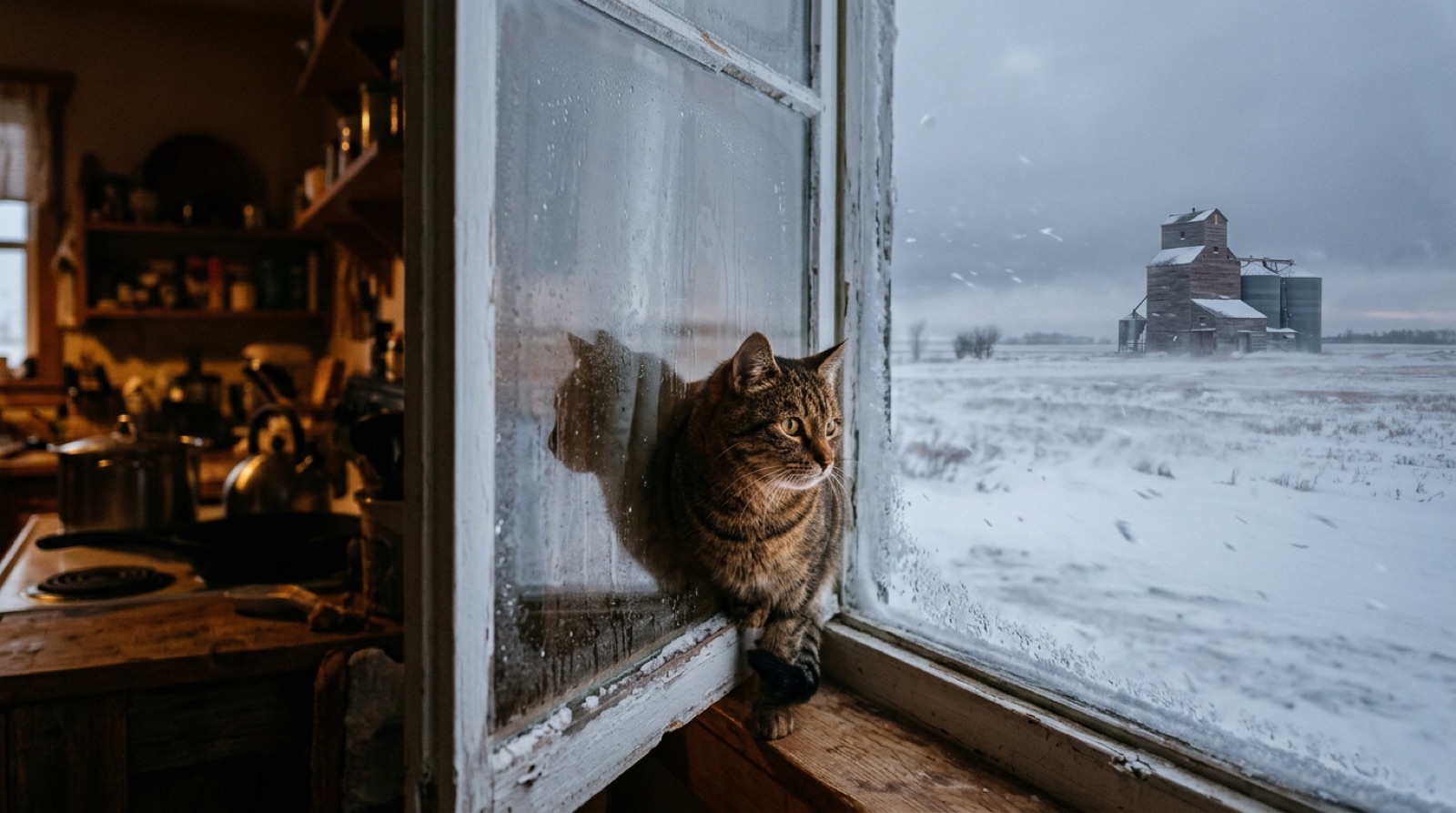
The short answer
Around Humboldt, indoor is the safe choice. Prairie winters run well below -30C, coyotes and owls hunt the town edges and acreages, Highway 5 and warm winter engine bays kill cats, and farm chemicals add more risk. Indoor cats live far longer, and a home with height to climb, things to scratch and daily play meets a cat's needs. Humboldt also licenses cats, so a tag matters if yours gets out. Want outdoor time? Use a harness, a catio or a fenced yard.
The indoor-versus-outdoor question has a clear answer almost everywhere, and central Saskatchewan makes it clearer than most. This is grain country with long, brutal winters, open prairie, and predators that treat a house cat as an easy meal. The romantic idea of a cat roaming free runs straight into a landscape built to shorten its life.
None of this means an indoor cat is a deprived cat. It means the enrichment moves inside, where you control it, instead of outside, where a coyote or a cold snap does.
What the outdoors actually threatens
Humboldt winters run well below -30C with wind on top. Frostbite hits ears, paws and tails fast, and a cat locked out overnight in a cold snap can die.
Coyotes work the edges of prairie towns and acreages, and great horned owls take cats after dark. A house cat is prey it does not know to fear.
Highway 5 and town traffic are one danger. The other is a cat crawling into a warm engine bay in winter, which ends badly when the vehicle starts.
Around acreages, machinery, rodenticides and antifreeze all kill cats. Antifreeze tastes sweet and a small amount is fatal.
Fighting, mating and shared prey spread feline leukaemia, FIV, abscesses and worms. An outdoor cat needs far more parasite prevention.
A roaming cat can wander, get shut in a shed, or be picked up under the animal control bylaw. A licence tag is what gets it home.
The winter case, specifically
Humboldt winters are the part outsiders underestimate. Stretches well below -30C are normal, and open-prairie wind drags the felt temperature down further. A cat caught out overnight in that can suffer frostbite on its ears, paws and tail, or freeze outright.
The engine-bay danger is the sneaky one. Outdoor and stray cats climb into a warm engine compartment to escape the cold, and starting the car the next morning is fatal for them. If you know cats are around, bang on the hood or honk before you start the vehicle. It costs you two seconds.
Even a cat that loves the outdoors in July has no business out in a January cold snap. If you feed strays, the winter minimum is an insulated, wind-blocked shelter raised off the ground, not an open porch.
The Humboldt cat licence
Humboldt is one of the prairie cities that licenses cats, not just dogs. Any dog or cat over three months old needs an annual licence, which runs $40 or $15 if the cat is spayed or neutered with a vet certificate. Licences follow the calendar year and are paid at City Hall. See the City of Humboldt permits and licensing page for the current process.
The practical value is the tag. An indoor cat can still dart out an open door, and a tagged cat that is found gets identified as yours rather than treated as a stray. It is cheap insurance for the one time it matters.
Make the indoor life a good one
Go vertical. A cat tree, a few wall shelves or a tall scratching post give the climbing and perching cats crave. Vertical space makes a small home feel big to a cat.
Play like a hunter. Two short wand-toy sessions a day let the cat stalk, chase and pounce. That is the outdoor drive, satisfied indoors.
Give it a view. A perch at a window, ideally with a bird feeder outside the glass, is hours of free entertainment. Cats will watch a prairie yard all day.
Feed the brain. Puzzle feeders and a measured diet keep a cat lean and busy instead of bored and overweight.
Add safe outdoor time if you want it. A catio, a harness routine or a cat-proof fenced yard gives fresh air with none of the traffic, predators or cold.
Barn cats, done right
Working barn cats are a genuine prairie tradition and this guide is not against them. But there is a right way. The cats are spayed and neutered so they do not breed into an unmanageable colony, they are vaccinated, they get an insulated and heated shelter for winter, and they are fed every day rather than left to survive on mice alone.
What creates the shelter problem is the other version: an unfixed house cat dropped on an acreage and forgotten. Those cats suffer and multiply, and their kittens are the ones that fill the Humboldt & District SPCA. If you want working cats, ask the shelter about animals suited to that life and commit to getting them fixed.
Watch for the winter emergency
Antifreeze is the one to fear on an acreage. It tastes sweet, cats lick it up, and a very small amount causes fatal kidney failure. Store it sealed and clean spills immediately. If you think your cat swallowed any, that is a same-day emergency, not a wait-and-see. Your day clinic handles urgent calls in hours, and the nearest 24-hour hospital is the WCVM Veterinary Medical Centre in Saskatoon, about an hour and a quarter west on Highway 5.
Looking for an indoor companion?
Plenty of cats at the Humboldt & District SPCA are happiest as indoor pets. Browse who is available and ask the shelter which cats suit a quiet home. Listings refreshed regularly.
See Available Humboldt Cats →Frequently Asked Questions
Should I let my cat outside in Humboldt?
For most cats, no. Indoor cats live much longer on average than cats allowed to roam, and around Humboldt the outdoor dangers stack up fast: prairie cold well below -30C, coyotes and owls, Highway 5 and town traffic, warm engine bays in winter, and farm chemicals near acreages. A cat gets everything it needs from a well-set-up indoor home with things to climb, scratch and watch. If you want your cat to experience outside, do it on your terms with a harness, a catio or a securely fenced yard rather than an open door.
Is it cruel to keep a cat indoors?
No, as long as the indoor space is set up for a cat rather than just containing one. Cats need vertical space to climb, scratching surfaces, a window to watch, daily play that mimics hunting, and a routine. A bored indoor cat is a real problem, but the answer is enrichment, not the front door. The trade is simple: an enriched indoor cat lives a longer, safer, healthier life. An outdoor cat gets more stimulation and a much shorter, riskier one. Most owners, once they see the risks clearly, choose the longer life.
What about barn cats and acreage cats?
Working barn cats are a real prairie tradition, and if you genuinely need mousers, the responsible version looks specific. The cats are spayed and neutered so they do not breed into a colony, vaccinated, given a heated and insulated shelter for winter, and fed daily rather than left to fend for themselves. What does not work is dumping an unfixed house cat on an acreage and hoping. Around Humboldt those cats freeze, get taken by coyotes, or multiply into the numbers that keep the shelter full. If you want a barn cat, ask the Humboldt & District SPCA about cats suited to that life.
Do I need to licence my cat in Humboldt?
Yes. The City of Humboldt licenses cats as well as dogs, and this catches out adopters who lived somewhere that only licensed dogs. Any dog or cat over three months old needs an annual licence, which is $40 or $15 if the cat is spayed or neutered with a vet certificate. Licences run the calendar year and are paid at City Hall. Beyond the fee, the tag is the practical thing: if your cat gets out and is picked up, the tag is what identifies it as yours instead of a stray. Check the City of Humboldt permits page for the current process.
How cold is too cold for a cat outside?
Colder than most people think, and Humboldt spends a lot of the winter past that line. Once temperatures drop below freezing, a cat outdoors risks frostbite on its ears, paws and tail, and hypothermia if it cannot get somewhere warm. Add prairie wind and the real danger climbs sharply. During a deep cold snap, well below -30C, no house cat should be outside at all. If you feed strays or a barn cat, the winter minimum is an insulated, wind-blocked, off-the-ground shelter they can warm with their own body heat.
My cat wants to go outside and cries at the door. What do I do?
Redirect the energy rather than open the door, because the crying is usually boredom wearing an outdoor costume. Add two short play sessions a day with a wand toy that lets the cat chase and pounce, feed part of the meal in a puzzle feeder, and put a cat tree by a window so there is something to watch. A window bird feeder outside the glass is cat television. If you have the space, a catio or a harness routine gives real outdoor time safely. Most door-crying fades once the indoor day is genuinely interesting.
Are engine bays really a winter risk here?
Yes, and it is one of the ones people forget. In cold weather, outdoor and stray cats climb into the warm engine compartment of a recently parked vehicle to escape the wind. When someone starts the engine the next morning, the results are horrific. The prevention is simple and worth the habit in a prairie winter: bang on the hood or honk the horn before you start the car, especially if you know cats are around. It is a small thing that saves lives in a town where winters are long.
Will an indoor cat get fat and lazy?
It can, if the home is set up as a container rather than a habitat, but that is a management issue, not a reason to send the cat outside. Measure food rather than free-feeding, feed part of it through puzzle feeders that make the cat work, and build in daily play that gets the cat moving and hunting. A cat tree, shelves and a window perch add the vertical movement cats crave. An indoor cat that plays every day and eats a measured diet stays lean and engaged. The couch-potato cat is usually an under-stimulated cat, not an indoor one.
What is the safest way to give my cat outdoor time?
Three options, in rough order of ease. A harness and leash lets a confident cat explore a yard under supervision, though it takes patient training and not every cat takes to it. A catio, an enclosed patio or window box, gives fresh air and sunshine with zero risk and is the gold standard. A securely fenced yard with cat-proof fence toppers can work for some cats but needs real attention to escape-proofing. All three beat an open door, because you keep the cat away from traffic, predators, cold and disease while still giving it the enrichment it wants.
Related Humboldt Guides
One search, every Humboldt cat
Adoptable cats and kittens from the Humboldt area, in a single list.
Browse Available Humboldt Cats →New cat? Start with these care guides
Everything a new adopter needs to set up a safe, happy home.