The short answer
Book a cat spay or neuter through the Animal Health Clinic of Humboldt (306-682-2583), the local small-animal practice, and phone ahead because surgery days fill quickly in a small city. Expect the cost to land in the low hundreds, more for a spay than a neuter, plus 6% PST and 5% GST. A cat adopted from the Humboldt & District SPCA is already fixed. Fix privately-taken kittens and farm cats early, before one unspayed female turns into a colony.
Around Humboldt, the case for fixing a cat is not abstract. The Humboldt & District SPCA runs cat-heavy most of the year, and the reason traces straight back to unfixed cats reproducing on rural properties. Every cat someone gets fixed is a stack of future litters that never lands in a kennel.
If your cat came from the shelter, this is already handled. If you took on a kitten from a farm litter, a stray that wandered in, or a free cat off a classified ad, read on. The surgery is straightforward and the payoff is large.
Where to book in Humboldt
626 2nd Street, Humboldt. 306-682-2583. A mixed-animal practice handling small-animal surgery, including cat spays and neuters. Phone for current cat pricing and to book a surgical slot.
Clinic details verified July 2026 from the Animal Health Clinic of Humboldt. Confirm current cat pricing and available surgery dates by phone, since a small city has limited surgical slots.
What to ask when you phone
The full price. Ask what the total includes: the surgery, anaesthetic, pain medication to go home, an e-collar and any recheck. A low quote that excludes pain control is not the cheaper option.
Pre-surgical screening. Ask whether they run bloodwork before anaesthetic, especially for an older cat.
Weight and readiness. They will confirm the kitten is big enough and old enough on the day.
The tax. Remember Saskatchewan adds 6% PST and 5% GST, so the number you are quoted is not quite the number you pay.
Spay and neuter are not the same surgery
A neuter removes a male cat's testicles through a small incision, with no entry into the abdomen, so recovery is quick. A spay removes a female's ovaries and uterus through an abdominal incision, which is a bigger surgery with a slightly longer recovery. That difference is why a spay costs more, and why the recovery guidance below matters more for a female.
On timing, ask your vet rather than a rule of thumb from the internet. The American Veterinary Medical Association's position on paediatric spay and neuter and the American Association of Feline Practitioners endorsement on age of sterilisation are both worth reading first, so the conversation with your clinic is a better one.
The Recovery Week
| When | What to expect |
|---|---|
| Surgery day | Home the same day, groggy and quiet. Offer a small meal and water once the vet says so. Keep the cat warm and let it sleep it off. |
| Days 1 to 3 | Low activity. No jumping onto counters or beds if you can help it. Check the incision once a day for redness, swelling or discharge. |
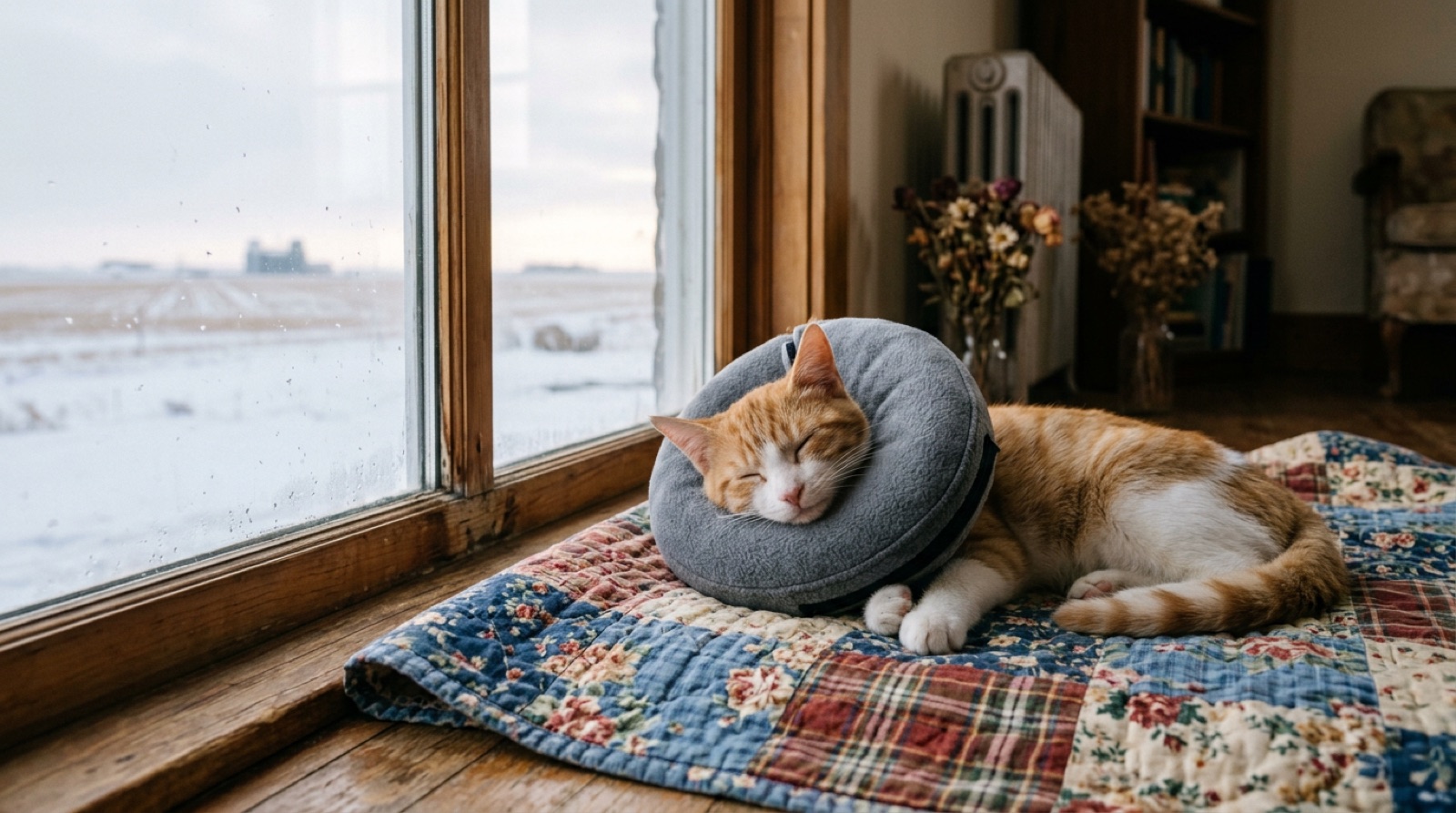
| Days 4 to 7 | Energy comes back and the challenge flips to keeping the cat calm enough to heal. Keep the cone on and the cat indoors. |
| Days 7 to 14 | Most incisions are healed by the end of this window. Follow the clinic on any recheck or suture removal. Stop the licking until then. |
General guidance only. Always follow the specific aftercare instructions your clinic sends home with the cat.
Know your after-hours plan before you need it
Most recoveries are boring, which is the goal. But have the plan ready anyway. Call your day clinic first with any worry during business hours.
For a genuine after-hours emergency, the nearest 24-hour hospital is the WCVM Veterinary Medical Centre in Saskatoon, about an hour and a quarter west on Highway 5, and it asks people to phone ahead. Write the numbers on the fridge the day of surgery. Ongoing bleeding, a reopened incision, repeated vomiting or a cat that will not eat all need a call.
Why this matters more in a rural catchment
In a big city with a dense clinic network, an unfixed cat is a bad idea. Around Humboldt, it is the engine of the whole problem. Free-roaming cats are normal on prairie farmyards, and a single unspayed female can start a colony in a couple of seasons that nobody planned and nobody can afford to feed.
Getting one cat fixed is not just about that cat. It is the single most effective thing an ordinary owner can do to keep the regional shelter from staying permanently full. The health benefits for your own cat are real, as the American Veterinary Medical Association lays out. The population benefit for the region is bigger than any one household.
Prefer a cat already fixed?
Every cat at the Humboldt & District SPCA comes home spayed or neutered, vaccinated and microchipped. Skip the surgery booking entirely. Listings refreshed regularly.
See Available Humboldt Cats →Frequently Asked Questions
Where can I get a cat spayed or neutered in Humboldt?
The Animal Health Clinic of Humboldt at 626 2nd Street is the local small-animal practice and handles cat spays and neuters. Phone them at 306-682-2583 for current cat pricing and to book a surgical slot, since a small city has limited surgery days each week and they fill up. If your cat came from the Humboldt & District SPCA it is already fixed, so this guide is really for kittens you have taken on privately, farm cats or a cat from a source that did not include the surgery. Book earlier than you think you need to.
How much does it cost to fix a cat in Saskatchewan?
A routine cat neuter is the cheaper surgery and a spay costs more, because a spay is abdominal surgery and a neuter is not. Across Saskatchewan clinics the total commonly lands somewhere in the low hundreds, and it varies with the clinic, the cat's weight, whether it is pregnant or in heat, and any bloodwork. Do not price it off a number from another province. Phone the Animal Health Clinic of Humboldt for their current figure, and remember Saskatchewan adds 6% PST plus 5% GST to the bill, which many owners forget to budget for.
Is there a low-cost spay and neuter program near Humboldt?
We could not verify a standing low-cost or subsidised cat spay and neuter program running in Humboldt itself, so we are not going to name one that might not exist. Some Saskatchewan communities run periodic clinics or income-based programs, and availability changes. The people who would actually know are the Humboldt & District SPCA and your clinic, so phone and ask them directly. If money is the barrier, say so plainly. A clinic can sometimes plan around a budget when it knows in advance.
What age should a cat be fixed?
Ask your vet rather than a rule of thumb off the internet, because the timing has shifted over the years. The American Association of Feline Practitioners endorses sterilising by five months of age, before most cats can reproduce, and the American Veterinary Medical Association supports paediatric spay and neuter as safe when done properly. A kitten from a farm litter can be pregnant far earlier than people expect, which is exactly how one unfixed female becomes a colony. Your clinic will weigh the cat and confirm it is ready.
Why bother fixing an indoor-only cat?
Two reasons that have nothing to do with roaming. Health first: spaying removes the risk of a life-threatening uterine infection called pyometra and greatly reduces mammary cancer risk, and neutering removes the testicular cancer risk and a lot of hormone-driven stress. Behaviour second: unneutered males spray strong-smelling urine to mark territory and unspayed females yowl and pace through heat cycles that repeat every couple of weeks in season. An indoor cat with none of that is a calmer housemate. The surgery is a one-time thing that prevents a long list of problems.
Is the surgery safe?
Spay and neuter are among the most common surgeries a small-animal clinic performs, and the risk for a healthy young cat is low. Modern anaesthetic protocols, pre-surgical checks and pain control have made it far safer than it was a generation ago. Ask your clinic what pre-anaesthetic screening they do, how they manage pain afterward and what warning signs to watch for at home. A good clinic answers all of that without being prickly, because informed owners make their job easier and the cat safer.
What does the recovery week actually look like?
The cat comes home the same day, groggy, and mostly sleeps off the anaesthetic. The genuinely hard part is not the first day, it is days four to seven when the cat feels fine and wants to leap onto the counter while the incision is still healing. Keep the cone on even though the cat hates it, keep activity low, keep the cat indoors, and check the incision once a day for redness, swelling or discharge. Most cats are fully healed within two weeks. Follow whatever recheck your clinic sets.
My cat is pregnant. Can it still be spayed?
Usually yes, and many vets will spay a pregnant cat, which ends the pregnancy. It is a more involved surgery than a routine spay and it costs more, so discuss it honestly with your clinic. Given how many cats already wait for homes at the Humboldt & District SPCA and across the region, most rescues and vets treat this as the responsible choice rather than adding another litter to a system that is already full. It is your decision to make with your vet, not a stranger online.
Does fixing a cat change its personality?
Not the core personality, no. A friendly cat stays friendly and a shy cat stays shy. What changes is the hormone-driven behaviour most owners are glad to lose: the spraying, the yowling, the pacing, the urge to bolt out an open door chasing a mate. Many owners describe a neutered male as calmer and more affectionate afterward, which makes sense once the constant hormonal pressure is gone. You are not trading away the cat you like. You are removing the parts nobody enjoys.
What if something goes wrong after hours?
Have the plan before you need it. Your day clinic handles routine post-surgery questions during business hours, so call them first with anything that worries you. For a genuine after-hours emergency, the nearest full 24-hour hospital is the WCVM Veterinary Medical Centre in Saskatoon, about an hour and a quarter west on Highway 5, and it asks people to phone ahead. Write the numbers on the fridge the day of surgery. Signs that need a call include ongoing bleeding, a reopened incision, repeated vomiting or a cat that will not eat or drink at all.
Related Humboldt Guides
One search, every Humboldt cat
Adoptable cats and kittens from the Humboldt area, already spayed or neutered.
Browse Available Humboldt Cats →New cat? Start with these care guides
Everything a new adopter needs to set up a safe, happy home.
Cat & Dog Spay/Neuter Cost in Canada
Standard and subsidised pricing by province, and how to find a low-cost clinic wherever you are.