The short answer
Labs are the most obesity-prone breed in North America, and Edmonton owners face the worst version of the problem. The Lab POMC gene variant drives constant food motivation, and Edmonton winters cut outdoor exercise volume by 30 to 40 percent across 6 to 7 months. The target is Body Condition Score 4 to 5 out of 9 (ribs palpable, visible waist, abdominal tuck). The calorie math: cut kibble 10 to 15 percent from October through March, hold the treat budget at 10 percent of daily calories, and replace lost outdoor minutes with indoor mental work. The payoff is real. Lean Labs live a median of 2 years longer than overweight ones.
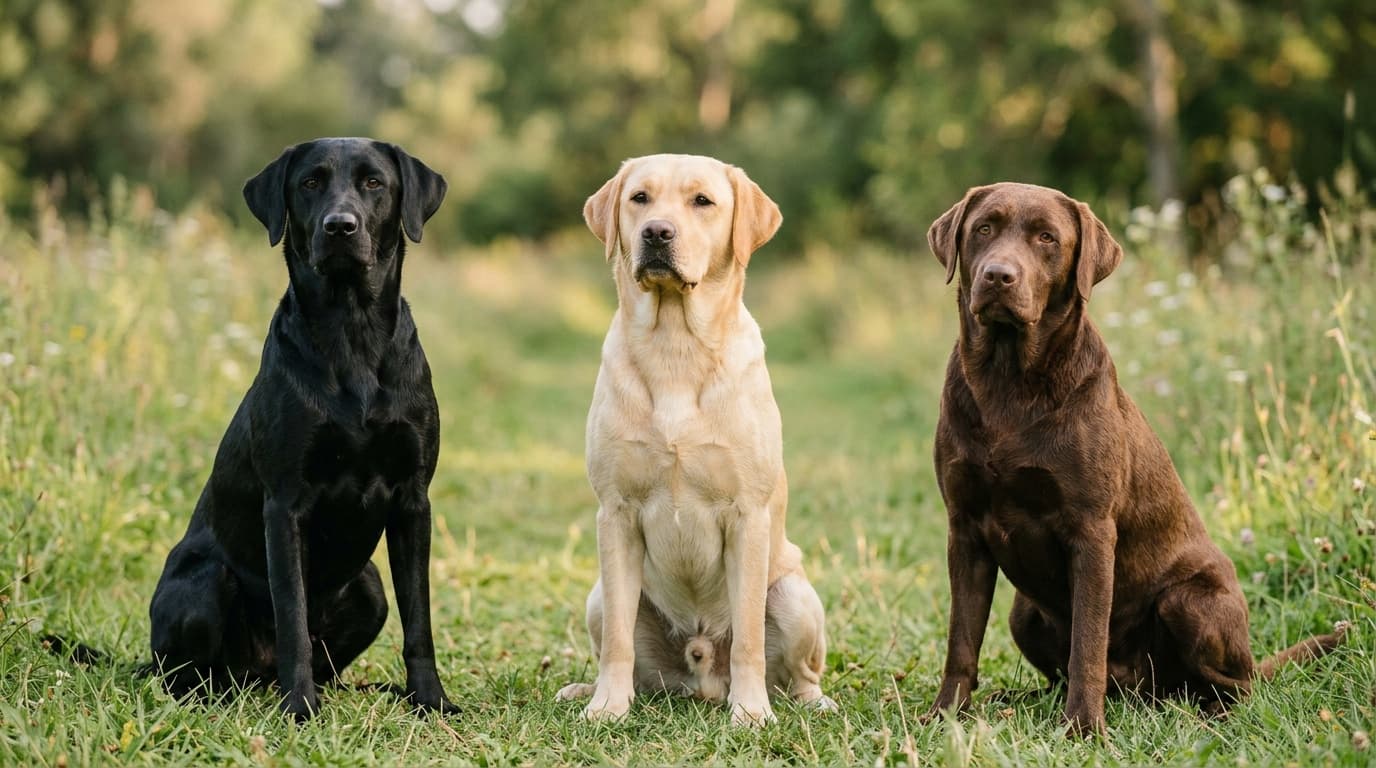
Why Labs gain weight more easily than other breeds
The Lab obesity rate sits at the top of every breed comparison study published in the past decade. The mechanism is genetic. A documented mutation in the POMC gene (proopiomelanocortin) affects appetite regulation in a meaningful percentage of the breed. Dogs carrying the variant feel hungrier than other breeds even after eating adequate calories, beg for food more persistently, and gain weight faster on the same diet. The University of Cambridge POMC research on Labradors is the most-cited paper in the field and gives veterinary clinicians a clean explanation for what every Lab owner has observed: the dog is always hungry, even when well fed.
On top of the genetic drive, Labs were selectively bred for centuries as a working retriever, and the same food motivation that makes them the dominant breed in guide-dog and service-dog work makes them prone to over-eating in pet homes. They will work for food in a way few breeds will. They will also eat the food regardless of whether they are hungry, regardless of whether the meal is theirs, and regardless of whether the bowl is on the floor or the kitchen counter.
The numbers reflect the genetics. The ASPCA pet weight guidance notes that more than half of North American pet dogs are overweight or obese. For Labs specifically, the rate is the highest of any breed studied. Most pet Labs in Edmonton homes today are running BCS 6 to 7, which the owner sees as normal because that is what most Labs look like.
The implication is not subtle. Weight management is not an aspiration for a Lab owner. It is a daily lifelong commitment. Skipping the discipline takes years off the dog life and compounds every joint, cardiac, and metabolic risk the breed already carries.
The Edmonton winter pattern: October to April is the danger window
Edmonton winter is longer, deeper, and more consistent than Calgary winter. The first hard freeze typically arrives in mid-October, the last spring thaw lingers into early May, and the deep cold (-25C and below) stretches across many weeks rather than a handful of cold snaps. Calgary gets chinook reprieves of +5C in mid-January that let owners stretch the dog hard outside and reset the weekly exercise debt. Edmonton does not. The deep cold runs continuously, and the snow that fell in November is still on the ground in April.
For a Lab, that translates directly to a 30 to 40 percent reduction in outdoor exercise volume across 6 to 7 months. The summer Lab routine of an hour-long off-leash session at Terwillegar plus a neighbourhood walk plus a backyard fetch session is not realistic at -30C with a 25 km/h wind. The reality on a deep-cold week is a 20 to 30 minute walk, a quick fetch session at the door, and a long evening on the couch. A Lab on that schedule burns 100 to 200 fewer calories a day than the same Lab in summer.
The math is where the problem shows up. 150 missed calories a day for 180 days is 27,000 calories of unburned energy. At roughly 3,500 calories per pound of body fat, that is a potential 7 to 8 lb winter weight gain on autopilot. Real-world numbers we see in Edmonton owners we work with are slightly lower, around 5 to 10 lbs per winter, because most owners are at least somewhat aware. But the cycle is real, and it stacks year over year. The Lab that gained 5 lbs the first winter and lost 2 lbs the following summer is sitting at +3 lbs going into winter two. The same pattern across four winters is a 12 lb dog.
The fix is not optimism about spring. It is matching the winter food intake to the winter activity output. Most Edmonton Lab owners who manage weight successfully cut kibble 10 to 15 percent from October through March and add structured indoor work to replace some of the lost outdoor minutes.
Body Condition Score: what to actually look for
Body Condition Score is the veterinary tool that matters more than the scale weight. The AAHA weight management guidelines use a 9-point scale, where 1 is emaciated, 5 is ideal, and 9 is severely obese. For Labs, target BCS 4 to 5. Most Edmonton pet Labs are sitting at BCS 6 to 7, which looks normal because most Labs look that way, but the dog is 5 to 15 lbs overweight.
The hands-on monthly check has three parts. Do it the same day each month.
Rib check
Place flat hands on the dog ribcage at chest level. Apply light pressure. You should feel each rib through a thin layer of fat, similar to feeling knuckles through skin. If you have to press firmly to feel ribs, the dog is overweight. If ribs are clearly visible from across the room without touching, the dog is underweight.
Waist check from above
Stand directly over the dog and look down. There should be a visible narrowing behind the ribcage, called the waist. A straight side-to-side line from chest to hips means overweight. A pronounced narrowing that looks underfed means underweight.
Abdominal tuck from the side
From the side view, the abdomen should slope upward from the bottom of the chest to the hindquarters. A belly that hangs straight or sags down is overweight. The tuck should be visible but not extreme.
The realistic Edmonton picture: most rescue Labs arrive at BCS 6 or 7. Many shelter intake notes will say the dog “needs to lose weight” in the medical chart. Take that note seriously. Plan the first 6 months as a managed weight-loss period and then settle into maintenance at BCS 4 to 5.
Photos help. Take three each month: one from above, one from the side standing, one from the side sitting. The visual change is slow and easier to track in photo comparisons than in the moment.
The Lab weight math: realistic calorie ranges by size
The kibble bag is wrong. Manufacturer feeding guidelines are calibrated for high-activity working Labs, not pet Labs, and the bag math over-feeds by 25 to 40 percent for the typical household dog. The WSAVA global body condition standards note that BCS-based feeding is more reliable than weight-based feeding because dogs vary so much within a breed.
The realistic calorie ranges for an adult Lab at lean BCS 4 to 5, using a quality kibble at roughly 350 to 450 kcal per cup:
- 55 to 65 lb Lab, normal activity: 2 to 2.5 cups per day, split into two meals.
- 65 to 75 lb Lab, normal activity: 2.5 to 3 cups per day.
- 75 to 85 lb Lab, normal activity: 3 to 3.5 cups per day.
- Winter adjustment for any size: reduce 10 to 15 percent from October through March. A 70 lb Lab on 3 cups summer goes to 2.5 to 2.75 cups winter.
- Active weight loss for an overweight Lab: reduce 25 percent from maintenance until target BCS reached, typically 4 to 6 months.
Two rules that change the outcome more than the specific number. Weigh kibble on a kitchen scale. Cup measurements drift 30 percent or more between owners, kibble bags, and tired evening feeders. Weigh once a week, set the scale next to the kibble bin, and use it every meal. The other: feed two meals on schedule, never free-feed. A Lab will eat all available food immediately. Free-feeding is the single fastest path to obesity in the breed.
Puppies need their own math. The AKC puppy nutrition guidance covers the staged feeding schedule. The key Lab-specific point: feed slow gentle growth, not maximum growth. A Lab puppy that grows fast carries lifelong joint risk. Cap puppy food at the puppy-formula bag low-range and supplement with measured outdoor play, not extra food.
Winter indoor exercise programming
Indoor exercise replaces missed outdoor minutes on the deepest cold days. The Lab brain responds well to nose work, food-puzzle work, and structured training, all of which burn calories and tire the dog harder than passive movement. The default winter Lab routine that works for most Edmonton households:
- One outdoor walk a day, 20 to 45 minutes depending on temperature. Wind chill matters. At -30C ambient with a 20 km/h wind the effective temperature is -40C and the safe window shrinks fast.
- One indoor enrichment block of 20 to 30 minutes, using puzzle feeders, snuffle mats, frozen Kongs, or scent games. Hide kibble in the house and let the dog hunt.
- One short training session of 10 to 15 minutes, teaching new tricks or sharpening obedience. Mental work is calorie work.
- Backyard fetch or short tug breaks during the day to keep the dog moving rather than sleeping every interval between walks.
On the worst weather days (below -35C or active blizzard), skip the long walk entirely and run the indoor routine twice. Two 20 minute training sessions plus two puzzle-feeder meals plus 10 minutes of indoor tug will keep a Lab settled. The AVMA cold weather pet safety guidance is explicit that no breed is immune to severe cold below -40C, and even a Lab should not be doing long sessions in those conditions.
Daycare one or two days a week is the safety valve most Edmonton Lab owners we work with rely on through January and February. The dog gets sustained movement and social play in a heated indoor space, the owner avoids the destructive pattern, and the rest of the week absorbs the rest of the exercise budget. Ask your rescue or breed-knowledgeable friends for honest Edmonton daycare recommendations.
Browse adoptable Labradors in Edmonton
Most Lab surrenders in Edmonton are 2 to 7 year old adults from exercise-lifestyle mismatches, often arriving overweight. A foster-tested temperament note tells you which dogs will tolerate the disciplined weight protocol an Edmonton winter requires.
See Edmonton Adoptable Dogs →
Treat management: the 10 percent rule
Treats should be 10 percent of daily calories or less. For a 70 lb Lab eating around 1,300 kcal a day, that is roughly 130 kcal of treats. Most commercial training treats run 30 to 80 kcal each. A medium dental chew is 70 to 100 kcal. A large rawhide is 200 kcal or more. Three training treats and one dental chew already blows the daily budget.
The single most effective Lab treat strategy is to use kibble as training treats. Pull 1/4 to 1/2 cup out of the dog daily kibble allowance, use it for training and rewards, and feed the remaining kibble at meals. Zero extra calories. Most Labs are food-motivated enough that kibble works as a reward.
Low-calorie alternatives that most Labs love and that add volume without calories:
- Green beans (canned no-salt or fresh, around 30 kcal per quarter cup) are the classic Lab weight-loss treat. Many vets recommend replacing 25 percent of kibble volume with green beans during active weight loss.
- Baby carrots (around 5 kcal each) are crunchy, satisfying, and welcome.
- Cucumber slices, minimal calories, hydrating.
- Plain canned pumpkin (not pie filling, around 20 kcal per tablespoon) helps satiety and digestion.
- Ice cubes, zero calories, most Labs love them.
- Blueberries (around 1 kcal each), antioxidants and high-value.
Avoid: grapes and raisins (toxic), anything seasoned or fried, anything with onion or garlic (toxic). Most table scraps fail on calorie count alone.
The hardest part of treat management is coordination. Every member of the household needs to count treats together. A Lab works each family member separately, and the dog will collect three different sets of treats every day if nobody is tracking. Designate one person as the treat counter and keep a daily count visible (a sticky note on the fridge, a shared notes app entry, anything).
Food choices: kibble, slow feeders, weight-management formulas
For most healthy adult Labs at BCS 4 to 5, a quality adult maintenance kibble at measured portions is sufficient. The brand matters less than the discipline around portion control. Choose a kibble with a named meat as the first ingredient, moderate calorie density (350 to 450 kcal per cup), and a complete nutritional profile that meets AAFCO standards for adult dogs.
Slow-feeder bowls and puzzle feeders are the single highest-leverage non-food intervention. Labs inhale food. A bowl-fed Lab eats a meal in 90 seconds and signals hunger again 30 minutes later. A slow-feeder bowl stretches the same meal to 8 to 12 minutes, which engages the satiety pathway and reduces between-meal begging. Puzzle feeders stretch it to 15 to 25 minutes and double as mental enrichment. Both run $15 to $40 at most Edmonton pet stores.
Prescription weight-management formulas come into play for BCS 7 to 9 Labs where DIY calorie reduction is not moving the dog. The three commonly used in Edmonton are Hill Metabolic, Royal Canin Satiety, and Purina Pro Plan OM (Overweight Management). All three require a vet prescription, run $90 to $140 per bag, and are stocked at most Edmonton vet clinics. Royal Canin Satiety has the strongest satiety effect (higher fiber and protein), which matters for a Lab because the dog will feel less hungry between meals. Hill Metabolic adjusts metabolism. Pro Plan OM is the cost-effective choice with comparable outcomes for many dogs. Talk to your vet about which suits your specific Lab and plan on 6 to 12 months on the diet for moderate weight-loss programmes.
One commonly missed detail: when transitioning a Lab to a weight-management formula, do it over 7 to 10 days rather than overnight. Sudden food changes cause GI upset, the dog associates the new food with feeling bad, and refusal becomes a problem. Mix in 25 percent new with 75 percent old for 3 days, then 50/50 for 3 days, then 75/25 for 3 days, then full new food.
The senior Lab: even more at risk
From age 7 onward the senior Lab problem compounds. Metabolic rate drops, activity tolerance declines, joint pain reduces voluntary movement, and the food drive does not weaken. A senior Lab on the same maintenance calories as their 4-year-old self gains weight steadily across the seventh year and beyond.
The senior Lab feeding adjustment is a 10 to 15 percent reduction from adult maintenance, plus a switch to senior-formula kibble with higher protein, joint-support ingredients (glucosamine, chondroitin, omega-3s), and slightly lower calorie density. Most quality senior formulas are designed exactly for this trade-off.
Vet weigh-ins go from quarterly to every 6 months. The Edmonton clinic visit is also the right moment to screen for the medical conditions that present as weight gain in seniors: hypothyroidism (T4 panel), Cushing disease, kidney function, and cardiac evaluation. Annual senior wellness panels cost $300 to $500 at most Edmonton clinics and catch the conditions that change the weight-management approach entirely.
Exercise shifts from quantity to quality. A 30 minute slow walk that lets the senior Lab sniff and move at their pace is more valuable than a forced 60 minute walk that aggravates arthritis. Swimming and hydrotherapy are excellent senior Lab options when available; the water buoyancy takes weight off the joints while still burning calories. The Edmonton Humane Society publishes senior pet care guidance worth a read for any owner moving a Lab into the senior years.
The medical link: when weight gain is not just overfeeding
Most Lab weight gain is overeating combined with under-exercise. But around 10 to 15 percent of cases have a medical driver, and treating those as a discipline problem misses the underlying condition. The conditions that present as Lab weight gain:
Hypothyroidism
The most common Lab medical cause. The breed has an above-average rate of hypothyroidism. Affected dogs gain weight despite normal or reduced food intake and show lethargy, hair thinning at the flanks and tail, dry skin, cold intolerance, and reduced exercise tolerance. Diagnosis is a T4 blood panel (Edmonton clinics typically $150 to $300, sometimes paired with free T4 and TSH for fuller picture). Treatment is daily levothyroxine, around $20 to $50 a month, and most dogs respond within 4 to 8 weeks. Rule out hypothyroidism before treating apparent obesity in any adult Lab.
Cushing disease
Senior Labs are at moderate risk. Symptoms include increased thirst and urination, pot-bellied appearance, muscle wasting along the spine and shoulders, hair thinning, and panting. Diagnosis runs $300 to $500 in Edmonton. Lifelong management with daily medication.
Diabetes
Obesity itself drives Lab diabetes risk, so the relationship is bidirectional. Diabetic Labs may gain weight (Type 2) or lose weight while eating more (Type 1). Symptoms include increased thirst and urination and visible energy changes. Treatment is daily insulin injections plus a diabetes-management diet, around $60 to $120 a month for insulin and supplies plus regular blood-glucose monitoring.
Joint disease compounding obesity
Hip and elbow dysplasia are above-average in Labs to start, and obesity multiplies the clinical severity. An overweight Lab with mild dysplasia presents like a lean Lab with severe dysplasia. The dog stops moving voluntarily because moving hurts, which compounds the weight problem. This is a non-linear feedback loop and the fix is the same direction either way: cut weight to reduce joint load.
Pet insurance covers many of these conditions but not obesity itself. Most Edmonton insurance plans treat obesity-related joint and cardiac complications as preventable and apply exclusions. Enrolling a Lab in pet insurance during the puppy year (before any pre-existing conditions accrue) is the right time. See the Labrador health issues Edmonton guide for the full insurance breakdown.
Frequently asked questions
Why is my Lab getting fat in winter in Edmonton?
Edmonton winter runs from October through April most years, which means roughly seven months when outdoor exercise volume drops 30 to 40 percent for a typical Lab owner. Most owners do not reduce kibble portions to match. A 70 lb Lab eating maintenance calories while burning 100 to 200 fewer calories a day gains 5 to 15 lbs across one Edmonton winter without active management. The Lab POMC gene variant makes the dog feel hungrier than other breeds, so they keep asking for food while burning less. The fix is not waiting for spring. It is reducing kibble 10 to 15 percent from October through March, replacing some outdoor walks with indoor mental work, and holding the treat budget at 10 percent of daily calories regardless of season.
How much should my Labrador weigh in Edmonton?
Adult Labs typically run 55 to 80 lbs at lean weight depending on frame and sex. The number on the scale matters less than Body Condition Score. The target BCS is 4 to 5 out of 9: ribs palpable with light pressure, visible waist when viewed from above, and a slight abdominal tuck from the side. Most pet Labs in Edmonton are sitting at BCS 6 or 7, which looks normal because most Labs look that way, but the dog is 5 to 15 lbs overweight relative to where they should be. The vet weigh-in at the next wellness visit gives you the baseline. Photos from above and from the side every 4 weeks let you track change.
How much should I feed my Lab in Edmonton winter?
Bag recommendations are typically 25 to 40 percent too high for Labs. A realistic calorie range for a healthy adult Lab at BCS 4 to 5 is roughly 1,200 to 1,500 kcal a day during normal activity. In Edmonton winter that drops to 1,000 to 1,300 kcal a day for the same Lab because exercise output drops. Quality kibble runs 350 to 450 kcal per cup, so a 70 lb winter Lab needs roughly 2 to 2.5 cups split across two meals, not the 3.5 to 4 cups the bag suggests. Use a kitchen scale to weigh kibble. Cup measurements drift 30 percent without it. Adjust based on monthly BCS check, not bag math.
What is the 10 percent treat rule for Labs?
Treats should be 10 percent of daily calories or less. For a 70 lb Lab eating around 1,300 kcal a day that is roughly 130 kcal of treats. Most commercial training treats run 30 to 80 kcal each and a medium dental chew is 70 kcal, so the budget runs out fast. The simplest fix is to use kibble as training treats. Pull 1/4 cup out of the dog daily allowance, use it for training rewards, zero extra calories. For high-value rewards use small pieces of cooked plain chicken or freeze-dried liver. For free chewing offer green beans, baby carrots, cucumber slices, or ice cubes (most Labs love them). All family members need to count treats together. A Lab works every member of the household at once.
How do I exercise my Lab indoors in deep Edmonton winter?
Indoor exercise replaces outdoor volume on the days when -35 to -42C makes long walks unsafe. The combinations that work for most Edmonton Labs: puzzle feeders for every meal, snuffle mats with kibble hidden in fabric tags, frozen Kongs prepared the night before, structured trick-training sessions, indoor flirt-pole, controlled tug, and scent games hiding treats around the house. Labs are highly food motivated and respond well to any work that involves their nose. A 20 minute mental training session burns roughly the same calories as a 20 minute walk and tires the dog harder. Pair that with two or three short outdoor potty breaks. Daycare one or two days a week is the safety valve most Edmonton Lab owners we work with end up using through January and February.
When is Lab weight gain a medical issue?
Sudden weight gain or weight gain despite portion control deserves a vet workup. The most common medical cause in Labs is hypothyroidism, which affects an above-average percentage of the breed. Hypothyroid Labs gain weight despite normal or reduced food intake and often show lethargy, hair thinning at the flanks and tail, dry skin, and cold intolerance. Diagnosis is a T4 blood panel, which most Edmonton vets price at $150 to $300. Treatment is daily levothyroxine, which is inexpensive and effective. Less common medical causes include Cushing disease, diabetes, and fluid retention from cardiac disease. Rule these out before treating an adult Lab as a discipline problem.
Are prescription weight-loss diets worth it for my Lab?
Yes for moderate to severe overweight Labs (BCS 7 to 9). DIY calorie reduction handles BCS 6 cases. The three commonly used Edmonton vet-prescribed weight diets are Hill Metabolic, Royal Canin Satiety, and Purina Pro Plan OM. All three run roughly $90 to $140 a bag depending on size. Royal Canin Satiety is the most effective at making the dog feel full because of the high fiber and protein, which matters with a Lab. Hill Metabolic works by adjusting metabolism. Pro Plan OM is the cost-effective option. Talk to your vet about which suits your dog, plan on the diet for 6 to 12 months, and combine it with monthly weigh-ins. The diet alone is not magic. The discipline around it is.
How is Edmonton Lab weight management different from Calgary?
Edmonton lacks the chinook wind reprieve that gives Calgary a week of plus-5C in mid-January. Edmonton winter is longer, arrives earlier, and runs deeper. The practical impact for a Lab is that the exercise reduction window stretches across 6 to 7 months instead of 4 to 5, and there are no warm windows to defer the missed exercise into. Edmonton Lab owners typically run a tighter winter feeding protocol than Calgary owners do, reducing kibble 10 to 15 percent from October through March, and lean harder on indoor enrichment and daycare to cover the gap. Most Edmonton Labs that stay lean year-round have an established indoor exercise routine that does not depend on temperature.
How often should I weigh my Lab?
Monthly home weigh-ins plus quarterly vet weigh-ins for a healthy Lab. Most Edmonton vet clinics will let you walk in to use the scale at no charge. Lab weight drifts slowly, around 1 to 2 lbs a month for unmanaged gain, and the trend is what matters. Track in a notes app or pet health app. Take photos from above and from the side at the same monthly interval so the visual change is observable. For Labs on an active weight-loss programme, weigh weekly and aim for 1 to 2 percent body weight loss per week. Faster than that is unsafe and unsustainable.
What are the long-term health risks of Lab obesity?
Overweight Labs live a median of around 2 years shorter than lean Labs, which is roughly 15 to 20 percent of their expected lifespan. The compounding health risks include accelerated hip and elbow dysplasia, earlier-onset arthritis, dramatically higher diabetes risk, cardiac strain, increased cancer risk, anesthesia complications during routine surgeries, respiratory restriction, and reduced quality of life across the senior years. Lean weight is the single highest-leverage thing an Edmonton Lab owner can do for their dog. No medication, no surgery, no genetic test compares to the impact of keeping a Lab at BCS 4 to 5 from puppyhood through old age.
Related Edmonton Labrador guides
Adoptable Labradors in Edmonton
Browse current Labs and Lab crosses listed with Edmonton-area rescues. Updated regularly.
Labrador Adoption Edmonton
Edmonton Lab rescue sources, adoption costs, surrender patterns, and breed-vs-buy honesty.
Labrador Health Issues Edmonton
Hip and elbow dysplasia, cardiac, EIC, and the week-one pet insurance enrolment timing.
Labrador Water and Ice Safety Edmonton
River ice, spring melt, and summer swimming safety for the breed Edmonton loves most.
Find your Edmonton Labrador
Browse adoptable Labs and Lab crosses from Edmonton-area rescues. Filter by age and energy to find one whose lifestyle fits yours.
Browse All Edmonton Dogs →New dog? Start with these care guides
Everything a new adopter needs to set up a safe, happy home.