The short answer
Labs love Edmonton water and Edmonton has good Lab water from June through August. The non-negotiables: check the Alberta Health Services blue-green algae advisory list before every lake trip (the toxin kills dogs in hours), stay off the North Saskatchewan and any rotting lake ice through spring breakup in late March and April, never let a Lab on river ice in winter, and dry the ears every single time. The default summer lake destinations are Pigeon, Wabamun, Hubbles, and Hasse. The default river-swim shallows are at Terwillegar, Hermitage, and Capilano. Limber tail is the Lab-prone post-swim injury most Edmonton owners eventually meet.
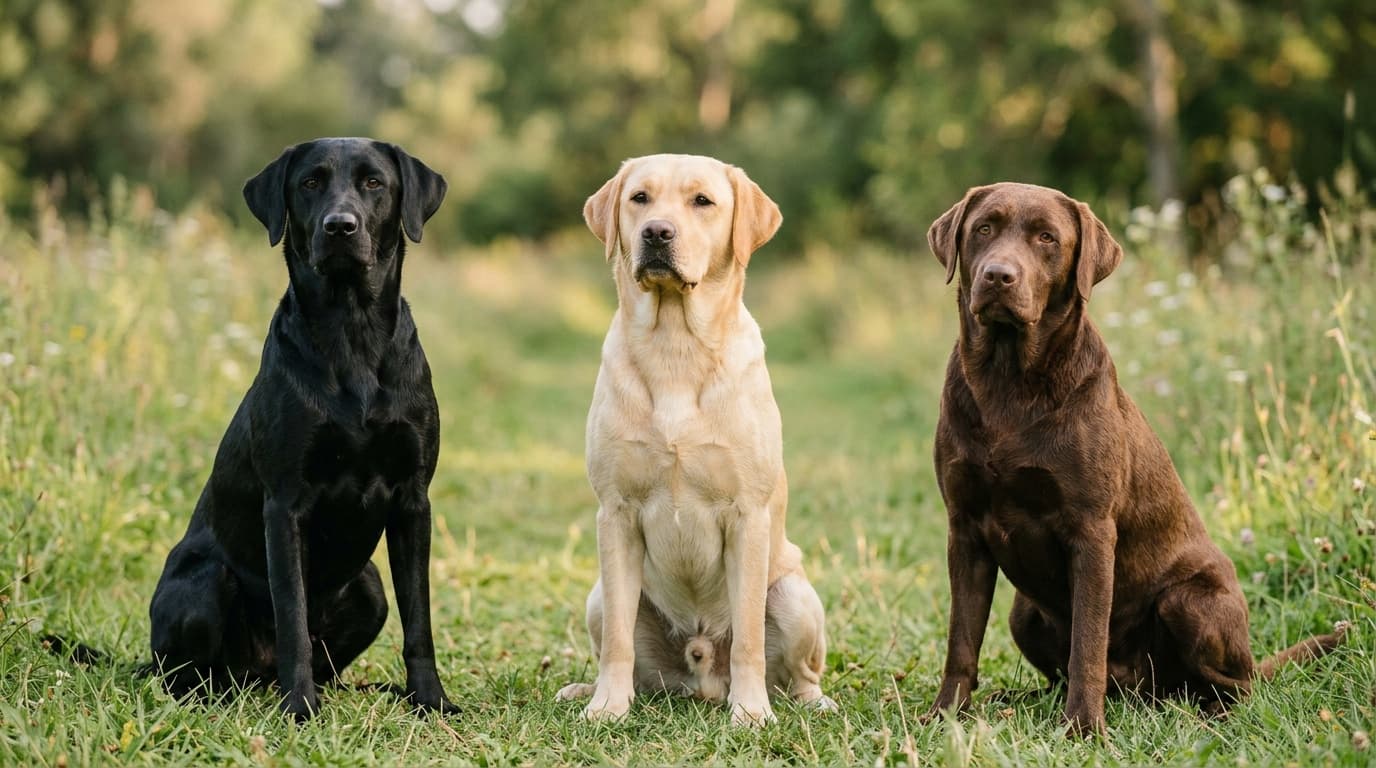
Why a Lab is built for water (and why that does not mean unsafe water is fine)
The Labrador Retriever was developed as a fisherman's working dog in the cold North Atlantic. The breed standard reads like a list of water adaptations. The double coat traps a layer of warm air close to the skin and sheds water on the surface, the famously thick “otter tail” works as a rudder, the webbed feet add propulsion, and the floppy ear flaps close over the canal in deep dives. A healthy adult Lab is a stronger swimmer than most humans, has more endurance in the water than most other breeds, and recovers from cold-water exposure faster than a comparable Husky or Shepherd.
The Edmonton owner pattern where this goes wrong is the assumption that the breed's water aptitude makes the water itself safe. It does not. The Lab handles cold better than most breeds. The Lab does not have a blue-green algae filter. The Lab does not detect river current under apparently calm water. The Lab does not know that the ice rotted three days ago. The Lab does not self-regulate exhaustion during a retrieve session and will keep swimming until the muscles fail. Every one of those failure modes is the owner's job.
The right read is that the breed is built for water work and you are the one watching the water. The rest of this guide is what to watch for, by water type and by season.
Edmonton Lab summer water options
The Edmonton-area swim picture splits into three categories: the North Saskatchewan River through the city, the central Alberta lakes within an hour or two of drive, and the engineered water inside the city (small ponds, Hawrelak Lake, the South Edmonton Common stormwater ponds). The first two are the real destinations. The third has rules that limit dog swimming.
North Saskatchewan River, in the off-leash zones
The river is the default Edmonton Lab summer water. The gravel-bar shallows at Terwillegar Park, the wide approaches at Hermitage Park in the east end, and the calmer bends near Capilano give the Lab room to wade and short-swim near shore. The Lab is in shallow water under fifteen metres from the bank, which is the safe zone. The deeper main channel carries current that even strong Lab swimmers struggle in if the flow is high.
The flow rate matters. The North Saskatchewan runs highest in May and early June (spring runoff) and after major summer thunderstorms (storm-water release). In those windows the gravel bars themselves shrink and the current at the bank intensifies, and the bar-to-channel transition steepens. Skip the river for 24 to 48 hours after any major rain event. The Alberta River Forecast Centre flow data is published publicly and is the canonical reference for current conditions.
The water quality is the other variable. The river receives municipal storm overflow during heavy rain events and the EPCOR water-quality page occasionally posts advisories. Periodic blue-green algae sightings are reported in slower-moving river sections. As with the lakes, check the advisory list before going.
Central Alberta lakes within driving range
For lake-style swimming the Edmonton Lab owner heads west or southwest. The standard destinations:
- Pigeon Lake (1.5 hours southwest): the most popular summer Lab destination. Long shoreline, warm shallow approaches, several dog-friendly access points. Algae advisories are common from mid-July through August; check before driving out.
- Wabamun Lake (1 hour west): a Provincial Park with a public beach and several quieter access points. Slightly cooler than Pigeon. Algae advisories appear most summers.
- Lac Ste Anne (1 hour northwest): warmer and shallower; popular with families. Heaviest algae advisory record of the three.
- Hubbles Lake (45 minutes west): smaller, quieter, less crowded weekends, generally cleaner. Locals consider it the best small-lake Lab swim in the region.
- Hasse Lake (50 minutes west): a Provincial Recreation Area with a designated swim area; smaller and quieter.
- Pembina River Provincial Park (90 minutes west, near Entwistle): river swimming with calmer-than-the-North-Saskatchewan flow in the summer months.
Pet rules vary by lake and by beach. Some Provincial Park beaches restrict dogs from designated human swimming areas; pet-friendly approaches are usually a short walk away. Check the Alberta Parks page for each destination before going.
Engineered city water
Hawrelak Park has a small lake. Dog swimming has historically been restricted there (the lake is a stocked recreational facility and ice condition makes it unreliable winter through spring). Check the current Hawrelak rules at the City of Edmonton before going. The South Edmonton Common stormwater ponds and the various neighbourhood stormwater features are not suitable for dog swimming; they collect road runoff and develop algae quickly.
Blue-green algae: the summer warning that kills Alberta dogs
Blue-green algae (cyanobacteria) is the single highest-mortality water hazard for Alberta dogs. Several documented dog deaths every summer. The toxins are not safe in small doses and the symptoms appear fast.
Cyanobacteria are bacteria that bloom in warm, still, nutrient-rich water through the late summer and early autumn. Some species produce hepatotoxins (liver toxins) and neurotoxins (nervous system toxins) at concentrations that can kill a Lab within hours of exposure. Dogs are at higher risk than humans because they drink the water while swimming and lick the toxin residue off their coat after exiting. Alberta Health Services publishes current blue-green algae advisories for every monitored lake in the province; check the list before any lake trip from mid-June through end of September.
What a bloom looks like
The water can have a thick green, blue, cyan, or red surface scum that looks like spilled paint or pea soup, an oily or shimmery surface film, a thick foam concentrated at the shoreline (blooms drift to shore in afternoon wind), a musty or earthy smell, dead fish in the water or on the beach, and visible streaks or clumps suspended below the surface. If the water looks wrong at all, treat it as positive and leave. Confirmation can take days of provincial lab work; the dog cannot wait.
Symptoms of exposure
Onset is fast (30 minutes to 4 hours). The early signs are vomiting, diarrhoea, drooling, weakness, and unsteady gait. The progression includes pale or blue-tinged gums, breathing difficulty, seizures, and collapse. Death from acute liver failure or respiratory arrest can occur within 6 to 24 hours of a serious exposure. There is no antidote; treatment is aggressive supportive care (IV fluids, anti-seizure medication, liver protection, sometimes activated charcoal), and outcome depends on how fast the dog reaches the vet.
What to do if you suspect exposure
Rinse the dog thoroughly in clean water immediately (do not let them lick more residue off the coat) and head straight to the closest 24-hour Edmonton emergency veterinary clinic. Do not wait for symptoms to confirm exposure; the time-to-treatment window is the variable that decides outcome. Edmonton emergency vet costs for a serious case run $2,000 to $5,000 or more, but the dog needs the treatment regardless. Call your vet from the car on the way in so they can prepare.
Prevention rules
- Check the Alberta Health Services advisory list before every lake trip from June through September.
- Never let your Lab drink lake water in late summer, regardless of advisory status.
- Avoid water with visible green scum, foam, or unusual colour.
- Rinse the dog with clean water after any lake swim, especially the coat and face.
- Watch the dog for four hours after any lake exposure.
- When in doubt, switch to flowing river water (current prevents bloom formation) or skip the trip.
Spring breakup: the most dangerous water window for Labs
Late March through end of April is the highest-risk window for dog drowning in Alberta water. The ice on the North Saskatchewan and on the central Alberta lakes is rotting from below as longer days warm the underlying water, and the surface still looks substantial. A Lab that has been waiting all winter to get back in the water sees an apparently solid surface and is drawn to it. The fall-through outcomes are brutal.
On the North Saskatchewan, the river current under the rotting ice is moving 2 to 5 km/h faster than a Lab can swim against. A dog that drops through a weak spot near the bank can be swept downstream under the surrounding ice within seconds, and the rescue window for owner-led retrieval is essentially zero. Edmonton fire crews respond to river-ice rescue calls every spring; some end well, many do not. The dog cannot self-rescue from under broken ice.
On the lakes, the failure mode is slower but the rescue is still harder than most owners realise. Ice that supports a 100 lb dog on Monday can fail under the same dog on Thursday after three days of warming. The bond between snow cover and the ice surface separates, the ice itself becomes honeycombed at the molecular level, and the surface fails in slabs rather than holes. Once a Lab is in cold spring water with rotting ice on every side, getting out unaided is unlikely.
The rule that prevents almost all spring water emergencies for Edmonton Labs: keep your dog on leash within 30 metres of any water from mid-March through end of April. Do not throw retrieve items toward water. Do not let the dog test ice that “looks fine.” The window closes in early May when the river ice is gone and the lake ice has broken up; until then, stay away.
If your Lab does go through ice, do not enter the water yourself. The same current and ice that captured the dog will capture you and the outcome doubles. Call 911. Throw a long object (a leash, a branch, a coat) that the dog can grip or that you can pull. Lie flat on the shore to distribute your weight if you must approach. Edmonton fire crews have ice-rescue training and equipment; your job is to keep eyes on the dog and direct rescuers when they arrive.
Winter ice: lakes versus the river
Lake ice and river ice behave differently and the rules are different. Most Edmonton Lab owners learn this the easy way (by following local ice-fishing access patterns) or the hard way (by trusting a surface that fails).
Lake ice in mid-winter
Mid-January through end of February, the central Alberta lakes typically carry 30 to 60 cm of solid ice, which supports a Lab easily and supports light vehicles in established ice-fishing zones. The safe pattern is to follow local ice-fishing access (those trails go where the ice is known to be solid), avoid inlet and outlet streams (current keeps the ice thin near flowing water), avoid pressure ridges (slabs of broken ice that refreeze unevenly and create weak seams), and avoid any dark patches in the surface (open water under thin re-frozen ice). Old ice-fishing holes left by other anglers can refreeze with a thinner layer and look identical to surrounding solid ice; stay back from any visible drilled holes.
River ice on the North Saskatchewan
Different rule: do not let your Lab on the river ice at any time. The North Saskatchewan carries current year-round, even in February when the surface appears solid. Pressure cracks, weak spots over channel deeps, and thin sections downstream of bridges and outflows can all support a human walker for several steps before failing, and they will fail under a running Lab. Stick to the off-leash zones on land in winter and treat the river as off-limits for the dog from October through end of April.
What to do if a Lab goes through
Same response as spring breakup. Do not enter the water. Call 911. Throw something the dog can grip or that you can pull (a leash, a long branch, your jacket). Lie flat on the shore or solid ground to distribute weight if you must approach. Stay calm and audible; the dog will swim toward your voice. The BC SPCA cold-weather safety guidance covers the basics for a household audience; Edmonton fire services maintain ice-rescue equipment and the call should always go in fast.
Limber tail: the Lab-prone post-swim injury
Limber tail (acute caudal myopathy, swimmer tail, cold-water tail, frozen tail, dead tail) is a muscle injury at the base of the tail that follows a long swim, a cold-water swim, a heavy retrieve session, or sustained activity in a dog that was not fully conditioned for it. Labs and a handful of other working breeds (Pointers, Setters, Beagles) are over-represented in cases. The mechanism is acute strain or transient ischaemia in the tail-base muscles. Edmonton cold-water swims are a textbook trigger.
Symptoms
Onset is usually within hours of the swim, sometimes the next morning. The tail hangs limp from the base. The dog cannot wag it. The area is painful on touch. The dog often holds the tail tight against the body or drooped straight down. Some dogs resist sitting normally or resist defecating (the lift-the-tail posture hurts). Some are lethargic. It looks alarming. It is generally not serious; most cases resolve in 3 to 14 days with rest.
Diagnosis and treatment
The vet visit is mostly to rule out tail fracture, spinal injury, or anal-gland infection (similar symptom presentation, different treatment). Clinical exam plus sometimes X-rays. Edmonton vet visit runs $200 to $400 with diagnostics. Treatment is a short NSAID course (carprofen or galliprant, $40 to $60 for a few weeks of pills), strict rest, and warm compresses if the dog tolerates them. Most cases resolve fully; some dogs are prone to repeat episodes and need swim-limit adjustments.
Prevention
- Limit cold-water swims (water below 15C, which is most Edmonton water until late June).
- Give rest breaks during retrieve sessions; Labs do not self-regulate.
- Avoid long swims after the dog has been out of condition for months (early-season caution).
- Towel-dry the tail thoroughly after every swim.
- Build swimming endurance gradually each spring rather than starting the season with a 90-minute lake visit.
- Watch the dog's tail for the first 24 hours after any swim, especially in cold water.
Senior, obese, and arthritic Lab water considerations
Older Labs are generally still capable swimmers and the water is one of the best low-joint-impact exercise options available to them, but the cold-water risks and the endurance limits shift. A Lab over eight years old, a Lab carrying significant excess weight, or a Lab with diagnosed hip or elbow arthritis needs adjusted sessions.
Cut session length 30 to 50 percent from adult limits. Swim only when the water is genuinely warm (above 15C, which in Edmonton is late July through August for most lakes). A life jacket is justified for any senior Lab with joint issues; the extra buoyancy reduces the work the dog has to do and lets you extend the session safely. Watch the body language harder. A senior Lab will keep retrieving past the point where the body is failing; the owner has to call the session.
Post-swim warm-down matters more for older dogs. Towel-dry thoroughly, indoor warmth for an hour, joint check (some seniors stiffen up overnight after a long swim). If your Lab struggles to stand the next morning after a swim day, you went too long; reduce the next session by half.
For overweight Labs the water is part of the weight-management plan. Combine swimming with the food-and-exercise pattern in our Lab weight management guide. Low-impact, high-cardio, joint-friendly. Just keep the cold-water and algae rules.
The post-swim routine that prevents most Lab problems
Every Edmonton Lab swim should end with the same five-minute routine. The owners who skip it end up with chronic ear infections and the occasional limber tail flare; the owners who do it consistently report neither.
- Rinse the coat in clean water if you swam in a lake. This is the most important step for blue-green algae prevention and for removing any toxin residue, and it also clears sand, mud, and small organic debris.
- Towel-dry the ears thoroughly, especially the inner flap and the outer canal. Lab ear flaps trap moisture and start the bacterial-yeast cascade within hours.
- Apply a veterinary ear cleaner within ten minutes. Epi-Otic Advanced, Zymox Otic, or MalAcetic Otic. Squirt into the ear, massage the base for 30 seconds, let the dog shake, wipe the outer flap with a cotton ball. Never push a cotton swab into the canal.
- Towel-dry the tail and undercarriage to reduce the limber tail trigger pattern.
- Watch the dog for four hours after any lake swim. Blue-green algae symptoms appear in that window. Vomiting, drooling, or staggering means head to the closest 24-hour emergency vet immediately.
Weekly ear cleaning through peak swimming season (May through September) catches early infections before they become painful. Once a Lab has had three ear infections in a summer, the cleaning becomes part of the routine forever; the dollar cost of veterinary cleaner ($25 to $40 per bottle, lasts months) is negligible compared to the cost of an active infection ($200 to $400 per vet visit). The AVMA swimming-safety guidance covers the basics for a pet-owner audience.
Browse adoptable Labs in Edmonton
Edmonton rescues see Labs and Lab crosses every month, and the breed's water aptitude is one of the genuine summer joys of owning one here. Browse Labs and Lab mixes listed with Edmonton-area rescues; foster temperament notes will tell you which dogs already love the water and which need patient introduction.
See Edmonton Adoptable Dogs →
Life jackets: when an Edmonton Lab actually needs one
For a healthy adult Lab in normal Edmonton swimming conditions, no, the dog does not need a life jacket. The breed swims well without one and the equipment can interfere with natural movement if poorly fitted. The exceptions where a jacket earns its place:
- Puppies under six months building first-water confidence. A jacket keeps them buoyant while they learn the mechanics.
- Senior Labs with arthritis or joint disease. The extra buoyancy reduces the work and extends the safe session length.
- Fast-flow North Saskatchewan conditions. Spring runoff or post-storm flow. Even strong Lab swimmers struggle against current that strong, and a jacket is the buy-time difference between a near-miss and a tragedy.
- Boat trips. Falling overboard is a real risk in any boat, and the jacket has a handle on top that lets the owner lift the dog back over the gunwale.
- Open-water sessions far from shore. Large central Alberta lakes (Wabamun, Pigeon) in the middle. If the dog cramps or panics far from a bank, the jacket buys time.
- Dogs with diagnosed cardiac or exercise-induced collapse conditions. Any condition that can fail the dog mid-swim is a jacket case.
The brands most Edmonton paddleboard and canoe owners settle on: the Ruffwear Float Coat ($90 to $110, professional-grade, top handle for boat retrieval), the Outward Hound Granby Splash ($30 to $50, budget pick), and the Kurgo Surf-N-Turf ($60 to $80, mid-range). Sizing is the variable that determines whether the jacket works. Too loose and the Lab slips out under load; too tight and the leg movement is restricted. Most outdoor stores stock pet life jackets; MEC and Atmosphere carry the Ruffwear line. Bright orange or yellow is the visibility colour for murky river water and distant lake situations.
Try the jacket on the dog in shallow water first. Some Labs tolerate flotation immediately and some take a few sessions. A jacket the dog refuses to wear is no jacket at all.
Edmonton dog water rules and bylaw reality
City of Edmonton off-leash bylaw applies at the river-valley off-leash zones and the dog must be leashed in and out of the zone, under voice or visual control inside, and the handler must carry a leash and pick up after the dog. The fine for failing to leash or control a dog is $250. The City of Edmonton dogs services page is the canonical reference for current rules and a full map of designated off-leash zones.
For lakes outside Edmonton, the rules vary by Provincial Park, Recreation Area, or Crown Land designation. Most Provincial Park beaches restrict dogs from the human swimming areas during posted hours; pet-friendly access is usually a short walk away. Check the Alberta Parks page for each destination before going. Alberta Parks is the canonical reference for provincial sites.
On the North Saskatchewan within Edmonton, swimming is permitted for dogs in the designated off-leash zones (Terwillegar, Hermitage, Capilano, Sir Wilfrid Laurier, and the rest of the river-valley off-leash mesh) under the same bylaw rules. The river itself is not a swimming facility and no lifeguards exist; owner supervision is the only safety net. River swimming for humans is generally discouraged by the City for water-quality and current reasons; the same caveats apply to dogs but the practice is widespread and accepted.
Frequently asked questions
Can my Lab swim in the North Saskatchewan River?
Yes, in the right spots and the right water conditions, but the river is not a lake substitute. The North Saskatchewan carries real current year-round, the channel deepens fast away from gravel-bar shallows, and the flow rate spikes through spring runoff and after summer thunderstorms. Most Edmonton Lab owners stick to the shallow gravel-bar approaches at Terwillegar Park, Hermitage Park, and the Capilano area, where the dog can wade and short-swim near shore rather than entering the main channel. Avoid the river entirely during high-water windows in May through early June and for 24 to 48 hours after heavy rain.
Are Edmonton-area lakes safe for my Lab to swim in?
Mostly yes from June through August, with one major caveat: blue-green algae. Alberta Health Services posts cyanobacteria advisories on Pigeon Lake, Wabamun Lake, Lac Ste Anne, and many smaller central Alberta lakes through July, August, and into September. The toxins are fatal to dogs at small doses and act fast. Check the Alberta Health Services advisory list before every lake trip, and if the water looks like spilled paint, pea soup, or has thick green foam at the shoreline, do not let your dog in or near it. Outside of advisory windows, the lake-style swimming Edmonton Labs need is best at Pigeon, Wabamun, Hubbles, and Hasse Lake.
What is blue-green algae and why does it kill dogs?
Blue-green algae (technically cyanobacteria) is a naturally occurring bacterium that blooms in warm, still, nutrient-rich water. Some species produce hepatotoxins and neurotoxins that are extremely toxic to dogs, livestock, and humans. Dogs are at higher risk because they drink the water while swimming and lick the toxin off their coat afterward. A Lab can die within hours of a serious exposure. Symptoms appear in 30 minutes to 4 hours: vomiting, diarrhoea, drooling, staggering, weakness, seizures, blue-tinged gums, collapse. Treat any suspected exposure as a same-day emergency: rinse the dog in clean water immediately and go to the closest 24-hour Edmonton emergency vet without waiting for symptoms.
How dangerous is the spring breakup window for Labs?
Extremely. Late March through April is the highest-risk window for dog drowning on the North Saskatchewan and on every central Alberta lake. The ice still looks substantial but it is rotting from underneath, and the river current under the ice is moving fast. A Lab that runs onto rotting ice falls through into water that is moving 2 to 5 km/h faster than the dog can swim, and the rescue window is minutes. Keep your Lab on-leash near any water from mid-March through end of April. Do not throw retrieve items toward water in this window. Edmonton fire crews respond to dog-through-ice calls every spring; the outcomes are mixed at best.
Can my Lab walk on frozen Edmonton lakes in winter?
Lake ice in mid-January through February is usually thick enough to support a dog, but the ice strength is not uniform and the safest move is to follow established ice-fishing access patterns rather than assume a fresh-snow surface is solid. Avoid inlet and outlet streams (current keeps the ice thin), avoid pressure ridges (slabs of broken ice that refreeze unevenly), and avoid any dark patches in the surface (open water under thin re-frozen ice). On the North Saskatchewan, the rule is simpler: do not let your Lab on the river ice at any time. Even in February the current keeps weak spots and pressure cracks that look identical to safe ice. Stick to the off-leash zones on land.
What is limber tail and why do Labs get it?
Limber tail (acute caudal myopathy, swimmer tail, cold-water tail) is a Lab-prone muscle injury in the tail base, typically following a long or cold swim or a sustained retrieving session. The tail hangs limp from the base, the dog cannot wag it, the area is painful to touch, and the dog often resists sitting or defecating. It looks alarming. It is generally not serious; most cases resolve in 3 to 14 days with rest and a short NSAID course from your vet. The Edmonton vet visit runs $200 to $400 with diagnostics. Prevention: limit cold-water swims (under 15C water), give rest breaks during retrieve sessions, towel-dry the tail thoroughly, and build swim endurance gradually each spring rather than starting the season with a 90-minute lake visit.
How do I prevent ear infections from Lab swimming?
The Lab ear flap traps moisture and creates ideal conditions for bacterial and yeast infections, and approximately a third of Labs deal with at least one ear infection per year. The post-swim routine that prevents most of them: towel-dry the ear flaps thoroughly within minutes of exiting the water, apply a veterinary ear cleaner like Epi-Otic Advanced or Zymox Otic within ten minutes (squirt into the ear, massage the base for 30 seconds, let the dog shake, wipe the outer flap with a cotton ball), and never push a cotton swab down the ear canal. Weekly cleaning through peak swimming season catches problems early. Symptoms of an active infection: head shaking, ear scratching, redness, dark or pus-like discharge, yeasty smell, sensitivity to handling. Edmonton vet visit for a confirmed infection runs $200 to $400.
When can a Lab puppy start swimming in Edmonton?
Generally 12 to 16 weeks, after the second or third vaccination round, and only in warm shallow water with the puppy able to stand. Edmonton water complicates this: the North Saskatchewan and the larger lakes stay cool through May and June, and 8 to 12C water is genuinely too cold for a puppy regardless of breed. The realistic first-swim window for an Edmonton Lab puppy is late July through August at a warm shallow lake or a kiddie pool in the back garden. Never throw a puppy in the water; let them choose to enter, reward calm exploration, and end the session on a positive note before the puppy is exhausted. Forced entry creates lifelong water aversion in some Labs.
Does my Lab need a life jacket?
For a healthy adult Lab in normal swimming conditions, no. Labs are built for the work and most never need flotation. The exceptions are real: puppies under six months building water confidence, seniors with arthritis or joint disease, any Lab in fast-flow river conditions (the North Saskatchewan in spring or after heavy rain), boat outings where a fall overboard is possible, lakes far from shore, and dogs with cardiac or exercise-induced collapse conditions. The Ruffwear Float Coat ($90 to $110) is the professional-grade option Edmonton paddleboard and canoe owners use; the Outward Hound Granby Splash ($30 to $50) is a budget pick. Bright orange or yellow is the visibility colour for murky river water and distant lake situations.
How does Edmonton water safety compare to Calgary for a Lab?
Different problems. Calgary Labs deal with glacial-cold Bow River water year-round and a ban on swimming at Glenmore Reservoir. Edmonton Labs deal with longer warm-lake seasons (Pigeon and Wabamun are genuine summer swim destinations), but face more blue-green algae advisories because the central Alberta lakes warm earlier and stay warmer than the Bow watershed, and a North Saskatchewan that has its own current and quality variability. The winter ice picture is similar; rivers are unreliable in both cities. The shared rule for both: check the algae advisory list, respect spring breakup, never trust river ice, and dry the ears every time.
Related Edmonton Lab guides
Adoptable Labs in Edmonton
Browse current Labradors and Lab crosses listed with Edmonton-area rescues. Updated regularly.
Labrador Retriever Adoption Edmonton
Edmonton Lab rescue sources, adoption costs, surrender patterns, and the breed-vs-buy honesty.
Labrador Health Issues: Weight, Hips, Collapse
Labrador Retriever health issues to plan for: weight and the POMC appetite gene, hip and elbow dysplasia, exercise-induced collapse, eye disease and cancer.
What to Feed a Labrador: Food, Diet & Portions
What to feed a Labrador: how to choose a food, large-breed puppy formula, portions for a breed built to overeat, the raw-diet truth, and foods to avoid.
Find your Edmonton Lab
Browse adoptable Labrador Retrievers and Lab mixes from Edmonton-area rescues. Filter by size and energy to find one that fits your river-valley and lake summer routine.
Browse All Edmonton Dogs →New dog? Start with these care guides
Everything a new adopter needs to set up a safe, happy home.