The short answer
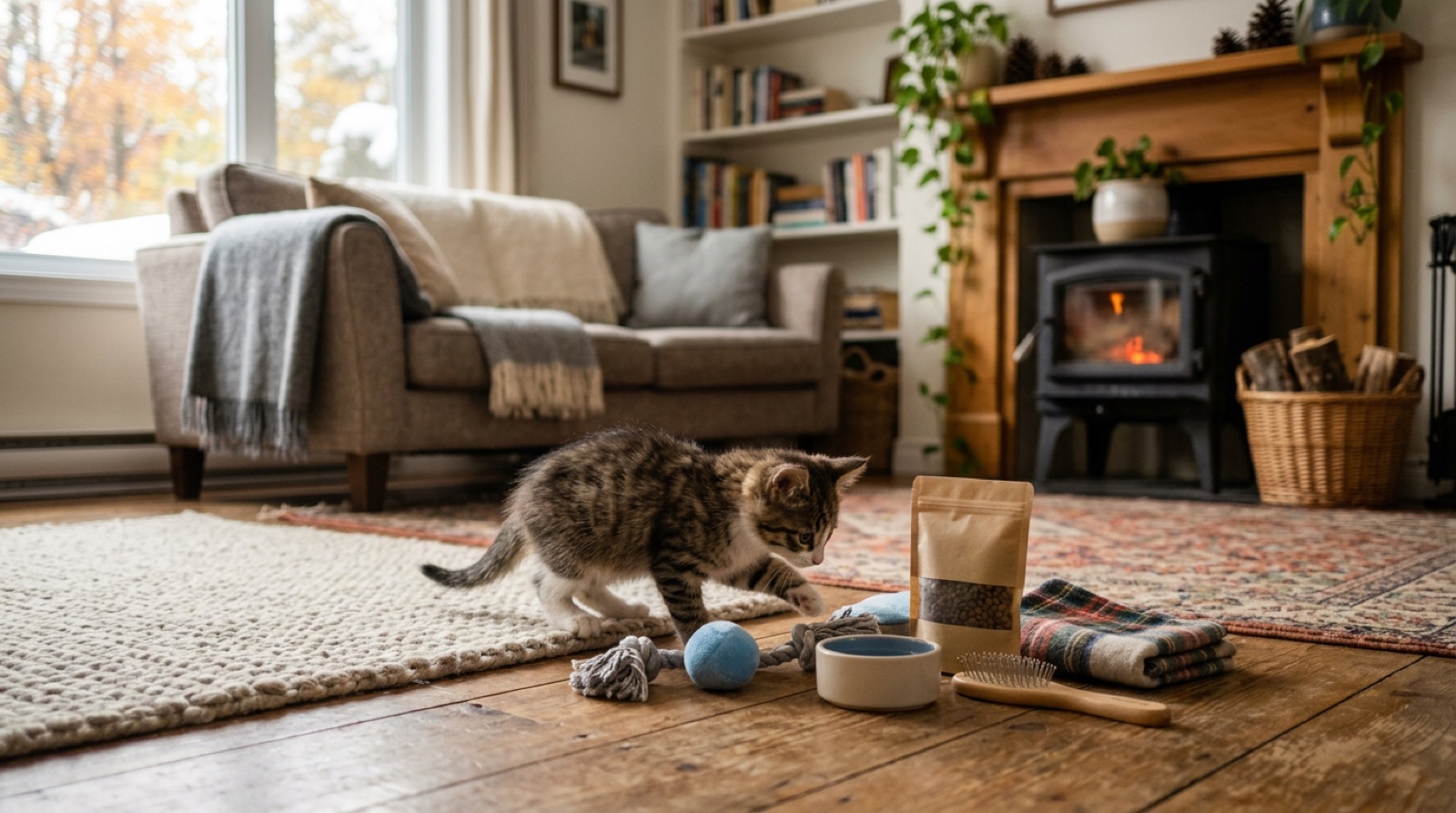
Buy the kit before pickup day: two low-sided litter boxes, unscented clumping litter, a hard-sided carrier, bowls, kitten food, a scratching post, a wand toy, and an enzymatic cleaner. Roughly $200 to $350 plus Manitoba sales tax. Set up one quiet room and let the kitten own it for a week or two. Book a vet visit inside the first seven days to lock in the booster schedule. Then kitten-proof for the prairie specifics: floor registers, pipe gaps, and a warm carrier for the walk to the car.
Heads up: This is informational, not veterinary advice. Vaccine and surgery timing is set by your veterinarian based on the individual kitten. Costs are planning estimates confirmed for Winnipeg in July 2026 and change without notice.
Winnipeg produces a lot of kittens. The city has one of the largest free-roaming cat populations in the country, kitten season floods the shelters from late spring through autumn, and by August there are more kittens available here than in cities twice the size. If you are adopting one, you have plenty of choice and almost no reason to buy from a backyard litter.
What you will not get is a manual. Shelters hand you a vaccine record, a bag of food, and a very tired volunteer's best wishes. The first month is where most new owners improvise, and improvising is how you end up at a hardware store at 9 p.m. buying a register cover because a kitten went down a floor vent.
This is the checklist we would give a friend picking up a kitten in Winnipeg: what to buy, what to book, what to block off, and what the first thirty days actually look like. If you are adopting an adult instead, our first week with a rescue cat guide is the better starting point.
The Supply List (Buy Before Pickup)
| Item | Estimate | Why it matters |
|---|---|---|
| Two litter boxes, low-sided | $20 to $50 | Kittens cannot climb high walls. Buy new, not secondhand. |
| Unscented clumping litter | $15 to $30 | Fine grain. Skip scented and crystal types. |
| Hard-sided carrier | $35 to $80 | Top-loading is far easier at the vet. Essential in winter. |
| Food and water bowls | $10 to $30 | Shallow and wide. Ceramic or steel over plastic. |
| Kitten food, wet and dry | $40 to $80/month | Kitten formula until roughly 12 months. |
| Scratching post and cardboard scratcher | $25 to $70 | Tall enough for a full stretch as the kitten grows. |
| Toys: wand, balls, crinkle | $15 to $40 | A wand toy does more than a bin of plastic mice. |
| Cat tree or window perch | $50 to $200 | Vertical space matters most in small apartments. |
| Enzymatic cleaner | $12 to $20 | Buy it before you need it. You will need it. |
| Nail clippers and a soft brush | $10 to $25 | Start handling paws in week one. |
Directional Winnipeg planning estimates, not quotes. Manitoba adds 7% RST plus 5% GST on supplies. Cat trees and carriers turn up constantly secondhand on local buy-and-sell groups; litter boxes are the one item to buy new.
Adopt Two Kittens, Not One
This is the advice we give most often and the one most people politely ignore. A single kitten with no feline playmate spends its energy on you. That means ankle attacks at 3 a.m., shredded curtains, and a resident adult cat being pestered to the point of hiding under the bed for a month.
Two kittens wrestle each other into exhaustion, teach each other bite inhibition, and sleep in a pile instead of on your face. The extra cost is food and litter. They share the tree, the toys, the scratching post and usually the bed. Shelters price bonded pairs to move together because they know exactly how the single-kitten story goes.
The other version of this advice: if you already have a calm adult cat and cannot take two kittens, plan a genuinely slow introduction rather than an optimistic one. Our cat introduction guide covers the scent-first sequence.
The Vet Schedule
Your clinic sets the exact timeline based on the kitten's age and what the shelter already did. The shape of it is consistent, though, and knowing it helps you budget and ask better questions:
Week 1 after adoption: baseline exam at your chosen clinic. Bring the shelter's vaccine and deworming records so nothing gets doubled up or skipped. Weight recorded, parasites checked, booster dates set.
Roughly 6 to 16 weeks: the core vaccine series, given in rounds a few weeks apart. Rescue kittens usually arrive partway through this, not at the start.
Rabies: at the age your veterinarian recommends. Winnipeg requires proof of current rabies vaccination to licence a cat, so this one has a legal dimension as well as a medical one.
Spay or neuter: usually already done by the shelter, or built into the adoption contract with a scheduled follow-up. Confirm which applies before you leave with the kitten.
Around 12 months: transition from kitten food to adult food, and have the first adult wellness exam. This is also when most owners finally book the dental conversation they have been putting off.
The Feline Veterinary Medical Association publishes free client brochures on kitten care and handling that are worth reading before the first appointment. For emergencies outside clinic hours, Winnipeg Animal Emergency Hospital on Pembina Highway is at 204-452-9427.
Kitten-Proofing an Older Winnipeg House
Do this on your hands and knees. The hazards are at kitten height, and character homes in Wolseley, St. Boniface, the North End and Transcona all share the same weak points:
Prairie-house specifics
- •Floor registers and cold-air returns without screens
- •Gaps around basement pipes and the furnace
- •Radiator gaps and the space behind built-in cabinets
- •Window wells and unscreened basement windows
- •Attached garages and any idling vehicle
- •Balconies in Osborne Village and downtown towers
Universal kitten hazards
- •Lilies, which are severely toxic to cats. Keep none in the house.
- •String, thread, hair elastics, tinsel, dental floss
- •Loose blind cords, which are a strangulation risk
- •Electrical cords a teething kitten can chew
- •Open toilets, washing machines, and dryers
- •Human medication left on a nightstand
The two that cause real emergencies are string-type objects, which cause intestinal damage when swallowed, and lilies, which cause kidney failure. Everything else on the list is mostly about not losing a kitten inside a wall for two days.
Winter Pickup: Getting a Kitten Home at -30 °C
Warm the car before you leave for the shelter. A carrier sitting in a cold vehicle is a small metal box full of cold air.
Use a hard-sided carrier with a towel or fleece blanket inside, and drape a second blanket over the outside for the walk between doors. Cardboard shelter carriers are for the parking lot, not for January.
Park close and move quickly. A few minutes of exposure to a Winnipeg wind chill is a genuine risk to an animal that weighs under two kilograms.
At home, set the kitten room away from drafty floor vents and exterior doors. Kittens have poor temperature regulation and will seek the warmest spot they can find, which is often somewhere you do not want them.
Never let a kitten near an idling car, and check under the hood of any vehicle parked outside before starting it in winter. Cats shelter in warm engine bays, and Winnipeg vets see the results every cold season. The full winter risk picture is in our indoor vs outdoor guide.
The First 30 Days
Days 1 to 3: one room, low expectations
The kitten stays in the prepared room. Sit on the floor and read aloud rather than chasing. Confirm eating, drinking, and litter box use daily. Some hiding is normal; a kitten that has not eaten in 24 hours is not.
Days 4 to 7: first vet visit and first play
Book the baseline exam. Start short wand-toy sessions, several a day. Begin handling paws and ears gently so nail trims and vet visits are not a fight later. Keep the room, keep the routine.
Week 2: expanding the territory
Open one more room while the kitten is supervised, then return to base at night. Add a second litter box in the new space. Redirect biting onto toys every single time, never onto hands.
Week 3: routine and resident pets
Feeding and play settle into a rhythm. If there is a resident cat or dog, this is usually where controlled face-to-face introductions begin, not before. Boosters may fall in this window.
Week 4: full house access
Most kittens have the run of the house by now, with the original room still available as a retreat. Keep both litter boxes. Book any outstanding vaccine appointments and register the microchip if you have not.
Browse adoptable Winnipeg kittens and cats
Winnipeg has one of the largest adoptable cat populations in Canada, and kitten season means bonded pairs are usually available together. Listings refreshed regularly.
See Available Winnipeg Cats →Frequently Asked Questions
What do I need to buy before bringing a kitten home in Winnipeg?
Two low-sided litter boxes, unscented clumping litter, a hard-sided carrier, food and water bowls, kitten food, a scratching post, a wand toy, and an enzymatic cleaner. That core kit runs roughly $200 to $350 depending on how much you buy new, plus Manitoba's 7% RST and 5% GST at the till. Buy everything before pickup day rather than after, because a kitten arriving to an unprepared house means someone leaving for a store while a scared animal hides under a bed. The carrier matters more here than in warmer cities; you will be moving a small animal through cold air.
What vaccines does a Winnipeg kitten need and when?
A kitten typically starts a core vaccine series around six to eight weeks, with boosters every three to four weeks until roughly sixteen weeks, then rabies at the age your veterinarian recommends. Your clinic sets the exact schedule based on the kitten's age at intake, health, and what the shelter already gave. Rescue kittens usually arrive with at least the first round done and a record showing dates. Bring that paperwork to the first appointment so nothing is repeated or missed. Rabies vaccination is also required to licence a cat in Winnipeg.
When should the first vet visit happen?
Within the first week, even if the kitten looks perfectly healthy. That visit establishes a medical record with your chosen Winnipeg clinic, gives the vet a baseline weight, catches parasites the shelter may not have cleared yet, and locks in the booster schedule. It is also your chance to ask the questions you will otherwise spend three weeks searching for online. If the kitten was adopted from the Winnipeg Humane Society, the initial exam and first vaccines are already covered in the adoption fee, so this visit is the follow-up rather than the first look.
How do I kitten-proof an older Winnipeg house?
Walk the house on your knees, because that is the height where the hazards are. Older homes in Wolseley, St. Boniface and the North End have the specific problems: gaps around basement pipes and floor registers, unscreened cold-air returns, radiator gaps, and window wells. Block anything a kitten could squeeze into and not get out of. Then handle the universal ones: cords tucked away, blind cords tied up, hair elastics and thread put away, toilet lids down, and no lilies in the house at all, since lilies are severely toxic to cats.
Do kittens need to stay in one room at first?
Yes, and it makes the first two weeks far easier. Set up a single room with food, water, both litter boxes, a bed, and a hiding spot, and let the kitten own that space before opening the rest of the house. A kitten given a whole house on day one will pick a hiding place you cannot reach and stay there. Start with the room, expand to one more when the kitten is confidently eating, playing and using the box, and take a week or two over the whole process rather than a day.
Should I adopt one kitten or two?
Two, if you can. This is the advice rescue people give most often and adopters ignore most often. A single kitten with no feline playmate burns its energy on your ankles at 3 a.m., on the curtains, and on the resident adult cat who wants nothing to do with it. Two kittens wrestle each other into exhaustion and teach each other bite inhibition. The extra cost is food and litter, since they share the tree, the toys and usually the bed. Shelters often price bonded pairs to move together for exactly this reason.
What should I feed a kitten?
A food formulated for kittens or for all life stages, fed until roughly twelve months. Kittens need more calories, protein and specific nutrients than adult cats, so adult food is not a money-saving swap. Feed a mix of wet and dry if you can; wet food supports hydration, which pays off over a lifetime. Keep the shelter's food for at least the first week and transition to anything new over seven to ten days, because an abrupt switch on top of a move produces diarrhoea. Never feed kitten milk replacer to a weaned kitten, and never cow's milk at all.
When can a kitten be spayed or neutered?
Ask your veterinarian; many practices operate on a standard timeline and the shelter often does the surgery before adoption. Rescue kittens from Winnipeg organisations are typically already fixed or have the surgery built into the adoption contract with a follow-up appointment. If you somehow ended up with an unfixed kitten, this is not a step to postpone: unfixed cats drive the free-roaming population Winnipeg is already struggling with, and the intact cat licence costs $69 a year against $15.75 for a fixed one. Our Winnipeg spay and neuter guide covers the low-cost routes.
How do I introduce a kitten to a resident cat?
Slowly, through a closed door, with scent before sight. The kitten stays in its own room, you swap bedding between the two cats, then feed them on either side of the door, then allow brief supervised visual contact through a barrier before any face-to-face meeting. Rushing this is the single most common cause of long-term tension between cats, and a resident adult who feels ambushed by a kitten may start marking or hiding. Our Winnipeg cat introduction guide walks through the full sequence with realistic timelines.
Is it safe to bring a kitten home in a Winnipeg winter?
Yes, with a bit of planning. Warm the car before pickup, use a hard-sided carrier with a towel or blanket inside, cover the carrier with a blanket for the walk between the building and the car, and do not leave the carrier sitting in a cold vehicle. A short walk across a parking lot at -30 °C with wind chill is genuinely dangerous for a small animal in a wire crate. Once home, keep the kitten away from drafty floor vents and never let a kitten near an idling car or an open garage; engine bays kill cats every prairie winter.
How much does the first month with a kitten cost in Winnipeg?
Roughly $400 to $800 all in. That is the adoption fee at $229 for a Winnipeg Humane Society kitten, the core supply kit at $200 to $350, the first month of food and litter, and the optional $30 microchip. Add Manitoba sales tax at 12% on supplies. The number drops considerably if you buy the cat tree and carrier secondhand, which is easy on local buy-and-sell groups. Litter boxes are the one item worth buying new, since old plastic holds odour that can put a kitten off the box.
What kitten behaviour should worry me?
Call a vet for any of these: not eating for 24 hours, repeated vomiting or diarrhoea, straining in the litter box, laboured breathing, discharge from eyes or nose, extreme lethargy, or a limp that does not resolve quickly. Kittens have almost no reserves, so a problem that an adult cat would shrug off can become serious in a day. Play biting, zoomies at midnight, and climbing the curtains are normal and annoying rather than medical. Redirect biting onto a wand toy and never onto your hands, or you teach a habit that stays for years.
Related Winnipeg Cat Guides
Set Up First. Then Bring the Kitten Home.
Winnipeg has more adoptable cats and kittens than almost any city in the country, and plenty of them come in pairs.
Browse Available Winnipeg Cats →New cat? Start with these care guides
Everything a new adopter needs to set up a safe, happy home.