The short answer
A Border Collie needs a job, not a walk. Plan for around two hours a day of activity that combines hard physical exercise plus daily mental work, and the mental side is the part most owners miss. Training, puzzles, scent games, and dog sports satisfy a BC more than a long run does, and mental work is your winter lifeline when it is -35 outside. Skip the enrichment and a Border Collie turns its drive on the household: barking, destruction, compulsive spinning, and herding the kids. That is the number-one reason BCs fill Manitoba rescue. Channel the herding instinct through a sport, never punish it, and be honest about whether your life fits the breed.
Browse adoptable Border Collies in Winnipeg. For where to adopt one, see our BC adoption guide, and for the medical picture, the health-issues guide covers CEA, epilepsy, and MDR1.
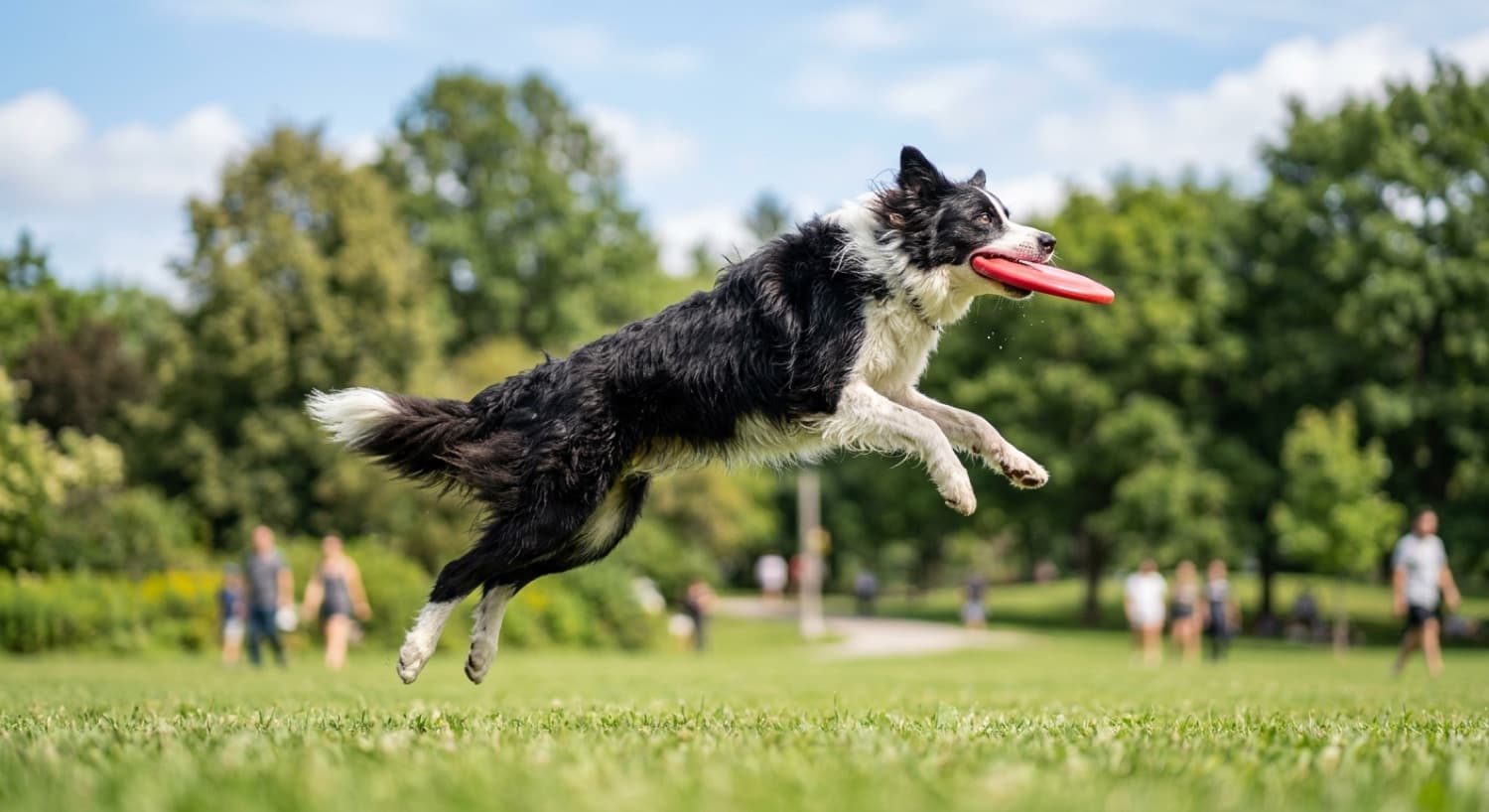
The mistake that fills rescues: treating a Border Collie like a Lab.
A walk is not enough for this breed. The single most common reason Border Collies end up in Manitoba rescue is owners who provided physical exercise but no mental work, or not nearly enough of either. The breed was built to work all day and think for itself, and it does not switch off indoors. Meet the mental and physical needs and a BC is extraordinary. Skip them and the same dog becomes anxious, destructive, and compulsive. This one thing decides whether the adoption works.
How much exercise does a Border Collie really need?
Around two hours a day, and it has to include mental work. Physical exercise alone, even a lot of it, does not satisfy a Border Collie. The brain needs a job as much as the body does.
The Border Collie is the most intelligent, highest-drive breed there is, bred to work sheep for hours and solve problems on its own. The American Kennel Club breed profile is blunt about the exercise demand, and it is real. A fit adult BC can run for miles and still be wired if the brain got nothing.
So the daily target is a combination, not a single long walk: hard physical activity (running, fetch, a dog sport) plus real mental work (training, puzzles, scent games, a task to complete). The mistake that ends most Border Collie adoptions is treating the dog like a Lab and assuming a walk around the block will do. It will not, and the gap between what the breed needs and what it gets is where every behaviour problem starts.
Why mental work matters more than a long run
Mental work tires a Border Collie more efficiently than physical exercise. Fifteen minutes of hard training can settle a dog that a two-hour run left buzzing.
Owners are often stunned by this. You take the dog for a huge run, it comes home and immediately starts looking for something to do, and you cannot understand why. The answer is that you exercised the body and left the brain idle. A Border Collie's intelligence is the engine of the breed, and it needs to be worked.
This is also the key to the whole Winnipeg-winter problem. When it is -35 and a long outdoor run is off the table, mental work carries the load, because it does not depend on the weather. Practical daily mental work includes:
- Training sessions. Short, focused obedience or trick training. New skills are the best mental workout there is.
- Food puzzles and snuffle mats. Feed meals through a puzzle instead of a bowl. Fifteen minutes of problem-solving beats a bowl gulped in 30 seconds.
- Scent and nose games. Hide treats or a toy around the house and let the dog search. Scent work is deeply satisfying and low-space.
- Learning tasks. Teach the names of toys, a tidy-up routine, or a complex trick chain. A BC loves having a job to master.
A Border Collie with a job for its brain is calm and easy at home. One without invents its own job, and you will not like the job it chooses.
What a bored Border Collie does to your house
An under-stimulated Border Collie does not just get restless, it comes apart. These behaviours are the number-one reason the breed fills Manitoba rescue, and most are preventable.
When a working dog has no work, the unspent drive has to go somewhere, and it goes into behaviours that make the dog unlivable:
- Destruction and barking. Relentless chewing, digging, fence-running, and barking that no apartment neighbour will tolerate.
- Compulsive behaviours. Obsessive shadow- or light-chasing, spinning, tail-chasing, and movement fixation. These are hard to reverse once they take hold, which is why prevention matters.
- Misdirected herding. The instinct turns on the household: herding and nipping at kids, chasing bikes and cars (dangerous), and controlling movement in the home.
- Anxiety and reactivity. Chronic frustration tips into anxiety, and an anxious BC often becomes reactive to dogs, people, or noise.
None of this means the dog is bad. It means a working animal has been left with no work. The behaviours are almost all preventable with adequate physical and mental exercise, which is the entire case for being honest about the breed's needs before you adopt.
Browse adoptable Border Collies in Winnipeg
Ready to give a Border Collie the job it needs? A breed-specific rescue can match you with a dog whose drive level suits your life. See the Winnipeg BCs available now.
See Available Border Collies →Meeting the needs through a Winnipeg winter
The winter that makes Labs fat tends to make Border Collies frantic. When -30 to -40 cold cuts the outdoor time, the answer for a BC is to double down on mental work, which needs no weather.
A Winnipeg winter is where under-prepared Border Collie owners really struggle, because the easy outlet (a long outdoor run) disappears for weeks. The dogs that get through it well are the ones whose owners lean on the indoor toolkit:
- Mental work first. On a -35 day, 20 to 30 minutes of training, a couple of puzzle-fed meals, and a scent game around the house genuinely satisfies a BC. Spread it through the day.
- Indoor physical outlets. Hallway or basement fetch, stair runs, tug, and a flirt pole burn real energy inside.
- Milder-day runs. A prairie winter still breaks above -15. On those days get a proper outdoor run or a training session in, and layer the dog if it is lean.
- Indoor dog sport or daycare. Many Winnipeg training clubs run indoor agility, obedience, and scent classes through winter, which are a lifeline. Doggy daycare a couple of days a week helps too.
For the cold thresholds, frostbite signs, and paw protection that apply to any winter outing, see our Winnipeg winter dog care guide.
Dog sports: the breed's natural outlet
Dog sports are the closest thing to a job most Border Collies will get, and the breed excels at nearly all of them. A sport delivers physical exercise, mental challenge, and partnership all at once.
The Border Collie dominates dog sport for a reason. Good options, many available indoors in Winnipeg through the winter:
- Agility. The signature BC sport. Fast, physical, and mentally demanding.
- Scent work and nose work. Low-space, winter-friendly, and a huge mental workout. Ideal for cold months.
- Obedience, rally, and trick training. Structured mental challenge you can also practise at home.
- Flyball and disc. High-energy outlets for the physical drive.
- Herding or treibball. The real thing, or the urban substitute using large exercise balls, both of which give the herding instinct an approved job.
The value of a sport is not only the exercise, it is the structured challenge and the partnership with you, which is what a Border Collie wants most. Look for Winnipeg training clubs and facilities that run indoor classes, since they turn the hardest season into the best one for building a bond.
Channeling the herding instinct
Channel the herding drive, never punish it. The instinct is hardwired, and suppressing it just creates a frustrated dog. Give it a legal outlet and it becomes a delight.
A Border Collie may try to herd whatever moves: kids, other dogs, bikes, cars, even the vacuum. That is the breed doing exactly what it was made for. The job is to redirect it, not stamp it out.
- Give the drive an approved job. Herding, treibball, or structured fetch with rules lets the instinct out in a way you control.
- Train an alternative. A solid recall and a reliable settle, plus rewarding calm behaviour around movement, give the dog something to do instead of chasing.
- Never let it rehearse chasing cars or bikes. It is dangerous and self-reinforcing, so manage the environment so the dog cannot practise it.
- Have a plan around young kids. Heel-nipping at running children is a classic BC behaviour that needs active management, ideally with a Winnipeg force-free trainer.
A Border Collie with an approved outlet for its herding drive is one of the most rewarding dogs alive. One with no outlet turns the whole household into its flock.
Frequently asked questions
How much exercise does a Border Collie need?
A lot, and the physical side is only half of it. A healthy adult Border Collie needs on the order of two hours a day of real activity, and crucially that has to include mental work, not just a long walk. A walk alone barely touches a BC, because the breed was built to work sheep for hours and think for itself. The dogs that do well get a combination: hard physical exercise (running, fetch, a dog sport) plus daily mental work (training, puzzles, scent games, a job to do). The single most common mistake is treating a Border Collie like a Lab and assuming a walk will do. It will not. An under-exercised BC does not just get restless, it gets anxious, destructive, and often compulsive, which is exactly the dog that ends up surrendered.
Why is mental stimulation so important for a Border Collie?
Because the Border Collie brain is the whole point of the breed, and it needs work as much as the body does. This is the most intelligent dog breed, bred to make independent decisions while working stock, so a BC that gets physical exercise but no mental challenge is still a frustrated dog. Owners are often shocked that a two-hour run leaves their Border Collie wired, but 15 minutes of hard training or a puzzle-feeder session leaves it genuinely satisfied. Mental work also tires a dog out far more efficiently than physical work, which matters enormously in a Winnipeg winter when outdoor time is limited. Training, trick work, scent games, food puzzles, and teaching new tasks all count. A Border Collie with a job for its brain is calm at home. One without invents its own job, and you will not like the job it chooses.
Can a Border Collie live in a Winnipeg apartment?
It is possible but genuinely hard, and it fails far more often than it works. A Border Collie does not need acreage to be happy, it needs a job, and a committed owner in an apartment who provides serious daily exercise and mental work can absolutely make it work. But the apartment setup stacks the odds against you: no yard to burn energy in, close neighbours who notice barking, tight quarters when a bored dog starts spinning or destroying things, and a Winnipeg winter that makes getting out harder. The dogs that self-destruct are the ones where the apartment comes with a full-time office job and no enrichment plan. If you are in an apartment and set on the breed, be brutally honest about whether you can commit to a couple of hours of real physical and mental work every single day, winter included. If not, this is the wrong breed for your space.
What happens if you do not exercise a Border Collie enough?
The dog falls apart, and it happens fast. An under-stimulated Border Collie channels its unspent drive into behaviours that make it unlivable: relentless barking, destructive chewing, digging, fence-running, and pacing. Many develop compulsive behaviours, obsessive shadow- or light-chasing, spinning, tail-chasing, or fixating on any movement, which are hard to reverse once entrenched. The herding instinct turns inward on the household, so the dog starts herding kids, nipping at heels, and chasing bikes and cars. And the frustration often tips into anxiety and reactivity. This is not a bad dog, it is a working animal with no work, and it is the single most common reason Border Collies end up in Manitoba rescue. The behaviours are preventable with adequate exercise and mental work, which is the entire argument for meeting the breed's needs before you adopt.
How do I tire out a Border Collie in a Winnipeg winter?
Lean hard on mental work, because it does not depend on the weather and it tires a BC more efficiently than physical exercise anyway. On a -35 day when a long outdoor run is off the table, a Border Collie can be genuinely satisfied by 20 to 30 minutes of hard training, a couple of food-puzzle or snuffle-mat meals, a scent game hiding treats around the house, and a trick-training session, spread through the day. Add indoor physical outlets: hallway or basement fetch, stair runs, tug, and a flirt pole. On milder winter days (a prairie winter still breaks above -15), get a real outdoor run or a dog-sport session in. Many Winnipeg owners also use doggy daycare a couple of days a week through the deep freeze for hard play. The winter that breaks Labs by making them fat tends to break Border Collies by making them frantic, and the answer for a BC is mental work.
What dog sports are good for a Border Collie?
Almost all of them, because this is the breed most dog sports were practically designed around. The classics are agility (the BC is the dominant breed in the sport), flyball, disc, obedience, rally, and of course herding or treibball (an urban herding substitute using large balls). Scent work and nose work are excellent low-space, winter-friendly options that engage the brain hard. Trick training and canine freestyle scratch the same itch at home. The value of a sport is not just the physical outlet, it is the structured mental challenge and the partnership with you, which is what a Border Collie craves most. In Winnipeg, look for training clubs and facilities that run agility, obedience, and scent classes, many indoors, which makes them a winter lifeline. A sport turns a demanding dog into a thrilled, focused partner.
How do I manage a Border Collie's herding instinct?
Channel it, do not punish it, because the instinct is hardwired and suppressing it just creates frustration. A Border Collie may try to herd whatever moves: kids, other dogs, bikes, cars, even the vacuum. Give the drive a legal outlet through a sport like herding, treibball, or fetch with rules, and it becomes manageable and even delightful. For the problem versions, redirect and train an alternative: teach a solid recall and a settle, reward calm behaviour around movement, and never let the dog rehearse chasing cars or bikes, which is dangerous and self-reinforcing. Households with young kids need a plan, because heel-nipping at running children is a classic BC behaviour that needs active management with a force-free trainer. The instinct is not a flaw, it is the breed, and a Border Collie with an approved job for its herding drive is a joy. One with no outlet turns the whole house into its flock.
Is a Border Collie a good running or biking partner?
Yes, an adult Border Collie is an outstanding running partner and can be a great cycling companion, and structured cardio is a good part of the mix, though it is not a substitute for mental work. A fit adult BC can happily run for miles, and canicross or trail running suits the breed well once the dog is mature. A couple of important caveats: wait until the dog is skeletally mature (usually around 18 months, ask your vet) before high-impact running, because a young dog's joints are still developing. In a Winnipeg summer, run in the early morning or evening to avoid heat, and in winter watch paws and pace on ice. And remember the core lesson: a five-mile run will leave a Border Collie fit but still mentally wired if you skip the brain work. Pair the cardio with training and puzzles, not instead of them.
At what age does a Border Collie calm down?
Most Border Collies mellow somewhat as they mature, often noticeably after two to three years, and again as seniors, but do not adopt one expecting it to become a couch dog. The intensity softens with age, and a well-exercised, mentally satisfied adult is far calmer than a frantic adolescent, but a Border Collie stays a high-needs dog well into its senior years, just with the edges rounded off. The dogs that seem to never calm down are usually the ones whose needs were never met, so the frustration compounded. If you want an easier version of the breed, this is a strong argument for adopting an adult or senior from a breed-specific rescue like Hull's Haven rather than raising a puppy, because you can meet a dog whose energy level is already known and pick one that suits your life.
Related Winnipeg guides
Border Collie Adoption Winnipeg
Hull's Haven, real costs, farm-collie surrenders, and the breed reality.
Border Collie Health Issues
CEA, hips, epilepsy, MDR1, and the DNA tests worth knowing about.
Best Off-Leash Parks in Winnipeg
Where to run a high-drive dog across the city, season by season.
Adoptable Winnipeg Border Collies
Every available Border Collie and BC cross across Manitoba rescues.
New dog? Start with these care guides
Everything a new adopter needs to set up a safe, happy home.