The short answer
Huskies are relatively healthy and long-lived. The breed-specific conditions to know are inherited eye problems (cataracts, corneal dystrophy, PRA), occasional hip dysplasia, hypothyroidism, and zinc-responsive dermatosis. The single most important Manitoba point: the double coat that thrives at minus 30 makes a Husky overheat at plus 30, so summer heat is the real risk, not winter cold. Exercise early or late in July and August, never shave the coat, and never leave a Husky in a car. This is general information, not veterinary advice. Build every plan with your own vet.
Heatstroke is the Husky emergency to plan around. Heavy panting, drooling, bright red gums, weakness, vomiting, or collapse in a hot-weather Husky is a same-minute emergency. Move the dog to shade, offer cool water, and get to an emergency vet immediately. The American Veterinary Medical Association has clear guidance on preventing and recognising heat stress.
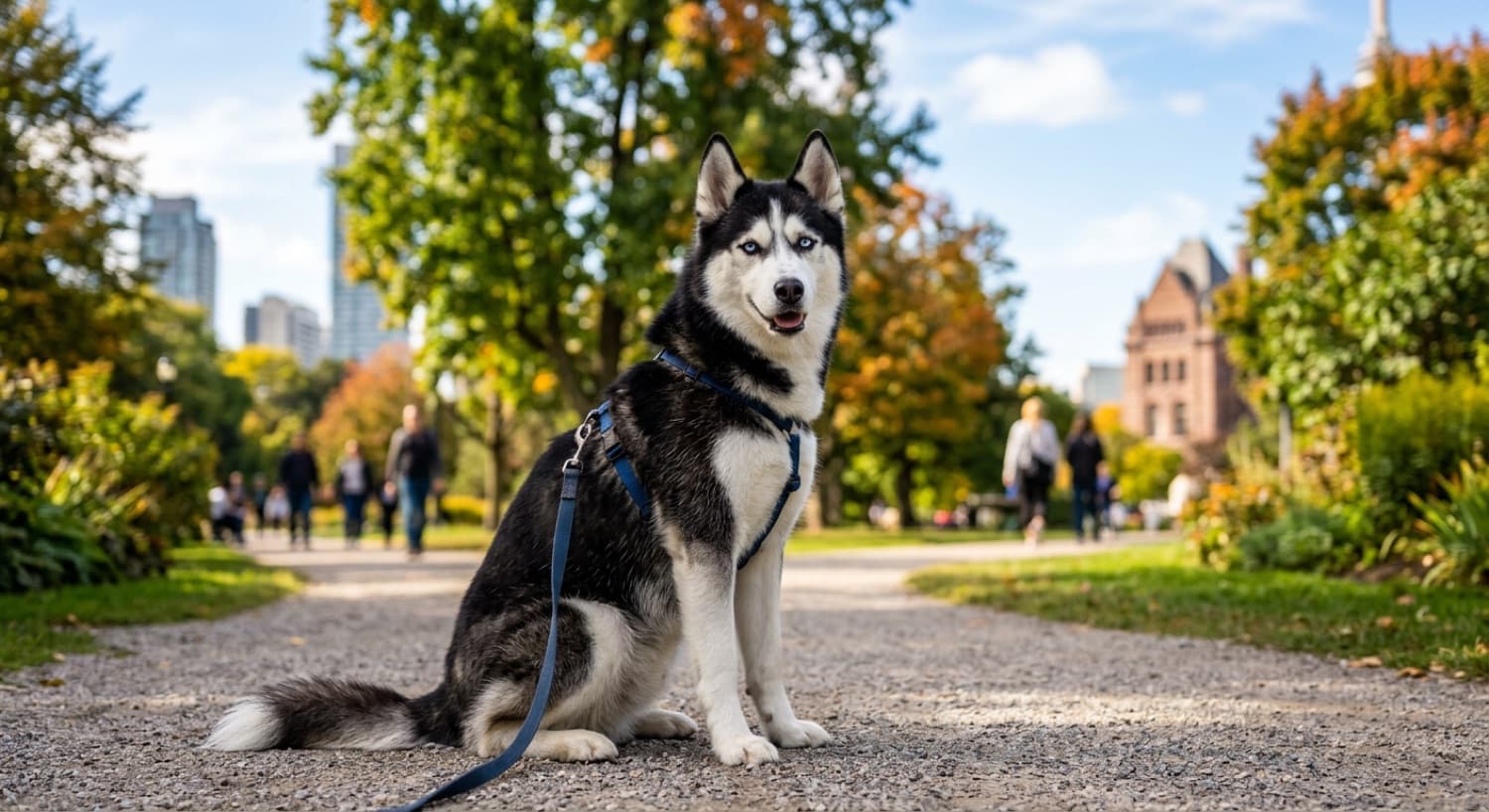
Here is the reassuring headline: Huskies are one of the healthier, longer-lived medium-to-large breeds, and much of what you will read about fragile large dogs simply does not apply to them. The American Kennel Club and the Siberian Husky Club of America both document the breed's recommended health screening, which centres on eyes and hips.
One note before the conditions: this article is general information, not a diagnosis or treatment plan. Every dog is different, and the right person to screen and care for your Husky is your own vet. Where this guide gives signs or ranges, treat them as a prompt to ask, not a substitute for the visit.
Summer heat: the risk owners underestimate
It feels backwards to say the biggest health risk for a Manitoba Husky is heat, but it is true. The dense double coat that lets a Husky run happily at minus 30 also traps heat when the temperature climbs, and Manitoba summers regularly hit the low 30s with humidity. Huskies overheat faster than most breeds, and heatstroke can turn fatal quickly.
Prevention is simple and non-negotiable:
- Exercise early or late. Walk and run a Husky in the early morning or after dark in July and August, not at midday.
- Shade and water always. A Husky outdoors in summer needs constant access to shade and fresh water.
- Never leave a Husky in a car. A Winnipeg car interior climbs to dangerous temperatures within minutes in prairie sun, even with the windows cracked.
- Never shave the coat. It seems logical but it backfires: the coat insulates against heat and protects from sun, and shaving harms both.
Know the signs of heatstroke (heavy panting, drooling, bright red gums, weakness, vomiting, collapse) and treat them as an emergency. This is the Husky risk we most want Manitoba owners to take seriously.
Inherited eye conditions
Eyes are the area the breed is most known for, which is why responsible breeders eye-test their dogs and the Orthopedic Foundation for Animals runs a companion eye registry. The three main conditions are juvenile cataracts (lens clouding that can appear in young dogs), corneal dystrophy (a hazy corneal deposit), and progressive retinal atrophy (a gradual retinal degeneration that can lead to blindness).
Watch for cloudiness, bumping into things, hesitance in dim light, or any visible change in the eyes. Some conditions are manageable and some are not, but early detection always helps, so an annual eye check is worth it for a Husky. If you notice a change, see your vet, who may refer you to a veterinary ophthalmologist.
Hips, thyroid, and weight
Hip dysplasia occurs in Huskies but less often than in many large breeds, another point in the Husky's favour. Because Huskies are athletic and stoic, they hide discomfort well, so do not assume a quiet dog is pain-free. Keeping your Husky lean is the most powerful protection for the joints, and a vet can assess hips if you have concerns.
Hypothyroidism is one of the more common Husky endocrine issues, usually appearing in middle age. The signs creep in slowly: weight gain without eating more, lethargy, a dull coat, and skin problems. It is diagnosed with a blood test and managed well with daily medication, so if your Husky is slowing down or gaining weight for no clear reason, ask your vet to check thyroid levels. The American Veterinary Medical Association has a plain-language overview.
Zinc-responsive dermatosis
This is a skin condition that Huskies and other northern breeds are specifically prone to, where the dog cannot properly absorb or use zinc. It shows up as crusting, scaling, hair loss, and redness, often around the eyes, muzzle, ears, and paws. It is a breed-associated absorption issue, not simply a diet problem, and a vet diagnoses it, sometimes with a skin biopsy. It usually responds well to zinc supplementation that your vet prescribes and monitors, which is where the name comes from. Do not supplement zinc on your own, because too much is harmful. If your Husky develops crusty, flaky skin around the face or paws, get it examined rather than guessing at the cause.
Browse adoptable Huskies in Winnipeg
Adopting an adult Husky from a foster home means you can ask about eyes, skin, and any known conditions before you commit. See the Winnipeg Huskies available now.
See Available Huskies →Vet costs and where to go in an emergency
Routine annual care for a healthy Husky runs into the low four figures a year in Winnipeg, and because the breed is relatively hardy, many owners avoid the big surgeries that some breeds require. The costs to plan for are annual eye checks, managing thyroid or skin conditions if they come up, and any emergency such as heatstroke or an injury from an escape. Pet insurance enrolled while the dog is young and healthy is still worth weighing, since it covers the unexpected. Get specific quotes from your own vet, since prices vary by clinic. Our low-cost Winnipeg vet guide covers affordable routine care.
For after-hours emergencies, Winnipeg has 24-hour options including the Winnipeg Animal Emergency Hospital on Pembina Highway and Bridgwater Veterinary Hospital. Program a number into your phone now, because with heatstroke you are counting minutes. For specialist eye or orthopaedic work, your vet may refer to a veterinary specialist, occasionally as far as Saskatoon, but the vast majority of Husky care stays in the city.
Frequently asked questions
Are Huskies a healthy breed?
Relatively, yes, and it is one of the breed's real upsides. Siberian Huskies typically live 12 to 15 years and carry fewer of the severe orthopaedic and cancer predispositions that shorten some large breeds. They are a hardy working breed. That said, "healthier than average" is not "problem-free." Huskies have specific conditions to watch: inherited eye problems, occasional hip dysplasia, hypothyroidism, and a breed-associated skin condition called zinc-responsive dermatosis. And in Manitoba the biggest practical health risk is not a genetic disease at all, it is summer heat. Knowing the breed profile lets you screen and prevent rather than react. Build any specific plan with your own vet.
Why is heat the biggest Husky health risk in Winnipeg?
Because the double coat that makes a Husky thrive at minus 30 also traps heat at plus 30, and Manitoba summers get genuinely hot and humid. Huskies overheat faster than most breeds, and heatstroke is a real emergency: heavy panting, drooling, bright red gums, weakness, vomiting, and collapse. Prevent it by exercising in the early morning or after dark in July and August, always providing shade and water, never leaving a Husky in a parked car (a Winnipeg car interior climbs dangerously fast in prairie sun), and never shaving the coat, which actually harms heat regulation and sun protection. If you suspect heatstroke, move the dog to shade, offer cool (not ice-cold) water, and get to an emergency vet immediately. This is the Husky risk owners most often underestimate.
What eye problems do Huskies have?
Huskies are prone to several inherited eye conditions, which is why responsible breeders eye-test their dogs. The main three are juvenile cataracts (clouding of the lens that can appear in young dogs), corneal dystrophy (a hazy deposit in the cornea), and progressive retinal atrophy (PRA, a gradual degeneration of the retina that can lead to blindness). Watch for cloudiness, bumping into things, hesitance in dim light, or changes in the eyes. Some of these are manageable and some are not, but early detection matters, so an annual eye check is worth it for this breed. The Orthopedic Foundation for Animals runs a companion animal eye registry that breeders use. If you notice any change in your Husky's eyes, see your vet, who may refer you to a veterinary ophthalmologist.
Do Huskies get hip dysplasia?
Less often than many large breeds, which is another point in the Husky's favour, but it does happen and it is worth screening for. Hip dysplasia is a malformation of the hip joint that leads to arthritis, and signs include stiffness after rest, reluctance to jump, a bunny-hop gait behind, and slowing on walks. Because Huskies are athletic and stoic, they can mask discomfort, so do not assume a quiet Husky is a pain-free one. Keeping your Husky lean is the single most effective way to protect the joints, and a vet can assess hips with an exam and X-rays if you have concerns. If you adopted an adult, ask the rescue whether hips were ever imaged.
What is zinc-responsive dermatosis in Huskies?
It is a skin condition that Huskies and other northern breeds are specifically prone to, where the dog cannot absorb or use zinc properly. It shows up as crusting, scaling, hair loss, and redness, often around the eyes, muzzle, ears, and paws. It is not caused by a bad diet as such, it is a breed-associated absorption issue, and it is diagnosed by a vet, sometimes with a skin biopsy. The good news is that it usually responds well to zinc supplementation prescribed and monitored by a vet, which is where the name comes from. Do not start supplementing zinc on your own, because too much is harmful, this is a diagnosis and treatment plan for your veterinarian. If your Husky has crusty, flaky skin around the face or paws, get it checked rather than guessing.
Are Huskies prone to hypothyroidism?
Yes, hypothyroidism is one of the more common Husky endocrine issues. It happens when the thyroid gland does not produce enough hormone, and it tends to show up in middle-aged dogs. Signs are easy to miss because they are gradual: weight gain without eating more, lethargy, a dull or thinning coat, skin problems, and cold intolerance. It is diagnosed with a blood test and, importantly, it is very manageable with a daily thyroid medication under veterinary supervision, and dogs usually do well once it is treated. If your Husky is putting on weight, slowing down, or losing coat quality for no obvious reason, ask your vet to check thyroid levels rather than assuming it is just aging.
Are Huskies at risk for bloat?
Their risk is lower than a deep-chested breed like a German Shepherd or Great Dane, because the Husky is not built with that same deep, narrow chest, but bloat can affect almost any dog and every owner should know the signs. Bloat, or gastric dilatation-volvulus (GDV), is when the stomach fills with gas and twists, and it is a same-minute emergency. Signs are a distended, hard belly, unproductive retching, drooling, restlessness, and collapse. If you see them, get to an emergency vet immediately. Sensible feeding habits, such as avoiding one huge meal and heavy exercise right around eating, are reasonable precautions for any large-ish dog. Know your nearest Winnipeg emergency vet before you ever need it.
Do Huskies need a special diet?
Not a special diet as such, but a couple of Husky quirks are worth knowing. Huskies are famously "easy keepers," meaning they often need less food than their size suggests and can gain weight easily, so measure meals and keep the dog lean. Many are also naturally picky or self-regulating eaters, which surprises owners used to food-motivated breeds, and a Husky skipping a meal is usually not a concern the way it would be for a Lab. Any diet change or weight concern is a conversation for your vet, who can rule out an underlying issue (like thyroid) behind a change in appetite or weight. Keep fresh water available at all times, especially in summer, when hydration matters for a heat-sensitive breed.
How much do Husky vet bills cost in Winnipeg?
Routine annual care for a healthy adult Husky (wellness exam, vaccines, parasite prevention, good food) runs into the low four figures a year in Winnipeg, and because Huskies are relatively hardy, many owners do not face the big-ticket surgeries some breeds require. The costs to plan for are eye care (an annual check, and possible referral to an ophthalmologist), managing thyroid or skin conditions if they arise, and any emergency such as heatstroke or an injury from an escape. Pet insurance enrolled while the dog is young and healthy is still worth considering, since it covers the unexpected. Get specific quotes from your own vet, since prices vary by clinic and by the individual dog.
Where do I take a Husky for an emergency in Winnipeg?
Know this before you need it, because heatstroke and escape injuries are the Husky emergencies most likely to come up. Winnipeg has 24-hour emergency options including the Winnipeg Animal Emergency Hospital on Pembina Highway and Bridgwater Veterinary Hospital, both of which handle after-hours and critical care. Program a number into your phone now and know the drive from home. For a heatstroke suspicion, start cooling the dog with shade and cool water on the way, but do not delay the drive. For specialist eye or orthopaedic work, your Winnipeg vet may refer to a veterinary specialist, occasionally as far as the Western College of Veterinary Medicine in Saskatoon, but the vast majority of Husky care stays right in the city.
Related Winnipeg guides
Husky Adoption Winnipeg
Rescues, real costs, escape risk, and the breed reality.
Huskies in Winnipeg Winter
Why the coat thrives in the cold and the escape drive is the danger.
Adoptable Winnipeg Huskies
Every available Husky and Husky cross across Manitoba rescues.
Low-Cost Vet Winnipeg
Affordable routine care, clinics, and payment options.
New dog? Start with these care guides
Everything a new adopter needs to set up a safe, happy home.