The short answer
German Shepherds reach Fredericton rescue often, because they are the most-surrendered large breed in the region. The work is exercise, training, and health management. The Fredericton SPCA on Hilton Road is the natural first call, and Fulfilling Hearts Rescue is the foster-based option with detailed temperament notes. Fees are $275 for an adult and $400 for a puppy at the Fredericton SPCA, and the fee covers spay/neuter, microchip, and shots (but not rabies, so budget a vet visit for that). A Shepherd is a working dog: it needs 60 to 90 minutes of daily physical and mental work, and it comes with a guarding instinct that wants training and management. Health-wise, plan for hips, elbows, and degenerative myelopathy. Pick the dog whose assessed temperament fits your household, and prepare your application before you find the dog.
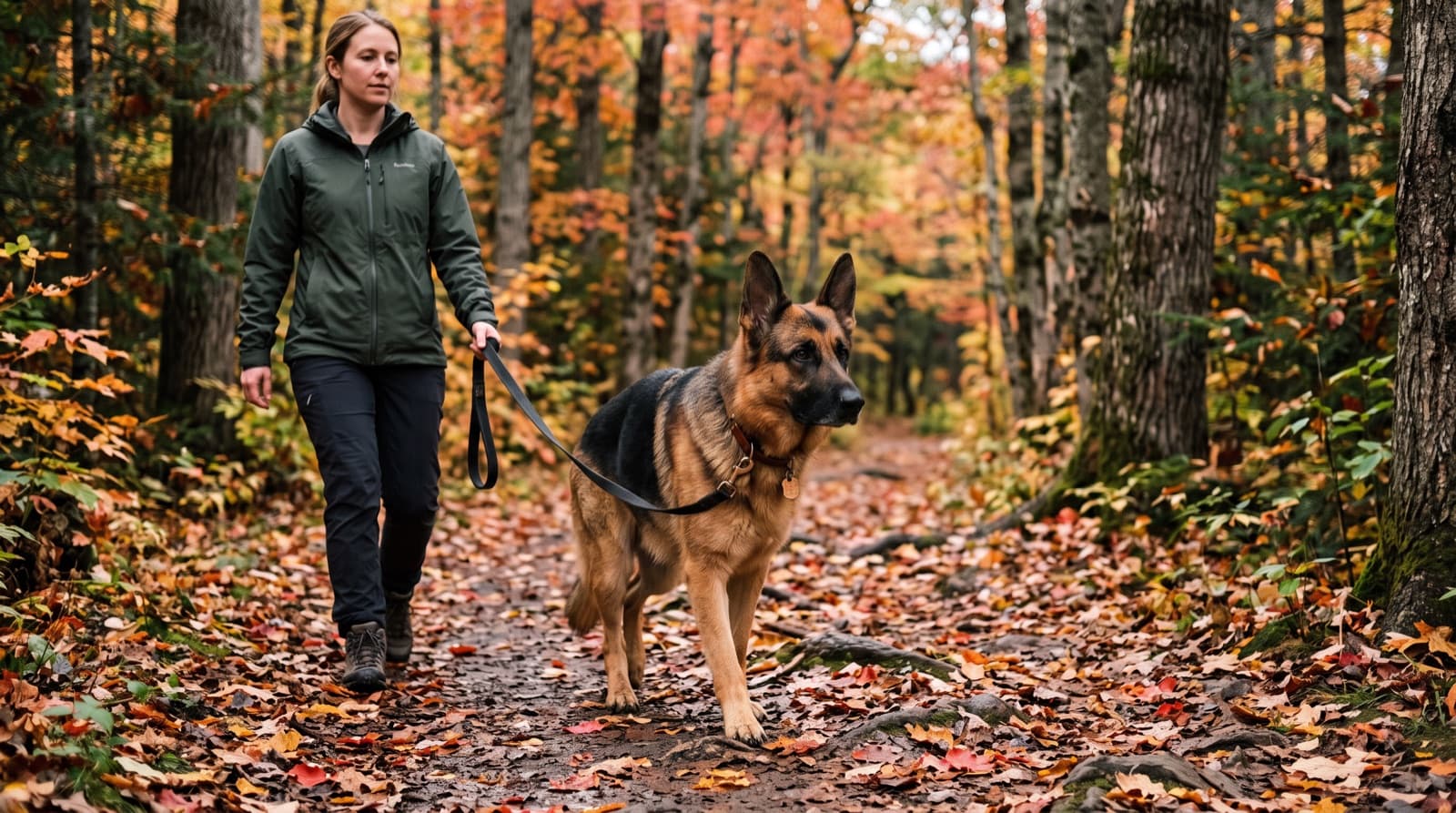
Why German Shepherds surrender in Fredericton
German Shepherds and Shepherd mixes are the most-surrendered large breed in New Brunswick rescue, and the reasons repeat almost word for word. Reading them before you adopt helps you set realistic expectations and pick the dog that actually fits your home.
- Underestimated drive and energy. This is the number-one story. Somebody adopted the intelligent, loyal image and got a working dog that needs 60 to 90 minutes of real physical and mental work every day. When that work is missing, a young Shepherd invents its own: barking, digging, chewing through drywall, patrolling the fence line. The household reads it as a “bad dog” when it is really an under-employed one, and the dog goes back around the 8-to-18-month mark when adolescence peaks.
- Guarding and reactivity that got away from the owner. The breed carries a genuine guarding instinct. Without early socialisation and training, that instinct can turn into stranger wariness, yard-guarding, or leash reactivity toward other dogs. An owner who is not equipped to manage a 80 lb dog lunging on leash reaches a breaking point, and the dog is surrendered as “aggressive” when it usually needs management and a good trainer, not rehoming.
- Size, shedding, and housing. A Shepherd is a lot of dog. It sheds year-round with heavy seasonal blowouts, it needs space, and it is a hard fit for a small apartment or a rental with breed or size restrictions. Landlord problems, a move, or a new baby in a small home push some Shepherds into rescue through no fault of the dog.
- Vet costs and health surprises. Large-breed medical care is not cheap, and a Shepherd with hip dysplasia, a cruciate injury, or a chronic condition can generate bills a household did not budget for. Some surrenders are financial, from owners who love the dog but cannot fund the care.
- Life changes. Divorce, illness, a death in the family, a job that means long hours away. A high-need breed feels these changes hardest, and a Shepherd that suddenly gets far less attention often develops the behaviour problems that lead to a surrender.
None of these are about a fundamentally bad dog. A surrender note that says “too much for us” almost always means one of the patterns above. Ask the rescue directly: how much daily exercise does this dog need, is there any history of guarding or reactivity, how is it with other dogs and strangers, and are there known medical issues. The Fredericton rescues that handle Shepherds will give you honest answers, and those answers are how you avoid becoming the next surrender.
Fredericton and NB rescues that list German Shepherds
A handful of organisations list Shepherds and Shepherd mixes in and around Fredericton. Because a good match for this breed depends so heavily on temperament, casting a wide alert net across the shelter and the province's foster-based rescues is worth the effort. For a fuller directory, see our guide to the best dog rescues in Fredericton.
- Fredericton SPCA: at 165 Hilton Road, this is the only full shelter inside city limits and the anchor of the local rescue scene. It also doubles as the pound for dogs picked up by Animal Control, so strays and owner surrenders both come through, and Shepherds appear regularly. You can meet the dog in person before applying, and the shelter team produces a write-up covering temperament, energy level, and any flagged history. Adoption fees are $275 for an adult and $400 for a puppy under six months or a small dog, and long-stay dogs in the SPCA Lonely Hearts Club carry reduced fees.
- Fulfilling Hearts Rescue: a New Brunswick foster-based rescue with foster homes across the province that considers applicants beyond Fredericton. Because its dogs live in real homes, the temperament notes on energy, guarding, and how the dog does with kids, cats, and other dogs tend to be more detailed than a shelter-only setting, which matters enormously for a breed as individual as the Shepherd. Fulfilling Hearts does not publish a flat fee, but every dog is spayed or neutered and vaccinated before adoption. This is a strong first stop if you want thorough foster feedback before you commit.
- Provincial and Maritime rescues, and strays: Shepherds also come through general New Brunswick and Maritime rescue networks, and many Maritime foster-based rescues pull dogs from within the province and sometimes out of region, so timelines vary. Given the breed's size and drive, Shepherds turn up as strays through Animal Control too. The New Brunswick SPCA is the provincial animal-welfare body and a useful reference point.
Before sending money to any rescue, verify a real address, charitable status, and a current adoptable-dog list. Free-purebred-German-Shepherd offers and out-of-country transport deals that ask for payment up front are a common scam, and a legitimate NB rescue will always want an application and a real conversation first. If you are choosing a general-practice vet for a large breed, a full-service clinic such as the Fredericton Animal Hospital on Prospect Street is one named option, and it is worth knowing where your nearest after-hours help is before you need it (see our Fredericton emergency vet guide).
Working line vs show line, and why it matters in rescue
“German Shepherd” is not one dog. Decades of breeding have split the breed into distinct types, and knowing the difference helps you read a rescue dog accurately even when its history is a blank page.
Working-line Shepherds are bred for drive, stamina, and job focus, the type you see in police, protection, and sport work. They are athletic, intense, quick to learn, and quick to get into trouble when their brains and bodies are not fully occupied. In an average pet home with an hour's walk a day and nobody home for eight hours, a young working-line dog is often the one that unravels. Show-line and pet-line Shepherds (including the sloped-back conformation type common in North America) are frequently a little calmer and more biddable, although make no mistake, they are still active dogs that need real daily exercise and training.
In rescue you almost never get papers, so you cannot know a dog's exact line. What you can do is lean on the behaviour assessment. A good foster or shelter write-up describes the dog in front of you: does it settle easily indoors or pace and whine, how does it handle downtime, how fast does it escalate when excited. For a first-time large-breed owner, a lower-drive adult with a calm, settled assessment is a far safer choice than a high-arousal young dog, regardless of what line either came from. Match the individual dog to your real energy and schedule, and the line label matters much less. Our Fredericton German Shepherd listings show which Shepherds are available now.
German Shepherd health, in brief
Shepherds typically live 9 to 13 years, and a few breed-linked conditions are worth planning around so adopters apply with realistic expectations. None of this is a reason to skip the breed; it is a reason to keep a vet relationship and an emergency fund.
- Hip and elbow dysplasia. The breed is over-represented in orthopaedic screening. Malformed joints can lead to arthritis, pain, and in bad cases costly surgery. Keeping a Shepherd lean and giving it joint-appropriate exercise (steady activity over repetitive high-impact jumping) is the best day-to-day protection.
- Degenerative myelopathy (DM). A progressive spinal-cord disease the breed is genetically predisposed to, usually appearing in older dogs as gradual, painless hind-end weakness that worsens over time. There is a DNA test for the risk gene. It is not curable, but early awareness helps you plan supportive care.
- Bloat (GDV). Gastric dilatation-volvulus is a sudden, life-threatening emergency in deep-chested breeds. Every Shepherd owner should learn the signs (a distended belly, unproductive retching, restlessness) and treat them as a same-day emergency.
- Exocrine pancreatic insufficiency (EPI). The breed is prone to this digestive disorder, where the pancreas fails to produce enough digestive enzymes. It is manageable with enzyme supplementation and diet once diagnosed by a vet.
- Allergies and skin issues. Environmental and food allergies show up fairly often and are managed with veterinary guidance.
- Degenerative joint and spine issues. Beyond the hips, the breed sees general arthritis and spinal problems with age, so weight control matters across the whole life span.
A rescue Shepherd will rarely arrive with health-testing paperwork, but the standards the breed is screened against are public. The Orthopedic Foundation for Animals maintains open hip, elbow, and DNA screening databases, and the Canadian Kennel Club publishes breed-standard and health information. Book a baseline vet visit in your first month to establish records, score body condition, and discuss breed-specific monitoring, and never start any medication or supplement on your own, since dosing and interactions are a vet's call.
Managing guarding and reactivity
The German Shepherd's guarding instinct is part of what makes the breed loved, and it is also what most often gets an owner into trouble. Handled well, it produces a stable, loyal dog that is calm around strangers because it trusts its handler to make the calls. Handled poorly or left to develop on its own, it can slide into stranger wariness, yard-guarding, or leash reactivity toward dogs and people.
The most important step happens before you adopt: ask the rescue directly about any history of guarding, resource-guarding, or reactivity, and take the answer at face value. A dog flagged for reactivity is not a hopeless case, but it needs an experienced, committed home, not a busy household with young kids and a revolving door of visitors. Fulfilling Hearts and the Fredericton SPCA both assess for this, which is exactly why the foster and shelter notes are worth reading closely.
At home, management comes first. Give a new Shepherd time to settle before flooding it with strangers and other dogs. Walk at quiet times on the riverfront Green or on calm Fredericton streets rather than pushing straight into a crowded park. Reward calm behaviour, keep good distance from triggers, and build confidence gradually. If reactivity shows up, work with a force-free, reward-based trainer or a qualified behaviour professional; ask your vet or the SPCA for a referral to a positive-methods trainer rather than a dominance-based one, because harsh corrections tend to make a guarding dog worse, not better. Progress is slow and steady, and most Shepherds improve a great deal with consistent management and the right professional support.
What a Fredericton rescue German Shepherd actually costs
The Fredericton SPCA charges $275 for an adult dog and $400 for a puppy under six months or a small dog. That fee covers spay or neuter surgery, initial flea and worm treatment, a microchip, and the vaccinations given while the dog was in SPCA care. Budget one extra item: the SPCA does not routinely give the rabies vaccine, so plan a vet visit to arrange it after you bring the dog home. Long-stay Lonely Hearts Club dogs carry reduced fees. Fulfilling Hearts Rescue does not publish a flat fee, but every dog is spayed or neutered and vaccinated before it goes home.
None of that fee is profit. It reimburses the SPCA for veterinary work the dog has already had. Price a private spay or neuter, a full course of vaccines, and a microchip separately at retail New Brunswick clinic rates and the total climbs well past $275, which is why adopting an adult here is the least expensive honest route to a fully vetted dog in Fredericton. Compare that to a German Shepherd puppy from a breeder at breed-typical pricing with none of the medical work done yet, and the rescue path is far cheaper and the dog often arrives with a known temperament. Note that the 15 percent NB HST applies to supplies you buy, not to the adoption fee itself. For a full local breakdown, see our Fredericton dog adoption cost guide.
Plan roughly $400 to $900 in one-time setup costs the first month: a crate sized for a large dog, a good harness and leash, a vet baseline visit, the rabies vaccine, and food. Ongoing costs for a large breed run roughly $1,500 to $2,500 a year, and pet insurance is genuinely worth it for a breed with documented hip, joint, and DM risks. If your Shepherd somehow arrives unaltered, our Fredericton spay and neuter guide covers the local options, though most rescue Shepherds are altered before adoption.
Browse adoptable Fredericton German Shepherds and Shepherd mixes
Current New Brunswick listings from the Fredericton SPCA, Fulfilling Hearts Rescue, and other local rescues in one place. Shepherds appear often but sound young dogs place fast, so alerts and same-day applications win.
See Available German Shepherds →The first 30 days with a Fredericton German Shepherd
A rescue Shepherd runs on the same 3-3-3 arc as any dog: the first three days are raw decompression, the routine clicks into place over about three weeks, and the real bond takes closer to three months. With a large, driven breed the early structure matters even more, because a Shepherd reads calm, predictable leadership as safety. The general decompression plan lives in our first week with a rescue dog guide; what follows is tuned to a Shepherd.
- Set structure from day one. A calm, predictable routine (set meal times, set walk times, a quiet space of the dog's own) lowers arousal and helps a big dog settle. Do not overwhelm a new Shepherd with visitors and outings in week one.
- Book a baseline vet visit in the first two weeks. Establish records, arrange the rabies vaccine the SPCA does not give, score body condition, check the hips and joints, and confirm the microchip is registered to you.
- Start training immediately, with positive methods. Enrol in a reward-based obedience class or line up a force-free trainer. A Shepherd learns fast, and the early weeks are when good habits stick. Skip harsh corrections, which backfire on a guarding breed.
- Meet the exercise need every single day. 60 to 90 minutes of combined physical and mental work. The riverfront Green and Odell Park trails are strong on-leash options, and a puzzle feeder or training session at home counts as much as distance.
- Manage introductions carefully. Go slow with strangers, kids, and other dogs until you know this individual dog. Distance and calm beat flooding, especially if the assessment flagged any reactivity.
- Crate train from night one. A crate sized for a large dog gives a decompressing Shepherd a safe den and helps with house-training and settling in the first month.
- Watch for the guarding signs early. Note how the dog handles food, chews, doorways, and visitors, and address any resource-guarding with a professional right away rather than hoping it fades.
- Enrol in pet insurance in week one. Before any pre-existing conditions land in your records. Hip, joint, and DM risks are cheaper to insure against when you enrol early.
- Licence the dog and learn the local rules. See our Fredericton pet licensing guide and the Fredericton dog bylaws guide for the leash and licence requirements.
- Winter and summer paw and coat care. Rinse or wipe the paws after salted-sidewalk walks in winter and watch for salt-cracked pads; in the warm, humid Fredericton summer, walk early or late and carry water. See our Fredericton winter dog care guide.
- Keep the first two weeks predictable. Same routes, same routine, and hold off on the off-leash trails and busy dog parks until the dog has settled and you have read our Fredericton off-leash parks guide for where off-leash is actually permitted.
By around week three the house has a rhythm and the Shepherd underneath the nerves begins to surface. Reactivity that showed up early softens with distance and reward-based work, the guarding settles into trust rather than suspicion, and the daily exercise stops feeling like a chore and starts feeling like your normal. Do not judge the dog inside the first 90 days. A Shepherd's confidence builds slowly, and the loyal, level companion waiting on the other side of that settling period is worth every patient week.
Frequently asked questions
Where can I adopt a German Shepherd near me in Fredericton?
Start with the Fredericton SPCA at 165 Hilton Road. It is the only full shelter inside city limits, it doubles as the municipal pound, and German Shepherds and Shepherd mixes cycle through it regularly because they are the most-surrendered large breed in the region. The other consistent source is Fulfilling Hearts Rescue, a New Brunswick foster-based rescue with foster homes across the province and detailed temperament notes on each dog. Purebred Shepherds also come through general NB and Maritime rescues and occasionally as strays picked up by Animal Control. Fredericton is a capital-city market with real demand for the breed, so set alerts on both the SPCA and Fulfilling Hearts, stay open to a Shepherd mix rather than a purebred, and apply the same day a dog that suits your household appears. Young, sound, well-tempered Shepherds place fast.
Why are German Shepherds the most-surrendered large breed in Fredericton?
It comes down to a mismatch between what the breed is and what most people expect. A German Shepherd is a working dog with high drive, strong guarding instinct, and a need for daily physical and mental work. People adopt the loyal, intelligent image and are unprepared for the reality: a bored adolescent Shepherd that barks, digs, chews, and starts guarding the yard or reacting to strangers and other dogs on leash. Add the size (a 70 to 90 lb dog is a lot of animal in a small yard or apartment), the shedding, and the vet costs of a large breed prone to hip and joint problems, and some households give up around the 8-to-18-month mark. The dogs themselves are usually sound and trainable. Most surrenders are about an owner who underestimated the workload, not a bad dog.
How much does it cost to adopt a German Shepherd in Fredericton?
The Fredericton SPCA charges $275 for an adult dog and $400 for a puppy under six months or a small dog. That fee includes spay or neuter surgery, initial flea and worm treatment, a microchip, and the vaccinations the dog received while in SPCA care. One thing to budget for: the SPCA does not routinely give the rabies vaccine, so plan a vet visit to arrange it yourself soon after adoption. Long-stay dogs in the SPCA Lonely Hearts Club carry reduced fees. Fulfilling Hearts Rescue does not publish a flat fee, but every dog is spayed or neutered and vaccinated before it goes home. None of the fee is profit; it reimburses the shelter for veterinary work the dog already had. Priced on their own at a New Brunswick clinic, the spay or neuter, vaccines, and microchip would total well past $275, making the adult SPCA adoption the least expensive honest route to a fully vetted dog in Fredericton. Plan roughly $400 to $900 in one-time setup costs the first month, and $1,500 to $2,500 a year ongoing for a large dog.
What is the difference between working-line and show-line German Shepherds?
It matters more than most adopters realise. Working-line Shepherds are bred for drive, stamina, and job focus. They are athletic, intense, and need serious daily work, and they are usually the ones that struggle most in an average pet home when that work is missing. Show-line or pet-line Shepherds (including the sloped-back conformation type) are often somewhat calmer and more biddable, though still active dogs that need real exercise. In rescue you rarely get papers, so you cannot always know which line a dog came from. What you can do is read the foster or shelter behaviour notes, because a good assessment describes the dog in front of you: is it high-arousal and hard to settle, or a steadier companion. For a first-time large-breed owner, a lower-drive adult with a calm assessment is a far safer bet than a high-octane young working-line dog.
What health problems do German Shepherds have?
German Shepherds carry a few well-documented breed risks that adopters should plan around. Hip and elbow dysplasia are the big ones: the breed is over-represented in orthopaedic screening databases, and dysplasia can mean arthritis, pain, and eventually costly surgery. Degenerative myelopathy (DM) is a progressive spinal-cord disease the breed is genetically predisposed to, usually appearing in older dogs as gradual hind-end weakness; there is a DNA test for the risk gene. Bloat (gastric dilatation-volvulus) is a life-threatening emergency in deep-chested breeds and every Shepherd owner should learn the signs. The breed also sees exocrine pancreatic insufficiency, allergies, and degenerative joint issues. A rescue Shepherd will rarely have OFA or DNA paperwork, but a baseline vet visit, weight control, joint-appropriate exercise, and knowing your nearest emergency vet cover the practical bases. Never medicate on your own; work with your vet.
How much exercise does a German Shepherd need?
A lot, and mental work counts as much as physical. Plan 60 to 90 minutes a day minimum for a healthy adult, split between walking, training, and problem-solving games, and expect more for a young working-line dog. A Shepherd left with nothing to do invents its own job, and that job is usually barking, digging, chewing, or patrolling and reacting. In Fredericton the riverfront Green (the multi-use Fredericton Trail along the Saint John River) and the trails through Odell Park are strong on-leash options, and structured obedience or scent work drains the mental energy that raw distance does not. Puzzle feeders, training sessions, and a job to do at home matter every single day. A well-exercised, mentally-tired Shepherd is a calm, easy dog. An under-worked one is the dog that ends up back in rescue.
Are German Shepherds good with kids and other dogs?
Many are excellent family dogs, but it is individual and it depends on the specific dog and its socialisation. A well-raised, well-socialised Shepherd is loyal, gentle, and protective of its family, and plenty live happily with children and other pets. The cautions are the breed's guarding instinct and its size: a Shepherd that has not been socialised, or that has a history of resource-guarding or leash reactivity, needs an experienced home and careful management, not a house full of toddlers. This is exactly why a foster-based rescue like Fulfilling Hearts is valuable, because the dog has lived in a home and the foster can tell you honestly how it does with kids, cats, and other dogs. For a family home, look for a dog with a documented history of living calmly with children, and supervise all interactions through the first few months.
Is a German Shepherd a good first dog?
For most first-time owners, an adult Shepherd with a calm, well-assessed temperament can work; a young working-line puppy usually does not. The breed's intelligence cuts both ways: a Shepherd learns good habits fast and bad ones just as fast, and its size and drive mean mistakes have consequences a small dog's do not. If you are set on the breed as a first-timer, adopt an adult, lean on the rescue's temperament notes, commit to a positive-reinforcement training class in your first months, and be honest about your schedule and energy. The adopters who struggle are usually the ones who took a high-drive young dog on optimism. The ones who succeed picked a dog whose assessed temperament matched their real life, and put in the training time from week one.
How do I manage a reactive or guarding German Shepherd in Fredericton?
First, understand that guarding and leash reactivity are common in the breed and usually manageable, not a dealbreaker, but they take a real plan. Ask the rescue directly about any history of reactivity, resource-guarding, or stranger wariness before you adopt, and take the answer seriously. At home, management comes first: avoid flooding the dog with strangers and dogs before it has settled, use distance and calm on-leash walks rather than crowded areas, and reward calm behaviour. A reactive Shepherd benefits from a force-free, reward-based trainer or behaviour professional; ask the SPCA or your vet for a referral to a qualified local trainer rather than a dominance-based one. The riverfront Green and quieter Fredericton streets are better early walking grounds than a busy off-leash park. Progress is slow and steady. Most Shepherds improve a great deal with consistent management and the right professional guidance.
How does Fredericton's climate affect a German Shepherd?
Fredericton sits inland in the Saint John River valley, so it gets a full four-season humid-continental climate: cold, snowy winters and genuinely warm, humid summers. The Shepherd's dense double coat handles the winter easily, and most Shepherds love the cold and snow. The winter concern is not cold, it is road salt: salted sidewalks and slushy streets can burn and crack paw pads, so rinse or wipe the paws after walks and watch for limping or licking, with booties an option for sensitive dogs. Summer is the bigger risk. Inland Fredericton runs warmer and more humid than the coast, and a heavy double coat plus real heat and humidity can push a Shepherd toward overheating. On hot, humid days, walk early or late, skip the midday heat, carry water, and give a senior or overweight dog extra caution. Never leave a dog in a parked car. The double coat also means year-round shedding with heavy blowouts twice a year.
How long is the wait to adopt a German Shepherd in Fredericton?
It varies with what you are looking for. Because Shepherds and Shepherd mixes are the most-surrendered large breed in the region, they appear in Fredericton rescue fairly often, so the wait can be shorter than for a rare breed. Young, sound, well-tempered Shepherds still place fast, sometimes within days of listing, because demand for the breed is high. A senior Shepherd, a dog with a managed medical need, or one flagged for reactivity may wait longer and can be the better match for an experienced, quieter home. Set alerts on the Fredericton SPCA and Fulfilling Hearts Rescue, widen to general NB and Maritime rescues, and get your references, landlord approval, and vet contact ready in advance. Same-day applications win most placements, so prepare before you find the dog, not after.
Related Fredericton adoption guides
Fredericton German Shepherds
Current New Brunswick German Shepherd and Shepherd-mix listings from the Fredericton SPCA, Fulfilling Hearts, and other local rescues.
Best Dog Rescues in Fredericton
A directory of the New Brunswick shelters and foster-based rescues worth setting listing alerts on, with what each is known for.
Fredericton Dog Adoption Costs
What rescue fees actually cover, first-month vet and setup costs, and the true ongoing budget for a large dog in Fredericton.
First Week With a Rescue Dog
The 3-3-3 decompression plan, settling routines, and what to expect in the first days with a newly adopted Fredericton rescue dog.
Find your Fredericton rescue German Shepherd
Browse current New Brunswick German Shepherd and Shepherd-mix listings. Shepherds appear often but sound young dogs place fast; alerts and same-day applications win.
Browse All Fredericton Dogs →New dog? Start with these care guides
Everything a new adopter needs to set up a safe, happy home.