The short answer
Huskies reach Fredericton rescue often, because the breed is so frequently surrendered. The work is containment, exercise, and summer heat management. The Fredericton SPCA at 165 Hilton Road is your first call, and Fulfilling Hearts Rescue is the foster-based option with detailed temperament notes. Fees $275 adult and $400 for a puppy under six months at the SPCA, plus a secure, dig-proof fence. A Husky is a working sled breed: it runs off on instinct, it needs one to two hours of daily exercise, and it blows its coat twice a year. Off leash in an unfenced space is not safe for the large majority of Huskies. This is not a first dog for most owners. Its double coat handles the snowy inland winter easily, but the warm, humid Fredericton summer is genuinely dangerous, so shade, water, and no midday walks are the rule.
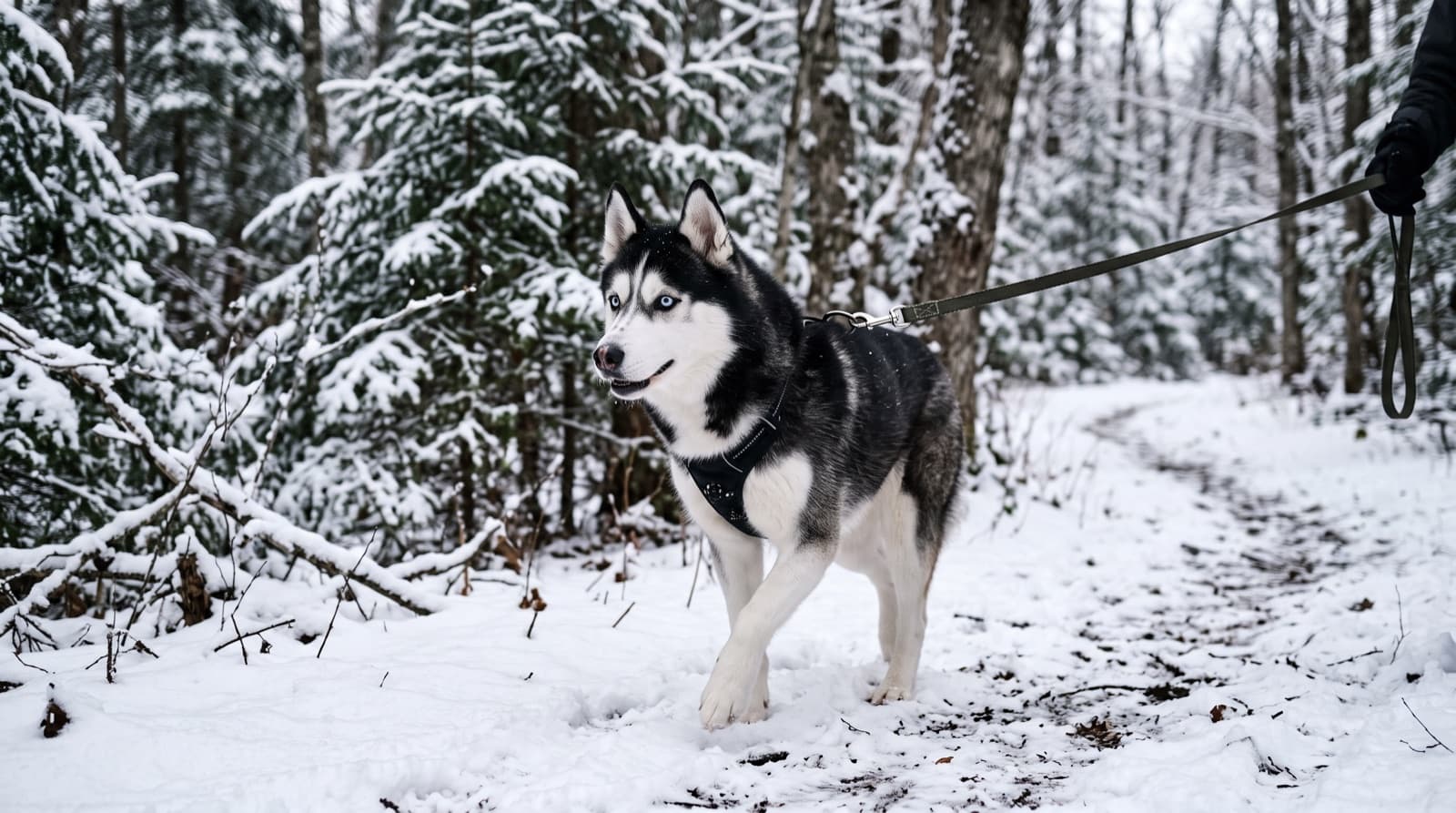
Why Huskies surrender in Fredericton
The Husky is one of the most-surrendered breeds in Canada, and Fredericton is no exception. The pattern is remarkably consistent, and almost none of it is about a bad dog. It is a working sled breed placed in a home that could not meet its needs. Reading these reasons before you adopt helps you decide honestly whether your household is the right match.
- Escape. This is the number-one Husky surrender story. A Husky bred to run will clear a standard fence, dig under it, chew through a gate, or slip out an open door in a heartbeat, and it will keep going once it is loose. Households that lose the dog twice, or that spend every walk chasing a runaway, get worn down and surrender. A secure, dig-proof fence and a leash everywhere else are not optional extras for this breed. They are the price of ownership.
- Underestimated energy. People see the striking looks and the wolfish face and picture a companion dog. What they get is an athlete that needs one to two hours of real exercise a day. When that need goes unmet, the energy turns destructive: shredded couches, holes dug in the yard, chewed doors and drywall, and a dog that never seems to settle. Owners who cannot keep up eventually give up.
- Shedding and coat blow. The double coat sheds moderately year-round and then blows out completely twice a year, coating the entire house in fur over a few weeks. Owners who did not sign up for daily vacuuming and constant brushing are often shocked, and for some households the fur becomes the last straw.
- The independent streak. Huskies are intelligent but stubborn and were bred to make their own decisions on a trail. People expecting a biddable, obedient dog read that independence as being untrainable, get frustrated, and surrender. The breed is trainable, but it needs a different, more patient approach than a Retriever or Shepherd.
- Noise and life changes. Huskies are famously vocal. They howl, they “talk,” and in an apartment or a close-set rental that draws neighbour complaints. Add a move, a new baby, or a change in work schedule that cuts the dog's exercise, and a household that was managing tips over into surrender.
The through-line is that a Husky needs an active home with secure containment and an owner who understands the breed going in. When you read a Husky surrender note that says “too much for us” or “kept escaping,” it is almost always one of the reasons above. Ask the rescue directly: how does this dog handle being alone, has it escaped before, what is its energy level, and how is it with cats. The Fredericton rescues that place Huskies will give you straight answers.
Fredericton and NB rescues that list Huskies
A short list of organisations covers most Husky adoptions in the Fredericton area, and because the city is a small market, casting a wider net across New Brunswick and the Maritimes helps. Set up listing alerts on every rescue you would consider. For a fuller directory, see our guide to the best dog rescues in Fredericton.
- Fredericton SPCA: the anchor of the local rescue scene, the only full shelter inside city limits, at 165 Hilton Road. It also serves as the pound for dogs picked up by Fredericton Animal Control, which is one reason escape-prone Huskies pass through regularly. Adopters meet the dog in person, and the shelter team produces a write-up on temperament, energy level, and any flagged medical history. Adoption fees are $275 for an adult and $400 for a puppy under six months, with reduced rates for long-stay Lonely Hearts Club dogs. Full fee details are on the SPCA adoption fees page.
- Fulfilling Hearts Rescue: a New Brunswick foster-based rescue with foster homes across the province that considers applicants beyond Fredericton. Because its dogs live in real homes rather than kennels, the temperament notes on how a Husky handles being alone, its recall, its energy level, and how it does with cats and other dogs tend to be more accurate, which matters enormously for this breed. Fulfilling Hearts does not publish a flat adoption fee, but every dog it places is spayed or neutered and vaccinated before it goes home. This is the best option for an adopter who wants detailed foster notes to match the right individual Husky.
- Regional NB and Maritime rescues and strays: Huskies also reach the region through general foster-based and transport-based rescues that pull dogs from within New Brunswick and sometimes out of province, so timelines vary. Given the breed's reputation for wandering, Huskies also turn up as found strays, handled through the local shelter and Animal Control system. For welfare context province-wide, the New Brunswick SPCA is the provincial animal-welfare body.
One warning specific to a popular breed like the Husky: be careful with online “free Husky” and cheap-purebred-puppy offers, which are a common scam. Verify any rescue through a real address, charitable status, and a current adoptable-dog list before sending money. A legitimate New Brunswick rescue will always want an application and a conversation first, and will ask you as many questions about your fence and exercise routine as you ask about the dog.
The escape-artist reality
Everything about living with a Husky comes back to one fact: this is a dog bred to run for distance, in front of a sled, over terrain no companion breed was designed to cross. That heritage produces an athletic, tireless, endearing dog, and it also produces the behaviour that surprises unprepared owners most.
The first is recall failure. When a Husky decides to go, it goes, and the recall you spent months building simply evaporates. This is not stubbornness you can drill out; it is what the breed was built to do. The practical consequence for Fredericton owners is firm: the large majority of Huskies should never be off leash in an unfenced space. A securely fenced yard gives the dog freedom to run at home, and a leash or long-line goes on everywhere else, including Odell Park with its old-growth Acadian forest trails and the riverfront Green along the Saint John River, both of which are on-leash walking areas. If you want to let the dog run loose, use a fully fenced off-leash area only, and check the Fredericton off-leash parks guide for where those are and the City of Fredericton leash-optional dog trails page for the official list.
The fence itself needs a plan, because a standard four-foot fence does not contain a motivated Husky. The breed climbs, jumps, and digs, so the containment that works is a taller fence line (six feet is the sensible minimum), dig-proofing at the base with buried wire or a concrete footing, and gates that latch securely and cannot be nosed open. Walk the whole perimeter before the dog arrives and assume it will test every weak point in the first week. If a fenced yard is not an option, a Husky is a hard fit, and you should be honest with the rescue about that up front.
The second reality is energy. A Husky needs one to two hours of genuine physical activity a day, and a stroll does not qualify. Running, hiking, and dog sports like canicross satisfy the breed; a bored Husky redirects all that drive into digging, chewing, and escaping. The good news is that a properly exercised Husky is a calmer, easier housemate. The bad news is there is no shortcut around the daily commitment. If your week cannot reliably include that much movement, the mismatch will show up as destruction and escape attempts, no matter how much you love the dog.
Coat, shedding, and the Fredericton seasons
The Husky's double coat is the reason the breed thrives in a Fredericton winter and the reason the summer needs real caution. The dense undercoat and coarse outer coat insulate against cold and heat alike, which is why you should never shave a Husky: shaving damages the coat and strips away the dog's own temperature regulation. Grooming is a rake, a brush, and patience, with far more frequent sessions during the twice-yearly coat blow when the undercoat comes out in handfuls over a few weeks.
Fredericton sits inland in the Saint John River valley, which gives it a humid continental climate with four distinct seasons, colder and snowier than the New Brunswick coast. Winter brings nor'easters, freezing rain, heavy snow, and a lot of road salt. For a healthy adult Husky, the cold and snow are the easy part; most love winter and want to be out in it. The one winter chore is paw care, because salt and ice melt on Fredericton sidewalks can burn and crack pads. Rinse or wipe the paws after every walk, watch for salt burn between the toes, and use booties for a dog with sensitive feet. Our Fredericton winter dog care guide covers the full routine.
Summer is where a Husky owner has to pay attention. Inland Fredericton runs warmer and more humid than the coast, and hot, sticky days are genuinely dangerous for a heavily coated northern breed that does not shed heat efficiently. Walk in the early morning or after sunset, skip midday heat entirely, always bring water, and keep constant shade available in the yard. Watch closely for heavy panting, drooling, wobbliness, or lethargy, which are early signs of overheating. Heatstroke moves fast and is a medical emergency, so know where your nearest after-hours clinic is before you ever need it; our Fredericton emergency vet guide maps the options.
Husky health, in brief
Siberian Huskies are a relatively healthy, hardy breed (12 to 14 years is typical), a legacy of being bred for hard work rather than looks. A few conditions are worth planning around so adopters apply with realistic expectations.
- Eye conditions. The breed is prone to several inherited eye problems, including juvenile cataracts, progressive retinal atrophy, and corneal dystrophy. Responsible breeding screens for these, and any change in vision or cloudiness warrants a vet check.
- Hip dysplasia. Less common than in larger breeds but still present. A malformed hip joint leads to arthritis over time; keeping the dog lean and fit reduces the impact.
- Skin and coat issues. Some Huskies develop zinc-responsive dermatosis and other skin conditions. Keep an eye on coat quality, hair loss, and skin around the face and paws.
- Hypothyroidism. Shows up in middle age with weight gain and coat changes, diagnosed with bloodwork and managed with a daily pill.
- Heat sensitivity. Not a disease, but the most important day-to-day health consideration in a warm, humid Fredericton summer. The double coat that protects against cold makes the breed vulnerable to overheating.
For breed-level health-testing standards, the Orthopedic Foundation for Animals maintains public screening databases at ofa.org, and the Canadian Kennel Club publishes the breed standard. A rescue Husky usually will not come with OFA records, but the databases are useful context for what the breed is screened for. Book a baseline vet visit in your first month to establish records and, importantly, to arrange the rabies vaccine, since the Fredericton SPCA does not routinely give it. A full-service clinic such as the Fredericton Animal Hospital on Prospect Street handles routine care, and it is worth knowing your after-hours option before you need it.
What a Fredericton rescue Husky actually costs
The Fredericton SPCA charges $275 for an adult dog and $400 for a puppy under six months. That fee covers spay or neuter surgery, initial flea and worm treatment, a microchip, and the vaccinations the dog received in SPCA care. Budget separately for the rabies vaccine, which the SPCA does not routinely give, so you arrange it with your own vet soon after adoption. Long-stay Lonely Hearts Club dogs carry reduced fees. Fulfilling Hearts Rescue does not publish a set fee, but spays or neuters and vaccinates every dog before adoption, so confirm the amount when you apply. Whatever the number, the fee recoups part of the veterinary work the dog has already had rather than pricing the dog for sale. Bought separately at New Brunswick clinic rates, the surgery, microchip, and vaccines already provided would cost well beyond it, making an adult adoption here the most budget-friendly aboveboard way to get a fully vetted dog in Fredericton.
Compare that to a Husky puppy from a breeder, typically well over a thousand dollars with no medical work done yet, and the rescue path is far cheaper, and the dog often arrives with a known temperament. Plan another $400 to $900 in the first month for setup, and understand that for this breed the largest single first-month cost is usually containment: dig-proofing and raising the fence line, or buying a good long-line and committing to a training plan if a fenced yard is not available. Note that the 15% NB HST applies to supplies like the crate, fencing, and gear, though not to the adoption fee itself. For a fuller local breakdown, see our Fredericton dog adoption cost guide.
Ongoing costs for a medium-to-large active dog run roughly $1,500 to $2,500 a year: quality food for a 35 to 60 lb athlete, routine vet care, grooming supplies for the coat, pet insurance (worth considering for the breed's eye and skin risks), and a City of Fredericton dog licence. Most rescue Huskies arrive already spayed or neutered, but if yours is not, our Fredericton spay and neuter guide covers the local options.
Browse adoptable Fredericton Huskies and Husky mixes
Current New Brunswick listings from the Fredericton SPCA, Fulfilling Hearts, and other regional rescues in one place. Huskies come into rescue often, but the right match for your fence and lifestyle still rewards an alert and a same-day application.
See Available Fredericton Huskies →The first 30 days with a Fredericton Husky
A rescue Husky settles on the same 3-3-3 arc as any adopted dog: three days of raw decompression, about three weeks for the routine to click, and closer to three months for the real bond. What you cannot ease off on, even in the first hour, is containment, because a Husky can be over the fence or out the door before you finish unpacking. Our first week with a rescue dog guide lays out the general decompression steps; the checklist below is built around a Husky.
- Secure the yard before the dog arrives. Walk the whole fence line for gaps, low spots, and diggable edges. Six feet is the sensible minimum height, with buried wire or a footing at the base and gates that latch. Assume the dog will test every weak point on day one.
- Leash on for every outing, no exceptions. Until you know this individual dog, treat off-leash freedom outside a fully fenced area as off the table. A well-fitted harness reduces the risk of a Husky backing out of a collar and bolting.
- Build the exercise routine immediately. Start the one-to-two-hour daily habit from week one. A well-exercised Husky decompresses faster and destroys less. Adjust timing for heat in summer and footing in winter.
- Book a baseline vet visit in the first two weeks. Establish records, arrange the rabies vaccine the SPCA did not give, confirm the microchip is registered to you, and score body condition.
- Dog-proof the interior. A bored or anxious Husky in the settling period chews. Put away shoes and cords, and give the dog appropriate outlets so it does not choose the couch.
- Start grooming early. Get the dog used to the brush and undercoat rake now, before the next coat blow, and set the expectation that grooming is a regular, calm routine.
- Introduce cats and small pets slowly, if at all. Prey drive is real. Use gates and supervised, gradual introductions, and be prepared to keep them permanently separated if the dog is not safe.
- Consider pet insurance in week one. Before any pre-existing conditions land in your records. The breed's eye and skin risks are cheaper to insure against when enrolled early.
- Licence the dog with the City of Fredericton. Required for dogs in the city, and quick to arrange. The municipal animal-control law sets the rules for licensing and containment.
- Crate train from night one. Even a house-trained Husky benefits from a crate routine in the first month; it gives the dog a safe den and limits destruction while you are out.
- Keep the routine predictable for the first two weeks. Same walks, same schedule. Save new dogs and busy spaces for after week three.
By week three most Huskies have stopped testing the fence line quite so relentlessly, once they learn the yard is secure and the exercise is reliable. By three months the daily running, the coat brushing, and the fence checks have settled into a routine you barely think about, and the dog trusts the rhythm. Do not write the verdict on this dog inside the first 90 days. A Husky that arrives wired to escape usually eases once containment and real exercise become predictable, and time does the rest.
Frequently asked questions
Where can I adopt a Husky near me in Fredericton?
Start with the Fredericton SPCA at 165 Hilton Road, the only full shelter inside city limits and the most consistent local source of Huskies and Husky-type mixes through owner surrender and stray intake. It also doubles as the pound for dogs picked up by Fredericton Animal Control, and Huskies land there fairly often because the breed is a determined escape artist. Fulfilling Hearts Rescue is the other strong option, a New Brunswick foster-based rescue with foster homes across the province that considers applicants beyond Fredericton and writes detailed temperament notes. Huskies also reach the Maritimes through regional and transport-based rescues, so widen your alerts across the Fredericton SPCA, Fulfilling Hearts, and general NB and Maritime rescues. Most rescue Huskies here are purebred Siberians or Husky-shepherd and Husky-Malamute mixes. Fredericton is a small market, so set alerts everywhere you would consider and apply the same day a Husky that suits your household appears.
Why do Huskies end up in rescue in Fredericton?
Huskies are one of the most-surrendered breeds in Canada, and the reasons are consistent. Escape is the big one: a Husky bred to run will jump a four-foot fence, dig under it, or bolt through an open door, and after the second or third escape a frustrated household gives up. Underestimated energy is next, because the breed needs real daily exercise and a bored Husky becomes destructive, shredding drywall, couches, and doors. Heavy shedding and twice-yearly coat blow surprise owners who did not expect fur on everything. The breed's independent, stubborn streak reads as untrainable to people expecting an obedient dog. And Huskies are talkers and howlers, which draws noise complaints in shared housing. Almost none of this is a bad dog. It is a working sled breed placed in a home that did not match its needs.
How much does it cost to adopt a Husky in Fredericton?
The Fredericton SPCA charges $275 for an adult dog and $400 for a puppy under six months (the same rate applies to small dogs). That fee includes spay or neuter surgery, initial flea and worm treatment, a microchip, and the vaccinations the dog received while in SPCA care. One thing to budget for: the SPCA does not routinely give the rabies vaccine, so plan a vet visit to arrange that yourself soon after adoption. Long-stay dogs in the Lonely Hearts Club carry reduced fees. Fulfilling Hearts Rescue does not publish a flat fee, but every dog it places is spayed or neutered and vaccinated before adoption; confirm the amount when you apply. Whatever the number, the fee recoups part of the veterinary work already done for the dog rather than pricing it for sale. Plan another $400 to $900 in one-time setup for the first month, and expect containment (a taller, dig-proofed fence line) to be the single largest first-month cost for this breed.
Can a Husky ever be trusted off leash?
For the large majority of Huskies, no, not in an unfenced space. The Siberian Husky was bred to run in front of a sled for distances most dogs never cover, and that drive to move forward does not switch off on command. Recall in a Husky is unreliable by design, not by poor training, and a Husky that takes off can be kilometres away before it slows down. The realistic plan for Fredericton is a securely fenced yard for off-leash freedom at home and a leash or long-line everywhere else, including Odell Park and the riverfront Green, which are on-leash walking areas. If you want to let a Husky run loose, use a fully fenced off-leash area only, and check our Fredericton off-leash parks guide for where those are. Treating an open trail, a quiet street, or the riverbank as safe is exactly how Huskies go missing.
How much exercise does a Husky actually need?
A lot, and more than most first-time owners expect. Plan on one to two hours of real physical activity a day for a healthy adult, and understand that a walk around the block does not touch it. This is a breed built to pull a sled across long distances, so it needs running, hiking, structured play, or a dog sport like canicross or bikejoring to be satisfied. An under-exercised Husky is a destructive Husky: the energy that has nowhere to go turns into digging, chewing through doors and drywall, escaping, and howling. Mental work helps but does not replace the physical outlet. In Fredericton that means committing to daily activity year-round, walking the multi-use riverfront Green in the shoulder seasons and being disciplined about heat in summer and footing in winter. If your lifestyle cannot support that much daily movement, a Husky will struggle in your home no matter how much you love it.
Is a Husky a good first dog?
For most first-time owners, no. A Husky is an intelligent, independent, high-energy working breed that will exploit every weakness in a fence, an exercise routine, or a training plan. First-time owners tend to underestimate the containment needs, the exercise commitment, the shedding, and the stubborn streak, and the mismatch is a leading reason Huskies land in rescue. That said, it is not impossible. A committed first-time owner who has genuinely researched the breed, has a securely fenced yard, can commit to one to two hours of daily exercise, and works with a foster-based rescue that helps match the right individual dog can succeed. Fulfilling Hearts and the Fredericton SPCA can steer you toward an easier, lower-drive individual if you are honest about your experience. If you want a breed that is more forgiving of a first-time home, that is a reasonable conversation to have with a rescue before you commit to a Husky.
How bad is Husky shedding, and does it get worse in Fredericton?
Husky shedding is heavy and constant, with two dramatic peaks a year when the dog blows its entire undercoat over a few weeks in spring and fall. During coat blow you will pull out fur in handfuls and vacuum daily. The rest of the year is steady moderate shedding. What you should never do is shave a Husky: the double coat insulates against both cold and heat, and shaving damages it and removes the dog's temperature regulation. Regular brushing, a good undercoat rake, and more frequent grooming during the blow are the whole plan. Fredericton's climate does not make shedding worse so much as it makes the timing predictable, with the spring blow arriving as the snow clears and the fall blow ahead of winter. If a heavily shedding double-coated dog in your home sounds like a dealbreaker, the Husky is not the breed for you, because the fur is not negotiable.
Are Huskies good with kids, cats, and other dogs?
Huskies are usually very social with people, including children, and most are friendly rather than protective, which is one reason they make poor guard dogs. With other dogs they are typically sociable, a legacy of being bred to work in teams. The real caution is prey drive. Many Huskies have a strong instinct to chase small animals, so cats, rabbits, and small dogs can be a genuine risk depending on the individual. A Husky raised with a cat may be fine, while another will never be safe around one. This is exactly where a foster-based rescue earns its value: Fulfilling Hearts places dogs from real homes and can tell you whether a specific Husky has lived successfully with cats or small dogs. If you have a cat or a small pet, ask about prey drive directly and insist on a slow, supervised introduction, and be prepared to walk away from a dog that is not a safe match.
How does a Husky handle Fredericton winters and summers?
The winter is the easy part. Fredericton sits inland in the Saint John River valley and gets cold, snowy winters with nor'easters, freezing rain, and heavy snow, and a healthy adult Husky with its full double coat is built for exactly this. Most Huskies love the snow and want to be out in it. The one winter task is paw care: road salt and ice melt on Fredericton sidewalks can burn and crack paw pads, so rinse or wipe the paws after walks and use booties for a dog with sensitive feet. Summer is the real risk. Inland Fredericton runs warmer and more humid than the coast, and hot, humid days are genuinely dangerous for a heavily coated northern breed. Walk early morning or after sunset, skip the midday heat entirely, always carry water, provide constant shade, and watch closely for heavy panting or lethargy. Heatstroke is a medical emergency, so know where your nearest emergency vet is before you need it.
Should I adopt a Husky puppy or an adult?
For most Fredericton households, an adult Husky is dramatically easier. Husky adolescence, roughly six to eighteen months, stacks peak destructiveness, peak escaping, and peak stubbornness all at once, and it overwhelms unprepared owners. An adult Husky has a settled energy level you can actually assess, established house manners, a known temperament around cats and kids, and a lower adoption fee. A foster-based rescue can tell you whether a specific adult is high-drive or comparatively mellow, which is information a puppy simply cannot give you. Senior Huskies, seven years and up, are often the calmest and most rewarding option for a quieter home. If you specifically want a puppy and can commit to eighteen months of intensive training, containment, and exercise while the dog tests every boundary, it can work, but for most adopters an adult or senior Husky is the far better fit.
How long is the wait to adopt a Husky in Fredericton?
It varies. Huskies come into rescue often because they are so frequently surrendered, so the breed is not rare here, but the wait for the right individual depends on your household. If you have a securely fenced yard, an active lifestyle, and no cats, a good-match Husky can appear within a few weeks of setting alerts. If you need a Husky that is safe with cats or small dogs, or you want a lower-energy senior, expect a longer search. The Fredericton SPCA posts dogs as they come in, and Fulfilling Hearts works through an application and foster-match process that takes time but produces better matches. Get your references, landlord approval if you rent, and vet contacts ready before you find the dog, because same-day applications win most placements. Setting alerts across the Fredericton SPCA, Fulfilling Hearts, and regional NB and Maritime rescues, and staying open to a Husky mix, shortens the wait.
Related Fredericton adoption guides
Fredericton Huskies
Current New Brunswick Husky and Husky-mix listings from the Fredericton SPCA, Fulfilling Hearts, and other regional rescues.
Best Dog Rescues in Fredericton
A directory of the New Brunswick shelters and foster-based rescues worth setting listing alerts on, with what each is known for.
Fredericton Dog Adoption Costs
What rescue fees actually cover, first-month vet and containment costs, and the true ongoing budget for a dog in Fredericton.
Fredericton Winter Dog Care
Salt and paw care, nor'easters and cold snaps, and keeping a double-coated dog safe and comfortable through the inland winter.
Find your Fredericton rescue Husky
Browse current New Brunswick Husky and Husky-mix listings. Huskies come into rescue often, but the right match for your fence and lifestyle still rewards alerts and a same-day application.
Browse All Fredericton Dogs →New dog? Start with these care guides
Everything a new adopter needs to set up a safe, happy home.