The short answer
Labradors reach Fredericton rescue steadily, and almost always over one thing: underestimated energy. The Fredericton SPCA at 165 Hilton Road is the anchor of the local scene and your first call, with Fulfilling Hearts Rescue the strong foster-based second option. SPCA fees are $275 for an adult and $400 for a puppy or small dog, and the rabies shot is not included, so budget a vet visit. A Lab is a sporting breed built to work all day. Field lines run hotter than bench lines, obesity is the breed's biggest health risk, and hip and elbow joints need a lifelong lean weight. Plan 60 to 90 minutes of real daily exercise, use the Saint John River and Killarney Lake for summer swims, and be honest about the energy before you apply.
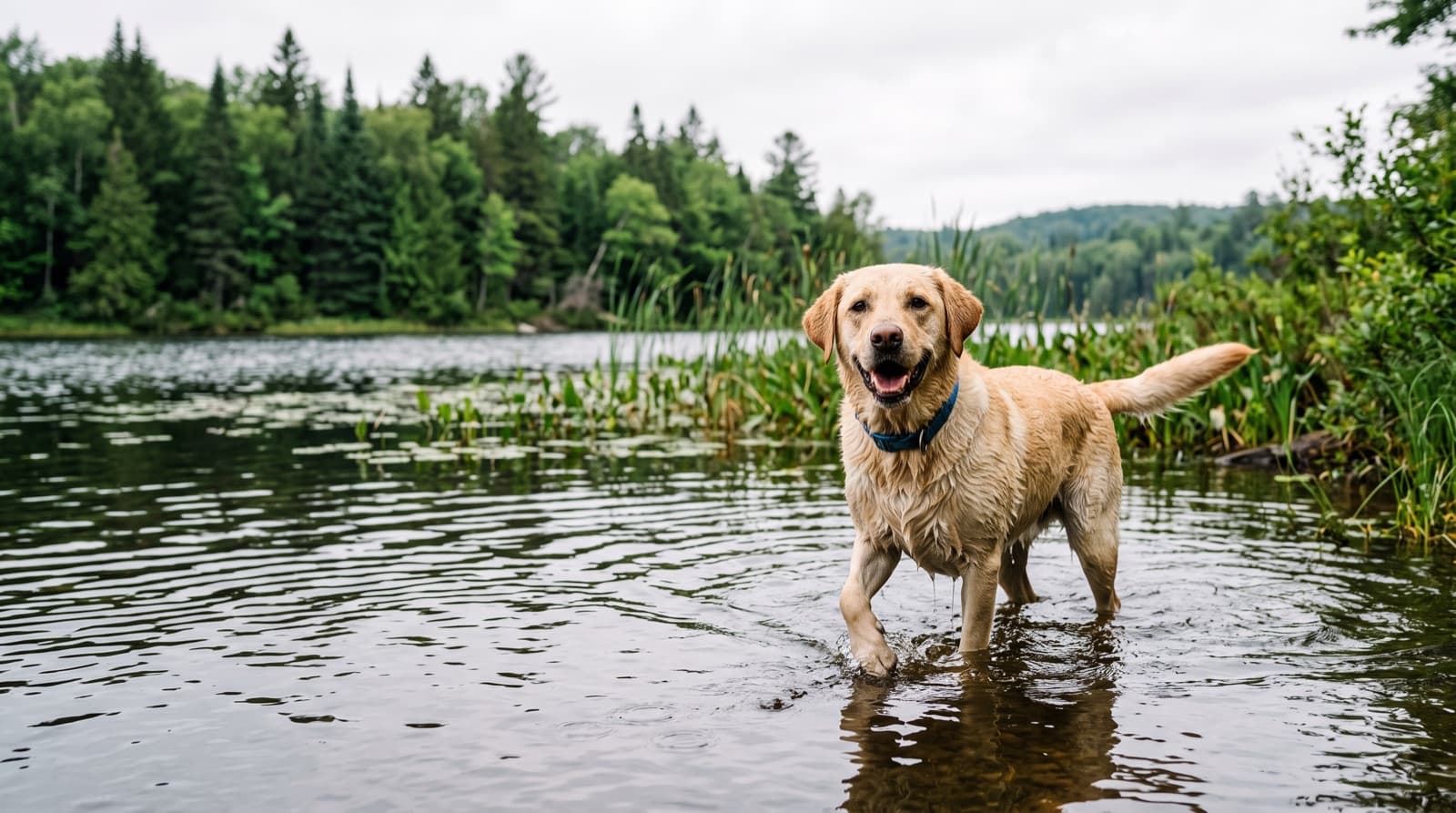
Why Labradors surrender in Fredericton
Labrador surrenders follow a pattern, and it is worth understanding before you adopt because it tells you exactly what to plan for. The Lab is the most popular dog in Canada, which means it is also one of the most commonly surrendered, and the reasons rarely have anything to do with a bad dog.
- Underestimated energy. This is the big one. People adopt the image of the mellow older Lab and get a bouncing adolescent with the drive of a hunting dog. When the chewing, counter-surfing, jumping, and leash-pulling pile up, an unprepared household gets overwhelmed. A Lab needs a real daily workout, and the ones that do not get it become the destructive dogs that end up back in rescue. The dog is not broken; the exercise math never worked.
- Housing changes. A move into a rental that will not take a large dog, a landlord who changes the rules, or a downsize to a place with no yard. Big sporting dogs are the first to lose their homes when housing shifts, and Fredericton's rental market is no different from anywhere else on this.
- A new baby and an untrained adolescent. An exuberant young Lab with no manners plus a newborn is a common surrender trigger. The dog means no harm, but a 70 lb adolescent that jumps and mouths is a genuine worry around an infant, and stretched-thin new parents often cannot commit to the training the dog needs.
- Cost of care. Hip or elbow issues, an ear infection that keeps recurring, or the vet bills of an overweight dog can push a struggling household past its budget. This is why keeping a Lab lean and insured from day one matters so much.
- Life changes. Job loss, a relationship ending, a health crisis, a death in the family. These account for a real share of surrenders and say nothing about the dog. Many of the best rescue Labs come from exactly these situations and are already house-trained, socialised family dogs.
The thread running through all of it is energy. Read a Lab surrender note carefully and ask the rescue directly: how much exercise is this dog getting now, what is its body condition, and how does it behave when it has not been walked. A rescue that has fostered the dog will give you honest answers, and those answers predict your next decade with the dog far better than the pedigree does.
Fredericton and NB rescues that list Labs
A handful of organisations serve Fredericton adopters, and because purebred Labs place fast, a wide alert net catches the right dog sooner. Set up listing alerts on every rescue you would consider. For a fuller directory, see our guide to the best dog rescues in Fredericton.
- Fredericton SPCA: the only full shelter inside city limits, at 165 Hilton Road, and the anchor of the local rescue scene. It also doubles as the pound for dogs picked up by Animal Control, so a wide range of dogs pass through, including Labs and Lab mixes from owner surrender and stray intake. Adopters meet the dog in person before applying, and the shelter produces a clear write-up on temperament and any known history. Fees are $275 for an adult and $400 for a puppy under six months or a small dog, with reduced rates for long-stay Lonely Hearts Club dogs. See the current SPCA adoption fees before you visit.
- Fulfilling Hearts Rescue: a New Brunswick foster-based rescue with foster homes across the province, and a strong choice for a Lab or Lab cross when you want detailed temperament notes. Because its dogs live in real homes, the write-ups on energy level, house manners, and how the dog is with kids and other pets tend to be accurate, which matters a lot for judging a Lab's true drive. It considers applicants beyond Fredericton, spays or neuters and vaccinates every dog before adoption, and does not publish a flat fee, so ask when you apply.
- Regional NB and Maritime rescues: many foster-based Maritime groups pull dogs from within New Brunswick and sometimes out of province, and Labs and Lab mixes turn up regularly. The provincial New Brunswick SPCA is a useful reference point for animal-welfare questions province-wide. Transport-rescue timelines vary, so confirm where the dog is now and when it would actually be available.
Whatever the source, verify any breed-specific rescue claim through a real address, charitable status, and a current adoptable-dog list before sending money. Free-purebred-Labrador offers online are a common scam, and legitimate rescues always want an application and a conversation first. Because Labs are so sought after, they are also the breed scammers most often dangle, so slow down when a deal looks too good.
The energy reality, and the field vs bench line difference
Everything about living happily with a Lab comes back to exercise. This is a sporting breed developed to retrieve waterfowl all day in cold water, and that heritage did not evaporate when Labs became family pets. A Lab that gets a proper daily workout is calm, biddable, and one of the easiest dogs you will ever share a house with. A Lab that does not becomes restless, mouthy, and destructive, and that gap is the reason so many end up in rescue.
Plan on 60 to 90 minutes a day of genuine activity for a healthy adult, and more for a young field-line dog. That means brisk walks, fetch, swimming, and secure off-leash running, not a slow lap of the block. Fredericton gives you good ground for it: long walks on the riverfront Green along the Saint John River, trail time under the old-growth Acadian forest at Odell Park, and summer swims at Killarney Lake north of the city. For where dogs can legally be off leash, check the City of Fredericton leash-optional dog trails and our Fredericton off-leash parks guide, because Odell Park and the Green are on-leash walks unless the guide says otherwise.
The other half of the picture is which kind of Lab you are looking at. Labs split roughly into two types, and the difference is bigger than most adopters realise. Field-line, or working, Labs are bred for hunting and field trials: leaner, more athletic, higher-drive, and genuinely needing a job and a lot of exercise. Bench-line, or show, Labs are bred to the conformation standard: blockier, heavier, and generally calmer, which suits a typical family better. Most rescue Labs are mixes and land somewhere between the two, which is often the sweet spot for a family home. The practical takeaway is to read the foster or shelter write-up for energy level rather than assuming any Lab is a mellow couch dog. A rescue that has lived with the dog can tell you whether you are meeting a laid-back companion or a high-octane athlete, and that one detail should steer your choice more than colour or looks.
Do not forget the brain. Retrievers were bred to think, mark falls, and solve problems, so mental work tires a Lab as much as physical exercise. Puzzle feeders, scent games, training sessions, and structured play burn energy that a walk alone leaves untouched. A Lab that is both physically and mentally worked is the calm dog people picture. One that is only walked, or only left in a yard, is not.
Labrador health, in brief
Labs are generally sturdy and, kept lean, often live 11 to 13 healthy years. A few conditions are worth planning around so you adopt with realistic expectations. None of this should scare you off the breed.
- Obesity. The single biggest day-to-day health risk. Labs are famously food-driven, some carry a genetic variant tied to a bigger appetite, and extra weight loads stress onto joints and shortens lives. Measured meals, counted treats, and a firm no-table-scraps rule are non-negotiable with this breed.
- Hip and elbow dysplasia. Inherited joint conditions that can lead to arthritis and lameness. Responsible breeders screen through the Orthopedic Foundation for Animals, but a rescue Lab rarely has those records, so a lean body weight and sensible exercise are your best protection.
- Ear infections. Those drop ears trap moisture, so weekly ear checks and cleaning matter, especially for a Lab that swims often.
- Progressive retinal atrophy. An inherited eye condition that gradually affects vision. Ask about eye history if it is known.
- Exercise-induced collapse. Seen in some working lines, where intense exercise triggers temporary weakness. Uncommon, but worth knowing if you adopt a high-drive field-type Lab.
- Bloat. A risk in any deep-chested large dog. Learn the signs, and avoid heavy exercise right around meals.
For breed-level health-testing standards, the Orthopedic Foundation for Animals maintains public screening databases at ofa.org, and the Canadian Kennel Club publishes the recognized breed standard, including the three official colours. Plan a baseline vet visit in your first month to establish records, score body condition, and sort out the rabies vaccine the SPCA does not routinely give. A full-service clinic like the Fredericton Animal Hospital on Prospect Street handles routine care, and it is worth knowing your after-hours options before you need them. See our Fredericton emergency vet guide for where to go in a crisis.
What a Fredericton rescue Labrador actually costs
The Fredericton SPCA charges $275 for an adult dog and $400 for a puppy under six months or a small dog. That number is a contribution toward veterinary care the dog has already had, not a purchase price. It covers the spay or neuter surgery, initial flea and worm treatment, a microchip, and the vaccinations the dog received in SPCA care. The one gap to plan for is the rabies vaccine, which the SPCA does not routinely give, so arrange it with your own vet after adoption. Long-stay dogs in the Lonely Hearts Club carry reduced fees. Fulfilling Hearts Rescue does not publish a flat fee but spays or neuters and vaccinates every dog before placement, so confirm the number when you apply.
Set that against a breeder Lab puppy, which runs well over a thousand dollars with none of the medical work done yet, and adopting an adult from the SPCA at $275 is the most affordable above-board way to bring home a fully vetted dog in Fredericton. Plan another $400 to $900 in one-time setup the first month: a crate, a proper harness and leash, food, bowls, bedding, and that first vet visit including the rabies shot. Note that the 15 percent HST applies to supplies you buy, though not to the adoption fee itself. For a fuller local breakdown, see our Fredericton dog adoption cost guide.
Ongoing, budget roughly $1,500 to $2,500 a year for a medium-to-large dog: quality food for a 55 to 80 lb Lab, routine vet care, and pet insurance, which is genuinely worth it for a breed with documented joint, ear, and eye risks. Enrol early, before any condition shows up in the records. If your rescue Lab somehow arrives unaltered, which is rare, our Fredericton spay and neuter guide covers the local options, and our low-cost vet guide helps if the budget is tight.
Browse adoptable Fredericton Labs and Lab mixes
Current New Brunswick listings from the Fredericton SPCA, Fulfilling Hearts Rescue, and other local sources in one place. Labs are popular and place fast, so alerts and same-day applications win.
See Available Fredericton Labradors →The first 30 days with a Fredericton Labrador
A rescue Lab settles on the same 3-3-3 arc as any dog: the first three days are decompression, the routine clicks over about three weeks, and the real bond takes closer to three months. Labs tend to land on the faster end because the breed is social and eager to please. What you cannot ease off on, even in week one, is exercise and structure, because a bored, under-worked Lab shows you its worst habits fastest. Our first week with a rescue dog guide handles the general plan; this list is the Lab-specific layer on top.
- Set the exercise plan before the dog arrives. Decide when and how the dog gets its daily 60 to 90 minutes, and who is responsible. A Lab without a plan fills the gap with chewing and door-dashing.
- Start the weight and feeding routine immediately. Measured meals, no free-feeding, treats counted into the daily total, and a firm no-table-scraps household rule. Score body condition at the first vet visit and hold the dog lean from day one.
- Book a baseline vet visit in the first two weeks. Establish records, sort the rabies vaccine, check the ears, confirm the microchip is registered to you, and discuss joint monitoring.
- Use a proper harness and leash. A young Lab pulls hard, and a well-fitted front-clip harness saves your shoulder and the dog's trachea while you teach loose-leash walking.
- Enrol in pet insurance in week one. Before any pre-existing conditions appear in the records. Lab joint and ear issues are cheaper to insure against when enrolled early.
- Licence the dog with the City of Fredericton. Required for dogs in the city; see our Fredericton pet licensing guide for how, and the city animal control law for the rules.
- Build the enrichment habit. Puzzle feeders, scent games, and short training sessions from the start. Mental work drains the energy that otherwise turns into trouble.
- Introduce water carefully in summer. Most Labs love to swim, but ease a nervous dog in and watch a young Lab around cold or fast river current. Killarney Lake and calm stretches of the Saint John River are good starting points.
- Manage the heat. Fredericton summers run warm and humid, and a heavy-coated Lab overheats fast, so walk early or late, carry water, and skip midday exercise on hot days.
- Same routes, same routine for the first two weeks. Predictability speeds settling. Save busy dog parks and new friends for after week three.
- Winter paw care. Rinse or wipe the paws after salted-sidewalk walks, watch for salt burn and cracking, and consider booties for a sensitive dog through the freezing-rain and heavy-snow stretches.
Give it three weeks and the frantic energy of a new Lab usually finds its groove, once the dog trusts that a real walk is coming every day. By the three-month mark the bouncing has an outlet, the feeding and training routine runs on autopilot, and the willing, affectionate housemate the breed is famous for is the dog in front of you. Resist the urge to size the dog up in the first 90 days. Almost every early worry with a Lab dissolves the moment the exercise math finally adds up.
Frequently asked questions
Where can I adopt a Labrador near me in Fredericton?
Start with the Fredericton SPCA at 165 Hilton Road, the only full shelter inside city limits and the most consistent local source of Labs and Lab mixes through owner surrender and stray intake. Fulfilling Hearts Rescue, a New Brunswick foster-based rescue, is the other strong option and often carries Labrador crosses with detailed foster temperament notes. Purebred Labs move fast in this market, so set alerts on both and widen your search to regional NB and Maritime rescues, since many foster-based groups pull dogs from across the province. Most rescue Labs in the Fredericton area are Lab mixes rather than papered purebreds, and a Lab-shepherd or Lab-hound cross is often a better family fit than a full field-line Lab anyway. Fredericton is a mid-sized capital city with real search demand for the breed, so apply the same day a Lab that suits your household appears rather than waiting to think it over.
Why do Labradors end up in rescue in Fredericton?
The single biggest reason is underestimated energy. People picture the calm older Lab from a commercial and adopt a bouncing 10-month-old with the drive of a working retriever, then surrender it when the chewing, jumping, and pulling get overwhelming. A Lab is a sporting breed bred to work all day, and an under-exercised one gets destructive and mouthy. Other common Fredericton surrender patterns include a move to a rental that will not take a large dog, a new baby colliding with an adolescent Lab that has no manners yet, the cost of care for a dog with developing hip or elbow issues, and simple life changes like job loss or a relationship ending. The dogs themselves are usually friendly, biddable, and family-safe. Almost every Lab surrender traces back to a household that matched the breed's looks but not its exercise needs.
How much does it cost to adopt a Labrador in Fredericton?
The Fredericton SPCA charges $275 for an adult dog and $400 for a puppy under six months or a small dog. That fee includes the spay or neuter surgery, initial flea and worm treatment, a microchip, and the vaccinations the dog received while in SPCA care. One thing to budget for: the SPCA does not routinely give the rabies vaccine, so you arrange that with your own vet after adoption. Long-stay dogs in the Lonely Hearts Club program have reduced fees. Fulfilling Hearts Rescue does not publish a flat fee, but every dog it places is spayed or neutered and vaccinated before adoption, so ask when you apply. Compared to a breeder Lab puppy at well over a thousand dollars with no medical work done yet, adopting the $275 SPCA adult Lab is the most affordable above-board way to bring home a fully vetted dog in Fredericton. Plan another $400 to $900 in one-time setup costs the first month, plus the rabies visit.
How much exercise does a Labrador really need?
More than most first-time owners expect, and this is the make-or-break question for the breed. Plan on 60 to 90 minutes a day of real activity for a healthy adult Lab, and considerably more for a young field-line dog. That means brisk walks, fetch, swimming, and off-leash running in a secure space, not a slow amble around the block. A Lab that gets a proper daily workout is a calm, easy housemate; a Lab that does not becomes the counter-surfing, door-dashing, furniture-chewing dog that ends up back in rescue. Fredericton gives you good options: the riverfront Green along the Saint John River for long walks, Odell Park for trail time, and Killarney Lake for summer swims. Mental work matters too. Retrievers were bred to think and problem-solve, so puzzle feeders, scent games, and training sessions burn energy that walks alone do not. Budget the time honestly before you adopt, because the exercise need does not go away.
Are field-line and bench-line Labs different?
Yes, and it matters a great deal for a family adopter. Labs split roughly into two types. Field-line, or working, Labs are bred for hunting and field trials. They tend to be leaner, more athletic, faster to mature mentally but far higher in drive, and they genuinely need a job and a lot of exercise. Bench-line, or show, Labs are bred to the conformation standard and tend to be blockier, heavier, calmer, and better suited to a typical family home. Most rescue Labs are mixes and fall somewhere in between, which is often ideal. What this means in practice is that you should read the foster or shelter write-up for energy level rather than assuming any Lab is a couch dog. A rescue that has fostered the dog can tell you whether you are looking at a mellow companion or a high-octane athlete, and that single detail predicts your next decade more than the colour or the pedigree does.
What colours do Labradors come in?
The Canadian Kennel Club recognizes three Labrador colours: black, yellow, and chocolate. Yellow ranges from nearly white cream to a deep gold, and the darker end of that range is often called fox-red, which is simply a rich reddish-yellow Lab, not a separate breed or a rare variety. Black is the most common in working lines, chocolate is popular as a family pet, and fox-red has become fashionable. Colour has no bearing on temperament, health, or trainability, despite persistent myths that chocolate Labs are hyper or that black Labs are calmer. In rescue you take the dog that fits your household, and colour should be near the bottom of your priority list. Be wary of anyone marketing silver, charcoal, or champagne Labs as rare and charging a premium; those are dilute coat variations that fall outside the recognized standard, and the marketing is usually the point. Adopt for temperament and energy match, not coat colour.
What health problems do Labradors have?
Labs are generally sturdy and long-lived, but a few conditions are worth planning around. Hip and elbow dysplasia are the best-known, both inherited joint conditions that can cause arthritis and lameness, and both are screened in responsible breeding through the Orthopedic Foundation for Animals databases. A rescue Lab will rarely have those records, so keeping the dog lean is your single most protective step. Obesity is the breed's biggest day-to-day health risk. Labs are famously food-motivated, some carry a genetic variant linked to appetite, and an overweight Lab piles stress onto already vulnerable joints. Other watch-items include exercise-induced collapse in some working lines, progressive retinal atrophy affecting vision, and ear infections from those drop ears trapping moisture. Bloat is a risk in any deep-chested large dog. None of this should scare you off the breed. A lean, well-exercised Lab from rescue often lives 11 to 13 healthy years. Just budget for pet insurance early and a good vet relationship.
Can Labradors handle Fredericton winters and summers?
Both, with sensible management, but the two seasons pose opposite problems. Fredericton sits inland in the Saint John River valley with a true four-season climate, so winters bring heavy snow, nor'easters, freezing rain, and heavily salted sidewalks. A Lab's dense double coat handles the cold well, and most Labs love snow, but road salt is hard on paws, so wipe or rinse the feet after every walk and watch for salt burn or cracking between the pads. Booties help sensitive dogs. The bigger risk is actually summer. Fredericton runs warm and humid in July and August, more so than the coast, and a heavy-coated, high-drive Lab can overheat fast. Walk early or late, skip the midday heat, carry water, and never leave a dog in a parked car. The upside of summer is water: Labs are built to swim, and access to the Saint John River or Killarney Lake lets a Lab burn energy without the heat and joint impact of running on hot pavement.
Are Labradors good with kids and other pets?
As a breed, Labs are one of the better family choices, which is a big part of why they are so popular. Most are patient, tolerant, and genuinely fond of children, and they usually get along with other dogs and often cats. The real caution with kids is not aggression but exuberance: a young, under-exercised Lab is a big, bouncy dog that can knock a toddler over without meaning any harm, and the mouthiness of a retriever puppy can startle small children. Supervise, teach the dog manners early, and make sure it is getting enough exercise so it is calm indoors. Rescues assess temperament in foster or shelter care and flag any concerns around kids, cats, or other dogs, so read the write-up and ask directly. For a home with young children, look for a foster note confirming the dog has lived successfully with kids, and give the adjustment a few patient months.
Should I adopt a Labrador puppy or an adult?
For most Fredericton households, an adult Lab is far easier than a puppy. Labrador adolescence, roughly six months to two years, is where the breed's energy peaks: the chewing, jumping, pulling, and general lack of an off-switch all land at once, and this is exactly the age at which so many Labs get surrendered. An adult Lab has usually grown out of the worst of it, has a settled temperament you can actually assess, comes with a known medical history, and often arrives already house-trained. You also get to see the dog's true energy level rather than gambling on how a puppy will turn out. Senior Labs, eight and up, are frequently the calmest, most rewarding companions in any shelter and place beautifully into quieter homes. If you specifically want a puppy and have the time, budget, and energy for two years of intensive training and exercise, a Lab puppy can be wonderful. For most adopters, an adult is the smarter fit.
How long is the wait for a Labrador in Fredericton rescue?
It varies with what you are after. Purebred Labs and young, family-friendly Lab mixes place fast, sometimes within days of listing, because the breed is in constant demand across New Brunswick. If you are set on a purebred Lab puppy specifically, expect a longer wait and be ready to move immediately when one appears. If you are open to a Lab mix or an adult, which most adopters should be, the wait is often just a few weeks once your application is ready. The way to shorten it is to prepare everything in advance: references, landlord approval if you rent, your vet contact, and a clear sense of your household's activity level. Set alerts on the Fredericton SPCA and Fulfilling Hearts Rescue, stay open on colour and age, and widen your net to regional Maritime rescues that transport dogs. Same-day applications win most placements in this market, so get approved before you find the dog, not after.
Related Fredericton adoption guides
Fredericton Labradors
Current New Brunswick Labrador and Lab-mix listings from the Fredericton SPCA, Fulfilling Hearts Rescue, and other local sources.
Best Dog Rescues in Fredericton
A directory of the New Brunswick shelters and foster-based rescues worth setting alerts on, with what each is known for.
Fredericton Dog Adoption Costs
What rescue fees actually cover, first-month vet and setup costs, and the true ongoing budget for a dog in Fredericton.
Winter Dog Care in Fredericton
Salt, snow, freezing rain, and paw care through a Saint John River valley winter, plus how to keep a big dog exercised in the cold.
Find your Fredericton rescue Labrador
Browse current New Brunswick Labrador and Lab-mix listings. Labs are popular and place fast; alerts and same-day applications still win.
Browse All Fredericton Dogs →New dog? Start with these care guides
Everything a new adopter needs to set up a safe, happy home.