The short answer
German Shepherds reach Saint John rescue steadily, because they are one of the most-surrendered large breeds. The work is exercise, training, and reactivity management. The SPCA Animal Rescue at 295 Bayside Drive is the only shelter inside city limits and lists Shepherds at a flat $375, fully vetted (spay or neuter, vaccinations, deworming, flea treatment, microchip, and one complimentary partner-clinic vet visit). Fulfilling Hearts Rescue is the foster-based alternative with detailed temperament notes. A Shepherd is a working breed: it needs one to two hours of physical and mental work a day, careful socialisation, and an owner who trains. The double coat handles Saint John's snowy, salted winters and cool, foggy Fundy summers with ease. Plan a few weeks to a couple of months from application to dog-in-home.
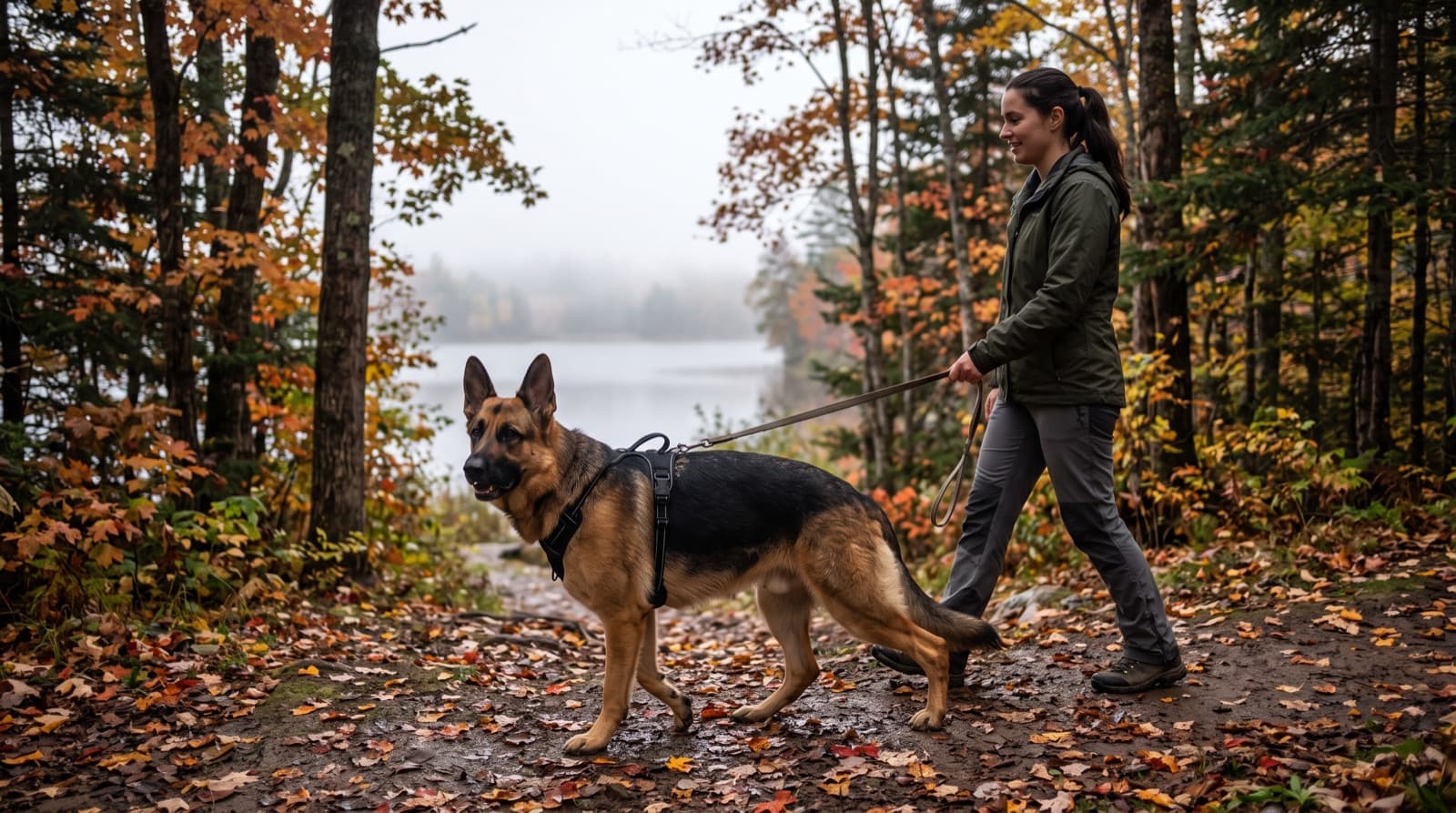
Why German Shepherds surrender in Saint John
The German Shepherd is one of the most-surrendered large breeds in Canada, and the surrender patterns are predictable. Understanding them ahead of time helps you read a foster write-up honestly and decide whether you are ready for a working dog. Very few of these dogs are surrendered because something is wrong with them. Most are good dogs whose owners were not ready for the breed.
- Underestimated exercise needs. This is the number-one reason Shepherds fail. Families picture a loyal companion and get a working athlete that needs one to two hours of real activity a day. An under-exercised Shepherd becomes bored, then destructive, then vocal, and the household concludes the dog is “too much” when the truth is the dog was never worked properly.
- Higher training demand than expected. The Shepherd is one of the smartest breeds, and a smart dog with no job makes its own decisions. Owners who do not put in the daily training end up with a large, strong dog that pulls, ignores recall, and controls the household. The intelligence that makes Shepherds trainable also makes an untrained one a handful.
- Reactivity that frightens owners. A naturally protective breed that is not socialised properly can develop lunging and barking at strangers or other dogs. This is manageable, but an owner who does not understand it often panics, muzzles the problem by avoiding the world, and eventually surrenders. Reactivity is a training and management issue, not a character flaw, but it needs a committed owner.
- Size and cost. A 60 to 90 lb dog eats more, costs more to medicate and insure, and is harder to rehome to a rental. When money gets tight or a landlord says no to a large breed, the Shepherd is often the family member who has to go.
- Life changes. Moves, new babies, relationship breakdowns, and job losses land Shepherds in rescue the same way they land any dog. These surrenders say nothing about the dog and everything about circumstance.
When you read a Shepherd surrender note, ask the rescue the specific questions the pattern raises: how much daily exercise did this dog get, what is its training level, how does it handle strangers and other dogs, and is there any bite or reactivity history. The SPCA Animal Rescue and Fulfilling Hearts both assess for these and will give you an honest read.
Saint John and NB rescues that list German Shepherds
A short list of organisations serve Saint John Shepherd adopters, and because the city is a mid-sized market, casting a slightly wider net across New Brunswick and the Maritimes helps. Set listing alerts on every rescue you would consider. For a fuller directory, see our guide to the best dog rescues in Saint John.
- SPCA Animal Rescue: located at 295 Bayside Drive, this is the only shelter inside Saint John city limits and the most consistent local source of Shepherds and Shepherd mixes, mostly through owner surrender and stray intake. It runs an application-first process, so you apply and are matched rather than walking in and picking a dog. The flat $375 fee covers spay or neuter, vaccinations, deworming, flea treatment, a microchip, and one complimentary vet visit at a partner clinic, the same fee for a puppy or an adult.
- Fulfilling Hearts Rescue: a province-wide foster-based rescue that takes applicants from beyond Saint John as a matter of course. Its dogs are assessed inside real households rather than kennels, which is exactly what you want with a working breed, because the foster can tell you how a specific Shepherd handles its energy, its recall, its reactivity, and being left alone. Every dog is altered and vaccinated before it is placed. Fulfilling Hearts does not publish a flat fee, so confirm the figure when you send in your application.
- Regional NB and Maritime rescues: the New Brunswick SPCA can point you to your nearest branch across the province, and many Maritime foster-based rescues pull dogs from within NB and sometimes out of region, so a Shepherd from a Moncton or Fredericton-area foster may be adoptable to a Saint John home. Foster-rescue timelines vary with intake and transport, so patience and broad alerts pay off.
Whatever the source, verify a rescue through a real address, charitable-registry status, and a current adoptable-dog list before sending money. Free-purebred-German-Shepherd offers online are a common scam, and a legitimate NB rescue will always want an application and a conversation first. If you want to browse everything in one place, our Saint John German Shepherd listings pull current Shepherds and Shepherd mixes from local rescues together.
The working-dog reality
Everything about living with a German Shepherd comes back to one fact: this is a working breed with a big brain and real drive. The breed was developed to herd, then adapted into police, military, and service work because it is intelligent, athletic, and eager to have a job. That heritage produces a remarkable dog and it also produces the demands that surprise unprepared owners.
The first is exercise. An adult Shepherd needs one to two hours of genuine activity a day, and it must be both physical and mental. A long hike through Saint John's off-leash areas, distance and varied terrain on the trails at Rockwood Park, one of Canada's largest urban parks at roughly 890 hectares, and the peninsula loops at Irving Nature Park along the Bay of Fundy all give a Shepherd the movement it needs. Keep the dog on leash on these trails unless the off-leash guide or the City of Saint John says a specific area is designated for it. Mental work matters as much as the walk: structured training sessions, scent games, puzzle feeders, and a clear job drain the intelligence that otherwise turns into chewing, digging, and barking. A Shepherd that gets a brisk walk but nothing to think about is still an under-stimulated dog.
The second is training and socialisation. The Shepherd is a naturally protective, aloof-with-strangers breed, and how it turns out depends almost entirely on the work you put in. A well-socialised Shepherd is a stable, devoted family dog that reads a situation correctly. A neglected one becomes reactive and hard to manage. Reward-based training suits the breed, which learns fast and wants to work with you, so a qualified force-free trainer is money well spent, especially for a rescue Shepherd with gaps in its early socialisation or a reactivity flag on its file. Manage reactivity with distance and calm exposure rather than flooding, walk uptown Saint John's quieter routes while you train, and give the dog a job so its focus has somewhere to go.
The double coat is the third piece, and here Saint John's climate is mostly an advantage. The Shepherd's dense coat is built for cold, so the snowy, salted winters and the nor'easters that roll off the Atlantic are no hardship for the dog. The Fundy fog and freezing rain mean a wet dog often, and a wet double coat needs to dry properly, so towel down and let the dog dry somewhere warm. The cool, damp, foggy Fundy summers are genuinely kind to a heavy-coated breed, keeping Saint John cooler and wetter than the rest of the Maritimes, so heat is rarely the limiting factor it would be inland, though you should still watch a Shepherd on the rare hot, humid day.
German Shepherd health, in brief
German Shepherds are a big, athletic breed with a typical lifespan of 9 to 13 years, and a few conditions are worth planning around so adopters apply with realistic expectations. None of this is a reason to avoid the breed. It is a reason to budget for a large-breed dog's real vet care and to know what to watch for.
- Hip and elbow dysplasia. The most common Shepherd concern, where the joints develop abnormally and lead to arthritis and pain. The breed is one of the most-screened for it, and the Orthopedic Foundation for Animals maintains public hip and elbow databases. Weight control, joint support, and appropriate exercise all help manage it.
- Degenerative myelopathy (DM). A progressive spinal-cord disease that causes gradual hind-end weakness in older Shepherds. It is over-represented in the breed, is not painful in itself, and has a genetic test for the risk gene. There is no cure, so early recognition and supportive care are the plan.
- Bloat (gastric dilatation-volvulus). A life-threatening emergency where the stomach twists, and deep-chested breeds like the Shepherd are prone to it. Learn the signs (a distended abdomen, unproductive retching, restlessness) and know where the nearest emergency vet is before you need it.
- Exocrine pancreatic insufficiency (EPI). A digestive-enzyme disorder more common in Shepherds, where the dog cannot properly digest food. It is diagnosed with bloodwork and managed with enzyme supplementation under a vet's direction.
- Allergies and skin issues. Shepherds are prone to environmental and food allergies that show up as itching and recurrent skin or ear irritation, worth watching in a damp coastal climate.
For breed-level health-testing standards, the Orthopedic Foundation for Animals runs public screening databases at ofa.org, and the Canadian Kennel Club publishes the breed standard and responsible-ownership guidance. A rescue Shepherd will rarely arrive with OFA records, but knowing what the breed is screened for lets you ask the right questions. Because a Shepherd is a bloat-risk breed, keep the number for Port City Emergency Vet, Saint John's after-hours option, somewhere you can find it fast. Book a baseline vet visit in your first month to establish records and score body condition, and never medicate a suspected condition on your own; work with a vet.
What a Saint John rescue German Shepherd actually costs
The SPCA Animal Rescue charges a flat $375 for a dog or a puppy, with no puppy premium. That fee is not a sale price; it is a partial recovery on the medical work already done. It covers spay or neuter, vaccinations, deworming, flea treatment, a microchip, and one complimentary vet visit at a partner clinic. Stacked at retail New Brunswick vet pricing, those services would cost well past $375, so the fee is a genuine bargain against the real cost of the care the dog has already received. Fulfilling Hearts Rescue does not publish a flat fee, but every dog it places is spayed or neutered and vaccinated before adoption, so confirm the number when you apply.
Compare that to a German Shepherd puppy from a breeder, which runs far higher with none of the medical work done yet, and the flat $375 fully-vetted adoption is the cheapest legitimate path to a Shepherd in Saint John. Beyond the fee, plan roughly $400 to $900 in one-time first-month setup for a large dog: a sturdy crate, a strong harness and lead, bedding, and your own baseline vet visit. For a fuller local breakdown, see our Saint John dog adoption cost guide.
Ongoing costs for a big active breed land above the medium-dog average, roughly $1,500 to $2,500 a year once you factor larger food portions, higher medication and insurance costs, and routine vet care. Pet insurance is genuinely worth it for a breed with documented hip, elbow, and DM risks, and enrolling before any pre-existing condition appears in the records is cheaper. Add a City of Saint John dog licence, which the municipality renews annually and prices at $10 for an altered dog versus $25 otherwise, so a spayed or neutered rescue dog qualifies for the lower rate. Most rescue Shepherds arrive already altered, but if yours is not, our Saint John spay and neuter guide covers the local options.
Browse adoptable Saint John German Shepherds and Shepherd mixes
Current New Brunswick listings from the SPCA Animal Rescue, Fulfilling Hearts, and other local rescues in one place. Shepherds are popular and Saint John is a mid-sized market, so alerts and prompt applications win.
See Available German Shepherds →The first 30 days with a Saint John German Shepherd
A rescue Shepherd runs on the same 3-3-3 arc as any dog: the first three days are raw decompression, the routine clicks into place over about three weeks, and the real bond takes closer to three months. A working breed with a history of upheaval may take the full arc, so patience matters. Our first week with a rescue dog guide covers the general decompression plan; here is the Shepherd-specific version.
- Go slow on introductions. A protective breed in a new home needs calm, quiet decompression before you introduce visitors, other dogs, or busy environments. Do not flood a nervous or reactive Shepherd in week one. Keep the world small at first and expand it gradually.
- Establish the exercise and mental-work routine immediately. Even during decompression, a Shepherd needs an outlet. Start with structured on-leash walks and simple training games in the yard or a quiet space, and build up as the dog settles.
- Book a baseline vet visit in the first two weeks. Establish records, score body condition, confirm the microchip is registered to you, and discuss large-breed and Shepherd-specific monitoring including joints and, in an older dog, any early hind-end weakness.
- Learn the signs of bloat. Before you need to, know what a distended abdomen and unproductive retching look like, and keep Port City Emergency Vet's number accessible. Feeding smaller meals and avoiding hard exercise right after eating lowers the risk.
- Start reward-based training from day one. A Shepherd wants a job. Basic obedience, loose-leash walking, and a reliable recall give the dog structure and give you control of a strong, smart animal. Book a force-free trainer early if there is any reactivity flag.
- Enrol in pet insurance in week one. Before any pre-existing conditions appear in your records. Shepherd hip, elbow, and DM risks are cheaper to insure against when enrolled early.
- Set the grooming routine. Brush twice a week to start, more during coat blow, and get the dog used to being handled, towelled dry, and having its paws checked. This pays off through the wet Fundy seasons.
- Licence the dog with the City of Saint John. Required for dogs in the city and cheaper for an altered dog. Our winter dog care guide covers the salt and cold specifics you will need by the first snow.
- Winter and wet-weather paw care. Rinse or wipe the paws after salted-sidewalk and slushy walks to prevent salt burn, watch for cracked pads, and towel the double coat dry after foggy or rainy outings.
- Crate train from night one. A crate gives a large dog a safe den during decompression and helps with house manners in the first month, even for a dog that is already house-trained.
- Same routine, quiet routes, for the first two weeks. Predictability speeds settling for a Shepherd. Save fenced dog parks, new canine friends, and busy uptown outings for after week three.
A Shepherd rarely shows its full self in the first fortnight. The confident, focused dog under the nervous new arrival tends to emerge around week three, once the structure and the daily work have become predictable, and by three months the training-and-exercise rhythm is simply part of the household. Do not read too much into an early wobble. With a working breed, steady routine and real daily work sort out most of what worries you in those first ninety days.
Frequently asked questions
Where can I adopt a German Shepherd near me in Saint John?
Start with the SPCA Animal Rescue at 295 Bayside Drive, the only shelter inside Saint John city limits, which lists Shepherds and Shepherd mixes through owner surrender and stray intake and runs an application-first process. Fulfilling Hearts Rescue, a New Brunswick foster-based rescue with foster homes across the province, is the other consistent source and is the better fit if you want detailed temperament notes on a dog that has been living in a real home. Widen your search across regional NB and Maritime rescues too, because Saint John is a mid-sized market and purebred Shepherds move quickly. German Shepherds are one of the most-surrendered large breeds in Canada, so intake is steady, but the specific dog that suits your household may take a few weeks to appear. Set alerts on both the SPCA Animal Rescue and Fulfilling Hearts, stay open to a Shepherd mix rather than holding out for a purebred, and get your application materials ready before you find the dog.
Why do German Shepherds end up in rescue in Saint John?
The German Shepherd is one of the most-surrendered large breeds in Canada, and the reasons are consistent. Owners underestimate the exercise load and end up with a bored, destructive dog. The training and mental-work demand is higher than most families expect, so an under-worked Shepherd starts making its own decisions. Reactivity toward strangers or other dogs develops when a naturally protective breed is not socialised and managed properly, and it frightens owners. The size and cost of feeding, vetting, and insuring a 60 to 90 lb dog catches people out. And life changes, moves, new babies, job losses, land Shepherds in rescue the same way they land any dog. Very few of these dogs are surrendered because something is wrong with them. Most are good dogs whose owners were not ready for a working breed.
What is the difference between working-line and show-line German Shepherds?
Working-line Shepherds are bred for drive, stamina, and the ability to do a job, so they tend to be leaner, more intense, and need serious daily physical and mental work. Show-line Shepherds, including the sloped-back conformation type, are bred more for appearance and a somewhat calmer temperament, though they still need real exercise. In rescue you rarely get papers confirming the line, and most Saint John rescue Shepherds are mixes or unknown-background dogs anyway, so the label matters less than the individual dog in front of you. What matters is the foster or shelter assessment: how much does this specific dog need to move, how does it handle strangers and other dogs, and what is its off-switch like at home. Ask the SPCA Animal Rescue or Fulfilling Hearts to describe the dog's energy and recovery, not its pedigree.
How much does it cost to adopt a German Shepherd in Saint John?
The SPCA Animal Rescue charges a flat $375 for a dog or a puppy, with no puppy premium. That fee includes spay or neuter, vaccinations, deworming, flea treatment, a microchip, and one complimentary vet visit at a partner clinic. Stacked at retail New Brunswick vet pricing, those services would run well past $375, so the adoption fee is a genuine bargain against the real cost of the care already done. Fulfilling Hearts Rescue does not publish a flat fee, but every dog it places is spayed or neutered and vaccinated before adoption, so ask for the specific number when you apply. Beyond the fee, plan roughly $400 to $900 in one-time first-month setup for a large dog: a crate, a strong harness, bedding, and a vet baseline. Ongoing costs for a big active breed land higher than the medium-dog average, closer to $1,500 to $2,500 a year once you factor larger food portions and higher medication and insurance costs.
Do German Shepherds need a lot of exercise?
Yes, more than most families expect, and this is the single biggest reason Shepherds fail in the wrong home. An adult Shepherd needs one to two hours of real activity a day, and it must be physical and mental, not just a stroll around the block. A long walk or hike through Rockwood Park, structured training sessions, scent games, and a job to focus on all count. Irving Nature Park's trails give a Shepherd distance and varied terrain on leash. Mental work matters as much as the physical: a Shepherd that gets a brisk walk but no thinking to do is still under-stimulated and will invent its own entertainment, usually chewing, digging, or barking. The good news is that Saint John's cool, foggy summers off the Bay of Fundy suit a double-coated breed far better than a hot inland climate, so you can work this dog most of the year without heat being a limiting factor.
Are German Shepherds aggressive or good with families?
A well-bred, well-socialised German Shepherd is a devoted, stable family dog, not an aggressive one. The breed is naturally protective and aloof with strangers, which is different from aggression, and that protectiveness is exactly why they were bred as working and guardian dogs. Problems come from poor socialisation, no training, and owners who either encourage guarding or never teach the dog how to handle new people and situations. A Shepherd raised or rehabilitated well is excellent with its family, including children it has grown up around, and reliably reads a household. When you adopt an adult, the rescue's foster or shelter assessment is your best guide: ask directly how the dog handles strangers at the door, other dogs on leash, and children, and follow the foster's honest read rather than the breed's reputation in either direction.
What health problems do German Shepherds have?
German Shepherds carry a few well-documented risks that adopters should plan around. Hip and elbow dysplasia are the most common, and the breed is one of the most-screened for them, so the Orthopedic Foundation for Animals maintains public hip and elbow databases at ofa.org. Degenerative myelopathy (DM), a progressive spinal-cord disease that causes gradual hind-end weakness in older dogs, is over-represented in the breed and there is a genetic test for the risk gene. Bloat, or gastric dilatation-volvulus, is a life-threatening emergency that deep-chested breeds like the Shepherd are prone to, so learn the signs. Exocrine pancreatic insufficiency, a digestive-enzyme disorder, and various allergies also appear. A rescue Shepherd usually will not come with OFA records, but knowing what the breed is screened for lets you ask the right questions and budget for a large-breed dog's realistic vet care. Never medicate on your own; work with a vet on any suspected condition.
How do I manage reactivity in a rescue German Shepherd?
Reactivity, lunging or barking at strangers or other dogs, is common in under-socialised Shepherds and it is manageable with the right approach. The first step is space: keep enough distance that the dog notices a trigger but does not react, then reward calm attention and slowly close that gap over weeks. Avoid flooding the dog by dragging it into busy situations, which usually makes reactivity worse. A Shepherd is a thinking breed that responds well to reward-based training, so a qualified force-free trainer or behaviour consultant is worth the money for a reactive dog. Manage the environment while you train: walk at quiet times, use uptown Saint John's less-busy routes, and give the dog a clear job so its brain is occupied. Rescues flag reactivity in the write-up, so read it carefully and ask the foster what specifically sets the dog off and what already helps. Do not adopt a flagged reactive Shepherd if you cannot commit to the management and training it needs.
Should I adopt a German Shepherd puppy or an adult?
For most Saint John households, an adult Shepherd is the smarter choice. Shepherd puppies are a heavy commitment: eighteen-plus months of intensive socialisation, training, and exercise during a critical window that shapes the adult dog, and getting it wrong produces exactly the reactive, under-worked dogs that end up back in rescue. An adult has a settled temperament you can actually assess, established manners, a documented history, and the same flat $375 fee at the SPCA Animal Rescue with no puppy premium. Senior Shepherds, seven years and up, are often calm, house-trained, and devoted, and they place beautifully into quieter homes. If you specifically want to raise a puppy and have the time, budget, and experience for the socialisation work, a Shepherd puppy can succeed, but for a first-time large-breed owner an adult with a known temperament is far more likely to work out.
How do I care for a German Shepherd's double coat in Saint John's climate?
The German Shepherd has a dense double coat built for cold, which makes Saint John's winters no problem for the dog and grooming the main job. Brush at least twice a week year-round and daily during the twice-yearly coat blow in spring and fall, when the undercoat sheds heavily. Never shave a double coat, which wrecks its insulation and temperature regulation. Saint John's specific challenge is damp: the Bay of Fundy fog and freezing rain mean a Shepherd often comes home wet, and a wet double coat needs to dry properly to avoid skin issues, so towel the dog down and let it dry somewhere warm. In winter, road salt and slush are the real hazards. Rinse or wipe the paws after salted-sidewalk walks to prevent salt burn, watch for cracked pads, and consider booties for a sensitive dog. Our winter dog care guide covers the local specifics. The cool, foggy Fundy summers are actually kind to a heavy-coated breed, though you should still watch a Shepherd on the rare hot, humid day.
How long is the wait to adopt a German Shepherd in Saint John?
Plan on a few weeks to a couple of months from application to dog-in-home, though it varies with the specific dog. German Shepherds are one of the most-surrendered large breeds, so intake is steady, but well-adjusted young adult Shepherds place fast once listed because the breed is popular. Dogs with managed reactivity, medical needs, or senior status wait longer and are often the better match for a calm, committed home. The SPCA Animal Rescue runs an application-first process, so having your references, landlord approval if you rent, and a vet contact ready before you apply speeds everything up. Fulfilling Hearts works on foster-rescue timelines that can shift with intake and transport. Setting alerts on both, plus regional NB and Maritime rescues, and staying open to a Shepherd mix rather than a purebred, is the fastest legitimate route to the right dog.
Related Saint John adoption guides
Saint John German Shepherds
Current New Brunswick Shepherd and Shepherd-mix listings from the SPCA Animal Rescue, Fulfilling Hearts, and other local rescues.
Best Dog Rescues in Saint John
A directory of the New Brunswick shelters and foster-based rescues worth setting listing alerts on, with what each is known for.
Saint John Dog Adoption Costs
What the flat $375 fee actually covers, first-month setup for a large breed, and the true ongoing budget for a Shepherd in Saint John.
First Week With a Rescue Dog
The 3-3-3 decompression plan, settling routines, and what to expect in the first days with a newly adopted Saint John rescue dog.
Find your Saint John rescue German Shepherd
Browse current New Brunswick Shepherd and Shepherd-mix listings. Shepherds are popular and Saint John is a mid-sized market; alerts and prompt applications still win.
Browse All Saint John Dogs →New dog? Start with these care guides
Everything a new adopter needs to set up a safe, happy home.