The short answer
Golden Retrievers are rare in Saint John rescue and they place fast, so the whole game is being ready to move. The SPCA Animal Rescue on Bayside Drive is the only shelter inside the city and charges a flat $375 for a dog or puppy, and Fulfilling Hearts Rescue is a New Brunswick foster-based rescue with detailed temperament notes. Set alerts on both, get your references and landlord approval sorted in advance, and apply the same day a Golden appears. Go in informed on the breed's elevated cancer risk, stay alert to free-Golden and long-distance transport scams, and know that the flat $375 fully-vetted adoption is the cheapest legitimate path to a dog in the city. Then budget for a dense double coat, winter road salt, and the cool, damp Fundy fog.
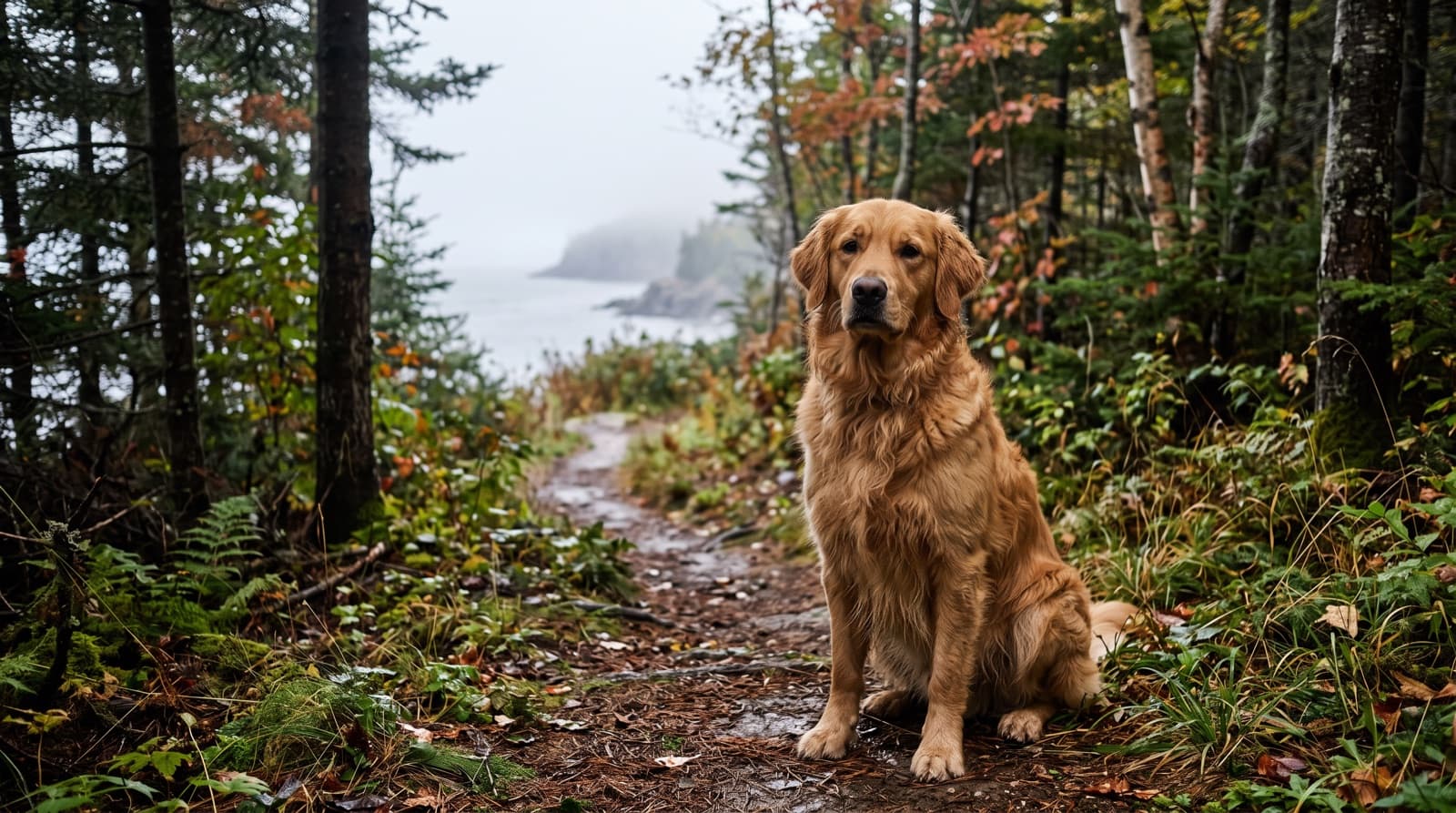
Why Goldens are rare in Saint John rescue
If you have been refreshing rescue listings hoping a Golden appears, you already know the frustration. The breed is one of the most popular family dogs in the country, and popular family dogs almost never reach a shelter. Owners keep them, rehome them privately through friends and family, or return them to a breeder before a rescue ever gets involved. When a Golden does land in New Brunswick rescue, the reason is usually a hard one: a death in the family, a divorce or a move, financial hardship, or a medical situation the household could not manage. It is rarely about a difficult dog.
The practical consequence is that a purebred Golden or a convincing Golden mix might surface on a Saint John or provincial rescue listing only a handful of times a year, and it is claimed almost immediately. This is the opposite of a husky or a hound, where intake is steady and you can afford to wait for the right match. For a Golden, the dog waits for no one. Adopters who succeed are the ones who prepared before they found the dog, not after.
That preparation is straightforward. Have your references lined up, confirm your landlord or condo board allows a large breed in writing, know your vet contact, and set listing alerts on every organisation you would consider. Then decide in advance that you will apply the same day a suitable Golden appears. The adopters who hesitate to “think it over” are usually a day too late. Staying open to a Golden mix rather than insisting on a purebred widens your odds considerably, and many mixes keep everything people love about the breed.
Saint John and NB rescues that place Goldens
Two organisations do most of the placing into Saint John homes, and because a Golden can surface anywhere in the province before it reaches a city listing, a wider provincial net helps. Set alerts on both, and add regional New Brunswick and Maritime rescues to your watch list. For a fuller directory, see our guide to the best dog rescues in Saint John.
- SPCA Animal Rescue: at 295 Bayside Drive, this is the only shelter inside Saint John city limits and the most consistent local source of dogs of every type through owner surrender and intake. It runs an application-first process, so you meet the dog and submit an application rather than paying on the spot. The adoption fee is a flat $375 for a dog or a puppy, with no puppy premium, and it includes spay or neuter, vaccinations, deworming, flea treatment, a microchip, and one complimentary vet visit at a partner clinic. A Golden or Golden mix here goes quickly, so set an alert and act fast. You can read the full process on their adoption process page.
- Fulfilling Hearts Rescue: a New Brunswick foster-based rescue with fosters across the province and an application process open to adopters beyond Saint John. Because each dog lives in a real home rather than a kennel, the notes you get on how a specific Golden does with children, other dogs, cats, and solitude tend to be genuinely detailed, which is reassuring when you are committing to a large breed you may not have met in person. Fulfilling Hearts publishes no set fee, though every dog it places is altered and vaccinated first, so ask for the figure when you apply. If foster-level insight before you commit is what you want, start here.
- Regional and provincial rescues: the New Brunswick SPCA can help you find your nearest local shelter across the province, which widens the net for a rare breed. Many Maritime foster-based rescues also pull dogs from within NB and sometimes from out of region, so a Golden that fits your household may appear in Moncton, Fredericton, or elsewhere before it ever reaches Saint John. Cast the net wide.
Whatever the source, verify it before you send money. A legitimate rescue has a real physical address, a current list of adoptable dogs you can actually see, and an application-first process. The SPCA Animal Rescue on Bayside Drive and Fulfilling Hearts both fit that description, which is exactly what you want. The next section covers the scams that specifically target Golden seekers, because the breed's rarity makes it a favourite bait.
The free-Golden scam and transport traps
Here is the uncomfortable part of wanting a rare breed: scammers know exactly how much people want a Golden, and they build their fraud around that longing. The classic version is a free or nearly-free purebred Golden puppy advertised online, wrapped in a heartfelt story, a downsizing senior, a family emergency, a military move, with a request for a shipping fee, a crate deposit, or insurance money paid up front. The dog does not exist. Once the deposit is wired, the seller disappears or invents a new fee. No legitimate rescue ships a dog to you sight-unseen for a wired payment, and none skips the application and conversation that a real placement requires.
Long-distance transport offers deserve the same caution, even when they are not outright fraud. A dog moved into New Brunswick from another region or country with thin health paperwork, no clear vaccination history, and no return plan is a risk to you and to the dog. Reputable Maritime rescues that transport do so with full vetting, quarantine where needed, and a foster-based intake, and they are transparent about where the dog came from. If you cannot get a straight answer about the dog's medical records and history, walk away.
The test is simple. A real adoption feels a little slow and a little bureaucratic: an application, references, a home conversation, a wait. A scam feels fast, cheap, and emotionally urgent, with pressure to pay before you can meet the dog. When a Golden deal has all three of those qualities, it is almost always a scam. Stick with the SPCA Animal Rescue, Fulfilling Hearts, and verified provincial rescues, and let the rarity be a reason for patience rather than a reason to take a risk.
The cancer reality, and the rest of Golden health
Any honest guide to the breed has to name the hard fact: Golden Retrievers carry an elevated cancer burden compared with dogs overall. The Morris Animal Foundation Golden Retriever Lifetime Study, a long-running research project following thousands of Goldens across their lives, exists precisely because the breed's cancer risk is significant enough to warrant a dedicated study. That is not a reason to avoid the breed. It is a reason to adopt one with clear eyes and a plan.
What the cancer reality means in practice is boring and manageable: establish your dog's baseline at a first vet visit, keep up with annual exams, and learn to run your hands over the dog during grooming so you notice new lumps early. Early detection is the thing you can actually control. Financially, pet insurance enrolled early, before any condition is on record, is the most useful hedge a Golden owner can put in place, because senior-year care for a serious diagnosis can run into the thousands.
Beyond cancer, the breed has a few predictable conditions worth planning around:
- Hip and elbow dysplasia. Common in the breed. Responsible breeders screen through the Orthopedic Foundation for Animals, though a rescue Golden usually arrives without records. Keeping the dog lean is the best joint protection you can give.
- Heart conditions. Sub-aortic stenosis and other cardiac issues appear in some lines, which a vet can screen for.
- Eye conditions. Cataracts and progressive retinal atrophy are seen in the breed and are worth an eye check as the dog ages.
- Hypothyroidism. Shows up in middle age, diagnosed with bloodwork, and managed with a daily pill.
- Ear infections. The drop ears trap moisture, and the damp Fundy climate makes weekly ear checks genuinely important rather than optional.
For breed-level health-testing standards, the Orthopedic Foundation for Animals maintains public screening databases at ofa.org, and the Canadian Kennel Club publishes breed standards and health guidance. Know where after-hours help is before you need it: Port City Emergency Vet handles Saint John emergencies outside regular clinic hours. For day-to-day and preventive care planning, our Saint John emergency vet guide and low-cost vet guide map out the local options.
Double-coat grooming for the Bay of Fundy
A Golden's dense double coat is one of the breed's joys and one of its ongoing commitments. Plan to brush several times a week, and expect two heavy sheds a year, in spring and fall, when the undercoat blows out and hair ends up on everything you own. The brushing has to reach the skin. A surface pass over the top coat leaves the undercoat to mat behind the ears, in the armpits, and around the tail and rear feathering. A proper line-brush and an undercoat rake are the tools that matter. Baths every four to eight weeks keep the coat clean without stripping the oils that protect it. And never shave a Golden's double coat: it does not cool the dog, and it can permanently change how the coat regrows.
Saint John's Bay of Fundy climate shapes the grooming routine in two specific ways, and it is worth being precise because Saint John is cooler and damper than most of the Maritimes. Winters here bring snow, nor'easters, freezing rain, and heavily salted streets. That road salt cakes into the long feathering on a Golden's legs and belly, and it irritates the skin and the paw pads. Rinse or wipe the legs, belly, and feet after every winter walk, watch for salt burn between the toes, and consider booties for a dog with sensitive feet. Our Saint John winter dog care guide goes deeper on cold-weather paw and coat management.
Summers on the Fundy coast are the second wrinkle, and they run cool, damp, and famously foggy rather than hot and dry. That matters for a heavy-coated dog because moisture is the real enemy here, not heat. A Golden that swims, walks through the fog, or gets caught in coastal drizzle holds water deep in its undercoat, and a coat that stays damp against the skin breeds hot spots and skin irritation. Dry the dog thoroughly after any wet outing, right down to the skin in the thick areas, and keep an eye on the belly and the base of the tail where damp lingers longest. On the occasional genuinely hot day, a Golden still overheats faster than a short-coated dog, so walk in the cooler morning or evening hours and carry water. But most of the Saint John summer, the coat conversation is about keeping the dog dry, not keeping it cool.
What a Saint John rescue Golden actually costs
The SPCA Animal Rescue charges a flat $375 for a dog or a puppy, and that single number is a genuine bargain once you see what it includes: spay or neuter, vaccinations, deworming, flea treatment, a microchip, and one complimentary vet visit at a partner clinic. Stacked at retail New Brunswick vet pricing, those services would run well past $375 on their own, so the fee recovers only part of the medical work already done. Fulfilling Hearts Rescue does not publish a flat fee, but it spays or neuters and vaccinates every dog before placement, so confirm the number when you apply. Either way, this is the cheapest legitimate path to a dog in Saint John.
Compare that to a Golden puppy from a Maritime breeder, which runs into the thousands of dollars with none of the vetting done yet, and the reframe is obvious: adoption is dramatically cheaper, and the dog often arrives with a known temperament and its medical work complete. Plan roughly $400 to $900 more in your first month for a vet baseline, a crate, grooming tools for that double coat, and basic setup. A City of Saint John dog licence runs $10 for an altered dog versus $25 otherwise, and NB's 15% HST applies to supplies though not to the adoption fee itself.
Ongoing costs for a medium-to-large dog run about $1,500 to $2,500 a year: quality food for a 55 to 75 lb dog, routine vet care, grooming supplies, and pet insurance, which is genuinely worth carrying for a breed with the Golden's documented cancer and joint risks. For a full local breakdown, see our Saint John dog adoption cost guide. If your Golden somehow arrives unaltered, which is uncommon for a rescue dog, our spay and neuter guide covers the local clinics.
Browse adoptable Saint John Goldens and retriever mixes
Goldens are rare and gone within days. Set an alert, keep your application ready, and see current Saint John and New Brunswick listings in one place so you can move the moment the right dog appears.
See Available Golden Retrievers →The first 30 days with a Saint John Golden
A rescue Golden settles on the same 3-3-3 arc as any adopted dog: the first three days are raw decompression, the routine clicks over about three weeks, and the real bond takes closer to three months. Goldens tend to land on the faster end because the breed is social and wired for human company, but do not skip the decompression window just because the dog seems easy. Our first week with a rescue dog guide covers the general plan; here is the Golden-specific version.
- Book a baseline vet visit in the first two weeks. Establish records, score body condition, check the ears, confirm the microchip is registered to you, and start the conversation about breed-specific monitoring given the cancer and joint risks.
- Enrol in pet insurance in week one. Before any pre-existing conditions land in the record. For a Golden this is the single most valuable early decision you can make.
- Set up the grooming routine from day one. Several brush sessions a week, an undercoat rake, and a plan for the heavy seasonal sheds. Grooming time is also lump-check time, so make it a habit.
- Keep the dog lean from the start. Measured meals and counted treats. A lean Golden protects its hips, elbows, and long-term health.
- Leash for every outing until you know the dog. Use the city's designated off-leash areas rather than assuming any trail allows it, and keep the dog well clear of the Bay of Fundy tidal zones and the Reversing Falls, where the currents are lethal.
- Licence the dog with the City of Saint John. Required in the city, $10 for an altered dog, and quick to arrange.
- Winter paw and coat care. Rinse the legs, belly, and feet after salted walks, watch for salt burn, and dry the coat fully after any snowy or foggy outing.
- Supervise early interactions with small children. A happy Golden tail and a big body can knock a toddler over without any ill intent, so let relationships build gradually.
- Same routes, same routine for the first two weeks. Predictability speeds settling. Save busy parks and new dog friends for after week three.
- Meet the exercise need with mind and body. Long on-leash walks plus training, sniffing, and play. An under-worked Golden gets bored and mouthy.
The Golden you meet on day one is not quite the Golden you will know by month three. The settling tends to happen around week three, and by the ninety-day mark the brushing, the ear checks, and the weight watching have folded quietly into your week. Because the breed is so eager to please, early worries usually melt faster here than with most dogs, but hold your judgement anyway. Steady routine, a lean feeding plan, and a little patience carry a rescue Golden through its first month.
Frequently asked questions
Where can I adopt a Golden Retriever near me in Saint John?
Start with the two organisations that place dogs into Saint John homes. The SPCA Animal Rescue at 295 Bayside Drive is the only shelter inside city limits, and it lists dogs and puppies of all types through owner surrender and intake, occasionally including a Golden or Golden mix. Fulfilling Hearts Rescue is a New Brunswick foster-based rescue that considers applicants across the province and posts detailed foster temperament notes. Purebred Goldens are genuinely rare in Maritime rescue and they place within days, sometimes hours, so set listing alerts on both organisations, keep your references and landlord approval ready, and be prepared to apply the same day a Golden appears. Widen your alerts to regional New Brunswick and Maritime rescues too, because a Golden that fits your household may surface anywhere in the province before it reaches a Saint John listing.
Why are Golden Retrievers so hard to find in rescue?
Goldens are one of Canada's most popular family breeds, and popular family breeds rarely end up in rescue. Owners tend to keep them, rehome them privately through friends, or return them to a breeder rather than surrender them to a shelter. When a Golden does reach rescue in New Brunswick, it is usually because of a major life change, a death, a move, financial hardship, or a medical diagnosis the family could not manage, not because the dog is difficult. The result is that a Golden or a convincing Golden mix might appear on a Saint John or NB rescue listing only a few times a year, and it is claimed almost immediately. Patience and fast alerts are the whole game. Staying open to a Golden mix rather than holding out for a purebred shortens the wait considerably.
How much does it cost to adopt a Golden Retriever in Saint John?
The SPCA Animal Rescue charges a flat $375 for a dog or a puppy, with no puppy premium. That fee includes spay or neuter, vaccinations, deworming, flea treatment, a microchip, and one complimentary vet visit at a partner clinic. Fulfilling Hearts Rescue does not publish a set fee, but every dog it adopts out is spayed or neutered and vaccinated before placement, so ask for the specific number when you apply. Whatever you pay, it is a partial recovery on medical work already done, not a sale price. Budget roughly $400 to $900 more in the first month for your own vet baseline, a crate, grooming tools, and setup. Ongoing costs for a medium-to-large dog run about $1,500 to $2,500 a year, and for a Golden it is worth adding pet insurance early given the breed's documented cancer and joint risks.
Is it true Golden Retrievers get cancer more than other breeds?
Cancer is the most significant health reality for the breed, and it is why prospective Golden owners should go in informed rather than surprised. The Morris Animal Foundation runs the Golden Retriever Lifetime Study, a long-term research project following thousands of Goldens across their lives specifically because the breed carries an elevated cancer burden compared with dogs overall. That study exists precisely because the risk is real and worth understanding. What it means for an adopter is practical, not frightening: know your dog's baseline, keep up with annual exams, learn to feel for new lumps during grooming, and budget for the possibility of significant vet care in the senior years. Pet insurance enrolled early, before any condition is on record, is the single most useful financial hedge. None of this should stop you from adopting a Golden. It simply means adopting one with open eyes.
How do I avoid Golden Retriever adoption scams and sketchy transports?
The rarity of rescue Goldens makes them a magnet for scams. The classic version is a free or nearly-free purebred Golden puppy advertised online, often with a heartfelt story and a request for a shipping or crate deposit up front. A legitimate rescue never ships a dog to you sight-unseen for a wired deposit, and it always wants an application, references, and a real conversation first. Be equally cautious with long-distance transport offers that move a Golden from another region or country into New Brunswick with thin health paperwork and no clear return plan. Verify any rescue through a real physical address, charitable-registry status, and a current adoptable-dog list you can actually see. The SPCA Animal Rescue on Bayside Drive and Fulfilling Hearts Rescue both run proper application-first processes, which is exactly what you want. If a deal feels rushed, cheap, and emotionally urgent, it is almost always a scam.
Should I adopt a Golden or buy one from a breeder?
For most Saint John families, adoption is both cheaper and kinder, and the reframe is worth sitting with. A Golden puppy from a responsible breeder in the Maritimes typically runs into the thousands of dollars, and that is before any of the vetting a rescue dog already comes with. The flat $375 SPCA Animal Rescue fee delivers a spayed or neutered, vaccinated, microchipped, dewormed dog with a complimentary vet visit attached, which makes it the cheapest legitimate path to a dog in the city. The trade-off is availability: breeders can offer a specific puppy on a timeline, while rescue asks you to wait and act fast when a dog appears. If you are set on a Golden specifically, run both tracks. Set rescue alerts while you research breeders, and be ready to adopt the moment a suitable rescue Golden surfaces. Many families who start out breeder-focused end up adopting because the right dog showed up first.
How much grooming does a Golden Retriever need in Saint John?
A Golden carries a dense double coat, and grooming is a year-round commitment rather than an occasional chore. Plan on brushing several times a week, more during the two heavy seasonal sheds in spring and fall when the undercoat blows out in earnest. The coat needs a proper line-brush down to the skin, not just a surface pass, or mats form behind the ears, under the legs, and around the tail. Baths every four to eight weeks keep the coat healthy without stripping its natural oils. Saint John's climate adds two wrinkles. In winter, road salt and slush cling to the feathering on the legs and belly, so rinse or wipe those areas after walks. In the cool, damp, foggy summers common on the Bay of Fundy, a Golden that swims or walks in the fog holds moisture in that thick coat, so dry the dog thoroughly to prevent damp-coat skin irritation and hot spots. Never shave a Golden's double coat; it does not help with heat and it can permanently change how the coat regrows.
Are Golden Retrievers good with kids and other pets?
Generally, yes, which is a big part of why the breed is so sought after. Goldens were bred to work closely with people and they tend to be patient, tolerant, and affectionate with children and sociable with other dogs and often cats. That said, adopt the individual dog, not the breed reputation. A rescue Golden's history may include gaps you do not know about, so a good foster or shelter assessment matters. Fulfilling Hearts Rescue is particularly useful here because its foster-based model produces real notes on how a specific dog behaves with kids, other dogs, and cats in a home setting. With any large, enthusiastic breed, supervise early interactions with small children, because a happy Golden tail and an eighty-pound body can knock over a toddler without any ill intent. Give the dog its decompression time and let relationships build over the first few weeks.
What health problems do Golden Retrievers have besides cancer?
Beyond the breed's elevated cancer risk, a few orthopaedic and other conditions are worth planning around. Hip and elbow dysplasia are common in the breed, which is why responsible breeders screen breeding dogs through the Orthopedic Foundation for Animals, though a rescue Golden usually arrives without those records. Keeping the dog lean is the single best thing you can do to protect the joints. Sub-aortic stenosis and other heart conditions appear in some lines. Eye conditions, including cataracts and progressive retinal atrophy, are seen in the breed. Hypothyroidism shows up in middle age and is managed with a daily pill once diagnosed. Ear infections are common because the drop ears trap moisture, so weekly ear checks belong in the routine, and they matter more in a damp Fundy climate. A baseline vet visit in your first month establishes records and a body-condition score to work from.
How much exercise does a Golden Retriever need?
A Golden is an active, working-origin breed that needs real daily exercise, roughly 60 to 90 minutes for a healthy adult, split between physical activity and the mental work of training, sniffing, and play. An under-exercised Golden gets bored and can become destructive or mouthy, though the breed is rarely as demanding as a husky or a border collie. Saint John offers good options: long on-leash walks through Rockwood Park, one of Canada's largest urban parks at around 890 hectares, or the trails at Irving Nature Park out on its Bay of Fundy peninsula. For off-leash running, use the city's designated areas rather than assuming any trail allows it; our off-leash parks guide covers where that is permitted. Goldens love water, but the Bay of Fundy carries the world's highest tides and dangerously cold, fast currents, so keep swimming to safer, calmer water and never let a dog into the tidal zones around the harbour or the Reversing Falls.
How long is the wait to adopt a Golden Retriever in Saint John?
Be honest with yourself: it can be a long wait for a purebred, and the dog itself goes fast when it appears. Because Goldens are rare in Maritime rescue and hugely popular, a listed purebred Golden is often claimed within a day or two, sometimes the same morning. That means the wait is less about a queue and more about being ready to move the instant a suitable dog surfaces. Adopters who get their references, vet contacts, and landlord approval sorted in advance, set alerts on both the SPCA Animal Rescue and Fulfilling Hearts Rescue plus regional NB rescues, and stay open to a Golden mix rather than a purebred will place far faster than those holding out for a specific look. If you need a dog on a fixed timeline, a Golden mix or a similar retriever-type dog is a realistic compromise that keeps most of what people love about the breed.
Related Saint John adoption guides
Adoptable Golden Retrievers
Current Saint John and New Brunswick Golden and retriever-mix listings from the SPCA Animal Rescue, Fulfilling Hearts, and other local rescues.
Best Dog Rescues in Saint John
A directory of the shelters and foster-based rescues worth setting listing alerts on, with what each is known for.
Saint John Dog Adoption Costs
What the flat $375 fee covers, first-month setup costs, and the true ongoing budget for a large dog in Saint John.
Saint John Winter Dog Care
Road salt, nor'easters, and cold-weather paw and coat care for a double-coated breed on the Bay of Fundy.
Find your Saint John rescue Golden
Goldens are rare and place within days. Set alerts, keep your application ready, and be prepared to move the moment the right dog appears.
Browse All Saint John Dogs →New dog? Start with these care guides
Everything a new adopter needs to set up a safe, happy home.