The short answer
Huskies are one of the most surrendered breeds, so rescue is full of them, and the work is containment, exercise, and hair management. The SPCA Animal Rescue at 295 Bayside Drive is the only shelter inside Saint John, with a flat $375 fee for a dog or puppy, and Fulfilling Hearts Rescue fosters dogs across New Brunswick. A Husky is a high-energy escape artist: it digs, climbs, and bolts on a whim, its recall is unreliable, and it sheds heavily with two dramatic coat blows a year. Off leash in an unfenced space is not safe for almost any Husky, so a securely dig-proofed yard plus a leash everywhere else is the Saint John reality. The one big plus here is the Bay of Fundy climate. The heavy double coat sails through snowy salted winters and the cool foggy summers suit a Husky better than most Maritime cities. This is rarely a good first dog. Plan a few weeks to a couple of months from application to dog-in-home.
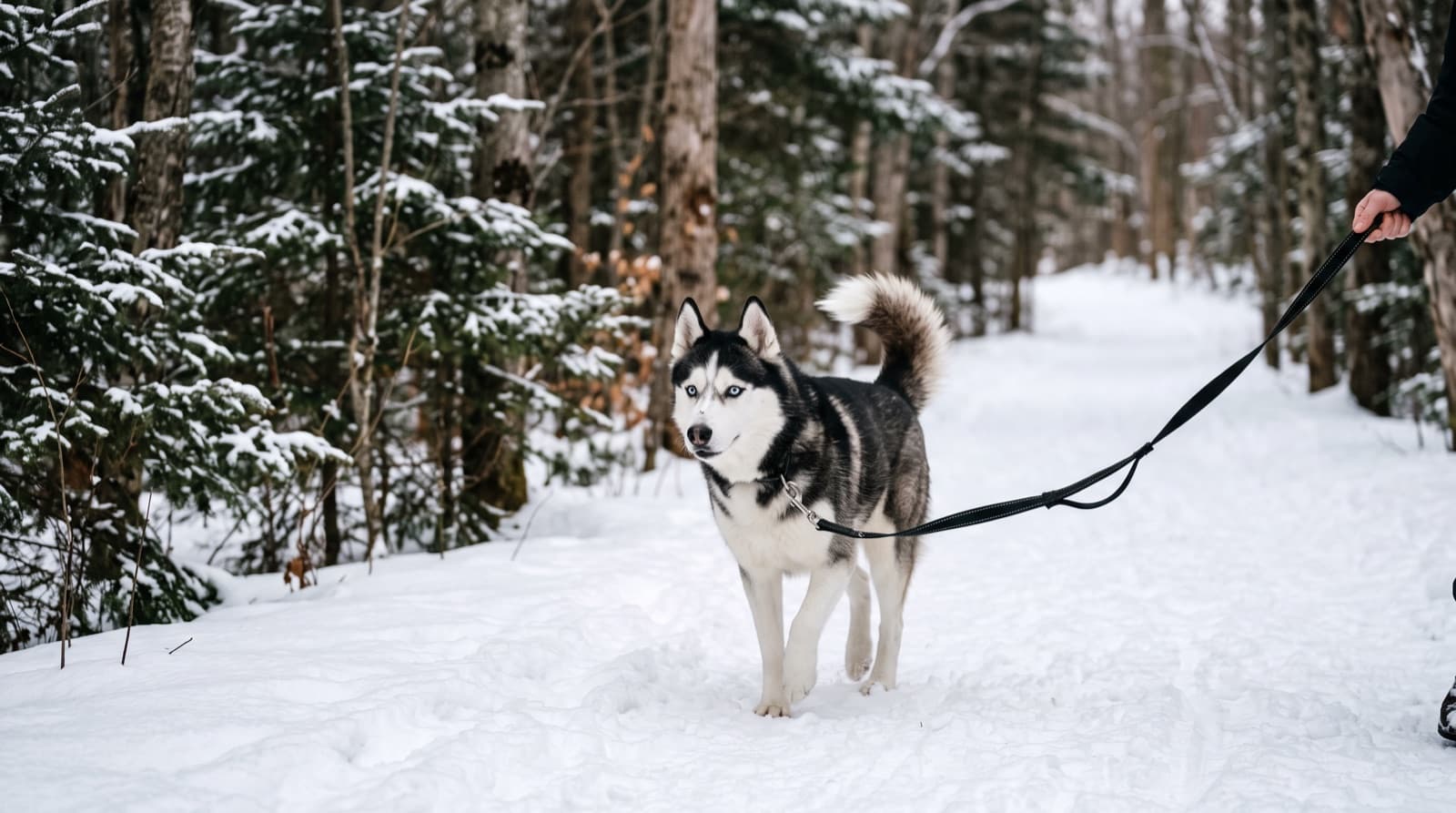
Why Huskies surrender in Saint John
The Husky is one of the most surrendered breeds in Canada, and the pattern repeats across the Maritimes. People fall for the looks, the blue eyes, and the wolfish presence, and then meet the reality of the dog behind them. Five reasons drive most Husky intake in and around Saint John, and almost none of them are about a bad dog.
- Escape and roaming. The Husky is a world-class escape artist. It climbs fences, digs under them, chews through weak points, and bolts through an open door in a heartbeat. Owners who thought their yard was secure lose the dog once, twice, three times, and eventually surrender in exhaustion. This is bred-in behaviour, not disobedience, and it means a dig-proof fence and a leash are non-negotiable for the breed.
- Destruction and boredom. A Husky needs one to two hours of real physical and mental work a day. Denied it, the dog turns that energy on the house: shredded couches, dug-up floors, destroyed drywall, and a dog vocalising its frustration for hours. Owners who underestimated the exercise commitment end up with a wrecked home and a dog they cannot cope with.
- The shedding shock. The double coat sheds steadily all year and blows out twice a year in clumps. Owners who did not expect hair on every surface, in their food, and coating their clothes reach a breaking point, especially in shared or rental housing. The shedding is permanent, and no grooming routine eliminates it.
- Recall failure and safety scares. A Husky off leash will not reliably come back, and one near-miss with traffic is often the trigger for a family to give up. The breed simply does not have the instinct to stay close, and no amount of training fully installs it. Households that expected an off-leash trail dog get a dog they can never let loose safely.
- Lifestyle mismatch. The most common story underneath the others. The dog was adopted for its looks by a household without the time, yard, or energy for a working northern breed. As the puppy grows into a demanding, stubborn, high-drive adult, the mismatch becomes unmanageable and the dog comes into rescue.
Reading these patterns ahead of time is the whole point. A Husky surrender note that says “too much energy for us” or “kept escaping” is describing the breed, not a defective dog. Ask the rescue specifically: how much daily exercise does this dog need, what is its history with escaping, how is it around cats and small animals, and how does it handle being alone. The rescues around Saint John that handle Huskies will give you honest answers.
Saint John and NB rescues that list Huskies
Saint John is one of New Brunswick's largest cities and the province's port city on the Bay of Fundy, so there is real search demand and steady Husky intake, but the local rescue landscape is small. Casting a wider net across the province helps. Set up listing alerts on every rescue you would consider. For a fuller directory, see our guide to the best dog rescues in Saint John.
- SPCA Animal Rescue: located at 295 Bayside Drive, this is the only shelter inside Saint John city limits and the most consistent local source of Husky intake through owner surrender and stray intake. The process is application-first, so you apply and are approved before you take a dog home, which means having your references and household details ready pays off. The adoption fee is a flat $375 for a dog or a puppy, with no puppy premium, and it includes spay or neuter, vaccinations, deworming, flea treatment, a microchip, and one complimentary vet visit at a partner clinic.
- Fulfilling Hearts Rescue: a foster-based New Brunswick rescue that places dogs from foster homes right across the province and welcomes applicants well beyond Saint John, whether you are in the city itself or out in Rothesay, Quispamsis, or Grand Bay-Westfield. The advantage for this breed is the foster insight: a Husky that has been living in someone's home comes with real observations on its energy level, its escape history, and how it does with cats, kids, and time alone, which beats a kennel assessment by a wide margin. Fulfilling Hearts does not post a set adoption fee, though every dog leaves spayed or neutered and fully vaccinated, so raise the number directly when you apply.
- Provincial and regional rescues: the New Brunswick SPCA maintains a find-your-local-shelter directory that helps you widen the search across the province, and many Maritime foster-based rescues pull dogs from within NB and sometimes out of region, so foster-rescue timelines vary. Given how often Huskies escape and roam, some also turn up as found strays, so it is worth checking the City of Saint John's animal control channel too if you have lost or found one.
One word of caution for this breed in particular. Huskies are a magnet for online scams, from free-purebred-Husky offers to fake transport rescues that ask for money up front. Verify any rescue through a real address, charitable-registry status, and a current adoptable-dog list before sending anything. A legitimate New Brunswick rescue will always want an application and a conversation first, and the fully-vetted flat $375 at the SPCA Animal Rescue is the cheapest legitimate path to a dog in Saint John, well below any breeder or online seller.
The escape-artist reality
Everything about living with a Husky comes back to one fact: this is a dog bred to run long distances away from home, pulling a sled across open country, working semi-independently of the handler. That heritage produces a superb athlete and an endlessly resourceful escape artist, and it produces the two safety realities that catch unprepared owners off guard.
The first is recall. When a Husky decides to go, it goes, and it will not reliably come back. The breed simply does not carry the instinct to stay near its person that a herding or retrieving breed does. This is not a training failure you can fully drill out; it is what the dog was built to do. The practical consequence for Saint John owners is firm and simple: almost no Husky should be off leash in an unfenced space. A securely fenced yard gives the dog room to run and play safely. Everywhere else, including the trails at Rockwood Park (one of Canada's largest urban parks at roughly 890 hectares), the peninsula paths of Irving Nature Park on the Bay of Fundy, and the walkways along Saint John Harbour and near the Reversing Falls, the Husky stays on a leash or a long-line. Only a fully fenced off-leash area is safe for a loose Husky. For where those are, see our Saint John off-leash parks guide rather than assuming any open trail is safe.
The second is containment. A Husky climbs, digs, chews, and squeezes through gaps that stop most breeds cold. A four-foot fence is a launch pad. The realistic plan is a solid fence of at least six feet, with the base buried, lined with an L-footer of wire, or set on concrete or pavers so the dog cannot dig under. Gates must latch and self-close, and nothing near the fence can serve as a step up. Assume the dog will test every weak point, because it will. Many Saint John Husky surrenders trace directly back to a yard that seemed secure until it was not, so most experienced Husky owners treat the yard as supervised space, not an unattended solution.
The good news is that a well-exercised Husky is a far calmer, far less escape-driven Husky. Aim for one to two hours of real activity a day: brisk walks, jogging or biking with a proper canicross setup, hiking, and mental work like scent games and puzzle feeders. A Husky that gets its energy met is a delight at home. A bored one is a project. Weave the exercise into the Saint John seasons and the breed thrives here, because there are few things a Husky enjoys more than a cold, snowy walk with a job to do.
Coat, shedding, and the Bay of Fundy climate
The Husky's double coat is the feature that makes it superb for Saint John and the one that surprises new owners most. It sheds steadily all year, and twice a year, usually spring and fall, it blows the undercoat out in clumps for two to three weeks. During coat blow you will pull handfuls of fluff off the dog and still find it on every surface. Management is a routine, not a cure: brush several times a week normally and daily during a blow, using an undercoat rake, and keep a good vacuum handy. Never shave a Husky. The double coat insulates against both cold and heat, and shaving damages its ability to regulate temperature and can leave the coat growing back wrong.
Here is where Saint John genuinely favours the breed. The city sits on the Bay of Fundy, home of the world's highest tides, and the climate is cool maritime with four real seasons. Winters are cold and snowy with nor'easters, freezing rain, and heavy road salt. The Husky's coat is built for exactly that, so a Saint John winter is the breed's comfort zone, and a Husky will happily walk in weather that sends most dogs indoors. Summers here are the other advantage. The famous Fundy fog keeps Saint John summers cool, foggy, and damp, noticeably milder and wetter than the humid heat of inland New Brunswick cities like Moncton or Fredericton. A heavy-coated dog that would struggle in a Moncton July is far more comfortable in the cool Saint John damp.
Two seasonal cautions still apply. In winter, road salt and slush irritate and burn paws, so rinse or wipe the feet after every salted walk, watch for cracked or raw pads, and use booties for a sensitive dog. Our Saint John winter dog care guide covers salt, cold, and paw protection in detail. In summer, even a foggy Fundy summer throws the occasional hot, still day, and a heavy-coated Husky can overheat quickly, so save hard exercise for the cool early morning or evening on those days and always provide shade and fresh water. Damp foggy conditions also mean a wet dog needs drying to keep the undercoat from staying soggy against the skin.
Husky health, in brief
Siberian Huskies are a relatively healthy, athletic breed (12 to 15 years is typical), which is part of why they are such capable working dogs. A few conditions are worth planning around so adopters apply with realistic expectations.
- Eye conditions. The breed is prone to several inherited eye problems, including juvenile cataracts, progressive retinal atrophy, and corneal dystrophy. Responsible breeding screens for these, and any change in a dog's vision or cloudiness in the eye warrants a vet visit.
- Hip dysplasia. Less common in Huskies than in many large breeds, but still present. Keeping the dog lean and fit protects the joints, which matters for an athletic breed you will be exercising hard.
- Hypothyroidism. An under-active thyroid can appear in middle age, sometimes showing as coat changes, weight gain, or low energy. It is diagnosed with bloodwork and managed with a daily pill.
- Zinc-responsive dermatosis. A skin condition seen in the breed, where the dog does not absorb zinc well, leading to crusting around the face and paws. It is manageable with veterinary guidance on diet and supplementation.
- Weight and joint care. Keeping a Husky lean is the single biggest day-to-day protection for its joints and long-term health. A working breed does best fit, not heavy.
For breed-level health-testing standards, the Orthopedic Foundation for Animals maintains public screening databases at ofa.org, and the Canadian Kennel Club is a useful reference for the breed standard. A rescue Husky will not usually come with OFA records, but the resources are useful context for what the breed is screened for. Plan a baseline vet visit in your first month to establish records and check the eyes, thyroid, and body condition, and know where the after-hours option is before you need it. Port City Emergency Vet handles Saint John after-hours emergencies, and our emergency vet guide covers when to use it.
What a Saint John rescue Husky actually costs
The SPCA Animal Rescue charges a flat $375 for a dog or a puppy, with no puppy premium. That fee is not a sale price; it is a partial recovery on medical work already done. It covers spay or neuter, vaccinations, deworming, flea treatment, a microchip, and one complimentary vet visit at a partner clinic. Stacked at retail New Brunswick vet pricing, that package would run well past $375 on its own, so the adoption fee is a genuine bargain against the real cost of the care the dog has already received. Fulfilling Hearts Rescue does not publish a flat fee, but every dog is spayed or neutered and vaccinated before adoption, so ask for the specific number when you apply.
Compare that to a Husky puppy from a breeder or online seller, often over a thousand dollars with no medical work yet done, and the rescue path is dramatically cheaper and the dog usually arrives with a known temperament. Beyond the fee, plan roughly $400 to $900 one-time in the first month for setup: a crate, a secure escape-proof harness, a long-line, fence upgrades to make the yard dig-proof, and your own vet baseline. The containment cost is real for this breed and worth budgeting seriously, because a dig-proof fence is the difference between a Husky that stays home and one that becomes a surrender statistic. For a fuller local breakdown, see our Saint John dog adoption cost guide.
Ongoing Husky costs run roughly $1,500 to $2,500 a year for a medium dog: quality food for a 35 to 60 lb athlete, routine vet care, pet insurance (genuinely worth it), grooming tools for the coat, and a City of Saint John dog licence, which costs $10 for an altered dog versus $25 otherwise (15% NB HST applies to supplies, not the adoption fee). Our Saint John pet licensing guide walks through the licence, and if your Husky somehow arrives unaltered, our spay and neuter guide covers the local options, though most rescue Huskies come already fixed.
Browse adoptable Saint John Huskies and Husky mixes
Current listings from the SPCA Animal Rescue, Fulfilling Hearts, and other New Brunswick rescues in one place. Huskies surrender often but the good ones go fast, so alerts and same-day applications win.
See Available Saint John Huskies →The first 30 days with a Saint John Husky
Huskies run on the same 3-3-3 arc as any rescue dog: the first three days are raw decompression, the routine clicks into place over about three weeks, and the real bond takes closer to three months. What you cannot ease off on, even in week one, is containment, because a nose-led, energy-fuelled escape from a yard can happen the first afternoon. Our first week with a rescue dog guide covers the general decompression plan; here is the Husky-specific version.
- Escape-proof the yard before the dog arrives. Walk the fence line for gaps at the bottom, low sections, loose boards, and gates that do not latch. Assume the dog will climb, dig, and test every weak point. If you do not have a dig-proof fence, have a long-line and a supervised plan ready from day one.
- Leash or long-line for every outing, no exceptions. Until you know this dog, treat off-leash freedom outside a fenced area as off the table permanently. A well-fitted escape-proof harness reduces the risk of a Husky backing out of a collar and bolting.
- Plan the daily exercise from day one. One to two hours of physical and mental work, built into the routine. A tired Husky settles; a bored one plans its escape and redecorates your home.
- Introduce cats and small pets carefully, if at all. Many Huskies have strong prey drive. Use gates and controlled introductions, and take any foster note about cat safety seriously.
- Start the grooming routine. Brush several times a week from the start so the coat and the hair-management habit are established before the first coat blow hits.
- Book a baseline vet visit in the first two weeks. Establish records, check the eyes and thyroid, confirm the microchip is registered to you, and use the SPCA's complimentary partner-clinic visit if the dog came from there.
- Enrol in pet insurance in week one. Before any conditions appear in the records, so eye and thyroid issues stay covered.
- Licence the dog with the City of Saint John. Required, and cheaper for an altered dog. Quick to arrange, and it links the dog back to you if it ever escapes.
- Crate train from night one. A crate gives a decompressing Husky a safe den and prevents destruction while you are out during the settling weeks.
- Winter paw care. Rinse or wipe the paws after salted-sidewalk walks, watch for salt burn and cracked pads, and use booties for a sensitive dog in the Fundy cold.
- Same routes, same routine for the first two weeks. Predictability speeds settling. Save fenced dog parks and new introductions for after week three.
Give it the full three weeks before you decide anything. That is usually when a rescue Husky drops its guard and the real personality surfaces, and by the ninety-day mark the daily exercise and the twice-weekly brushing have become background habits rather than chores. A Husky that seemed impossible in week one is often just a Husky that had not been worked or contained properly yet, so hold your judgement until the dig-proof yard and the real exercise routine have had time to do their job. Know the local rules too, which our Saint John dog bylaws guide lays out, and where affordable care lives, covered in our low-cost vet guide.
Frequently asked questions
Where can I adopt a Husky near me in Saint John?
Start with the SPCA Animal Rescue at 295 Bayside Drive, the only shelter inside Saint John city limits. It takes in owner surrenders and strays, and Huskies and Husky mixes show up regularly because the breed is one of the most surrendered in the Maritimes. Its adoption fee is a flat $375 for a dog or a puppy, and the process is application-first, so read the steps and get your paperwork ready before a dog you like appears. Fulfilling Hearts Rescue is the other strong option: it is a foster-based New Brunswick rescue with foster homes across the province and considers applicants beyond Saint John, so it is worth an application even if you are in Rothesay, Quispamsis, or Grand Bay-Westfield. Because breed-specific Husky demand runs ahead of local supply, set alerts on both, stay open to a Husky mix rather than a purebred, and apply the same day a suitable dog is listed.
Why do so many Huskies end up in rescue in Saint John?
The Husky is one of the most surrendered breeds across Canada, and the reasons are consistent. People adopt or buy the dog for its striking looks and dramatically underestimate the exercise, escape-proofing, shedding, and stimulation the breed demands. Five patterns drive most Maritime Husky surrenders: escape and roaming, because the breed is a world-class escape artist; destruction and boredom, because an under-exercised Husky demolishes a home; the shedding reality, which shocks owners twice a year during coat blow; recall failure and safety scares after an off-leash dog vanishes; and simple lifestyle mismatch, when the energy of the dog outpaces the household. The dogs themselves are usually friendly, social, and affectionate. The surrender is almost always about the match, not a bad dog.
How much does it cost to adopt a Husky in Saint John?
The SPCA Animal Rescue charges a flat $375 for a dog or a puppy, with no puppy premium. That fee includes spay or neuter, vaccinations, deworming, flea treatment, a microchip, and one complimentary vet visit at a partner clinic. Stacked at retail New Brunswick vet pricing, that package would cost well past $375 on its own, so the fee is a genuine bargain against the care already provided. Fulfilling Hearts Rescue does not publish a flat fee, but it spays or neuters and vaccinates every dog before adoption, so ask for the specific number when you apply. Beyond the adoption fee, plan roughly $400 to $900 one-time in the first month for a crate, a secure harness, a long-line, containment upgrades, and your own vet baseline. Ongoing costs run roughly $1,500 to $2,500 a year for a medium dog. A fully-vetted $375 adoption is the cheapest legitimate way to bring a dog home in Saint John.
Can a Husky ever be trusted off leash?
For almost every Husky, no, not in an unfenced space. The breed was built to run, and it was bred to run away from home over long distances pulling a sled, so it has very little instinct to stay close or to come back when called. When a Husky decides to go, it goes, and it can cover ground fast. Recall is unreliable in the breed even with heavy training, and the consequence of a single failure near a road is severe. The realistic plan for Saint John is a securely fenced yard for off-leash freedom and a leash or long-line everywhere else. That includes Rockwood Park trails, Irving Nature Park, and the harbourfront, which are on-leash spaces. Only a fully fenced off-leash area is safe for a loose Husky. Treating a quiet street or an open trail as safe is how Huskies go missing.
Do Huskies need a secure fence, and can they really dig out?
Yes to both, and this is the single most important thing to get right before adopting. Huskies climb, dig, chew, and squeeze through gaps that would stop most breeds. A four-foot fence is a suggestion to a Husky, not a barrier. The realistic containment plan is a solid fence of at least six feet, with the bottom buried, lined with an L-footer of wire, or set on a concrete or paver base so the dog cannot dig under it. Check that gates latch and self-close, and that there is nothing near the fence the dog can use as a launch point. Many Saint John Husky surrenders trace back to a dog that escaped a yard that seemed secure. A Husky left alone in a yard is a Husky planning an exit, so most owners treat the yard as supervised space, not an unattended containment solution.
Are Huskies good with kids and other dogs?
Generally yes on both counts, which surprises people who expect an aloof northern breed. Huskies were developed to live and work in large teams and in close quarters with families, so most are sociable, tolerant, and affectionate with children and other dogs. That said, the high energy means an adult Husky can knock over a toddler in play without any aggression, so supervision matters with small children. Prey drive is the real caution: many Huskies have a strong instinct toward cats, small dogs, and small animals, and some cannot safely live with them. This varies dog to dog. A foster-based rescue like Fulfilling Hearts is the better source when you need honest cat-and-small-animal notes, because the dog has lived in a real home and the foster has watched it around other pets.
How bad is Husky shedding, and how do I manage it in Saint John?
Heavy, and heavier than most first-time Husky owners expect. The Husky carries a thick double coat, and it sheds steadily year round with two dramatic blows a year, usually spring and fall, when the undercoat comes out in clumps for two to three weeks. You will find hair on everything. Management is a routine, not a fix: brush several times a week normally and daily during coat blow, using an undercoat rake and a good vacuum. Never shave a Husky, because the double coat regulates temperature in both cold and warm weather and shaving damages it. The upside for Saint John owners is that the same coat that sheds so heavily handles the Bay of Fundy winter with ease, and the cool foggy summers here are far kinder to a heavy-coated dog than the humid heat inland.
Is a Husky a good first dog?
For most first-time owners, honestly no. The Husky combines very high exercise needs, world-class escape ability, unreliable recall, independent stubbornness, heavy shedding, and a talent for destruction when bored. That is a demanding package for anyone, and it overwhelms owners who have not managed a high-drive dog before. This is not a reason to never own the breed, and plenty of first-time owners do succeed. It is a reason to be honest about your time, your fencing, your budget, and your tolerance for hair and stubbornness before you apply. If you can commit to one to two hours of real exercise a day, escape-proof a yard, and keep a firm sense of humour about a dog that will ignore you on purpose, a Husky can be a wonderful companion. If any of those is shaky, a lower-energy breed will make you both happier.
How does the Saint John climate suit a Husky?
Better than almost anywhere else in the Maritimes, with one caveat. Saint John sits on the Bay of Fundy, which means cold snowy winters with nor'easters, freezing rain, and heavy salted roads, and cool, foggy, damp summers kept mild by the Fundy fog. The Husky's heavy double coat is built for exactly this cold, so winter is the breed's comfort zone, and the cool damp summers here suit a Husky far better than the humid heat of inland cities like Moncton or Fredericton. The caveats are two. First, road salt and slush are hard on paws, so rinse or wipe the feet after winter walks and watch for salt burn. Second, even a Fundy summer throws the occasional hot, still day, and a heavy-coated dog can overheat fast, so exercise on those days in the cool early morning or evening and always give shade and water.
Should I adopt a Husky puppy or an adult?
For most Saint John households, an adult Husky is far easier than a puppy. Husky adolescence, roughly six months to two years, stacks boundless energy, escape attempts, destruction, and a stubborn refusal to cooperate all at once, and it tests even experienced owners. An adult Husky has a settled activity level you can actually assess before adopting, a known temperament around cats and other dogs, established house manners, and a documented medical history. A foster-based rescue can tell you whether a specific adult is a couch-friendly senior or still a wall of energy. Senior Huskies, seven years and up, are often the easiest of all and place beautifully into calmer homes that still enjoy daily walks. If you specifically want a puppy and have the time and budget for two years of intensive exercise and training, it can work, but for most adopters an adult is the smarter choice.
How long is the wait for a Husky in Saint John rescue?
It varies, and the paradox is that Huskies are both common in rescue and quick to be adopted. Because the breed surrenders often, dogs come available regularly, but because Huskies are popular and striking, desirable ones can have applications in within a day or two of listing. A realistic expectation is a few weeks to a couple of months from approved application to the right dog in your home, depending on how specific your needs are. If you must have a cat-safe Husky, or a low-shedding age, or a purebred rather than a mix, expect a longer wait. To shorten it, apply and get pre-approved before you find the dog, set alerts on both the SPCA Animal Rescue and Fulfilling Hearts, stay open to a Husky mix, and have your references, landlord approval, and fencing ready to go so you can move the same day a match appears.
Related Saint John adoption guides
Saint John Adoptable Huskies
Current Husky and Husky-mix listings from the SPCA Animal Rescue, Fulfilling Hearts, and other New Brunswick rescues.
Best Dog Rescues in Saint John
A directory of the New Brunswick shelters and foster-based rescues worth setting listing alerts on, with what each is known for.
Saint John Dog Adoption Costs
What the flat $375 fee covers, first-month vet and containment costs, and the true ongoing budget for a dog in Saint John.
Saint John Winter Dog Care
Salt, cold, nor'easters, and paw protection for a Bay of Fundy winter, the season a heavy-coated Husky loves most.
Find your Saint John rescue Husky
Browse current New Brunswick Husky and Husky-mix listings. Huskies surrender often but the good ones go fast; a dig-proof fence, alerts, and same-day applications win.
Browse All Saint John Dogs →New dog? Start with these care guides
Everything a new adopter needs to set up a safe, happy home.