The short answer
Labradors are the most popular dog in Canada and they reach Saint John rescue mostly because owners underestimate the energy. The SPCA Animal Rescue on Bayside Drive is the only shelter inside the city and charges a flat $375 for a dog or a puppy, including spay or neuter, vaccinations, deworming, flea treatment, a microchip, and one complimentary partner-clinic vet visit. Fulfilling Hearts Rescue is the foster-based option; it does not publish a flat fee but spays, neuters, and vaccinates every dog first. A Lab needs 60 to 90 minutes of real exercise a day, a firm diet to fight the breed's built-in appetite, and joint-aware care. Saint John's cool foggy summers suit the breed, but the Bay of Fundy's cold water and dangerous tides make it a look-but-do-not-swim shoreline. Plan weeks to a couple of months from application to dog-in-home.
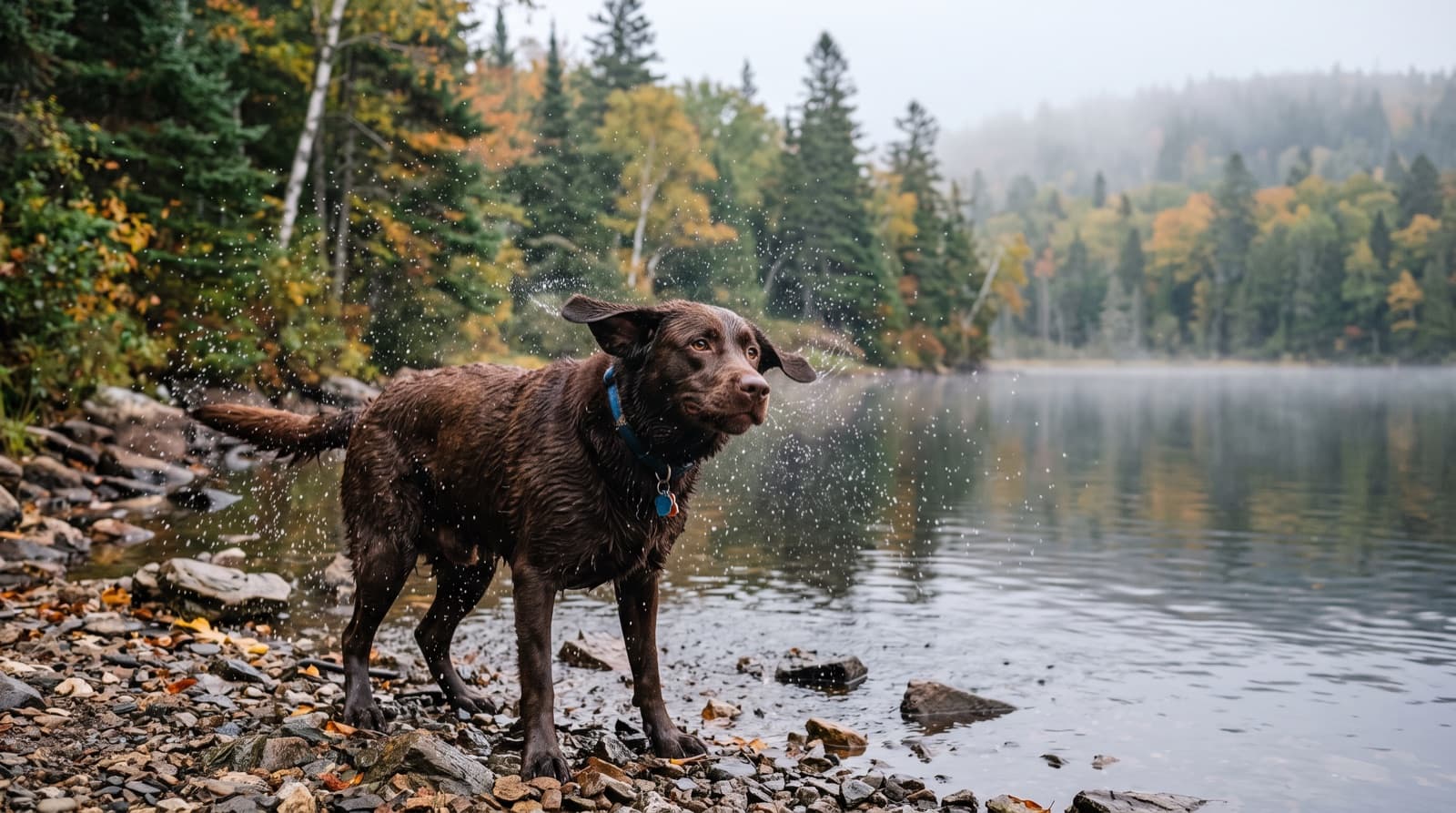
Why Labradors surrender in Saint John
Labradors top the popularity charts across Canada, and popularity is exactly why they fill rescue kennels. When a breed sells in huge numbers, a share of those dogs end up in the wrong homes. The Saint John surrender patterns are consistent, and almost none of them are about a difficult dog. They are about a gap between what people expected and what a Labrador actually is.
- Underestimated energy, the number-one reason. People adopt the calm, grey-muzzled Lab from a dog-food commercial and bring home a young working retriever with the drive to hunt all day. A Lab that does not get enough physical and mental work turns that energy into chewing, digging, counter-surfing, and relentless mouthing. Owners read it as a behaviour problem when it is really an exercise deficit, and the dog gets surrendered as “too much.”
- Adolescence. Between roughly eight and eighteen months a Lab hits its teenage phase: bigger, stronger, more independent, and testing every boundary. Cute puppy habits become a 60 lb dog dragging you down the street. Families who were coping suddenly are not, and the surrender rate for the breed spikes in this window.
- Size and boisterousness around small children. Labs are gentle-natured but big and bouncy, and a young one can bowl over a toddler without a shred of aggression. Some families adopt before the kids are ready for a large, exuberant dog and give up when the two do not mix in the early months.
- Housing and life changes. Moves, rental restrictions, a new baby, a relationship ending, or a job change all land on the family dog. A large active breed is harder to rehouse privately, so more of these dogs reach formal rescue than smaller breeds do.
- Cost of an active large dog. Food, vet care, and the occasional joint or ear problem add up faster for a big retriever than for a small companion breed. Households that adopted without budgeting for the real ongoing cost sometimes reach a point where they cannot keep going.
Reading these patterns before you apply is the whole game. A surrender note that says “we did not have time” almost always means the energy pattern above. Ask the rescue directly: how much daily exercise does this specific dog need, how does it handle being left alone, what is its body condition, and how is it around children and other dogs. The SPCA Animal Rescue and Fulfilling Hearts both know their dogs and will give you honest answers.
Saint John and NB rescues that list Labradors
Saint John is a smaller market than the big central-Canadian cities, so a wider net across New Brunswick and the Maritimes helps a great deal. Set listing alerts on every rescue you would consider, because a popular breed like the Labrador moves fast. For a fuller directory, see our guide to the best dog rescues in Saint John.
- SPCA Animal Rescue (295 Bayside Drive): the only shelter inside Saint John city limits and the most consistent local source of Labs and Lab mixes, mostly through owner surrender and stray intake. Its process is application-first, laid out on the adoption process page: you apply, the team reviews the fit, then you meet the dog. The adoption fee is a flat $375 for a dog or a puppy, and that number covers spay or neuter, vaccinations, deworming, flea treatment, a microchip, and one complimentary vet visit at a partner clinic.
- Fulfilling Hearts Rescue: a New Brunswick foster-based rescue whose foster homes stretch across the province and whose applications are open to adopters outside Saint John. The value here is the household-level read on a dog: because a rescue Lab has been living in a real home, the foster can speak to its true energy level, its house manners, and how it copes when left alone, which a shelter kennel rarely captures for a high-drive breed. There is no published flat fee, but every dog is spayed or neutered and vaccinated before it goes home, so settle the amount with the rescue directly when you apply.
- Wider NB and Maritime network: the New Brunswick SPCA can point you to member shelters across the province, and many Maritime foster-based rescues pull dogs from within NB and sometimes out of region. Labs turn up across all of these, so casting a provincial net rather than a Saint John-only one shortens the wait.
One caution for a breed this popular: free-purebred-Labrador and cheap-puppy offers online are a common scam, and so are “transport” rescues that ask for money up front before you have seen a real adoptable-dog list. A legitimate New Brunswick rescue will always want an application and a conversation first, and it will have a verifiable address and a current list of dogs in its care. If someone wants an e-transfer to ship a Lab sight-unseen, walk away.
The energy reality: field lines, bench lines, and what you are signing up for
Everything hard about living with a Labrador comes back to one truth: this is a working retriever bred to go all day. The friendly face hides real drive, and the households that struggle are the ones that treated the breed as a low-effort family dog. Labs split into two rough builds, and the difference matters more than colour ever will.
Field-line Labs (sometimes called working or American) are leaner, taller through the leg, and carry a high hunting drive. They need serious daily exercise plus a job, and they are the ones most likely to overwhelm a first-time owner in a quiet household. Bench-line Labs (show or English) are stockier and blockier in the head and tend to be a notch calmer, though calmer here still means a genuinely active dog that wants a real walk every day. Most rescue Labs are mixes or unregistered dogs of unknown line, so do not fixate on the label. Read the individual dog. A good foster note tells you the exercise reality better than any pedigree.
In practice, budget 60 to 90 minutes of real activity a day for a healthy adult, weighted toward a mix of hard aerobic work and mental work. A long walk or run, structured fetch, training sessions, scent games, and puzzle feeders all count; a slow amble around the block does not. Rockwood Park, at roughly 890 hectares one of Canada's largest urban parks, gives you kilometres of trails right in the city for on-leash walks, and Irving Nature Park out on its Bay of Fundy peninsula is another long-walk option. For off-leash running specifically, use only the designated areas, which our Saint John off-leash parks guide maps out. Everywhere else, a big fast Lab stays on a lead.
The payoff is enormous. A well-exercised Labrador is one of the easiest dogs alive to share a home with: biddable, food-motivated, endlessly trainable, and happy to sleep once the tank is empty. The whole breed reputation for being a great family dog is true, but only on the far side of the exercise. Skip the work and you get the surrender-note dog. Do the work and you get the commercial.
Water, tides, and the Fundy climate
Labradors were bred to retrieve from water and most of them are natural, joyful swimmers. In Saint John that instinct runs straight into a real hazard, so this is worth being firm about. The Bay of Fundy is not a safe swimming spot for your dog. Fundy has the highest tides in the world, the water is cold through the entire year, and the currents, channels, and mudflats around the tide line are genuinely dangerous. A Lab that launches after a stick into a Fundy channel can be swept out or trapped by a fast-rising tide, and the same goes for the harbour and the Reversing Falls rapids. Treat all of it as look-but-do-not-swim water, and keep the lead on near any Fundy shoreline. The tide chart matters here as much as the forecast.
For safe swimming, the calmer lakes and ponds inside Rockwood Park in the warmer months are a far better bet, always with you watching, the dog under control, and only where off-leash water access is actually permitted. Even there, a cold-water dog wants a rinse and a proper towel-off afterward, because the damp Fundy air does not dry a wet coat quickly.
The climate cuts both ways for a Lab. Saint John summers are cool, foggy, and damp thanks to the Fundy fog that keeps the port city wetter and cooler than the rest of the Maritimes, which is genuinely good news for a heavy-coated active breed; you can exercise a Lab through July and August without the heat stress inland cities face, though you should still ease off on the rare hot, still day and watch for a wet coat that never fully dries. Winter is the harder season. Nor'easters, freezing rain, heavy snow, and road salt are all part of a Saint John winter, so paw care is real: wipe or rinse the paws after salted-sidewalk and slushy walks, watch for salt burn between the pads, and consider booties for a sensitive dog. Our Saint John winter dog care guide covers the storm-day routine in full.
Labrador health, in brief
Labradors are generally sturdy dogs with a typical lifespan of 10 to 12 years, but a few conditions are worth planning around so you apply with realistic expectations. None of these should scare you off the breed; they simply shape how you feed, exercise, and budget.
- Hip and elbow dysplasia. The best-known breed risks, which is why responsible breeders screen through the OFA databases. A rescue Lab usually will not have those records, so watch for stiffness, a bunny-hop gait, or reluctance on stairs and raise any of it with your vet early.
- Obesity. The most common and most preventable Labrador problem. Many Labs carry a genetic variant that leaves them permanently hungry, so measured meals, counted treats, and a firm no-table-scraps rule are essential. Extra weight directly worsens joint disease.
- Exercise-induced collapse (EIC). A genetic condition in some Labs where intense exercise triggers a temporary loss of muscle control. Worth knowing about and mentioning to your vet if you see it.
- Eye conditions. Progressive retinal atrophy and cataracts appear in the breed. An older rescue Lab benefits from a routine eye check as part of its baseline.
- Ear infections. Common in dogs that swim often because the drop ears trap moisture. Dry the ears after water and keep up a regular cleaning routine.
- Cancer risk in older dogs. Like many larger breeds, senior Labs carry an elevated cancer risk. Regular senior vet checks catch problems earlier.
For breed-level health-testing standards, the Orthopedic Foundation for Animals maintains public screening databases at ofa.org, and the Canadian Kennel Club publishes the recognised breed standard. Plan a baseline vet visit in your first month to establish records, score body condition, and check the joints and ears. Know your after-hours option before you need it: the Port City Emergency Vet handles emergencies in the Saint John area, and it is worth having that number saved the day the dog comes home rather than the night you need it.
What a Saint John rescue Labrador actually costs
The adoption fee at the SPCA Animal Rescue is a flat $375 for a dog or a puppy, with no puppy premium. That fee is not a sale price; it is a partial recovery on medical work the rescue has already paid for. A Labrador adoption at that price includes spay or neuter, vaccinations, deworming, flea treatment, a microchip, and one complimentary vet visit at a partner clinic. Stacked at retail New Brunswick vet pricing, those services alone would run well past $375, so the fee is a genuine bargain against the real cost of the care already done. Fulfilling Hearts Rescue does not publish a flat fee, but every one of its dogs is spayed or neutered and vaccinated before adoption, so confirm the amount with them directly.
Compare that to a Labrador puppy from a breeder, which typically runs well over a thousand dollars before a single medical procedure, and the rescue path is by far the cheaper and often the more sensible one, because a rescue adult arrives with a known temperament and its core vetting done. Beyond the fee, budget roughly $400 to $900 in one-time first-month setup: a crate sized for a large dog, a good bed, leads and a well-fitted harness, bowls, and your own baseline vet visit. For a fuller local breakdown, see our Saint John dog adoption cost guide.
Ongoing costs for a medium-to-large dog run roughly $1,500 to $2,500 a year: measured food for a 55 to 80 lb dog, routine vet care, and pet insurance (genuinely worth it for a breed with documented joint, ear, and eye risks, and cheapest when enrolled before anything is on record). A City of Saint John dog licence is $10 for an altered dog versus $25 otherwise, and 15% NB HST applies to supplies but not to the adoption fee. If your Lab somehow arrives un-altered, our Saint John spay and neuter guide covers the local options, though nearly every rescue Lab comes home already fixed.
Browse adoptable Saint John Labradors and Lab mixes
Current New Brunswick listings from the SPCA Animal Rescue, Fulfilling Hearts, and other local rescues in one place. Labs are popular and Saint John is a small market, so alerts and same-day applications win.
See Available Labradors →The first 30 days with a Saint John Labrador
A rescue Lab runs on the same 3-3-3 arc as any adopted dog: the first three days are raw decompression, the routine clicks into place over about three weeks, and the real bond takes closer to three months. Labs often land on the faster end because the breed is social and eager to please, but do not mistake early enthusiasm for a settled dog. Our first week with a rescue dog guide covers the general decompression plan; here is the Labrador-specific version.
- Set the exercise routine from day one. Even during decompression, a Lab needs a real daily walk. Build the 60-to-90-minute habit early so the dog never gets a chance to store up energy and turn it into chewing or digging.
- Lock in the feeding and weight plan immediately. Measured meals, no free-feeding, treats counted into the daily total, and a household rule that nobody hands over table scraps. Score body condition at the first vet visit and feed to lean.
- Book a baseline vet visit in the first two weeks. Establish records, check the joints and ears, confirm the microchip is registered to you, and save the Port City Emergency Vet number in your phone.
- Enrol in pet insurance in week one. Before any joint, ear, or eye condition shows up in the records. Labrador risks are cheaper to insure against when enrolled early.
- Keep the lead on near any water. Until you know this individual dog, treat the Bay of Fundy, the harbour, and the Reversing Falls as no-swim zones, and use only permitted off-leash and swim areas.
- Start training and enrichment right away. Labs are food-motivated and love to learn. Short daily training sessions, puzzle feeders, and scent games drain the mental energy that otherwise becomes trouble.
- Licence the dog with the City of Saint John. Required for dogs in the city and cheaper for an altered dog. Our Saint John pet licensing guide walks through it.
- Crate train from night one. Even a house-trained adult benefits from a crate routine for the first month, and it gives the dog a safe den during decompression.
- Same routes, same routine for the first two weeks. Predictability speeds settling. Save busy trails, new dog friends, and off-leash areas for after week three.
- Winter paw care. If the dog arrives in the cold months, wipe or rinse the paws after salted-sidewalk walks, watch for salt burn, and dry the coat well in the damp Fundy air.
Expect the real Lab to arrive slowly. Week three is usually where the settled dog appears, and by month three the walk, train, feed, and keep-lean cycle has turned into an unthinking part of your day. Almost everything that unsettles you in the first ninety days, the mouthiness, the chewing, the boundless drive, softens once the exercise is consistent, the food is measured, and the dog has finally learned the shape of its new home. Give it the time before you draw conclusions.
Frequently asked questions
Where can I adopt a Labrador near me in Saint John?
Start with the two rescues that actually serve the area. The SPCA Animal Rescue at 295 Bayside Drive is the only shelter inside Saint John city limits, and it takes in Labradors and Lab mixes regularly through owner surrender and stray intake. Its process is application-first: you apply, the team reviews the fit, then you meet the dog. Fulfilling Hearts Rescue is the other strong option, a New Brunswick foster-based rescue with foster homes across the province that considers applicants beyond Saint John and provides detailed temperament notes because its dogs live in real homes. Labs are one of the most popular breeds in Canada, so purebred Labradors place fast when they appear. Set alerts on both organisations plus the wider New Brunswick and Maritime rescue network, stay open to a Lab mix rather than holding out for a purebred, and have your application ready to send the same day a suitable dog is listed.
Why do Labradors end up in rescue in Saint John?
The single biggest reason is underestimated energy. People picture the calm, grey-muzzled Lab from a dog-food advertisement and adopt a one-year-old with the drive of a working retriever. A young Lab that does not get enough physical and mental work becomes destructive, mouthy, and hard to live with, and that mismatch is what fills rescue kennels. Other patterns follow from it: adolescent Labs between eight and eighteen months who blew past their owners' expectations, dogs surrendered after a move or a housing change, Labs that got large and boisterous around small children, and dogs given up when a family's circumstances changed. The dogs themselves are usually friendly, biddable, and eager to please. The surrender is almost always about the gap between the breed's real needs and what the household could give, not a bad dog.
How much does it cost to adopt a Labrador in Saint John?
The SPCA Animal Rescue charges a flat $375 for a dog or a puppy, with no puppy premium, and that fee includes spay or neuter, vaccinations, deworming, flea treatment, a microchip, and one complimentary vet visit at a partner clinic. Stacked at retail New Brunswick vet pricing, those services alone would run well past $375, so the adoption fee is a genuine bargain against care the rescue has already paid for. Fulfilling Hearts Rescue does not publish a flat fee, but every dog it adopts out is spayed or neutered and vaccinated before going home; you confirm the amount when you apply. Beyond the fee, budget roughly $400 to $900 in one-time first-month setup (crate, bed, leads, bowls, a vet baseline of your own) and plan for roughly $1,500 to $2,500 a year in ongoing costs for a medium-to-large dog. A Saint John dog licence is $10 for an altered dog versus $25 otherwise, and 15% HST applies to supplies but not to the adoption fee.
What is the difference between field-line and bench-line Labradors?
Labradors come in two rough builds, and knowing which one you are looking at matters more than colour. Field-line (also called working or American) Labs are leaner, taller through the leg, and carry a high drive bred for a full day of hunting and retrieving. They need serious daily exercise and a job, and they are the ones most likely to overwhelm a first-time owner. Bench-line (also called show or English) Labs are stockier, blockier in the head, and generally a notch calmer, though calmer is relative and still means a genuinely active dog. Most rescue Labs are mixes or unregistered dogs of unknown line, so read the individual rather than the label. Ask the SPCA Animal Rescue or Fulfilling Hearts foster how the specific dog settles at home, how it handles being alone, and how much daily activity it actually needs. A good foster note tells you more about the exercise reality than any line pedigree could.
How much exercise does a Labrador really need?
Plan on 60 to 90 minutes of real activity a day for a healthy adult, and more for a young field-line dog. That means more than a stroll around the block. Labs were bred to work all day, so they want a mix of hard aerobic exercise (a long walk or run, fetch, swimming when the water is safe) and mental work (training, scent games, puzzle feeders). An under-exercised Lab does not switch off; it counter-surfs, chews, digs, and mouths, and those behaviours are the ones that get dogs surrendered. The upside is that a well-exercised Lab is one of the easiest dogs to live with: biddable, food-motivated, and happy to nap once the tank is empty. Saint John's cool, foggy summers actually help here, because you can exercise a Lab through July and August without the heat stress that inland cities deal with. Winter is the harder season for keeping a big active dog moving, so plan indoor enrichment for the storm days.
Can my Labrador swim in the Bay of Fundy?
Be very careful. Labs were bred to retrieve from water and most of them love to swim, but the Bay of Fundy is not a safe place to let one off a lead into the surf. Fundy has the highest tides in the world, the water is cold year-round, and the currents and mudflats around the tide line are genuinely dangerous. A Lab that bolts after a stick into a Fundy channel can be swept out or trapped by a fast-rising tide. Treat the harbour, the open bay, and the Reversing Falls rapids as look-but-do-not-swim water. Safer options are the calmer lakes and ponds inside Rockwood Park in the warmer months, always with you watching and the dog under control, and off-leash swimming only where it is explicitly permitted. When in doubt, keep the lead on near any Fundy shoreline. The tide chart matters as much as the weather here.
What health problems do Labradors have?
Labradors are generally sturdy dogs that live 10 to 12 years, but a handful of conditions are worth planning around. Hip and elbow dysplasia are the best-known breed risks, which is why responsible breeders screen through the OFA databases; a rescue Lab will not usually have those records, so watch for stiffness, a bunny-hop gait, or reluctance on stairs, and raise it with your vet. Obesity is the most common and most preventable problem, and it directly worsens joint disease. Many Labs carry a genetic variant that leaves them permanently hungry, so measured meals and counted treats are not optional. Other risks include exercise-induced collapse, progressive retinal atrophy, ear infections in dogs that swim a lot, and a slightly elevated cancer rate in older dogs. None of this should scare you off the breed. It just means feeding to a lean body condition, keeping the dog active, and budgeting for pet insurance early, before any condition is on record.
Do coat colours (black, yellow, chocolate, fox-red) change the dog?
Not in temperament, no. Black, yellow, and chocolate are the three recognised Labrador colours, and fox-red is simply a deep shade of yellow, not a separate colour or breed. The idea that chocolate Labs are wilder or that yellow Labs are calmer is folklore, not genetics; line and individual upbringing drive behaviour far more than coat colour. There is one real point worth knowing: some research has linked chocolate Labs to a slightly shorter average lifespan and higher rates of ear and skin conditions, likely tied to the narrower gene pool breeders drew from to fix the colour. In rescue this rarely matters, because you are adopting the dog in front of you, not a colour. Pick the Lab whose energy and temperament fit your household and treat the coat as a coin toss. A fox-red rescue Lab and a black one from the same litter will need the same exercise, the same diet discipline, and the same joint care.
Are Labradors good with kids and other dogs?
As a breed, yes on both counts, which is a big part of why they are so popular as family dogs. Labs are typically sociable, tolerant, and gentle-natured, and most do well with children and other dogs when raised and managed sensibly. The realistic caution is size and exuberance rather than aggression: a young Lab is a big, bouncy, mouthy dog that can knock over a toddler or scare a nervous child without meaning any harm. Supervise young kids around any new dog, teach the dog not to jump and mouth, and give it a quiet space of its own. For other dogs, most Labs greet the world as a friend, but individual history matters, so ask the SPCA Animal Rescue or the Fulfilling Hearts foster whether the specific dog has lived with kids or other pets and how it handled it. A foster-based rescue can usually tell you exactly how the dog behaves in a real home.
Should I adopt a Labrador puppy or an adult?
For most Saint John households, an adult Lab is the easier and smarter choice. A Lab puppy is roughly eighteen months of intensive work: house-training, teething and chewing, adolescent testing, and the daily exercise of a growing working dog, all at once. It is a lot, and it is exactly the stage where many owners get overwhelmed and surrender. An adult Lab, by contrast, has a known size, a settled temperament, established house manners, and a documented adoption fee of the same flat $375 at the SPCA Animal Rescue. You can see the energy level you are getting rather than guessing at it. Senior Labs, seven years and up, are often the calmest and most rewarding adoptions of all, and they place slowly, so a quieter home can do real good there. If you are set on a puppy and have the time, the budget, and the energy for eighteen months of training, a Lab puppy can be wonderful, but go in with clear eyes about the work.
How long is the wait for a Labrador in Saint John rescue?
Plan for weeks to a couple of months rather than days, and understand that the wait depends entirely on which specific dog fits you. Labradors are one of Canada's most popular breeds, so a healthy young purebred Lab at the SPCA Animal Rescue can have multiple applications within a day of listing. Adults, seniors, and Lab mixes wait longer and are often the better real-world match for a first-time family. Because Saint John is a smaller market and the SPCA Animal Rescue is the only shelter in the city, widening your net helps: set alerts with Fulfilling Hearts Rescue and the broader New Brunswick and Maritime rescue network, and stay open to a Lab-type mix. The adopters who succeed are the ones ready to move the same day: references lined up, landlord approval sorted if renting, a vet contact chosen, and the application already filled out before the right dog appears.
Related Saint John adoption guides
Adoptable Labradors in Saint John
Current New Brunswick Labrador and Lab-mix listings from the SPCA Animal Rescue, Fulfilling Hearts, and other local rescues.
Best Dog Rescues in Saint John
A directory of the New Brunswick shelters and foster-based rescues worth setting listing alerts on, with what each is known for.
Saint John Dog Adoption Costs
What the flat $375 fee actually covers, first-month setup costs, and the true ongoing budget for a large dog in Saint John.
First Week With a Rescue Dog
The 3-3-3 decompression plan, settling routines, and what to expect in the first days with a newly adopted Saint John rescue dog.
Find your Saint John rescue Labrador
Browse current New Brunswick Labrador and Lab-mix listings. Labs are popular and Saint John is a small market; alerts and same-day applications still win.
Browse All Saint John Dogs →New dog? Start with these care guides
Everything a new adopter needs to set up a safe, happy home.