The short answer
Berners shed a lot, year-round, with two heavier coat blows in spring and fall, and Toronto's sharp seasons make both blows pronounced. Brush two to three times a week (daily during a coat blow) with a slicker brush and an undercoat rake, working down to the skin. Never shave the double coat: it does not cool the dog and can permanently damage the coat. Bathe every six to eight weeks and dry thoroughly, since a damp undercoat causes hot spots. Berners are moderate droolers (not Mastiff-level). Toronto's seasonal habits are wiping salt and ice off the feathering in winter and shade, water, and de-shedding in a humid summer. Professional grooming runs about $90 to $160 every six to eight weeks.
The double coat: what you are working with
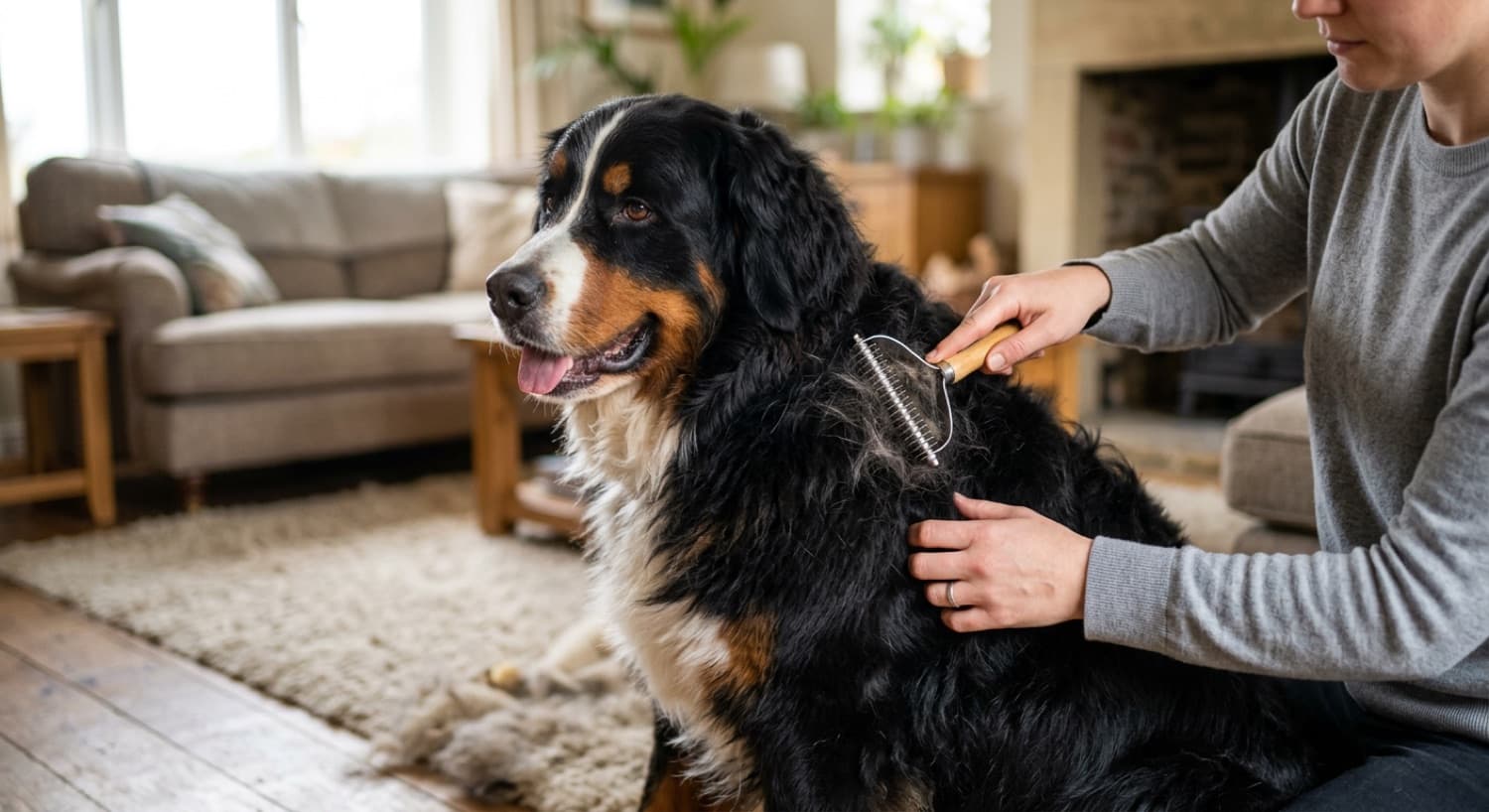
A Berner has a thick tricolour double coat: a long silky topcoat (roughly 1 to 3 inches) that sheds at a steady rate and protects the skin, and a dense woolly undercoat (1 to 2 inches) that insulates and does most of the heavy shedding. The undercoat is what blows out twice a year. Understanding this is the key to everything else.
The coat evolved for Swiss alpine farm work, which is why it insulates against cold and (when it is kept clean and open) helps regulate heat too, and why a Berner handles a Toronto winter with ease. The Canadian Kennel Club breed profile describes the medium-long, soft, silky coat over a short undercoat and notes plainly that vigorous brushing is part of keeping a Berner. That brushing is not optional. A matted or compacted undercoat does the opposite of what the coat should: it traps heat, holds moisture against the skin, and causes hot spots.
Your whole grooming routine is really two jobs: remove loose undercoat before it ends up on your floors, and keep the coat and skin clean, dry, and mat-free through the seasons. Recurring hot spots, chronic itch, or skin infections are not normal grooming problems, they are veterinary problems. Our Bernese health guide covers the breed's known conditions and when to escalate to a vet rather than reach for another brush.
The Toronto coat-blow calendar
Two coat blows a year, two to four weeks each. In Toronto the spring blow lands as the weather warms through April and May, and the fall blow comes as things cool through September and October. Daily brushing during these windows is the rule.
| Season | Toronto Months | Brushing Frequency | Primary Tool |
|---|---|---|---|
| Spring coat blow | April to May | Daily, 20 to 30 min | Undercoat rake |
| Summer off-season | June to August | 2 to 3x per week | Slicker brush |
| Fall coat blow | September to October | Daily, 20 to 30 min | Undercoat rake |
| Winter off-season | November to March | 2 to 3x per week | Slicker brush |
Start dates shift with the weather. A warm March can trigger the spring blow early, and a late warm spell can push the fall blow back. Watch your Berner. When you start finding tufts of undercoat on the couch and floor, switch to the daily routine. Owners who skip brushing through a blow end up at the groomer paying an extra $90 to $180 for de-matting, because the undercoat clumps against the skin, traps moisture, and triggers hot spots. There is no shortcut around this.
Brushing tools
Three hand tools cover most needs: an undercoat rake, a slicker brush, and a metal comb. A de-shedding tool is optional and should be used sparingly. Work down to the skin, not just over the top of the coat, or you leave the shedding undercoat sitting underneath.
| Tool | When to use | Notes |
|---|---|---|
| Undercoat rake | Daily during coat blows | Most important tool. Pulls dead undercoat. |
| Slicker brush | 2 to 3x per week off-season | Finishes the topcoat after the rake. |
| Metal comb | Weekly mat checks | Behind ears, armpits, britches, tail plume. |
| De-shedding tool | Coat blows, sparingly | Use lightly. Heavy use damages skin. |
| High-velocity dryer (rental) | After a bath, during blows | Available at Toronto self-wash centres. |
A high-velocity dryer is a game changer during a coat blow, but most owners rent one at a self-wash centre rather than buy. The four hand tools are a modest one-time cost and last for years.
Never shave the coat
Never shave a Berner's double coat. It is one of the most common and most damaging grooming mistakes, usually made with good intentions during a humid Toronto summer. The double coat insulates against heat as well as cold and shields the skin from sun, so shaving does not cool the dog, and it can permanently change how the coat regrows, leaving patchy, coarse, or uneven texture that may never fully recover.
To help a thick-coated Berner through the heat, do the opposite of shaving: brush the undercoat out thoroughly so air can move through the coat, provide deep shade and fresh water, and walk in the cool of the morning or evening. A shaved Berner often overheats more easily, not less, because it has lost the layer that reflects sun and keeps the skin cooler.
Grooming helps a little with airflow, but this is the honest limit of it: for a mountain breed in a humid Toronto July, shade, water, and timing matter far more than the coat. On a hot, humid day, keep walks short and early, skip the midday sun entirely, and never leave a Berner in a warm car or a hot backyard. The heat side of owning a thick-coated breed ties into coat care, but the medical detail (heat stress, when it becomes an emergency) belongs to the Bernese health guide.
Bathing a Bernese
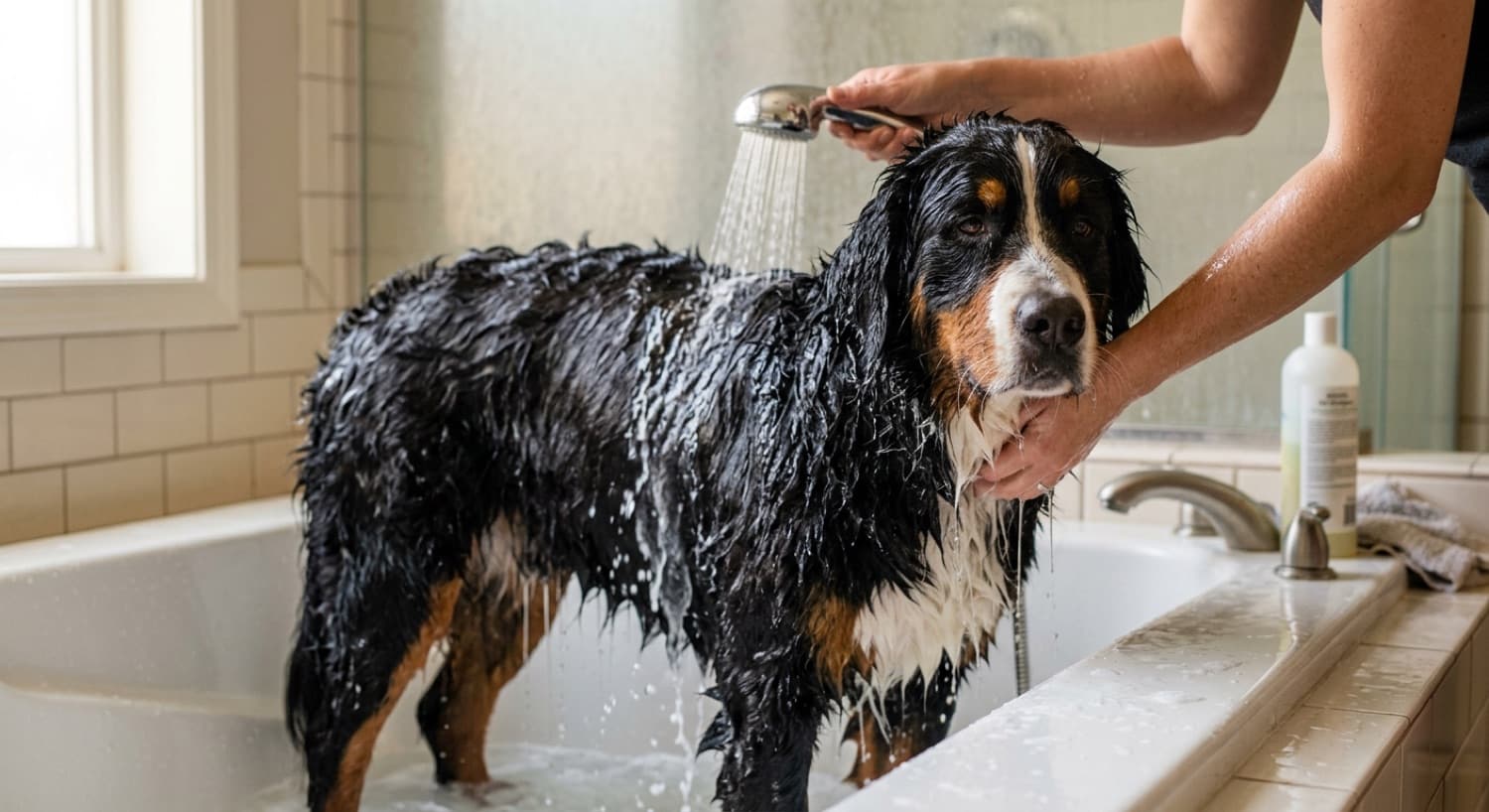
Every six to eight weeks for most Berners, less often if the coat stays clean. Drying is the hard part, not the wash.
Use a hypoallergenic or oatmeal-based shampoo. Over-bathing strips the natural oils and dries the skin, so more often is not better. Air-drying a Berner takes four to eight hours, and a wet undercoat traps moisture against the skin and causes hot spots, so never let a Berner stay damp. The fastest dry uses a high-velocity dryer, which many Toronto self-wash centres rent. Otherwise towel-dry vigorously with several towels, set up fans, and check that the chest, armpits, belly, and the area under the tail are fully dry before your dog lies down.
This drying habit is not just for baths. Dry the coat and feathering after a summer swim, and towel-dry the legs and belly after a snowy winter walk. A double coat that sits damp in humid summer weather is exactly where a hot spot starts.
The Toronto seasonal routine
This is the part specific to living with a Berner in Toronto. The double coat handles the cold beautifully, so the seasonal jobs are not about temperature. They are about salt and ice in winter and moisture in a humid summer, both of which land in the long feathering first.
Winter. Winter is a Berner element, so the job is not warmth, it is salt and wet. Road salt and de-icer irritate the paw pads and skin and dry the coat out, and wet snow packs into the feathering on the legs and belly and forms ice balls that tug at the coat. Build a door routine: after every snowy walk, wipe the salt off the legs and belly and clean the paws, then towel-dry the feathering. Apply a paw balm before walks, and trim the fur between the paw pads flush with the pad surface to reduce ice-ball buildup. Keep a dedicated stack of towels by the door. Our Toronto winter dog care guide covers the salt and paw routine in detail.
Summer. Toronto summers are hot and humid, and a thick-coated mountain breed feels it. The grooming side is a good de-shed at the start of summer to clear the dead undercoat that traps heat, plus drying the coat and ears after any swim or wet walk, because a damp double coat can develop hot spots and floppy ears plus lake water make ear infections common. But the bigger levers are behavioural, not grooming: shade, water, and walking in the cool of the day. Never try to shave a Berner cool.
Drool, ears, and paws
Beyond brushing and bathing, a Berner needs a short list of routine care: drool and mouth-fold hygiene, weekly ear checks, nail trims, and winter paw care.
- Drool. Berners are moderate droolers, more than a Lab, less than a Mastiff. Keep a drool towel by the water bowl. Wipe the mouth folds (the loose skin at the corners of the lips) with a damp cloth daily and dry them, since food and saliva collect there and can cause a yeast or bacterial infection. Redness, a yeasty odour, or pawing at the mouth means a vet visit.
- Ears. Drop ears trap moisture. Check weekly for redness, odour, or dark wax, and dry the ears thoroughly after every bath or swim. Clean with a dog-safe ear cleaner only when needed, not on a fixed schedule.
- Nails. Trim every three to four weeks. Berner nails are often black, which hides the quick, so a grinder used gradually is safer than clippers, or have your groomer or vet do it.
- Paw pads in winter. Apply a paw balm before walks and wipe the paws after every winter walk to remove de-icing salt, which cracks pads and irritates skin if licked.
- Eyes. Tear staining can leave a faint rust colour on the white markings under the eyes. Wipe daily with a damp cloth. Heavy staining is worth a vet check to rule out a blocked tear duct.
Professional grooming in Toronto
About $90 to $160 per visit in Toronto for a full bath, thorough dry, de-shed, brush-out, and nail trim. Every six to eight weeks works out to roughly $700 to $1,300 a year.
| Groomer type | Toronto cost | Notes |
|---|---|---|
| Chain salon | $90 to $130 | Most affordable. Variable quality. |
| Boutique groomer | $130 to $180 | Higher quality, breed-aware. |
| Mobile groomer | $150 to $220 | Comes to your home. Less stress for the dog. |
| Self-wash centre | $20 to $35 | You do the work. High-velocity dryer included. |
| De-shedding add-on | $30 to $60 | Worth it at the start of a coat blow. |
Tell your groomer: focus on undercoat removal, dry the coat thoroughly, never shave, trim the foot fur flush with the paw pads for winter ice prevention, and tidy the sanitary area. Grooming is a real part of the Berner budget. If you are pricing out the wider cost of a giant breed, our Toronto low-cost vet guide helps keep the rest of the care budget in check.
Browse adoptable Berners in Toronto
Grooming commitment is a real part of the Berner decision, and a rescue can tell you about a specific dog's coat and shedding before you commit. Browse adoptable Bernese Mountain Dogs and Berner mixes from Toronto rescues. Refreshed regularly.
See Available Berners →Frequently Asked Questions
Do Bernese Mountain Dogs shed a lot?
Yes. Berners are heavy shedders and shed year-round, with two much bigger seasonal sheds (the coat blow) in spring and fall. Shedding is the number one shock for first-time Berner owners, and it never fully stops. A Bernese has a thick tricolour double coat: a long silky topcoat and a dense woolly undercoat that does most of the shedding. In Toronto both coat blows are pronounced because the seasons are pronounced, a real spring warm-up and a genuine cold winter, so the dog drops its winter undercoat hard in spring and bulks up again in fall. Off-season you will brush two to three times a week. During a coat blow you will brush daily. There is no version of owning a Berner that involves a fur-free home, but a steady brushing routine keeps it manageable.
When do Bernese Mountain Dogs blow their coat?
Twice a year. In Toronto the spring coat blow lands as the weather warms through April and May, and the fall coat blow comes as things cool through September and October. Each blow runs about two to four weeks. During these windows the dense undercoat releases in clumps and the topcoat sheds more than usual. Daily brushing with an undercoat rake is the rule, because if you skip it the loose undercoat mats against the skin, traps moisture, and leads to hot spots and skin infections. Owners who let a coat blow go unbrushed often pay an extra $90 to $180 at the groomer for de-matting. Start dates shift with the weather, so watch your dog: when tufts of undercoat start turning up on the couch, switch to the daily routine.
What brushes do I need for a Bernese Mountain Dog?
Three tools cover most of what a Berner needs. An undercoat rake pulls dead undercoat during the twice-yearly coat blow and is the single most important tool. A slicker brush handles daily off-season brushing and finishes the topcoat after the rake. A metal comb checks the mat-prone spots: behind the ears, the armpits, the britches, and the tail plume. A de-shedding tool like a de-shedder speeds up coat-blow brushing but should be used sparingly, because aggressive use damages the skin and breaks the topcoat. Work down to the skin, not just over the top of the coat, or you leave the shedding undercoat sitting underneath. A high-velocity dryer, which many Toronto self-wash centres rent, is the game changer during a blow.
Should I shave my Bernese Mountain Dog in summer?
No, never shave a Berner double coat. It is one of the most common and most damaging grooming mistakes, and it is tempting during a humid Toronto July. The double coat insulates against heat as well as cold and shields the skin from sun, so shaving does not keep a Berner cooler and removes that protection. Worse, shaving a double coat can permanently change how it regrows, leaving patchy or coarse texture that never fully recovers, and a shaved Berner often overheats more easily, not less. To help a thick-coated dog in warm weather, brush the undercoat out so air can move through the coat, provide deep shade and fresh water, and walk in the cool of the morning or evening. Cooling comes from de-shedding, not from clippers. Grooming helps a little with airflow, but shade, water, and timing matter far more.
How often should I bathe a Bernese Mountain Dog?
Every six to eight weeks for most Berners, less often if the coat stays clean, since over-bathing strips the natural oils and dries the skin. Use a hypoallergenic or oatmeal-based shampoo. The hard part with a Berner is not the wash, it is the drying. The double coat dries slowly (four to eight hours air-dry), and a wet undercoat traps moisture against the skin and causes hot spots. Never let a Berner stay damp. Use a high-velocity dryer if you have access to one, or towel-dry vigorously with several towels and set up fans, and pay extra attention to the chest, armpits, belly, and the area under the tail. This same drying habit applies after a summer swim and after a snowy winter walk.
How much does professional grooming cost for a Bernese in Toronto?
Professional grooming in Toronto typically runs about $90 to $160 per visit for a Bernese, covering a bath, thorough blow-dry, de-shed, brush-out, nail trim, ear cleaning, and a sanitary trim. Giant-breed pricing sits at the higher end because the coat takes time (a full Berner groom often runs two to three hours). Chain salons tend to be cheaper and more variable, boutique and breed-aware groomers cost more, and mobile groomers who come to your home cost the most. Every six to eight weeks is a common schedule, which works out to roughly $700 to $1,300 a year, and many owners add a de-shedding appointment at the start of each coat blow. Tell your groomer to focus on undercoat removal, dry thoroughly, never shave the coat, and trim the foot fur flush with the paw pads for winter ice prevention.
Do Bernese Mountain Dogs drool a lot?
Berners are moderate droolers, not severe like Mastiffs, Saint Bernards, or Newfoundlands, but more than a Lab or a Golden. Drool happens after drinking, after eating, and during heat, stress, or excitement. Most owners keep a drool towel by the water bowl and wipe the mouth folds clean after meals. The mouth folds (the loose skin at the corners of the lips) collect food and saliva and can develop a yeast or bacterial infection if left alone, so wipe them with a damp cloth daily and dry thoroughly. If you see redness, smell a yeasty odour, or notice your Berner pawing at their mouth, book a vet visit. Expect the odd drool sling on the wall and your jeans. That is normal Berner ownership.
How do I care for a Bernese coat through a Toronto winter?
Winter is a Berner element. The double coat is built for cold and they genuinely thrive in snow, so the winter job is not warmth, it is salt and wet. Road salt and de-icer irritate the paw pads and skin and dry the coat out, and wet snow packs into the long feathering on the legs and belly and forms ice balls that tug at the coat. Build a door routine: after every snowy walk, wipe the salt off the legs and belly and clean the paws, then towel-dry the feathering so it does not sit damp under the dense coat. Apply a paw balm before walks, and trim the fur between the paw pads flush with the pad surface to reduce ice-ball buildup. Keep a dedicated stack of towels by the door. The cold itself is the easy part for this breed.
The full Bernese Mountain Dog cluster
Bernese Mountain Dog Adoption in Toronto
Where to adopt, real costs vs breeders, waitlists, and the breed reality before you apply.
Bernese Health Issues
Cancer risk, hip and elbow dysplasia, bloat, heat sensitivity, and why insuring early matters.
Adoptable Berners in Toronto
All currently available Bernese Mountain Dogs and Berner mixes. Updates regularly.
Winter Dog Care in Toronto
Salt, ice, and cold-weather paw and coat care for a Toronto winter.
New dog? Start with these care guides
Everything a new adopter needs to set up a safe, happy home.