The short answer
The Bernese Mountain Dog has one of the shortest lifespans of any breed, commonly around 7 to 10 years, and the main reason is a high cancer rate, with histiocytic sarcoma as the breed-defining one. This is the fact to know going in, and it is why enrolling pet insurance while your dog is young and healthy is the single best financial decision you can make for this breed. The other concerns: hip and elbow dysplasia, bloat (GDV) as a deep-chested breed, and genuine heat sensitivity in Toronto summers, plus von Willebrand disease and degenerative myelopathy. None of this is a reason to avoid a wonderful breed. It is a reason to keep your Bernese lean, monitor, insure early, and act fast on warning signs. Ontario insurance runs roughly $70 to $130 per month for a young healthy Bernese, and pre-existing conditions are excluded, so enrol early. This is general information, not veterinary advice; your vet is the right guide for your specific dog.
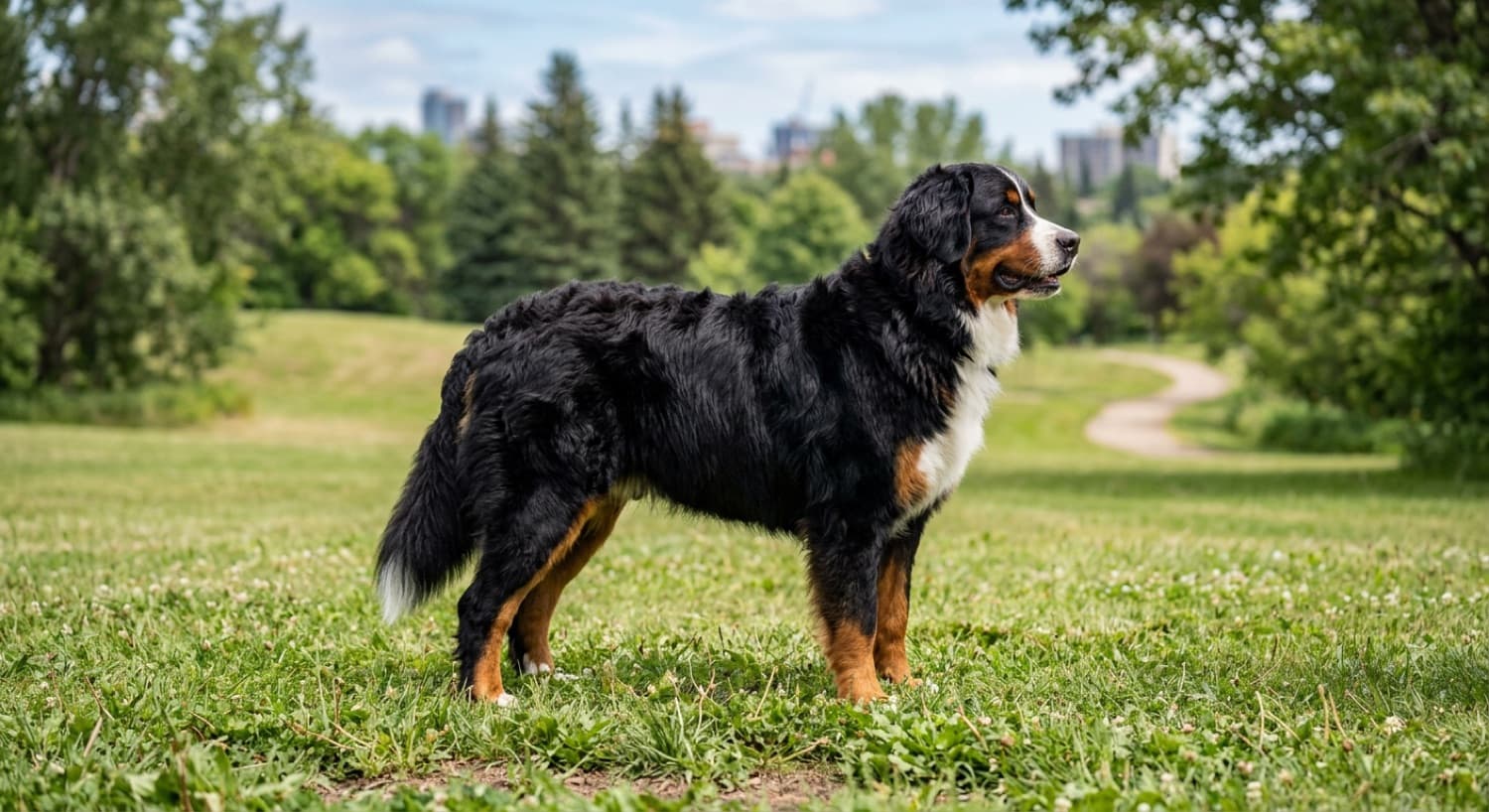
Cancer and a short lifespan: the breed-defining reality
Bernese live commonly around 7 to 10 years, among the shortest of any breed, and cancer is widely reported as the leading cause of death. The breed descends from a small founder population in the Swiss Alps, and that genetic bottleneck concentrated cancer-risk genes. This is not a scare tactic. It is the one fact that should shape how you plan, budget, and insure for a Bernese.
The breed-defining cancer is histiocytic sarcoma, an aggressive cancer of histiocytes (a type of immune cell) that Bernese develop far more often than most breeds. It moves fast and it hides, often starting in the spleen, lungs, liver, lymph nodes, or a joint, places an owner cannot see or feel. By the time the first symptom appears (sudden lethargy, weight loss, a limp with no injury, or pale gums) the disease is often already advanced. Bernese also see higher rates of lymphoma (swollen lymph nodes you can feel under the jaw or behind the knees), mast cell tumours (skin lumps), and osteosarcoma (bone cancer, usually a sudden limp in a leg).
What to actually do with this: (1) enrol pet insurance while your Bernese is young and healthy, because a cancer diagnosis after enrolment is covered while one before it is excluded; (2) keep up with routine vet check-ups and talk with your vet about cancer surveillance from mid-life so anything is caught early, when options are widest; and (3) act on small symptoms. A Bernese owner should not watch a new lump or a limp for a couple of weeks. Any new lump, any limp that does not resolve in a week, or any sudden drop in energy gets a prompt vet visit.
The AKC Canine Health Foundation funds ongoing research into the cancers that affect breeds like the Bernese. If your dog is ever diagnosed, your vet can refer you to a veterinary oncology service to discuss options and costs. The point of leading with cancer is not to talk you out of a gentle, devoted breed. It is to make sure the one decision that matters most, insuring early, happens before it is too late.
Hip and elbow dysplasia
Both hip and elbow dysplasia are common in the breed, as in most large, heavy dogs. These are developmental joint conditions where the joint does not form perfectly, which can lead to arthritis and mobility problems over time. The Orthopedic Foundation for Animals (OFA) publishes breed hip and elbow statistics, and reputable breeders clear both parents before breeding.
With a rescue Bernese you usually will not have the parents' OFA results, so watch for the signs: limping, stiffness after rest, reluctance on stairs or jumping into the car, or a bunny-hopping gait in the back legs. Elbow issues often show up as a front-leg lameness in a young, growing dog. Raise anything you notice with your vet, who can examine, image if needed, and recommend management from weight control and joint supplements up to surgery in serious cases.
The single most powerful thing you control is weight. Keeping a Bernese lean dramatically reduces the load on developing and arthritic joints and is the best lifelong protection you can give a heavy breed. Sensible, low-impact exercise that avoids repetitive high-impact jumping during the growth phase also helps a fast-growing skeleton settle well.
Heat sensitivity: the Toronto summer problem
The Bernese was bred for the cold Swiss Alps and carries a thick double coat, so it genuinely struggles in heat, and Toronto's humid summers are the hard season. This is a real management issue, not just comfort. Winter is the easy season for this breed. July and August are the season to plan around.
Humidity is the part that catches people out. A dog's main way of shedding heat is panting, and humid Toronto air makes panting less effective, so a thick-coated Bernese can overheat on a day that feels merely warm to you. Overweight Bernese overheat faster still, which is one more reason to keep this breed lean.
The practical rules mirror what the AVMA warm-weather pet safety guidance recommends. Walk in the cool of early morning and late evening, and skip midday exercise on hot or humid days. Check that pavement is not too hot for paws with the back of your hand. Always carry water, and keep air conditioning or a cool room available at home through the summer. Learn the signs of heatstroke cold: heavy panting, drooling, bright red gums, unsteadiness, vomiting, and collapse. Heatstroke is an emergency; get to a vet immediately.
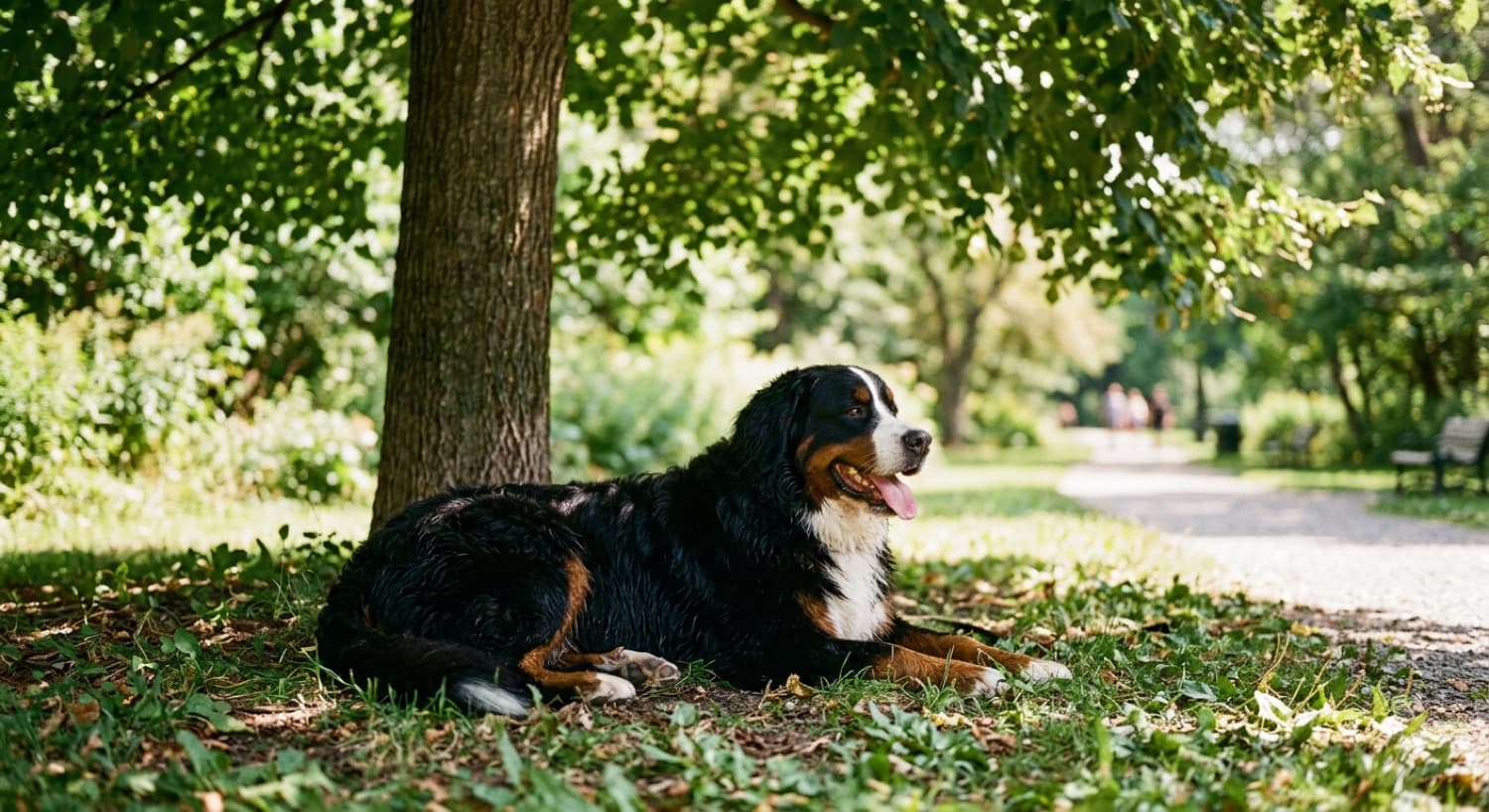
Bloat (GDV): a deep-chested emergency
As a large, deep-chested breed, the Bernese is at higher risk of gastric dilatation-volvulus (GDV), or bloat, where the stomach fills with gas and can twist. It is a fast, life-threatening emergency. A swollen abdomen, unproductive retching, restlessness, and drooling mean an emergency vet immediately, not in the morning.
The Merck Veterinary Manual notes that deep or narrow chest conformation is a proven risk factor for GDV, which is exactly the Bernese build. Know the signs cold, because bloat progresses within hours, and every deep-chested dog owner should have the nearest emergency vet's number saved before they ever need it.
Because the risk is structural, some owners of at-risk breeds discuss a preventive gastropexy with their vet, a surgery that tacks the stomach to the body wall so it cannot twist, sometimes done at the same time as a spay or neuter. It does not prevent the stomach from filling with gas, but it prevents the twist, which is the part that kills. Common everyday precautions include feeding two or three smaller meals rather than one large one, using a slow-feeder bowl if your dog inhales food, and avoiding hard exercise right before and after meals. Ask your vet what is right for your individual dog.
Bleeding, spinal, and other conditions
Von Willebrand disease (vWD). This inherited bleeding disorder, caused by low or defective von Willebrand factor, is described in the breed. Many carriers show no symptoms, while affected dogs can bleed longer than expected from cuts, surgery, or dental work. It is diagnosed with a DNA test or a blood factor level. Any Bernese heading into surgery should ideally be screened first so the surgical team can plan for it, and for a rescue dog without records, flag it to your vet before any planned procedure. Never give over-the-counter human pain medications, since some interfere with clotting.
Degenerative myelopathy (DM). A late-onset spinal cord disease that causes slow, painless, progressive hind-end weakness in older dogs, often compared to the dog version of human ALS. Early signs are subtle: knuckling of the back feet, dragging the toes, a wobble in the back end. There is no cure, so management focuses on physical therapy, hydrotherapy, controlled exercise, and mobility support. A DNA test identifies at-risk dogs, though a positive result does not guarantee the disease develops. Mention any hind-end weakness to your vet so the cause can be properly worked up.
Heart and thyroid. Some Bernese see subvalvular aortic stenosis (SAS), a congenital narrowing below the aortic valve that a vet may first notice as a murmur, and hypothyroidism (an underactive thyroid) that shows up as weight gain, low energy, or coat changes. A murmur warrants a cardiology referral for assessment; hypothyroidism is diagnosed with a blood test and managed with an inexpensive daily medication. As with the rest, the message is awareness and monitoring, and a thorough vet exam at adoption matters.
The Bernese health profile at a glance
| Concern | What it is | What helps |
|---|---|---|
| Cancer | High breed risk, led by histiocytic sarcoma; also lymphoma, mast cell, osteosarcoma | Insure early, mid-life surveillance, act on lumps and weight loss fast |
| Short lifespan | Commonly around 7 to 10 years, among the shortest of any breed | Lean weight, prompt vet care, honest expectations |
| Hip & elbow dysplasia | Developmental joint conditions, lead to arthritis | Keep lean, low-impact exercise, vet management |
| Bloat (GDV) | Deep chest, stomach can twist. Emergency | Know the signs, emergency vet, discuss gastropexy |
| Heat sensitivity | Thick double coat struggles in humid Toronto summers | Early or late walks, shade, water, air conditioning |
| vWD / DM / heart / thyroid | Bleeding disorder, spinal disease, SAS murmur, hypothyroidism | Screening, vet exam, blood test, monitoring |
Should I get pet insurance for my Bernese Mountain Dog?
For a Bernese, yes, and the timing is everything. Between the high cancer risk and the potential for joint disease and bloat, the lifetime odds of a large vet bill are higher than for almost any breed, and cancer treatment, orthopedic surgery, and emergency bloat surgery all run into the thousands. Ontario pet insurance for a young, healthy Bernese commonly runs roughly $70 to $130 per month, higher than for many breeds because insurers factor in the cancer and orthopedic risk.
The rule that catches everyone: anything already present becomes a pre-existing condition and is excluded, so a policy taken out the week you adopt a healthy young Bernese covers vastly more than one bought after the first lump or limp. With a breed this cancer-prone, that difference can be the difference between treating a disease and facing an impossible decision. Compare a few Ontario providers on annual and per-condition limits, deductibles, and reimbursement percentage, and enrol while your dog is healthy. Be realistic too about lifespan: this is a breed you may have for around 8 years rather than 14, and planning your budget and your heart around that honestly is part of responsible ownership. For the wider cost picture, see our guide to dog adoption costs in Toronto.
To keep routine costs down so your budget is free for what matters, see our guides to low-cost vet options in Toronto and affordable spay and neuter. And for a smooth start with a new rescue Bernese, our first week with a rescue dog guide covers settling in.
Ready to meet a Bernese?
Browse adoptable Bernese Mountain Dogs and Bernese mixes from Toronto rescues. A rescue can tell you what a specific dog's health has looked like in foster, including anything a vet has flagged, which is exactly the head start this breed rewards. Refreshed regularly.
See Available Bernese →Frequently Asked Questions
Why do Bernese Mountain Dogs die so young?
Cancer, mostly. Bernese have one of the shortest lifespans of any breed, commonly around 7 to 10 years, and the biggest reason is a high rate of cancer, which is widely reported as the leading cause of death in the breed. The Bernese population descends from a small founder group in the Swiss Alps, and that genetic bottleneck concentrated cancer-risk genes the breed has never fully escaped. This is the defining fact of Bernese ownership, and it is better to know it going in than to be blindsided by it. It is not a reason to avoid the breed. It is the reason to enrol pet insurance while your dog is young and healthy, keep up with vet check-ups, keep your dog lean, and act quickly on any new lump, unexplained weight loss, or lameness that does not resolve. Your vet is the right person to build a monitoring plan for your specific dog.
What cancer are Bernese Mountain Dogs prone to?
The breed-defining cancer is histiocytic sarcoma, an aggressive cancer of histiocytes (a type of immune cell) that Bernese develop far more often than most breeds. It moves fast and often starts in places an owner cannot see or feel, such as the spleen, lungs, liver, lymph nodes, or a joint, so the first sign is frequently sudden lethargy, weight loss, lameness without an injury, or pale gums. Bernese also see higher rates of lymphoma (swollen lymph nodes), mast cell tumours (skin lumps), and osteosarcoma (bone cancer, usually a sudden limp). The practical takeaway is that Bernese owners should act on small symptoms other breed owners might watch and wait on. Any new lump, any limp that does not resolve in a week, or any sudden drop in energy deserves a prompt vet visit. Diagnosis and treatment options belong with your veterinarian and, where appropriate, a veterinary oncologist.
How long do Bernese Mountain Dogs live?
Commonly around 7 to 10 years, which is one of the shortest typical lifespans of any breed and comparable to Great Danes and Saint Bernards. Some Bernese reach 10 to 12 years and a small minority go past that, but it is wise to plan around the shorter end. Cancer drives most early deaths in the breed, with joint disease and bloat as other contributors. The levers you actually control point the average in the right direction: keep your dog lean, provide low-impact exercise, stay current on vet care so problems are caught early, enrol pet insurance as a puppy, and, if buying, choose a breeder who can show pedigree longevity and OFA-cleared parents. None of this guarantees a long-lived Bernese, but neglecting it tends to produce the shortest outcomes. Going in with honest expectations, around 8 years rather than 14, protects you from grief that hits harder than it has to.
Are Bernese Mountain Dogs prone to hip problems?
Yes. Hip and elbow dysplasia are both common in the breed, as in most large, heavy dogs. These are developmental joint conditions where the joint does not form perfectly, which leads to arthritis and mobility problems over time. Reputable breeders clear both parents through the OFA (Orthopedic Foundation for Animals) before breeding, and the OFA publishes breed statistics showing Bernese among the higher-risk large breeds. With a rescue Bernese you usually will not have the parents' clearances, so watch for a bunny-hopping gait, stiffness after rest, reluctance on stairs or jumping into the car, and limping, and raise anything you notice with your vet. The single most powerful thing you control is weight. Keeping a Bernese lean dramatically reduces the load on developing and arthritic joints and is the best lifelong protection you can give a heavy breed. Sensible, low-impact exercise during the growth phase helps too.
Do Bernese Mountain Dogs handle heat and Toronto summers?
Poorly, and this is a genuine management issue, not just a comfort one. The Bernese was bred for the cold Swiss Alps and carries a thick double coat, so it struggles in heat and especially in Toronto's humid summers, where the humidity blunts a dog's main cooling method (panting). Winter is the easy season for this breed; July and August are the season to plan around. Walk in the cool of early morning and late evening, skip midday exercise on hot or humid days, check that pavement is not too hot for paws, always carry water, and keep air conditioning or a cool room available at home. Know the signs of heatstroke: heavy panting, drooling, bright red gums, unsteadiness, vomiting, and collapse, all of which are veterinary emergencies. Overweight Bernese overheat faster, which is one more reason to keep this breed lean.
Are Bernese Mountain Dogs prone to bloat?
Yes. As a large, deep-chested breed, the Bernese is at higher risk of bloat, or gastric dilatation-volvulus (GDV), a life-threatening emergency where the stomach fills with gas and can twist. Signs include a swollen or distended abdomen, unproductive retching (trying to vomit with nothing coming up), restlessness, drooling, and obvious distress. It comes on fast and needs an emergency vet immediately, not in the morning. Because deep-chested conformation is a known risk factor, some owners of at-risk breeds discuss a preventive gastropexy with their vet, a surgery that tacks the stomach so it cannot twist, sometimes done at the same time as a spay or neuter. Common everyday precautions include feeding smaller meals rather than one large one and avoiding hard exercise right before and after eating. Ask your vet what is right for your dog and know the warning signs cold.
Do Bernese Mountain Dogs have bleeding disorders?
Some do. Von Willebrand disease (vWD) is an inherited bleeding disorder described in the breed, caused by low or defective von Willebrand factor, a protein the blood needs to clot properly. Many carriers show no symptoms at all, while affected dogs can have prolonged bleeding from cuts, prolonged bleeding after surgery or dental work, frequent nosebleeds, or bleeding gums. It is diagnosed with a DNA test or a blood factor level run by your vet, and any Bernese heading into surgery should ideally be screened first so the surgical team can plan for it. For a rescue Bernese without breeder records, mention it to your vet before any planned procedure. Do not give over-the-counter human pain medications to a dog, since some interfere with clotting; all pain control and surgical medication should be chosen by your veterinarian for the individual dog.
What is degenerative myelopathy in Bernese Mountain Dogs?
Degenerative myelopathy (DM) is a late-onset spinal cord disease that causes slow, progressive hind-end weakness, often compared to the dog version of human ALS. It usually appears in older dogs and tends to start subtly: knuckling of the back feet, dragging the toes, a wobble in the back end, or difficulty rising. It is painless but progressive and there is no cure, so management focuses on physical therapy, hydrotherapy, controlled exercise, mobility carts, and supportive care to keep quality of life high for as long as possible. A DNA test for the SOD1 mutation identifies dogs at risk, though a positive result does not guarantee the disease will develop, and other spinal problems have to be ruled out first. For a rescue Bernese, mention any hind-end weakness or coordination changes to your vet so the cause can be properly worked up rather than assumed.
Is pet insurance worth it for a Bernese Mountain Dog?
For this breed, it is one of the best financial decisions you can make, and enrolling early is everything. Between the high cancer risk and the potential for joint disease and bloat, the lifetime odds of a large vet bill are higher than for almost any breed, and cancer treatment, orthopedic surgery, and emergency bloat surgery all run into the thousands. Ontario pet insurance for a young, healthy Bernese commonly runs roughly $70 to $130 per month, higher than for many breeds because insurers factor in the cancer and orthopedic risk. The rule that catches everyone: anything already present becomes a pre-existing condition and is excluded, so a policy taken out the week you adopt a healthy young Bernese covers vastly more than one bought after the first lump or limp appears. With a breed this cancer-prone, that difference can be the difference between treating a disease and facing an impossible financial decision. Enrol while your dog is healthy.
What should I ask about a rescue Bernese's health?
Ask the foster or rescue what they have seen day to day: any limping, stiffness, or reluctance on stairs; any lumps they have noticed; energy and appetite; coughing or exercise intolerance that could hint at a heart issue; and whether a vet has flagged anything. Ask for the vet records from the rescue's intake exam, including whether a heart murmur was heard, what bloodwork and vaccinations were done, and the dog's rough age, since a Bernese's age shapes what to monitor for. Then book your own vet visit soon after adoption to set a baseline, and for an adult or senior Bernese talk with your vet about sensible cancer surveillance, given the breed risk. Reputable Toronto rescues are upfront about known issues, and a foster who has lived with the dog is a valuable source of honest information. Going in informed lets you plan and insure appropriately from day one.
The full Bernese Mountain Dog cluster
Bernese Mountain Dog Adoption in Toronto
Where to adopt, real costs vs breeders, Bernese mixes, and the breed reality before you apply.
Bernese Grooming & Shedding
Managing the thick double coat, seasonal blow-outs, and the real grooming budget.
Winter Dog Care in Toronto
Winter is this breed's easy season. How to make the most of it and stay safe in the cold.
Low-Cost Vet Options in Toronto
Keep routine care affordable so your budget is free for the conditions that matter.
New dog? Start with these care guides
Everything a new adopter needs to set up a safe, happy home.