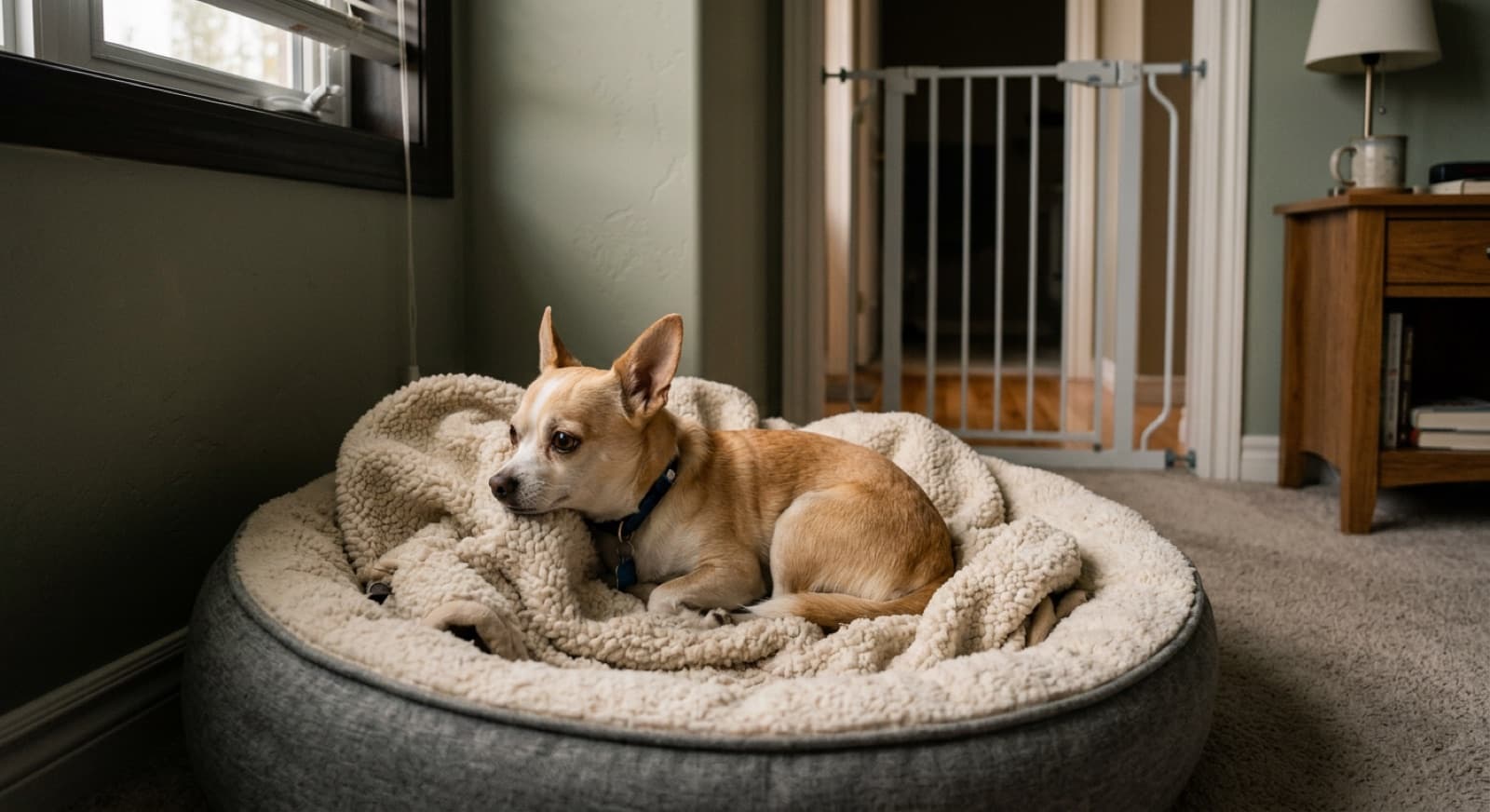
The honest version
Rescue Chihuahuas in Calgary are often surrender dogs from senior owners, hoarding cases, or transport intakes from rural Alberta. The dog you meet on day one is rarely the dog you will have on day 90. The 3-3-3 rule holds. 3 days to decompress, 3 weeks for real personality to emerge, 3 months to feel fully bonded. Two things make Chihuahuas different from larger rescues: they are fragile (a wrong grip or a couch jump can break a leg) and they are slow to trust. Many regret in the Calgary Chihuahua rescue network comes from owners who expected a lap dog on day one and read trembling shutdown as “the wrong dog.” This is the playbook for not doing that.
The 3-3-3 Rule for Chihuahuas
The standard 3-3-3 framework applies, with a few toy-breed adjustments. Chihuahuas bond hard once they bond, but they bond on their own timeline. Many look terrified for the first week and crash into your lap in week three. That is normal, not a setback.
3 Days: Decompression
Overwhelmed, scared, often trembling. May hide under furniture, refuse food, sleep most of the day, or freeze when approached. Some Chihuahuas growl or snap if handled too soon. All of this is normal. Your job is to be predictable, quiet, warm, and non-demanding. No handling beyond gentle carrying for potty trips.
3 Weeks: Settling and personality emerges
Routines feel familiar. The dog you actually adopted starts showing up. Could be a confident lap dog. Could be a velcro shadow who follows one chosen person room to room. Could be a tiny boundary-tester who alert-barks at every doorbell. Could still be snappy when picked up wrong. Whatever shows up in weeks 2 to 4 is closer to baseline than what you saw on day one.
3 Months: Fully bonded
Real bond forms. The famous Chihuahua velcro behaviour usually appears by month 2 to 3. Recall starts. Potty training (notoriously slow in this breed) starts to click. Trust is two-way. By month three, most rescue Chihuahuas are at 80% of their long-term personality, and you can begin gentle alert-bark management and bigger-world exposure.
Day One: Setup and First 24 Hours
Set up before the dog arrives. A Chihuahua-proofed home is not the same as a Lab-proofed home. Small gaps, drafty corners, and high jumps all matter more.
Before the dog arrives
- • Pick a quiet warm room. Spare bedroom or laundry room works. Keep it draft-free and away from loud appliances.
- • Place a small soft-sided crate or covered carrier with a fleece blanket inside. Chihuahuas burrow.
- • Add a warm bed away from drafts. A heated pet pad on low is fine for adult Chihuahuas (never for puppies).
- • Confirm the same food the foster fed. Toy-breed kibble or wet food sized for small mouths. Do not switch food in week one.
- • Set water and food bowls at floor level OR a slight elevation if the dog seems reluctant to bend down. Some Chis prefer raised dishes.
- • Buy a fleece sweater in the right size for indoor use. Also a winter coat and booties if it is October to April.
- • Place indoor pee pads in the safe room and near the door to the outside. Outdoor-only potty is rarely realistic in week one.
- • Walk the yard. Check fence gaps under 4 inches. Chihuahuas squeeze through openings no other dog can.
- • Install baby gates at stairs. Falling down stairs is a top Chihuahua injury.
- • Brief everyone in the home: no picking up the dog, no crowding, no visitors for 2 weeks. Kids must let the dog come to them.
- • Stock soft treats (cooked chicken, tiny pieces of cheese, training-sized soft treats) for low-pressure trust building.
First 24 hours
- • Carry the dog inside using bowl-shape support (one hand under the chest, one under the hips). Never by armpits or legs.
- • Place them on a low soft surface in the safe room. Do not set them on the floor from chest height.
- • Show water and food. Leave food down 15 minutes, remove if untouched.
- • Indoor pee pad available. Carry the dog to the pad if they look like they need to go (sniffing, circling).
- • Optional short outdoor potty trip if weather is mild. Carry to and from the yard. Some Chihuahuas refuse to potty outside on day one.
- • Sit nearby quietly. Read, watch TV. Do not make eye contact, do not reach over the head, do not baby-talk.
- • Absolutely no visitors. No kids from the neighbourhood. No social media unboxing.
- • Other pets stay separate behind a closed door. No introductions in week one.
- • If the dog hides, leave them alone. Place treats at the edge of the hiding spot and walk away.
- • Night one: covered crate or carrier in your bedroom is often easier for a Chihuahua than a safe room. Many sleep better near a human.
The Fragile-Handling Protocol
A 4-pound dog is not a small Lab. It is a different physical reality. Many vet bills in the first year of Chihuahua adoption come from preventable handling injuries. Burn this section into the whole household.
How to pick up a Chihuahua
- • Slide one hand under the chest between the front legs. Slide the other under the hips.
- • Lift both hands together as one unit so the dog is supported like a bowl.
- • Hold close to your body to prevent twisting or kicking free.
- • Never by the armpits. Never by the front legs. Never by the scruff in an adult dog.
- • Never grab a leg, a tail, or the head.
- • When setting the dog down, lower to a low soft surface (couch seat or chair). Not the floor from chest height.
Prevent jump injuries
- • Off the couch is a real fall. A Chihuahua jumping off a standard couch can break a leg or dislocate a shoulder.
- • Block couches and beds when you are not there to lift the dog down. Use a pet ramp or steps if the dog is allowed up.
- • Off the bed is the most common Chihuahua injury. Use steps or a low platform.
- • No leaping off arms or laps. Always lower the dog to a low surface yourself.
Prevent crushing and trampling
- • Look before sitting on a couch with a blanket on it. Chihuahuas burrow under blankets and disappear.
- • Look before lying down on a bed with covers pulled back. Same reason.
- • Watch your feet at all times. A Chihuahua underfoot is a vet trip waiting to happen.
- • Kids must sit on the floor to interact, not stand. Standing kids trip and fall onto small dogs.
- • Large dogs in the home stay separated through a baby gate during decompression. A friendly paw from a Lab can fracture a Chihuahua rib.
Week One: Routine and Bonding Only
No training, no daycare, no off-leash, no introductions to anyone outside your household. Week one is one job: build a predictable rhythm and let the dog feel safe.
Daily rhythm to copy
- • Same wake time every day. Same potty routine (indoor pad and a short outdoor trip if the dog will go).
- • Sweater on indoors if your home is below 21C. Outdoor coat plus booties if you go outside.
- • 2 to 3 short outdoor trips (5 to 10 minutes each) on a harness, never a collar. Chihuahua trachea is fragile.
- • Indoor pee pad available at all times. Most Chihuahuas use both indoor and outdoor through month one.
- • 3 short low-pressure interaction sessions (3 to 5 minutes each): sit on the floor with treats, let the dog approach, soft pets only if they invite it.
- • Lots of rest. Rescue Chihuahuas need 16 to 18 hours of sleep in week one. Resist the urge to interact more.
- • Same evening wind-down. Lights low, calm energy in the home, predictable bedtime.
Week-one mistakes that cause month-two problems
- • Throwing a “welcome home” gathering. One new visitor in week one can trigger lifelong fear reactivity.
- • Letting kids pick up the dog, hug, follow into the safe room, or chase. Kids on the floor only, dog approaches first.
- • Forcing handling: nail trims, baths, brushing, sweater changes. Save all of it for week 3+.
- • Picking the dog up by the armpits or one-handed. Every lift is bowl-shape, two hands, supported.
- • Allowing couch or bed jumps. Block access or lift the dog down yourself.
- • Introducing the big dog in the home too soon. Wait at least 5 to 7 days, then parallel-walk on neutral ground.
- • Leaving the dog alone for 6+ hours on day one. Build alone-time gradually starting at 15 to 30 minutes.
- • Taking the dog to a pet store or dog park. Both are sensory overload during decompression.
- • Switching food. Stick with what the foster fed for at least 2 weeks, then transition over 7 to 10 days.
Weeks 2 and 3: The Real Dog Shows Up
This is the chapter most adopters are not warned about. Week one was the muted, terrified version. Weeks 2 and 3, the actual personality starts to emerge as the dog feels safe enough to behave normally. The surprises in this window are not regression. They are honesty.
Trembling continues or appears
Some Chihuahuas tremble visibly for weeks. Causes overlap: cold, mild anxiety, excitement, hunger, or just baseline (some Chis are lifelong tremblers). A warm sweater and a calm home address most of it. Persistent shaking despite warmth and quiet is anxiety worth working on.
Snappy when handled
Many rescue Chihuahuas snap or growl when picked up, especially picked up wrong. This is fear, not aggression. The fix is bowl-shape lifting, slow predictable approach, and short positive handling sessions starting in week 3. Force-free trainer if it does not improve.
Velcro to one person
Chihuahuas often pick one person and shadow them. The chosen person can do anything; everyone else gets cautious side-eye. This usually evens out over months 2 and 3 if the whole household uses the same gentle protocols. Sometimes it does not, and that is just the breed.
Alert barking starts
Doorbells, knocks, the mail carrier, squirrels, anything visible from a window. Chihuahuas are vocal alarm dogs and most will alert-bark. Manage with window film or moving the dog away from windows during peak alert hours. Training to quiet on cue starts in month 2, not week 1.
First gentle training
Short sessions (2 to 3 minutes), tiny soft treats, force-free. Name response, hand target, sit. Build the marker word (“yes”). No leash corrections, no e-collars. Chihuahuas shut down or escalate under harsh handling faster than almost any breed.
Months 2 and 3: Bond Solidifies
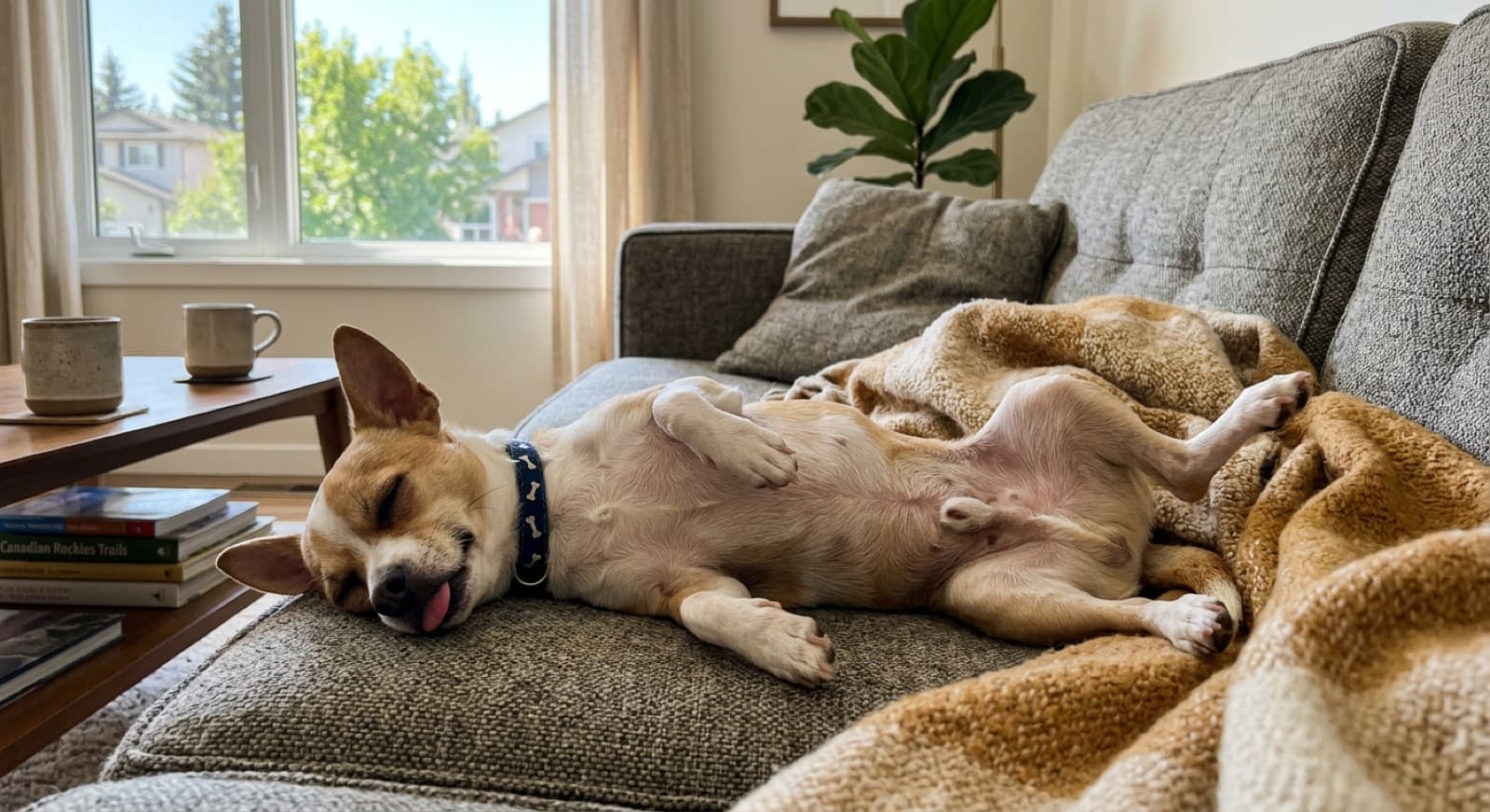
By week 5 to 6, your Chihuahua recognises you as theirs. By month 3, the velcro bond is real. This is when you can layer in real training and bigger-world exposure at a Chihuahua pace.
What to add by month
- • Month 2: Toy-breed-friendly group class (force-free only). Short recall games indoors. Slow handling work: paw touches, ear checks, mouth peeks with treat rewards.
- • Month 2: First short alone-time stretches built up to 3 to 4 hours. Frozen lick mats and small chew toys, never anything that could become a choking hazard.
- • Month 2 to 3: First grooming visit if needed (nails, occasional bath). Pick a fear-free Calgary groomer experienced with toy breeds and book a 15-minute meet-and-greet first.
- • Month 3: Quiet-cue training for alert barking. Window management plus a reward-based interrupt.
- • Month 3: First outdoor potty fully reliable for most Chihuahuas. Many keep an indoor pee pad option through winter for life.
- • Month 3: First real vet visit beyond the rescue check-up. Establish a fear-free clinic and discuss dental care (toy-breed dental issues are common) and luxating patella screening.
Trauma Signs to Watch For
Most rescue Chihuahuas show some of these in the first weeks. They usually resolve with patience. A few are flags worth calling the rescue or a fear-free vet about.
Common and usually resolve in 2 to 8 weeks
- • Trembling in cold or unfamiliar settings (often resolves with a sweater and time)
- • Tucked tail held constantly
- • Hiding under furniture for hours
- • Refusing food the first 24 hours (toy-breed window is shorter than for big dogs)
- • Flattened ears around new people
- • Freezing or going stiff when picked up
- • Snapping or growling when handled wrong
- • Choosing one safe spot and refusing to leave it
Call the rescue or a fear-free vet same day
- • No food OR water for more than 24 to 36 hours (hypoglycemia risk in toy breeds)
- • Weakness, stumbling, glassy eyes, or collapse (possible hypoglycemia, vet emergency)
- • Persistent trembling for hours in a warm environment with no other cause
- • Fearful aggression you cannot safely manage (lunging, snapping at the household repeatedly)
- • Severe shutdown past day 5 (no movement, no eye contact, will not leave the safe spot for water)
- • Bloody diarrhea, persistent vomiting, or uncontrolled shaking
- • Coughing, sneezing, or eye and nose discharge (kennel cough or upper respiratory infection)
- • Any fall injury: limping, holding a leg up, yelping when touched
Calgary rescues like BARCS, AARCS, Pawsitive Match, and Furball Force expect post-adoption support calls. Use them. Many are foster-based, which means the foster knows your dog better than anyone and is the first call for behaviour questions.
The Honest Reality of Rescue Chihuahuas in Calgary
Calgary rescue Chihuahuas come from a few common backgrounds. Knowing the patterns helps you read foster notes and ask the right questions.
Senior owner surrenders
Often well-socialized adult Chihuahuas, fully house-trained, used to a calm home. The grief of losing their person can show as appetite loss and depression for the first 2 to 3 weeks. These dogs usually settle beautifully but need extra patience in week one.
Hoarding case intakes
Calgary rescues regularly take Chihuahuas from hoarding situations in Alberta and BC. These dogs often arrive undersocialized, fearful of human handling, with weak house training and possible health issues. Foster homes do the heavy lifting; expect the full 3-3-3 timeline to stretch to 6 months.
Backyard-breeder Chihuahuas
Younger Chihuahuas from undersocialized litters may have weak bite inhibition, leash-walking fear, and longer settling. Dental issues and luxating patellas are more common from poor breeding. Not a worse choice, just a longer commitment with closer vet follow-up.
Transport dogs
Some Calgary rescues transport Chihuahuas from rural Alberta or California hoarding cases. These dogs often arrive after long transport stress and weeks in foster. The foster preview matters even more for transport dogs because behaviour in transit ≠ behaviour in a home.
Foster Network vs Direct Shelter
Most Calgary Chihuahuas come through foster-based rescues (AARCS, BARCS, Pawsitive Match, Furball Force). Calgary Humane Society is direct-shelter. The difference matters in week one.
Foster-based (BARCS, AARCS, Pawsitive Match, Furball Force)
- • Weeks of in-home behavioural notes
- • Documented kid, cat, and dog tolerance
- • House-training and pee-pad status known
- • Handling and pickup tolerance noted
- • Foster available for post-adoption questions
- • Higher fee ($400 to $650) reflects this work
Direct shelter (Calgary Humane Society)
- • Kennel behaviour ≠ home behaviour
- • Less behavioural history
- • Faster intake-to-adoption timeline
- • Lower fee ($200 to $400)
- • Strong medical screening
- • Watch closely in weeks 2 to 3 for personality surprises
Calgary Climate Notes
Winter (-10C to -30C)
Chihuahuas are the most cold-intolerant breed at Calgary latitudes. A fleece or wool sweater indoors during winter is normal, not coddling. Outdoors above 0C, a thin coat is fine. Between 0C and -10C, a winter coat and short trips only. Below -10C, booties and a coat for 3 to 5 minute potty trips only. Below -20C, use the indoor pee pad and skip outdoor potty entirely. A shivering Chihuahua outside in Calgary winter is in real danger within minutes.
Indoor warmth year-round
Even in summer, Calgary homes with strong air conditioning can leave a Chihuahua cold. A light cotton sweater indoors is fine. Beds in warm sun spots, away from AC vents. Most Chihuahuas burrow under blankets even in July.
Summer (22C to 30C)
Heat is rarely an issue for Chihuahuas the way it is for bully breeds. The bigger summer risks are hot pavement on small paws and getting stepped on at busy outdoor patios. Test pavement with the back of your hand. Keep walks short and shaded midday. Carry water. Many Chihuahuas prefer being carried in a sling for parts of summer walks.
Shoulder seasons (October, April, May)
Easiest months for Calgary Chihuahua walks. A light sweater plus a thin coat handles most conditions. Use these months to build outdoor potty habits before deep winter forces a return to indoor pee pads.
Ready to start the search?
Live Chihuahua listings from 15+ Calgary rescues, refreshed regularly. Foster reports usually include kid history, cat history, handling tolerance, and house-training status.
See Available Chihuahuas →Frequently Asked Questions
Does the 3-3-3 rule apply to rescue Chihuahuas?
Yes. 3 days to decompress, 3 weeks for personality to emerge, 3 months to feel fully bonded. Many rescue Chihuahuas spend the first 3 days hiding, trembling, or refusing food. The famous velcro bond usually does not show up until week 3 or later. Plan for the long arc.
How do I pick up a Chihuahua safely?
Bowl-shape support. One hand under the chest, one under the hips, lift as a unit. Never by the armpits or legs. Carry close to your body. Set down on a low soft surface, not the floor from chest height. At 3 to 6 pounds, a wrong grip can fracture a leg or dislocate a shoulder.
My new Chihuahua is trembling. What does it mean?
Cold, stress, or both. Try a sweater first. If shaking continues 30 minutes later in a warm sweater, treat it as stress and dial back stimulation. Sudden trembling with weakness or stumbling can be hypoglycemia and is a vet emergency.
What should I do on day one?
Minimal stimulation. Quiet warm room with a covered bed, sweater, water, and the same food the foster fed. Carry the dog inside using bowl-shape support. No visitors. No kids crowding. No other pets in the room. Indoor pee pad. Sit nearby quietly and let the dog approach.
When should I start training?
Not in week one. Week one is bonding only. Around week 3 start short 2 to 3 minute sessions on name and hand target with soft treats. Recall and potty training scale up across month 2 and 3. Force-free only. Chihuahuas shut down under harsh handling.
My new Chihuahua is not eating. Is this normal?
First 24 hours: common. Toy breeds are at hypoglycemia risk past that. Offer the same food the foster fed, slightly warmed, in a quiet spot. If refusing past 24 hours, offer plain boiled chicken. Past 36 to 48 hours of no food, or any weakness or stumbling, vet call same day.
When can I introduce my Chihuahua to my big dog?
Not in week one. Separate behind a baby gate for 5 to 7 days. Around day 7 to 10, parallel walks on neutral ground. Indoor introductions later with the big dog leashed and calm. A wrong first meeting can injure your Chihuahua and create lifelong fear.
How do Chihuahuas handle Calgary winters?
Cold-intolerant year-round. Sweater indoors during winter. Outdoor coat plus booties below -10C for short trips. Below -20C, use indoor pee pads and skip outside. A shivering Chihuahua in Calgary winter is in real distress within minutes.
More Chihuahua guides
Chihuahua Adoption Calgary →
Where to find a rescue Chihuahua in Calgary, real costs, foster network, and what to expect from each rescue.
Is a Chihuahua Right for You? →
Honest self-assessment for prospective Chihuahua owners in Calgary.
Chihuahua Behaviour & Temperament →
Honest look at Chihuahua temperament, velcro bonding, alert barking, and the sensitive personality profile.
Chihuahua Separation Anxiety →
Toy-breed separation anxiety patterns, alone-time conditioning, and when to call a behaviourist.
Chihuahua Biting & Aggression →
Why Chihuahuas snap, how to read fear vs aggression, and the force-free protocol that actually works.
Chihuahua Health Issues Calgary →
Dental disease, luxating patella, hypoglycemia, and the breed-specific health profile every adopter should know.
Chihuahua Potty Training Calgary →
Why Chihuahuas are slow to potty train, indoor pee pad plus outdoor protocols, and Calgary winter realities.
Senior Chihuahua Adoption →
The case for adopting an older Chihuahua, what to expect, and the easiest decompression timelines.
Buy or Adopt a Chihuahua? →
Comparison of rescue, foster, and breeder paths for prospective Chihuahua owners in Calgary.
Chihuahua Winter Survival →
Calgary winter playbook for tiny dogs: sweaters, coats, booties, indoor pee pads, and the cold-cap rules.
New dog? Start with these care guides
Everything a new adopter needs to set up a safe, happy home.