The short answer
An Australian Shepherd needs a couple of hours of real daily exercise, but physical activity alone will not settle one. This is a high-drive working breed, and its busy brain needs genuine mental stimulation (training, scent work, puzzles, a job) every day, mental work that tires an Aussie far more efficiently than distance. Channel the herding instinct into legitimate outlets rather than letting it fixate on kids, bikes, or other pets. Under-stimulation is the number one reason Aussies turn destructive, anxious, and nippy, and the classic reason they end up surrendered. Meet the body and the brain and you have one of the most rewarding dogs there is. Toronto's parks and dog-sport scene make it very doable, and indoor enrichment covers the winter.
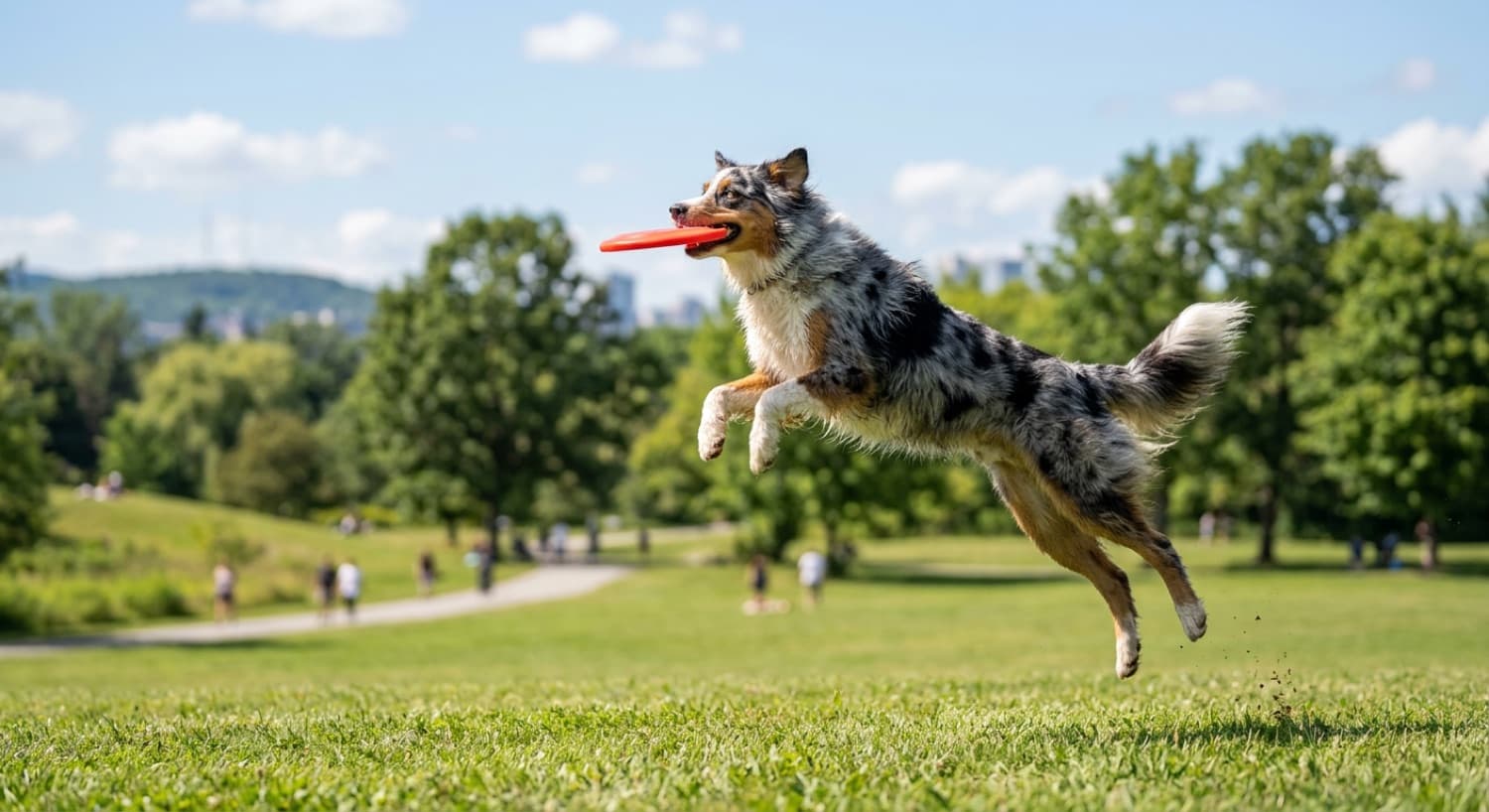
Physical exercise: how much is enough?
Plan for a couple of hours of real activity a day for an adult Australian Shepherd: running, fetch, hiking, off-leash running in a secure area, and swimming. This is a genuine athlete bred to work sheep across open ground all day, with the stamina to match. A leisurely walk around the block does not touch it.
You cannot simply run an Aussie into calm. A dog you only exercise physically gets fitter and fitter and needs more and more, while its brain stays unworked and restless. The classic mistake is hours of repetitive ball-chasing, which can actually build an over-aroused, obsessive dog rather than a settled one. Physical exercise is essential, but it is the floor, not the whole house. Pair it with the mental work below, and mix in varied activity (trails, swimming, sniffy exploring) rather than only high-intensity fetch. The Canadian Kennel Club Australian Shepherd breed profile describes a high-energy, highly trainable herding breed, which is exactly why the mental side matters as much as the distance.
Mental stimulation: the real secret
Australian Shepherds were bred to think and make decisions while working livestock, so they carry a busy, work-oriented brain. An Aussie without a job will invent one, and the jobs they invent (herding the kids, patrolling, dismantling the house, barking, restless pacing) are exactly what gets them surrendered. Mental work is core daily care, not an extra.
The good news: mental work tires an Aussie far more efficiently than distance. Fifteen minutes of training or a challenging puzzle can settle a dog that an hour of fetch only revved up. Build a daily enrichment habit:
- Training and trick sessions. Aussies love to learn and can master an enormous number of cues and tricks. Short, frequent sessions are ideal, and force-free methods suit this sensitive, clever breed best.
- Puzzle feeders and snuffle mats instead of a plain bowl, so meals become a brain game.
- Scent-work and “find it” games that engage the nose and mind, brilliant for cold or icy Toronto days indoors.
- Shaping games where the dog works out what earns a reward, plus named-object or tidy-up tasks that give a real job.
Rotate activities to keep them novel. The goal is to give that working brain legitimate daily work, which is what turns a potentially frantic Australian Shepherd into a fulfilled, settled one. If you are still settling a newly adopted dog into your home, our first-week rescue dog guide covers the decompression period before you ramp up training.
Channelling the herding drive
The herding drive is hardwired, not misbehaviour, and it shows up as fixating on and chasing movement, sometimes with heel-nipping or circling. Left unmanaged it can latch onto kids, bikes, joggers, cars, or other pets. The answer is to channel it, not fight it.
Give the drive a legitimate outlet (fetch with rules, flyball, treibball, disc, or real herding lessons where available), teach a rock-solid recall and a reliable “leave it,” and manage the environment so the dog never rehearses chasing traffic or nipping people. Reward-based, force-free training works best; this is a sensitive breed that shuts down under harsh corrections. When the instinct fires, calmly redirect to a toy or a task. Done well, the herding brain becomes the Aussie's single greatest asset, the thing that makes the breed so trainable and so good at sports, rather than a liability.
Dog sports and Toronto outlets
Dog sports are almost tailor-made for the breed, and Australian Shepherds excel at nearly all of them. Agility is a classic fit and Aussies are stars of it. Flyball, disc (frisbee), herding, treibball, obedience and rally, and scent work all deliver the mix of physical and mental work an Aussie craves, and the Greater Toronto Area has an active dog-sport community, so you can find a Toronto-area agility or dog-sports club and classes to try. You do not need to compete; even training for a sport at home or in a class gives your dog a job and deepens your bond. The Canadian Kennel Club lists sanctioned events and clubs across Ontario if you want to explore what is on offer.
For everyday exercise, Toronto is well served. See our High Park off-leash guide, Cherry Beach off-leash guide, and Sunnybrook Park off-leash guide, or the full off-leash parks guide for the complete list. Many Aussies love a summer swim off the Cherry Beach shoreline. Toronto's climate shapes the plan: humid July and August afternoons are too hot for hard midday exercise, so run early or late, and the long, cold, icy stretch from November to March cuts daylight and outdoor footing short. That is exactly when indoor mental work, training, puzzles, scent games, and trick sessions carry the load.
Building an off switch and impulse control
Just as important as exercising an Aussie is teaching it to switch off, rest, and hold impulse control. A high-drive dog that never learns to settle can tip into restless, obsessive patterns if every interaction is high-arousal. A dog that can switch on for work and off for calm is a balanced, happy Australian Shepherd.
Actively reward settling on a mat or bed, build up the duration of calm, and end play and training with a deliberate wind-down rather than stopping at peak excitement. Offer calm enrichment like a stuffed food toy to work on quietly. Pair this with impulse-control games (a solid wait, a reliable recall, and a leave-it cue) so the dog can hold itself back when a squirrel, a jogger, or a cyclist flashes past. And resist the urge to make every day a relentless adrenaline session, which can wind a sensitive Aussie up rather than tire it. The combination of a real daily job and genuine downtime is the formula that lets this brilliant breed thrive. If you are weighing whether a high-drive Aussie fits a smaller home, our apartment dog guide is an honest gut-check, and our winter dog care guide covers keeping an active dog going through the cold months.
Ready for an Australian Shepherd?
If you can commit to the body-and-brain workout this breed needs, few dogs give back more. Browse adoptable Australian Shepherds and Aussie mixes from Toronto rescues, and ask about each dog's energy level. Refreshed regularly.
See Available Australian Shepherds →Frequently Asked Questions
How much exercise does an Australian Shepherd need?
A lot, and more than most people expect. Plan for a couple of hours of activity a day for an adult Aussie, and understand that this has to be real aerobic exercise (running, fetch, hiking, off-leash running in a secure area, swimming), not just a leisurely walk around the block. But here is the part people miss: physical exercise alone is only half the job. An Australian Shepherd you only run into the ground gets fitter and needs even more, while its busy working brain stays under-worked and frustrated. The real answer is substantial daily physical exercise combined with genuine mental work (training, scent work, puzzles, a job). Meet both and you have a calm, brilliant companion. Meet only the physical side and you often get a fit, restless, destructive dog. Plan the time before you adopt, not after.
Can you tire out an Aussie with walks alone?
No, and this is the single most important thing to understand about the breed. You cannot out-walk an Australian Shepherd. A neighbourhood stroll barely registers for a dog bred to work sheep across open ground all day, and even long daily runs, on their own, tend to build a fitter dog that needs more rather than a settled one. The mental side matters as much as the physical. Fifteen minutes of training or a challenging puzzle can settle an Aussie that an hour of fetch only revved up. So walks are part of the plan, but they are the floor, not the whole house. Pair real aerobic exercise with daily mental stimulation and a job, and you will finally get the calm, easy dog people picture when they imagine an Aussie at rest.
What mental stimulation do Australian Shepherds need?
Variety and problem-solving, delivered daily. Great options include training and trick sessions (Aussies are whip-smart and love to learn), puzzle feeders and snuffle mats instead of a plain bowl, scent work and find-it games that engage the nose and brain, shaping games where the dog works out what earns a reward, and structured tasks that give the dog a genuine job. Rotate the activities so they stay novel, and keep sessions short and frequent rather than one long slog. This is not an optional extra for an Australian Shepherd; it is core daily care, as essential as food and walks. It also becomes your lifeline through a Toronto winter, when short daylight and icy footing cut into outdoor time and indoor enrichment carries the load.
Do Australian Shepherds do okay in a condo or apartment?
They can, but only if you are fully committed to meeting the exercise and enrichment needs outside the home, because the space itself does nothing for this breed. Plenty of Aussies live happily in Toronto condos with dedicated owners who provide real daily off-leash exercise, training, and mental work, and who have taught the dog to settle indoors. What fails an Australian Shepherd is not square footage; it is under-commitment. If you are gone long hours with no plan for the dog's day, no size of home will fix the boredom that follows. If you can commit to the daily body-and-brain workout, an Aussie can absolutely thrive in an apartment. Our apartment dog guide is an honest gut-check on whether the lifestyle fits.
Why is my Aussie destructive or herding the kids?
Almost always because the dog is under-exercised and under-stimulated. A bored Australian Shepherd with no legitimate job will invent one, and the jobs they invent are exactly the behaviours that get them surrendered: chewing and dismantling the house, restless pacing, anxiety, barking, and nipping or circling to herd children, bikes, or other pets. The herding drive is hardwired, not naughtiness, but left with no outlet it latches onto whatever moves. The fix is rarely more discipline; it is more fulfilment. Add real aerobic exercise, daily mental work, and a channel for the herding instinct, and teach a reliable recall and a leave-it cue. Most of these problems shrink or vanish once the dog's body and brain are genuinely tired in the right way.
What dog sports are good for Australian Shepherds?
Almost all of them, and the breed excels at most. Agility is a classic fit and Aussies are stars of the sport. Flyball, disc (frisbee), herding, treibball, obedience and rally, and scent work all give an Australian Shepherd the exact blend of physical and mental work it craves, plus a job it can pour that intensity into. The Greater Toronto Area has an active dog-sport community, so you can find a Toronto-area agility or dog-sports club and classes for most of these. You do not have to compete; even training for a sport at home or in a class gives your dog a purpose and deepens your bond. An Aussie with a sport is very often an Aussie that has found what it was built for.
How do I exercise an Aussie in a Toronto winter?
Lean hard on mental work and shorten but keep up the physical side. From November to March, Toronto gives you short daylight, deep cold, and icy footing, all of which cut into outdoor exercise for an active dog. That is exactly when indoor enrichment has to carry the load: daily training and trick sessions, puzzle feeders, scent and find-it games, and shaping work will tire an Australian Shepherd's brain regardless of the weather. For the physical side, protect the paws from ice and salt, keep outdoor sessions shorter but more frequent on the coldest days, and use secure off-leash time whenever conditions allow. Handled this way, a frozen week never has to become a bored, destructive one. Our winter dog care guide has more on keeping an active dog going through the cold months.
Is an Australian Shepherd the right dog for me?
Be honest with yourself, because this is a breed where matching your real lifestyle matters most. An Aussie is a superb dog for an active person or family who genuinely wants to spend a couple of hours or more a day exercising and training a dog, who enjoys teaching and problem-solving with a clever, sensitive partner, and who ideally has an interest in dog sports, hiking, or an active outdoor life. It is a poor fit for someone wanting a low-maintenance, chilled-out companion, or who is out long hours with no plan for the dog's day. If you want the commitment, few breeds give back more. If you are not sure, a calmer adult Aussie from a rescue, whose energy is a known quantity, is a much safer bet than a puppy.
The full Australian Shepherd cluster
Australian Shepherd Adoption in Toronto
Where to adopt, real costs vs breeders, the herding reality, and what to know before you apply.
Australian Shepherd Health Issues
Breed-specific conditions, the MDR1 gene, vet costs, and insurance considerations for Toronto owners.
Adoptable Australian Shepherds in Toronto
All currently available Aussies and Aussie mixes. Updates regularly.
Toronto Off-Leash Parks
The best places to run a high-energy dog across the city.
New dog? Start with these care guides
Everything a new adopter needs to set up a safe, happy home.