Showing 31 cats

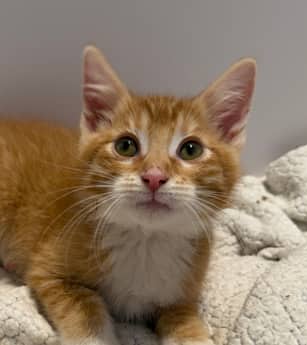

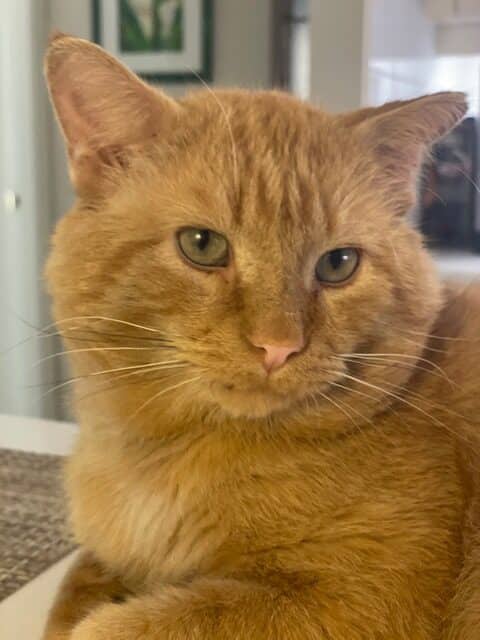
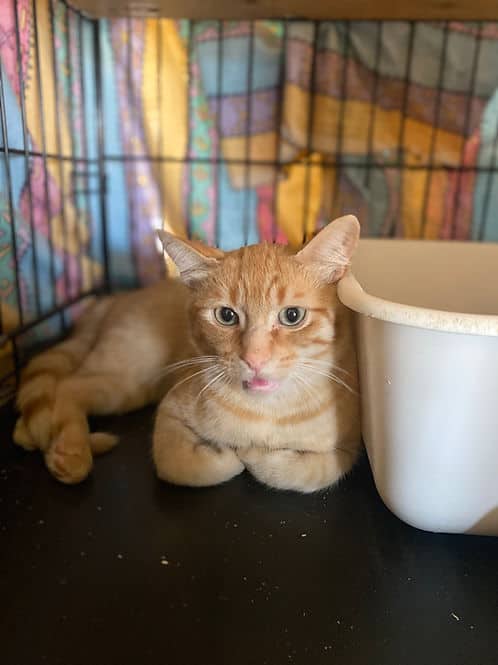
Get notified when an Orange is listed
We will email you the moment an Orange becomes available in Calgary, from a rescue or an owner rehoming.
About Orange Cats in Calgary
Orange cats, also called ginger or marmalade, run the opposite way to torties and calicos. Roughly four in five are male. The reason is the same X-linked colour gene: a male cat needs only one copy of the orange gene to be orange, while a female needs two, so orange lands far more often on males.
Every orange cat is genetically a tabby. The gene that produces orange cannot also produce a solid coat, so even an orange cat that looks plain will show faint striping, spotting, or a ringed tail in the right light. If a Calgary rescue lists a cat as an orange tabby and another as simply orange, they are describing the same underlying animal with different amounts of contrast.
The internet insists orange cats share one brain cell. Like tortitude, that is affectionate folklore rather than science, though the stereotype of the friendly, food-obsessed, slightly undignified orange boy is repeated often enough that it clearly resonates with owners. Orange cats appear steadily in Calgary rescues at standard domestic shorthair fees.
Orange Adoption FAQ
How many Oranges are available for adoption in Calgary?
As of September 2026, 31 Oranges are available for adoption in Calgary across 8 rescues on LocalPetFinder. Listings update regularly as cats are adopted and new ones arrive — browse the current Oranges above and apply directly through the rescue.
Why are most orange cats male?
The gene for orange fur sits on the X chromosome. A male cat has one X, so a single copy of the orange gene makes him orange. A female has two X chromosomes and needs the orange gene on both to be fully orange, which is statistically less likely. The result is roughly an 80 to 20 split in favour of males, the mirror image of the near-total female bias in tortoiseshells and calicos.
Are all orange cats tabbies?
Genetically, yes. The orange colour gene cannot produce a solid unpatterned coat, so every orange cat carries some tabby marking even when it is subtle. Look for faint stripes on the legs, a ringed tail, or the M-shaped marking on the forehead. Rescues use orange and orange tabby more or less interchangeably as a result.
Do orange cats have a distinct personality?
There is no reliable evidence that coat colour drives temperament, so the friendly-goofball reputation is folklore. That said, it is a remarkably persistent stereotype and many owners of ginger cats endorse it enthusiastically. The sensible approach is to ask the foster how the specific cat behaves rather than relying on the colour.
Are orange cats common in Calgary rescues?
Reasonably common, though less so than tabbies overall or black cats. They turn up across MEOW Foundation, AARCS, Calgary Humane Society, and the foster-based rescues throughout the year, and because the colour is popular they tend to be adopted faster than black or grey cats of the same age.
How much does it cost to adopt an Orange in Calgary?
Adopting an Orange in Calgary typically costs $100 to $300, and kittens usually carry a premium at $200 to $400. The exact fee varies by rescue, and older cats are often reduced. That fee is not a purchase price. It covers work already done on the cat: spay or neuter, vaccinations, deworming, microchip, and a basic vet workup, which would cost several hundred dollars more if you arranged it yourself after buying. Colour is not a breed, so there is no breeder route to this coat specifically, and the fee reflects the cat's age and the veterinary work already done rather than its markings. Ask the rescue what is included before you apply, since a few include extras like a starter bag of food or a first-month insurance trial.
Are these Orange cats for sale in Calgary?
Not for sale, for adoption, which is usually the better deal. Every Orange here comes from a Calgary rescue or shelter, not a breeder, pet store, or classified seller. Adoption fees are typically $150 to $500 and already include vaccinations, deworming, microchip and spay or neuter when age-appropriate, versus roughly $1,000 to $3,000 or more to buy an Orange from a breeder. If you searched "orange for sale calgary" or "orange kittens for sale," adopting gets you a healthy, vetted cat for a fraction of the price.
Where can I buy an Orange in Calgary, and should I?
You can buy from a registered breeder, but it is worth weighing against adoption first. A reputable Orange breeder typically charges $1,000 to $3,000 or more and often has a waitlist, while a rescue Orange costs $150 to $500 fully vetted and may be available now. Be cautious of cheap orange-for-sale ads on classified sites and marketplaces, which are frequently backyard breeders or kitten-mill resellers with unvetted, sometimes sick animals and no health guarantee. If you do buy, insist on seeing where the kittens were raised and getting vet records. For most families in Calgary, adopting a rescue Orange is cheaper, faster, and gives an cat in need a home.
Are there free Orange cats in Calgary, or oranges under $500?
Adoption is the closest honest answer, and it is not free. A rescue Orange in Calgary typically costs $150 to $500. What the fee buys is work already done, the vaccinations, deworming, microchip and spay or neuter, which would cost more than the fee itself if you arranged it yourself, and it is still far below breeder prices. Be wary of genuinely free orange listings. An animal advertised free to a good home has usually not been vetted, and free rehoming ads are the route flippers and unregistered breeders use to move animals with no health guarantee and no recourse. Paying a rescue fee buys you a cat someone has already examined, treated, and been honest with you about.
Are there Orange kittens in Calgary, or only adults?
Both, but adults far outnumber kittens, and it is worth knowing that before you start looking. Most Oranges arriving in Calgary rescue are adolescents and adults, because that is the age at which first homes tend to give up. Kittens do come through, usually as accidental litters or with a surrendered mother, and they are typically spoken for quickly. Setting an alert beats refreshing the page. It is also worth asking whether you actually want one: an adult arrives with a temperament a foster has already observed and described, where an Orange kitten is a prediction, and for this breed in particular knowing what you are getting is the more useful thing.
Where can I find an Orange near me in Calgary?
Start with the listings on this page, which pull from Calgary rescues and shelters and are refreshed regularly, so what you see is what is genuinely available rather than a stale directory. If nothing suits today, that is normal for this breed: rescue intake is intermittent rather than steady, and a breed with none listed this week often has several next month. Setting an alert beats checking back, and it is worth widening to nearby towns, since most rescues serving Calgary will adopt out across a reasonable driving distance rather than only inside one municipality.
Free tools for Orange owners
Browse More Cat Breeds
Looking beyond Calgary?
Alberta rescues transport between cities and several operate province-wide, so it is worth checking Oranges elsewhere in the province before you give up on a match in Calgary.