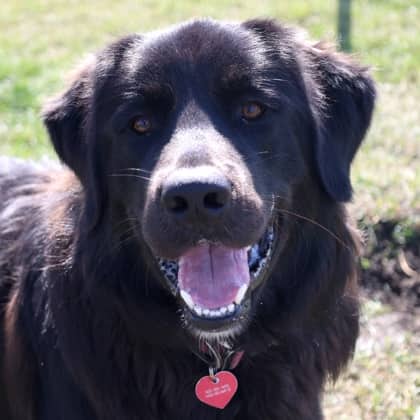
Get notified when a Great Pyrenees is listed
We will email you the moment a Great Pyrenees becomes available in Calgary, from a rescue or an owner rehoming.
About Great Pyreneess in Calgary
Great Pyrenees (Pyrenean Mountain Dogs) are a French livestock guardian breed (LGD) developed in the Pyrenees mountains between France and Spain to guard sheep and goats from wolves and bears. AKC-recognised in 1933. Adults weigh 85 to 120 lbs (females) and 100 to 160 lbs (males), and stand 25 to 32 inches at the shoulder. Lifespan is 10 to 12 years. The signature thick weatherproof double coat is solid white or white with badger markings.
The Great Pyrenees is consistently described as gentle, calm, patient, loyal, INDEPENDENT, and nocturnal. They are NOT a typical companion breed — they are a working livestock guardian breed first, family dog second. Their job for centuries was to make autonomous decisions about predator threat without human input. This shapes everything: they think for themselves, they bark at night (their working role), they roam without recall, and they have moderate energy with occasional bursts. They do best on acreage with livestock or larger properties. Apartment and urban Calgary households are rarely a good fit.
Calgary Great Pyrenees rescue intake happens regularly. Alberta's livestock-and-acreage agricultural community produces Great Pyrenees surrenders when puppies grow into 100+ lb adults that owners didn't anticipate. Calgary Humane Society, AARCS, BARCS, Pawsitive Match, ARF Alberta, Cochrane Humane, Heaven Can Wait take in Pyrenees; Great Pyrenees Club of Alberta and national breed-rescue networks place dogs. Common surrender pattern: 1 to 4 year young adults whose owners hit the bark-at-night wall, escape/roaming wall, size-reality wall, or shedding workload. Calgary rescue adoption fees commonly run $405 to $650 for an adult dog; breeder pricing runs $1,500 to $3,500 with 6 to 18 month waitlists.
A practical note on Calgary fit: the breed handles Calgary winter perfectly — the dense double coat was bred for Pyrenees mountain winters. Summer above 22°C requires AC and midday shade. The breed sheds heavily year-round with twice-yearly coat blow. Calgary off-leash recall is unreliable due to roaming instinct + independent thinking. Nighttime barking is documented breed temperament, not a training issue — urban neighbours suffer. The Pyrenees is a documented Alberta acreage breed. Listings update regularly.
Looking at all large dogs in Calgary?
Browse every available large dog from 15+ Calgary rescues in one place. Listings refresh regularly.
Browse all Calgary large dogs →Great Pyrenees adoption & care guides
Great Pyrenees Adoption Calgary
Adopt a Great Pyrenees in Calgary. Rescues, $500 to $900 vs $1,500 to $3,500 breeder, nighttime barking truth, acreage fit, secure fencing.
Breed CareGreat Pyrenees as Livestock Guardian: Calgary Guide
The Great Pyrenees is a livestock guardian breed. Night barking, roaming, and independent thinking are the job, not the problem. Calgary acreage fit guide.
Great Pyrenees Adoption FAQ
Tap a question to expand
How many Great Pyrenees are available for adoption in Calgary?▼
Where can I adopt a Great Pyrenees in Calgary?▼
How much does a Great Pyrenees cost to adopt in Calgary?▼
Are Great Pyrenees good for apartments and first-time owners?▼
Do Great Pyrenees bark at night?▼
What are the main Great Pyrenees health concerns?▼
Are these Great Pyrenees for sale in Calgary?▼
Where can I buy a Great Pyrenees in Calgary, and should I?▼
Are there free Great Pyrenees in Calgary, or great pyrenees under $500?▼
Are there Great Pyrenees puppies in Calgary, or only adults?▼
Where can I find a Great Pyrenees near me in Calgary?▼
Need to rehome a Great Pyrenees?
If you can no longer keep your Great Pyrenees, you can list them for free on LocalPetFinder. Your dog stays in your home until you find the right family, you screen who applies, and there is no surrender fee. Not sure yet? Our guide to surrendering a dog in Canada walks through every option first.
List your dog for free →Free tools for Great Pyrenees owners
Need to rehome your Great Pyrenees?
If you are on the other side of this page and need to find your great pyrenees a new home, we have a breed-specific guide: the rescues worth contacting first, realistic timelines, and how to screen adopters. Listing on LocalPetFinder is free.
How to rehome a Great Pyrenees responsibly →Browse More Breeds
Looking beyond Calgary?
Alberta rescues transport between cities and several operate province-wide, so it is worth checking Great Pyrenees elsewhere in the province before you give up on a match in Calgary.