The short answer
Rehome your cat on LocalPetFinder, free
List your cat at no cost. They stay home until the right family is found, you screen adopters through a verified contact form, and you choose who adopts. Reviewed within 24 to 48 hours.
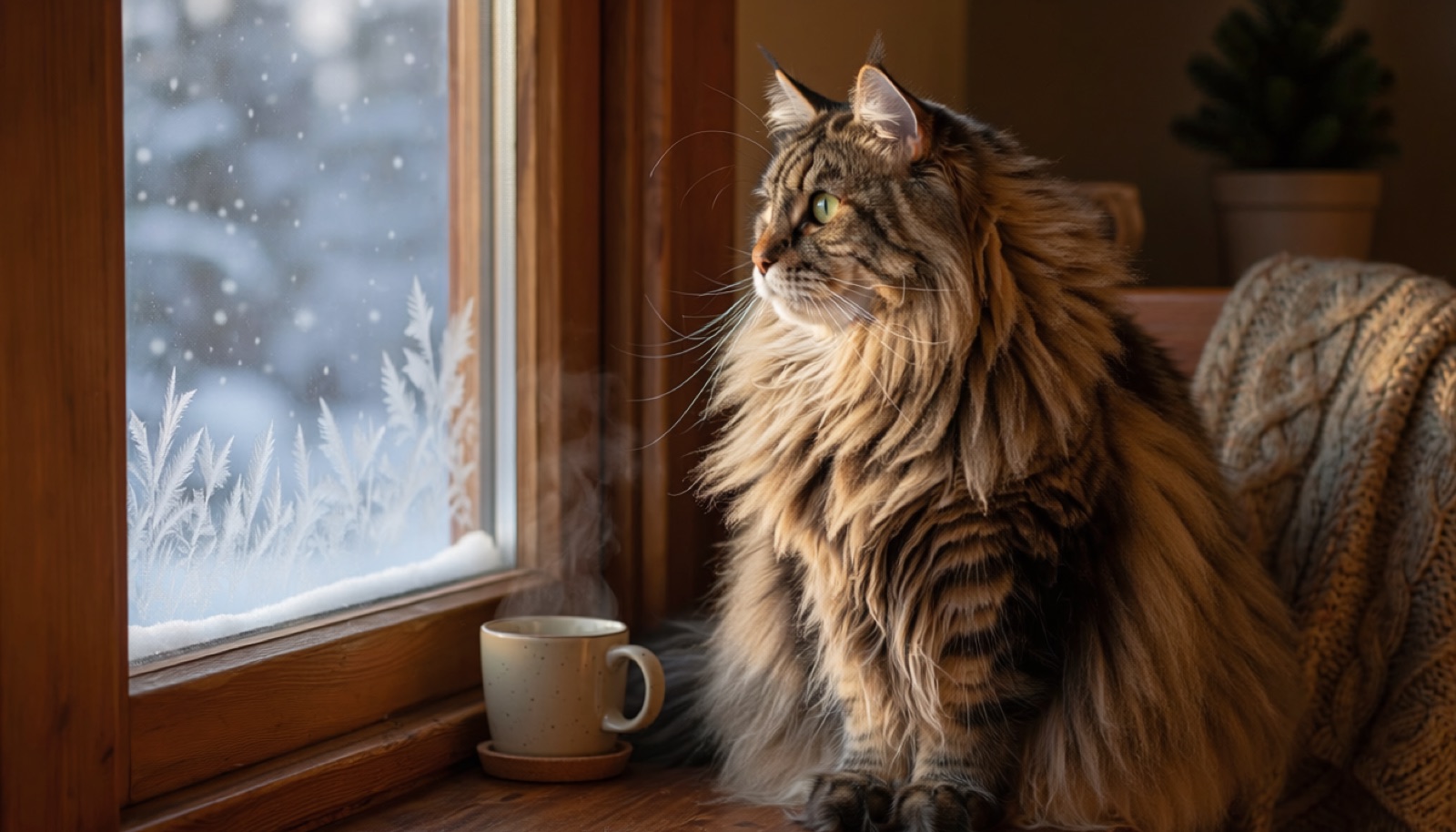
Why Norwegian Forest Cats end up needing a new home
The Cat Fanciers' Association describes an independent, intelligent, adaptable companion that enjoys being part of the family's day, and temperament is almost never the surrender story. The recurring reasons:
- Allergies. The big one. A large cat with a dense double coat moves a lot of allergen through a home, and reactions that were manageable with a short-haired cat often are not with a Wegie. If allergies are forcing your decision, our guide to rehoming because of allergies covers the timeline and what to try first.
- The coat, and especially the spring moult. A Wegie coat is lower-maintenance than a Persian's, but the seasonal coat drop is dramatic, and a household that skips brushing through it ends up with mats, hairballs, and fur on everything.
- Size and cost creep. A big cat eats like one, and everything from dental work to boarding scales with the animal.
- Mismatched expectations. This is a beside-you cat that likes to supervise from a high perch, not a lap ornament. Households that wanted a cuddle toy sometimes read the independence as coldness.
- The ordinary reasons. Moves, an owner's illness, a household change. A calm, adaptable breed inherits its owner's circumstances.
None of this means your cat is a problem. It means a substantial, high-shed breed met a household with less tolerance or health than the coat demands, and a careful rehoming fixes exactly that.
The screening priorities unique to Norwegian Forest Cats
A Wegie listing draws applicants on the majestic photos alone, which is the risk. Three checks matter most.
1. A real grooming plan, described out loud. Ask how the applicant will handle a weekly brushing routine that becomes near-daily during the spring and autumn moults. Previous longhaired-cat experience is worth more than any promise. An applicant who has only admired the photos discovers the coat drop in May and calls you in June.
2. Room for a big, climbing cat. Wegies are tree cats: strong, heavy, and happiest with genuine vertical territory. Ask about sturdy cat trees and shelf access. A home that plans for a dainty cat gets furniture damage and a frustrated animal; a home that plans for a climber gets the breed at its best.
3. Indoor-only, and screen out the flippers. A striking, expensive-looking breed on a free listing is a resale opportunity. Charge a real fee, require a vet reference, and slow the process down. Our Ragdoll guide covers the indoor-only screening conversation in depth, and it applies here nearly word for word.
What you must disclose
Wegie disclosure is a coat conversation and a health file, and neither stops an honest placement.
- The coat, truthfully. The brushing routine, how the cat tolerates it, recurring mat zones, and what the spring moult actually looks like in your house. If the coat got away from you, have a groomer deal with it before listing and say so plainly.
- Heart history. Hypertrophic cardiomyopathy (HCM) is documented in the breed. Share any murmur a vet has mentioned, any screening results, and breeder paperwork. Our Maine Coon guide covers HCM disclosure in depth, and the same hand-over-the-file approach applies to this very Maine-Coon-adjacent breed.
- GSD IV paperwork, if you have it. Glycogen storage disease type IV is a documented inherited condition in Norwegian Forest lines and a DNA test exists, so some cats come with breeder results. You are not expected to explain the genetics: share whatever paperwork exists and let the new home's vet take it from there.
- Joints and weight. A heavy breed carries weight consequences. State the current weight, your vet's target, and any notes about hips or movement.
- Temperament basics. For most Wegies this is a list of quiet virtues: write it in specifics, not adjectives.
Norwegian Forest Cat rescues and where to ask
Here is the honest picture: there is no Norwegian-Forest-specific rescue based in Canada we can currently verify as active and taking owner surrenders. The practical paths are all-breed cat rescues and humane societies in your province, which take Wegies readily because big fluffy cats place fast, and a direct vetted listing with the honest coat write-up described above. Adopters searching for Maine Coons routinely fall for a Norwegian Forest Cat, so the demand pool is bigger than the breed name suggests. If your cat came from a breeder, check your purchase contract first: many reputable Canadian breeders include a take-back clause, and one phone call may solve the whole problem.
Should you charge a rehoming fee?
Charge a real rehoming fee. Norwegian Forest Cats cost serious money from a breeder and look like it, which makes a free or cheap listing a magnet for resellers. A fee of a couple of hundred dollars for a healthy adult is normal in Canada (this is a directional range, not a fixed rule), paired with a vet reference and a meeting at your home or theirs, never a parking lot. If you are rehoming over allergies and the fee feels wrong, donate it to a cat rescue; the screening value stays intact.
How LocalPetFinder rehoming works
- Submit a free listing at /rehome/submit. Photos, age, breed, spay or neuter status, compatibility, an honest behavioural profile, your reason for rehoming, and a fee. The form takes about 5 minutes and your cat never leaves your home.
- We review it for completeness and basic safety, usually within 24 to 48 hours, then it goes live.
- Your Norwegian Forest Cat appears alongside rescue cats on the Norwegian Forest Cat listings and the main adoption pages, marked “Owner Rehoming.” Your email stays private.
- You screen and choose. Vetted adopters reach you through a verified contact form. You decide who to respond to, who to meet, and who gets the cat.
Ready to rehome your Norwegian Forest Cat responsibly?
List your Norwegian Forest Cat on LocalPetFinder for free. Your listing appears next to rescue cats, you control the screening, and we never share your email publicly.
Start Your Free Listing →Anti-scam rules (read every line)
- Never list as “free to good home.” A fair fee is the single best filter against flippers and bad-faith adopters.
- Insist on a meet-and-greet, ideally at the adopter's home. Anyone who refuses a home check is hiding their living situation.
- Be suspicious of anyone offering more than your fee, or pushing for a fast, no-questions handover.
- Get a written agreement and a vet reference, transfer the microchip registration, and prefer e-transfer over cash for a paper trail.