The short answer
Rehome your cat on LocalPetFinder, free
List your cat at no cost. They stay home until the right family is found, you screen adopters through a verified contact form, and you choose who adopts. Reviewed within 24 to 48 hours.
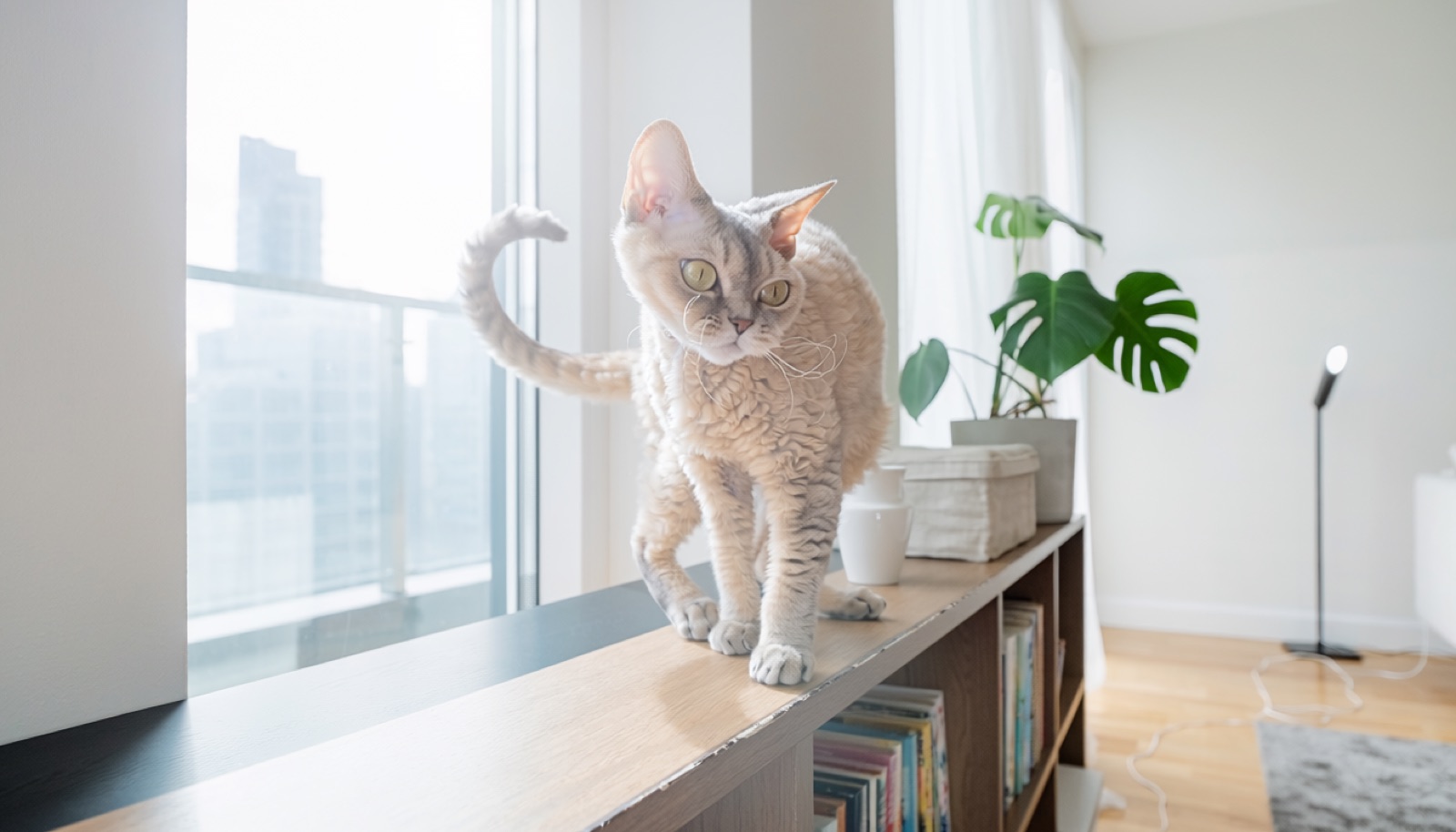
Why Devon Rex end up needing a new home
TICA describes a mischievous, people-oriented cat that wants to be involved in everything its person does, and that sentence is the entire surrender story. The recurring reasons:
- A new baby. The classic one for this breed. A Devon Rex is used to being the baby: on your shoulder while you cook, under the covers at night, supervising every task. When an actual baby absorbs the household, the cat's demands for attention escalate at exactly the moment there is none to spare. If that is your situation, our guide to rehoming after a new baby covers it without judgement.
- The attention mismatch. A household that shifted to long office days discovers that a Devon alone in an empty house is loud, destructive, and miserable. This breed does poorly as a latch-key cat.
- The food obsession. Devons are legendary counter surfers and plate raiders. It is funny for a year and exhausting for ten, and some households simply run out of patience.
- The hypoallergenic myth backfiring. The wavy coat gets marketed as allergy-friendly. No cat is hypoallergenic, the allergen is in skin and saliva rather than fur, and reactions develop anyway.
- The ordinary reasons. Moves, finances, an owner's illness. A small, portable, apartment-suited cat inherits its owner's housing story.
None of this means your cat is a problem. A Devon Rex being demanding, thieving, and omnipresent is a Devon Rex in factory condition, and the right home is one that ordered exactly that.
The screening priorities unique to Devon Rex
Devon applicants split into people who know the breed and people who like the elf face. The first group is your placement.
1. A home with people in it. Ask how many hours the house is empty on a normal day. A Devon needs company: a work-from-home household, a retired couple, a family whose comings and goings overlap, or a confident, playful second pet that genuinely fills the gap. Long-empty houses are how this breed ends up in rehoming twice.
2. Someone who wants the intensity, stated out loud. Put the velcro reality in the listing (shoulder rider, blanket burrower, kitchen supervisor, food thief) and screen for applicants who light up at it. Devon people exist in every province and actively search for the breed; a listing that reads like a warning label to the wrong person reads like a personal ad to the right one.
3. A warmth plan for a thin coat. The Devon's sparse, wavy coat does not do Canadian winter unassisted. Ask where the cat will sleep and whether the home runs warm: heated bed, sunny windows, blankets to burrow in, and strictly indoor living. Our Ragdoll guide covers the indoor-only screening conversation in depth; for a thin-coated, trusting, expensive cat, it is settled before it starts.
What you must disclose
Devon disclosure is personality first, and for this breed the personality is the product.
- The intensity, in detail. The shoulder riding, the shadowing, the vocal commentary, what the cat does when it is ignored, and what a normal evening actually looks like. Specifics find the right home faster than adjectives.
- The food behaviour, honestly. Counter surfing, plate raiding, bin diving, and whatever management works in your house (lidded bins, cleared counters, scheduled meals). The next home should start with your playbook, not discover the talent at their first dinner party.
- Coat and skin notes. The thin coat's warmth needs, any skin sensitivities or greasiness your vet has commented on, and the cat's sunbathing habits, since sparse-coated cats can overdo a sunny window.
- Heart history. Hypertrophic cardiomyopathy (HCM) is documented in the breed, so share any murmur, screening results, breeder paperwork, and the full vet records. Our Maine Coon guide covers HCM disclosure framing in depth; the same hand-over-the-file approach applies here.
- How the cat is with children, dogs, and other cats. Devons are usually social with everyone, which makes this section a selling point. Write what you have actually seen.
Devon Rex rescues and where to ask
Devon Rex owners share a safety net with the hairless-cat world: the Rex breeds are close enough in care needs that Canada's hairless-cat rescue community takes them in. Contact them early, be honest about the situation, and list on LocalPetFinder in parallel rather than waiting on a single door. A verified Canadian option:
Should you charge a rehoming fee?
Charge a real rehoming fee. Devon Rex are expensive from a breeder and unusual-looking enough to draw reseller interest, so a free listing invites the wrong applicants. A fee of a couple of hundred dollars for a healthy adult is normal in Canada (this is a directional range, not a fixed rule), paired with a vet reference and a meeting at your home or theirs, with the cat spayed or neutered before handover. Donate the fee to a cat rescue afterward if you would rather not keep it.
How LocalPetFinder rehoming works
- Submit a free listing at /rehome/submit. Photos, age, breed, spay or neuter status, compatibility, an honest behavioural profile, your reason for rehoming, and a fee. The form takes about 5 minutes and your cat never leaves your home.
- We review it for completeness and basic safety, usually within 24 to 48 hours, then it goes live.
- Your Devon Rex appears alongside rescue cats on the Devon Rex listings and the main adoption pages, marked “Owner Rehoming.” Your email stays private.
- You screen and choose. Vetted adopters reach you through a verified contact form. You decide who to respond to, who to meet, and who gets the cat.
Ready to rehome your Devon Rex responsibly?
List your Devon Rex on LocalPetFinder for free. Your listing appears next to rescue cats, you control the screening, and we never share your email publicly.
Start Your Free Listing →Anti-scam rules (read every line)
- Never list as “free to good home.” A fair fee is the single best filter against flippers and bad-faith adopters.
- Insist on a meet-and-greet, ideally at the adopter's home. Anyone who refuses a home check is hiding their living situation.
- Be suspicious of anyone offering more than your fee, or pushing for a fast, no-questions handover.
- Get a written agreement and a vet reference, transfer the microchip registration, and prefer e-transfer over cash for a paper trail.