The short answer
Rehome your cat on LocalPetFinder, free
List your cat at no cost. They stay home until the right family is found, you screen adopters through a verified contact form, and you choose who adopts. Reviewed within 24 to 48 hours.
Why Russian Blues end up needing a new home
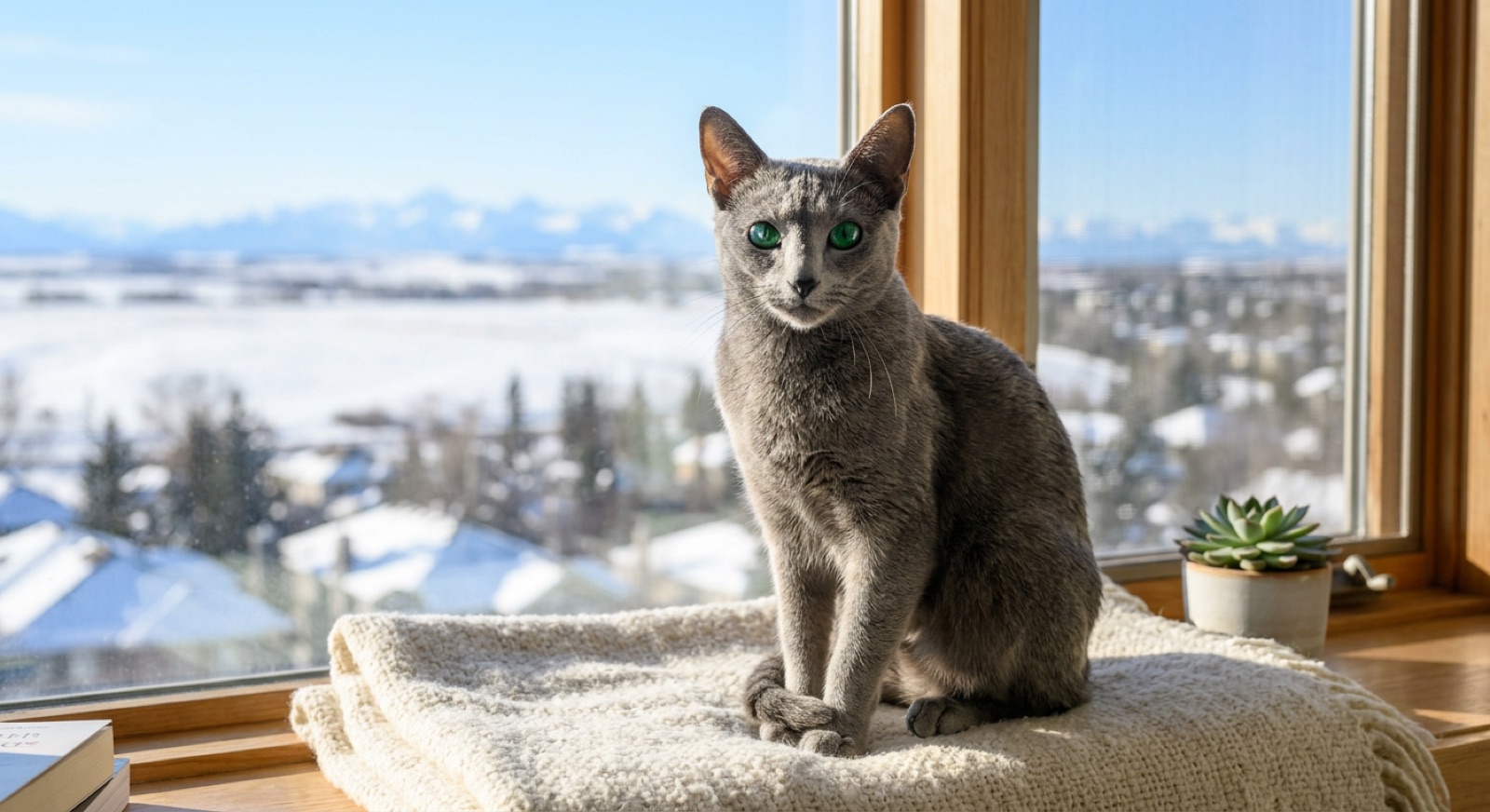
The Cat Fanciers' Association describes a gentle, reserved cat that is devoted to its own family and cautious with strangers. Every recurring rehoming reason lives in that sentence:
- A death in the family. The defining one for this breed. Russian Blues bond for life with one or two people and suit quiet, older households, so a steady share of these cats are inherited by adult children who cannot keep them. If that is your situation, our guide to rehoming after a death in the family walks through it, including doing it gently while you are grieving too.
- Household upheaval. A new partner, a new baby, a renovation, a chaotic move: changes a confident cat shrugs off can leave a routine-loving Russian Blue hiding, off its food, or avoiding the litter box, and the household reads it as the cat being unhappy forever.
- The allergy myth backfiring. The breed is often marketed as low-allergen. No cat is hypoallergenic, reactions develop anyway, and the cat pays for the label.
- Mismatch with a busy home. A house full of visitors, noise, and grabby toddlers is the wrong stage for a cat that wants one quiet audience.
- Moving into no-pets housing. The ordinary Canadian rental story, same as every breed.
None of this means your cat is broken. A shy, devoted cat in the wrong circumstances is still a shy, devoted cat, and the right quiet home will get the whole personality.
The slow-introduction reality: say it out loud
Here is the thing that makes or breaks a Russian Blue rehoming: the adopter will not meet the real cat. At a meet-and-greet, a Russian Blue hides. In the new home, it may live under a bed for days and take weeks to offer trust. An adopter who expects instant affection concludes something is wrong and returns the cat, which teaches the cat that strangers mean upheaval, which makes the next placement harder.
So set the expectation in the listing itself: "You will not see her personality at the meet. Give her two quiet weeks and she will choose you." Then stack the deck for the transition:
- Send the routine, written down. Feeding times, favourite sleeping spots, play habits, litter preferences. Russian Blues live by routine, and continuity is the fastest route to trust.
- Send familiar items unwashed. The bed, a blanket, the same food and litter brand. Smell is home.
- Recommend a single starter room. One quiet room with the cat's things beats the run of a strange house. Most adopters have never rehomed a shy cat and genuinely appreciate the instruction.
- Stay reachable for the first month. A "she has not come out yet, is that normal?" text answered with "yes, day four was when she started" saves placements.
The screening priorities unique to Russian Blues
1. A quiet, patient household. Ask what the home sounds like on a normal evening and how many people come and go. The best Russian Blue homes are calm ones: an adult household, a quiet couple, a retired person who is around most of the day. A revolving-door house of visitors and noise is the wrong placement no matter how kind.
2. Someone who has loved a shy cat before. Ask about previous cats. An applicant who says "our last cat took a month to trust us and then never left my lap" understands the deal. An applicant who wants the cat friendly by the weekend does not.
3. Realistic allergy expectations. If an applicant is choosing a Russian Blue specifically because of allergies, correct the record: the breed is often marketed as low-allergen, but no cat is hypoallergenic and individual reactions vary. Have them spend real time with the cat before committing. An indoor-only commitment rounds out the screen; our Ragdoll guide covers that conversation in depth, and a shy cat that slips out a door is notoriously hard to recover.
What you must disclose
Russian Blue disclosure is temperament first, and the temperament is only a problem when it is hidden.
- The shyness, specifically. How long the cat takes with new people, where it hides, and what finally wins it over. This is the match criterion, so lead with it.
- Routine dependence. What the cat's day looks like and how it reacts when the routine breaks. The new home should plan to keep the rhythm for the first month.
- Litter box standards. Many Russian Blue owners find their cat fussy about box cleanliness; describe yours honestly, including any stress-related lapses during past upheavals, so a normal adjustment blip does not read as a chronic problem.
- Vet records, complete. The breed is generally healthy, which makes the file short; hand it over anyway, name your vet, and note anything they are watching, including weight, since food-loving Blues gain easily.
- How the cat is with children, dogs, and other cats. What you have actually observed, not the breed reputation.
Russian Blue rescues and where to ask
Here is the honest picture: there is no Russian-Blue-specific rescue in Canada we can currently verify as active and taking owner surrenders. Very few purebred Russian Blues reach rescue, and grey shorthairs in general are absorbed by all-breed demand. The practical paths are all-breed cat rescues and humane societies in your province (tell them the cat is shy so it is fostered rather than caged if possible; a shy cat shows terribly in a shelter) and a direct vetted listing with the slow-introduction honesty described above, which for this breed is usually the kinder route because the cat skips the shelter entirely.
Should you charge a rehoming fee?
Charge a modest rehoming fee. For a healthy adult Russian Blue a fee in the low hundreds is normal in Canada (this is a directional range, not a fixed rule), paired with a vet reference and a home meeting. The breed's striking silver-blue look draws reseller interest like any recognizable purebred, and the fee plus screening filters it out. If you are rehoming an inherited cat and the fee feels wrong, donate it to a cat rescue in the original owner's name; adopters find that touching rather than off-putting.
How LocalPetFinder rehoming works
- Submit a free listing at /rehome/submit. Photos, age, breed, spay or neuter status, compatibility, an honest behavioural profile, your reason for rehoming, and a fee. The form takes about 5 minutes and your cat never leaves your home.
- We review it for completeness and basic safety, usually within 24 to 48 hours, then it goes live.
- Your Russian Blue appears alongside rescue cats on the Russian Blue listings and the main adoption pages, marked “Owner Rehoming.” Your email stays private.
- You screen and choose. Vetted adopters reach you through a verified contact form. You decide who to respond to, who to meet, and who gets the cat.
Ready to rehome your Russian Blue responsibly?
List your Russian Blue on LocalPetFinder for free. Your listing appears next to rescue cats, you control the screening, and we never share your email publicly.
Start Your Free Listing →Anti-scam rules (read every line)
- Never list as “free to good home.” A fair fee is the single best filter against flippers and bad-faith adopters.
- Insist on a meet-and-greet, ideally at the adopter's home. Anyone who refuses a home check is hiding their living situation.
- Be suspicious of anyone offering more than your fee, or pushing for a fast, no-questions handover.
- Get a written agreement and a vet reference, transfer the microchip registration, and prefer e-transfer over cash for a paper trail.