The short answer
Rehome your cat on LocalPetFinder, free
List your cat at no cost. They stay home until the right family is found, you screen adopters through a verified contact form, and you choose who adopts. Reviewed within 24 to 48 hours.
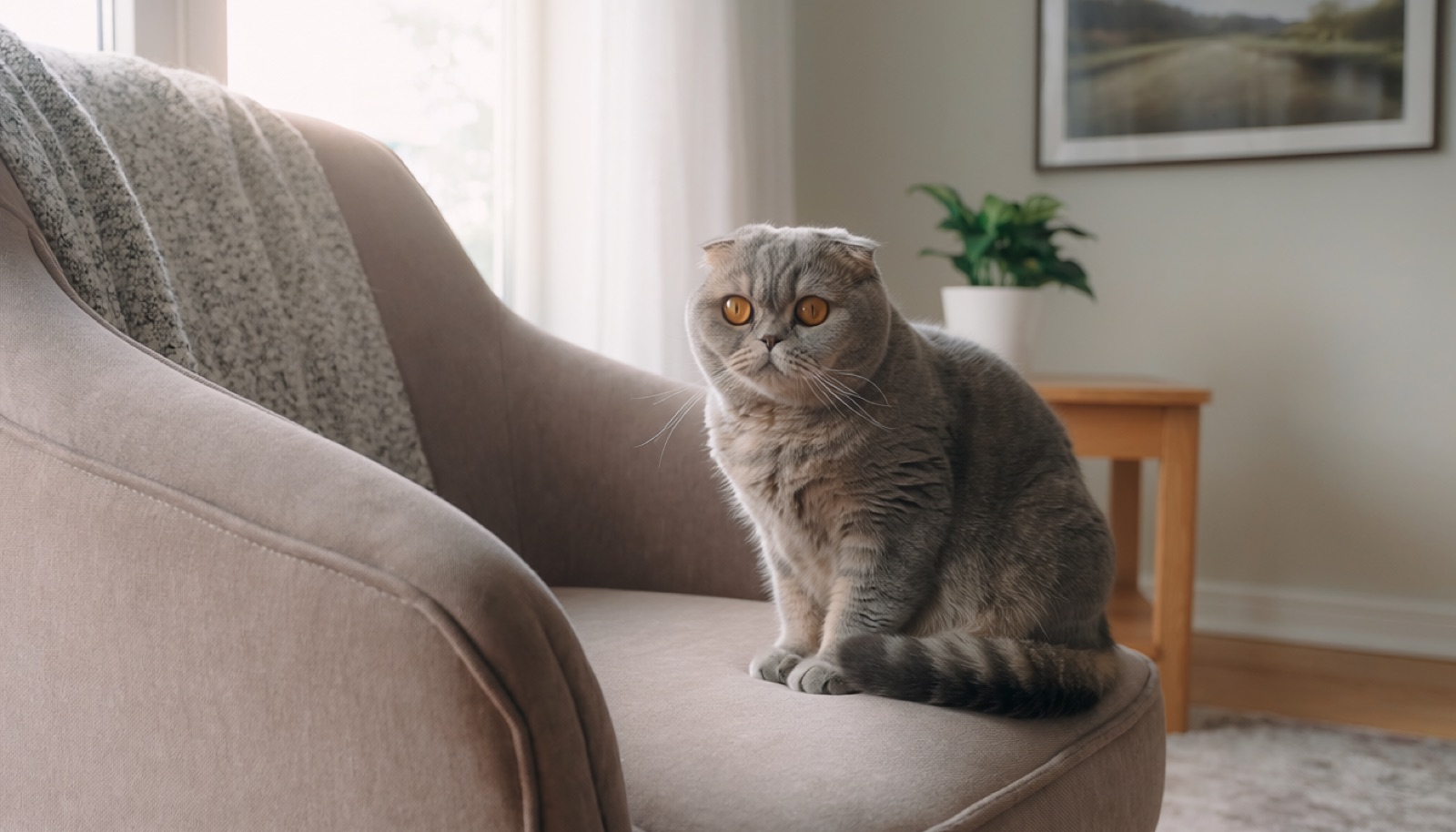
Why Scottish Folds end up needing a new home
The Cat Fanciers' Association describes a sweet-tempered, quiet, adaptable companion, and the temperament is rarely the problem. The recurring reasons:
- The social-media purchase meeting real life. Folds are one of the most photographed breeds on the internet, and a share of them were bought in a scroll and surrendered when the novelty faded or circumstances changed. If part of you is still asking whether rehoming is the right call at all, our honest self-assessment guide is the place to start before you list.
- Vet costs arriving. When joint trouble shows up (more on this below), so do the bills: imaging, pain management, and ongoing care. Households that did not know the breed's condition existed feel ambushed by it.
- The ordinary reasons. Moves into no-pets rentals, allergies, a new baby, an owner's illness. Folds are quiet apartment cats, so their owners' housing changes become theirs.
- Guilt-driven ambivalence. Some owners learn about the breed's condition after purchase and feel conflicted about the cat itself. The cat does not need a different owner because of how it was bred; it needs an informed one.
None of this means your cat is a problem. It means an appealing, heavily marketed breed landed in homes that were not told the whole story, and your rehoming is the chance to place it with a home that knows all of it.
The folded ears: what the new home must know
This is the section that makes a Scottish Fold rehoming different, so here it is plainly.
The folded ears are caused by a gene that affects cartilage, and cartilage is not just in the ears; it is in every joint in the body. The condition is called osteochondrodysplasia, and every fold-eared Scottish Fold carries the gene that causes it. What varies is severity: many Folds live comfortable lives with little visible trouble, while others develop stiff, painful joint changes, most often in the tail, ankles, and feet, sometimes early in life. This is also why several veterinary bodies and some countries discourage or restrict breeding fold-eared cats. None of that is a judgement on you or your cat; it is context the next owner deserves.
What it means for your listing:
- Name the condition. One honest sentence does it: "Like all fold-eared cats, she carries the cartilage condition behind the folded ears, and her new vet should know the breed."
- Describe what you have observed. Stiffness, reluctance to jump, a thick or inflexible tail, any lameness, or none of the above. Observed facts, not a diagnosis.
- Hand over everything medical. Vet records, any imaging, any pain management your vet has prescribed. Do not summarize medication details yourself; let the file and the vets speak.
- Screen for a budget and a plan. The right home would investigate and treat joint trouble if it comes, not surrender again.
The screening priorities unique to Scottish Folds
1. An adopter who accepts the condition out loud. After you explain the cartilage condition, the right applicant asks follow-up questions and talks about their vet. The wrong one waves it off ("she looks fine") or only talks about the ears. Make acceptance explicit before handover, because the placement that fails is the one where the first vet visit is a surprise.
2. Screen out the flippers, hard. Folds are trendy, expensive, and instantly recognizable, which makes a free or cheap adult a resale opportunity. Pressure to collect immediately, vagueness about the household, and no vet reference are the tells. Charge a real fee and slow everything down.
3. A gentle, low-jump-friendly home. A quiet household, soft climbing routes if the cat has any stiffness, and no expectation of an acrobat. An indoor-only commitment completes the screen; our Ragdoll guide covers that conversation in depth, and it applies to any expensive, recognizable breed.
Scottish Fold rescues and where to ask
Here is the honest picture: there is no Scottish-Fold-specific rescue in Canada we can currently verify as active and taking owner surrenders. Folds that reach rescue are absorbed quickly by demand. The practical paths are all-breed cat rescues and humane societies in your province (tell them the breed and share the vet records, since the cartilage condition matters to their vetting) and a direct vetted listing with the honest disclosure described above. If your cat came from a breeder, check the contract; take-back clauses are common with this breed.
Should you charge a rehoming fee?
Charge a real rehoming fee. Scottish Folds are one of the trendiest and most expensive breeds in Canada, and a free or cheap Fold listing is a magnet for resellers and for breeders looking for cheap fold-eared breeding stock, which is the worst outcome available given the breed's condition. A fee of a couple of hundred dollars for a healthy adult is normal (this is a directional range, not a fixed rule), paired with a vet reference and proof the cat is spayed or neutered before handover. Donate the fee to a cat rescue afterward if you would rather not keep it.
How LocalPetFinder rehoming works
- Submit a free listing at /rehome/submit. Photos, age, breed, spay or neuter status, compatibility, an honest behavioural profile, your reason for rehoming, and a fee. The form takes about 5 minutes and your cat never leaves your home.
- We review it for completeness and basic safety, usually within 24 to 48 hours, then it goes live.
- Your Scottish Fold appears alongside rescue cats on the Scottish Fold listings and the main adoption pages, marked “Owner Rehoming.” Your email stays private.
- You screen and choose. Vetted adopters reach you through a verified contact form. You decide who to respond to, who to meet, and who gets the cat.
Ready to rehome your Scottish Fold responsibly?
List your Scottish Fold on LocalPetFinder for free. Your listing appears next to rescue cats, you control the screening, and we never share your email publicly.
Start Your Free Listing →Anti-scam rules (read every line)
- Never list as “free to good home.” A fair fee is the single best filter against flippers and bad-faith adopters.
- Insist on a meet-and-greet, ideally at the adopter's home. Anyone who refuses a home check is hiding their living situation.
- Be suspicious of anyone offering more than your fee, or pushing for a fast, no-questions handover.
- Get a written agreement and a vet reference, transfer the microchip registration, and prefer e-transfer over cash for a paper trail.