The short answer
Rehome your dog on LocalPetFinder, free
List your dog at no cost. They stay home until the right family is found, you screen adopters through a verified contact form, and you choose who adopts. Reviewed within 24 to 48 hours.
Step one: check your adoption contract
This is the step that makes Greyhound rehoming different from every other breed on this site. Greyhound racing no longer operates in Canada, so nearly every pet Greyhound here was imported and placed by a volunteer adoption group, and those groups take their contracts seriously. Almost all of them include a return clause: if you cannot keep the dog, at any point in its life, the dog comes back to the group.
That clause is not a threat, it is a safety net. The group knows your dog's racing history, its cat test results, and its quirks, and it has foster homes that speak fluent Greyhound. Returning a hound to its group is not a failure, it is the system working as designed. Call them first, be honest about the situation, and in most cases the rest of this guide becomes unnecessary.
If your Greyhound did not come through a group, or the group has folded (it happens as volunteers age out), the rest of this guide is for you.
Why Greyhounds end up needing a new home
The Canadian Kennel Club describes the Greyhound as "alert, responsive and somewhat sensitive," and notes the paradox that owners discover: capable of great bursts of speed, but calm and quiet in the home. A Greyhound sleeps 16 to 18 hours a day. The surrender reasons are rarely about energy:
- Prey drive discovered late. The most serious one. Some retired racers cannot safely live with cats or small dogs, and owners sometimes find out after an incident. This is trained-and-bred instinct, not malice.
- Separation anxiety in a kennel-raised dog. A racer spent its whole life surrounded by other Greyhounds and has never once been alone. Some cope fine as only dogs; some fall apart in an empty house.
- Sensitivity mismatch. This is a soft, quiet breed that does poorly in chaotic households. Loud homes with rough young children can overwhelm a hound that startles easily.
- Medical costs. Greyhounds carry breed-specific costs: notoriously bad teeth, corns on the feet, and an elevated lifetime risk of bone cancer, on top of anesthesia protocols that need a Greyhound-savvy vet.
- Owner life changes. Greyhound adopters skew older, and illness, moves into care, and death account for a steady share of rehomings. Our honest self-assessment guide can help if you are still deciding whether rehoming is the right call at all.
The screening priorities unique to Greyhounds
Greyhound screening is mostly about physics and instinct.
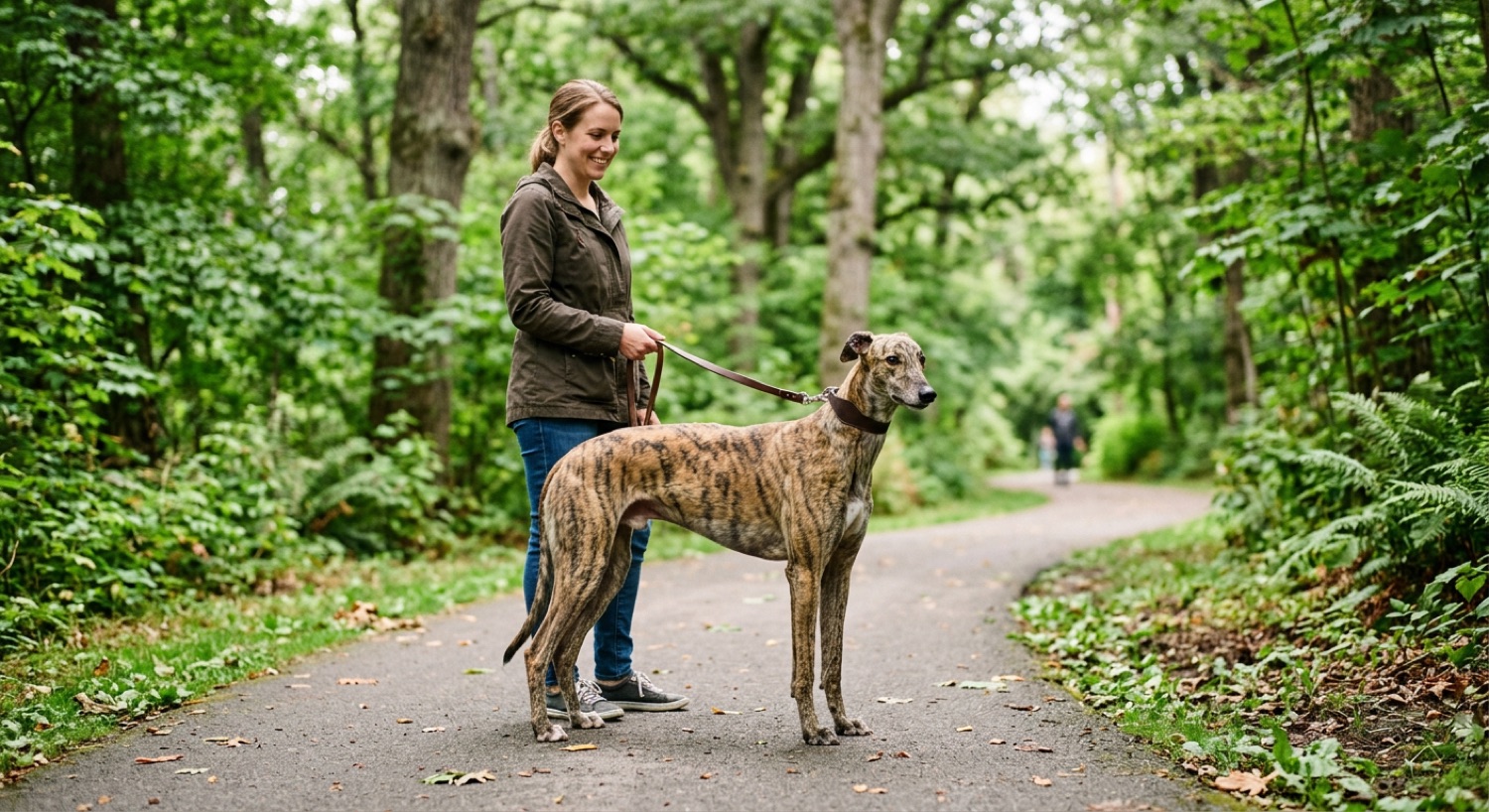
1. Leash discipline, absolutely. A Greyhound reaches 45 mph (72 km/h) and has effectively no recall once it is running. The rule the entire Greyhound community lives by is simple: never off-leash outside a securely fenced area. Ask every applicant how they exercise their dogs and where. An adopter who talks about off-leash trail time is the wrong home, however kind. Fenced yards, on-leash walks, and enclosed sniff parks are the life.
2. An honest prey-drive match. If your dog has been cat-tested or has lived with cats or small dogs, state the results plainly. If it has chased, grabbed, or fixated, say that too, and place only into a home without small animals. There is no version of fudging this that ends well.
3. A calm household that understands the breed's quirks. Ask about noise, children's ages, and the general pace of the home. Mention sleep startle if your dog has it (many do: a dog that has never shared a bed can snap when touched while asleep) and let the adopter plan for floor-level beds and a rule about not touching a sleeping hound.
What you must disclose
Greyhound disclosure is short but non-negotiable, because the failure modes are severe.
- Prey drive, with evidence. Cat test results, incidents, and how the dog behaves on leash around small dogs and wildlife.
- Sleep startle. Whether the dog has ever growled or snapped when woken, and the house rules that manage it.
- Alone-time behaviour. What the dog does in an empty house, and whether it has ever lived as an only dog.
- Dental and foot history. Greyhound teeth are famously bad and corns make some dogs limp on hard surfaces. Share the vet records and name a Greyhound-experienced vet if you have one, including the breed's specific anesthesia sensitivities.
- The weight and frame basics. A healthy Greyhound runs 55 to 80 lbs and is supposed to look lean; tell the adopter what your dog's healthy weight is so nobody "fixes" it with food.
Greyhound rescues and where to ask
If your dog came through an adoption group, that group is your rescue option, full stop: call them. If not, Greyhound-specific organizations in Canada are few, volunteer-run, and focused on retired racers, but they know the breed community and can often help or cross-post. A verified Canadian option:
Should you charge a rehoming fee?
If you are returning the dog to its adoption group, no fee changes hands; that is a return, not a sale. For a private rehoming, charge a modest fee, commonly in the low hundreds in Canada (this is a directional range, not a fixed rule). Greyhounds are not a reseller-bait breed the way Corgis or Poms are, but a fee still filters out impulse applicants and free-animal collectors, and it signals that the dog has value. You can donate it to a Greyhound group afterward, which the community will remember warmly.
How LocalPetFinder rehoming works
- Submit a free listing at /rehome/submit. Photos, age, breed, spay or neuter status, compatibility, an honest behavioural profile, your reason for rehoming, and a fee. The form takes about 5 minutes and your dog never leaves your home.
- We review it for completeness and basic safety, usually within 24 to 48 hours, then it goes live.
- Your Greyhound appears alongside rescue dogs on the Greyhound listings and the main adoption pages, marked “Owner Rehoming.” Your email stays private.
- You screen and choose. Vetted adopters reach you through a verified contact form. You decide who to respond to, who to meet, and who gets the dog.
Ready to rehome your Greyhound responsibly?
List your Greyhound on LocalPetFinder for free. Your listing appears next to rescue dogs, you control the screening, and we never share your email publicly.
Start Your Free Listing →Anti-scam rules (read every line)
- Never list as “free to good home.” A fair fee is the single best filter against flippers and bad-faith adopters.
- Insist on a meet-and-greet, ideally at the adopter's home. Anyone who refuses a home check is hiding their living situation.
- Be suspicious of anyone offering more than your fee, or pushing for a fast, no-questions handover.
- Get a written agreement and a vet reference, transfer the microchip registration, and prefer e-transfer over cash for a paper trail.