The short answer
Rehome your dog on LocalPetFinder, free
List your dog at no cost. They stay home until the right family is found, you screen adopters through a verified contact form, and you choose who adopts. Reviewed within 24 to 48 hours.
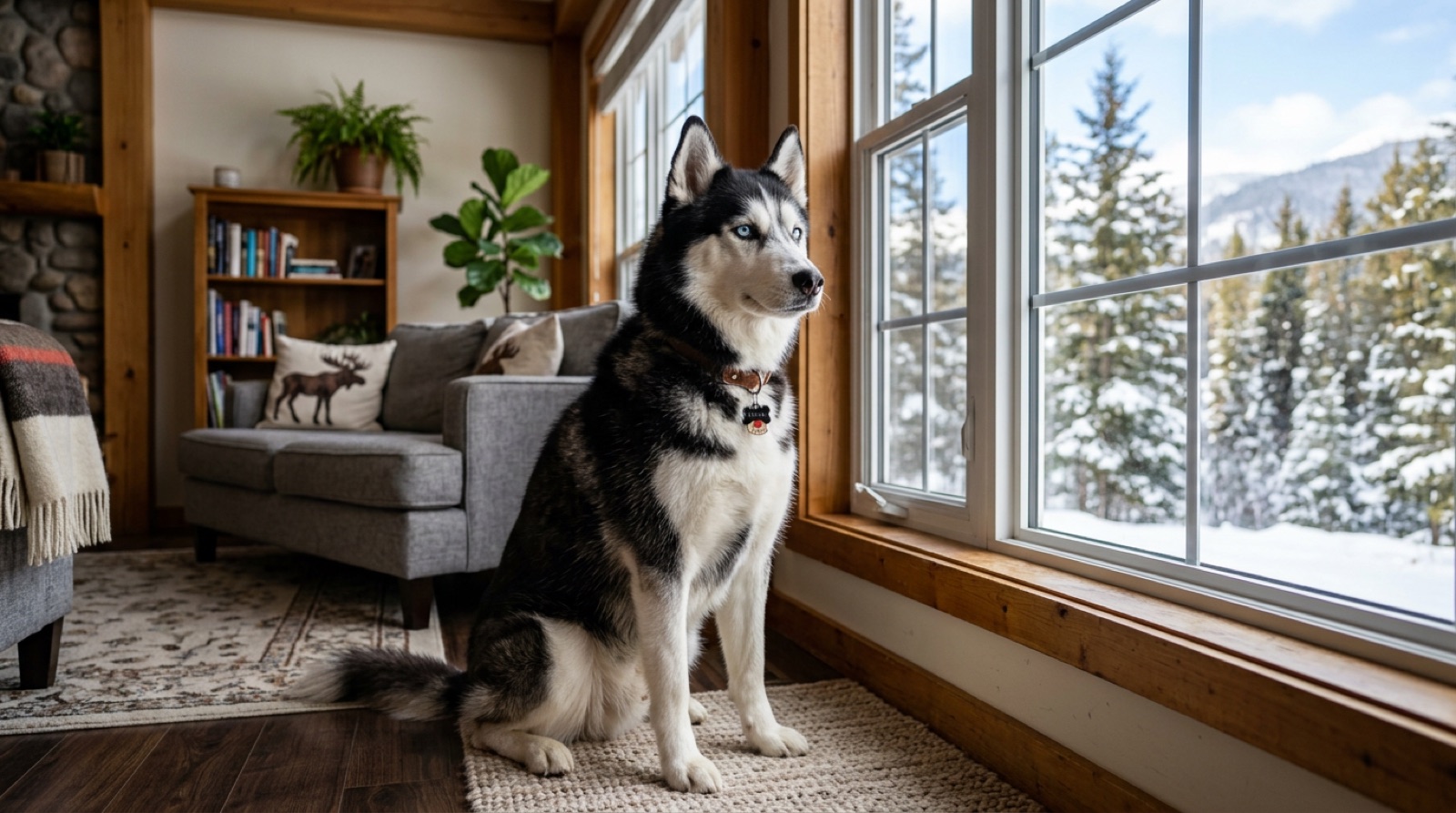
Why Huskies end up needing a new home
Most Husky surrenders trace back to the same pattern: someone falls for the look and the blue eyes, then meets the reality of a high-drive working breed. The Canadian Kennel Club puts it plainly: the Siberian Husky is "an active breed that prefers the outdoors and needs lots of regular exercise." When that exercise does not happen, the behaviour shows up as destruction, escaping, and noise.
The recurring reasons owners reach the rehoming decision:
- Exercise needs that a normal routine cannot meet. A bored Husky digs, chews, and finds its own entertainment.
- Escaping and roaming. Huskies were bred to run and they are determined fence-climbers, diggers, and door-bolters. A yard that holds other dogs often will not hold a Husky.
- High prey drive. A strong, documented breed trait. Many Husky rescues will not place into homes with cats or small animals unless the dog is already known to be safe with them.
- Vocalizing, shedding, and the general intensity of living with a talkative, heavy-coated working dog. These are commonly cited but vary dog to dog.
- Impulse adoption. Huskies surge in popularity after TV and film exposure, and a share of those dogs end up needing rehoming once the novelty meets the workload.
None of this means your dog is a problem. It means the breed was a mismatch for the situation, which is exactly the kind of thing a thoughtful rehoming fixes.
The two screening priorities unique to Huskies
A general rehoming guide tells you to screen adopters. For a Husky, two checks matter more than anything else, and getting them right is the difference between a placement that sticks and a dog that is loose on a highway in a week.
1. Secure physical fencing. Ask specifically about the yard. Husky rescues routinely require a physical fence and refuse to place into homes relying on an invisible or electric fence, because a Husky in prey or roam mode runs straight through the correction. If your dog has ever escaped, disclose exactly how (climbed, dug, bolted) so the new home can secure against it.
2. A realistic plan for prey drive. If an adopter has cats, rabbits, or small dogs, do not assume it will be fine. Ask whether your dog has lived with small animals and how it reacted, and be honest in the listing. The safest placements for a high-prey-drive Husky are homes without small resident pets, or homes with experience managing the introduction. Never off-leash in an unfenced space is the baseline rule for the breed; pass that on.
Husky rescues and where to ask
Breed-specific rescues are a good option, but Husky rescue intake in Canada is limited and often paused, so do not count on a guaranteed spot. Contact them early and list on LocalPetFinder in parallel. A few verified Canadian options:
Should you charge a rehoming fee?
Charge a rehoming fee. For a healthy adult Husky a few hundred dollars is normal in Canada, commonly in the $300 to $700 range depending on the dog and what is included (this is a directional range, not a fixed rule). The fee matters more for Huskies than for most breeds: they are a desirable, resellable dog, and the Siberian Husky Club of America’s surrender guidance warns that free listings attract people who pose as good homes but resell the dog days later. A real fee filters those people out. You can donate it to a Husky rescue afterward if you would rather not keep it.
How LocalPetFinder rehoming works
- Submit a free listing at /rehome/submit. Photos, age, breed, spay or neuter status, compatibility, an honest behavioural profile, your reason for rehoming, and a fee. The form takes about 5 minutes and your dog never leaves your home.
- We review it for completeness and basic safety, usually within 24 to 48 hours, then it goes live.
- Your Husky appears alongside rescue dogs on the Husky listings and the main adoption pages, marked “Owner Rehoming.” Your email stays private.
- You screen and choose. Vetted adopters reach you through a verified contact form. You decide who to respond to, who to meet, and who gets the dog.
Ready to rehome your Husky responsibly?
List your Husky on LocalPetFinder for free. Your listing appears next to rescue dogs, you control the screening, and we never share your email publicly.
Start Your Free Listing →Anti-scam rules (read every line)
- Never list as “free to good home.” A fair fee is the single best filter against flippers and bad-faith adopters.
- Insist on a meet-and-greet, ideally at the adopter's home. Anyone who refuses a home check is hiding their living situation.
- Be suspicious of anyone offering more than your fee, or pushing for a fast, no-questions handover.
- Get a written agreement and a vet reference, transfer the microchip registration, and prefer e-transfer over cash for a paper trail.